How To Draw a Leaf?
Here are the step by step process of drawing a leaf.
Step 1 – Block in the Basic Leaf Shape
- Start with a very light pencil grip (hold it a bit farther back) so your first lines stay soft and easy to erase.
- Decide the overall “gesture” of the leaf: is it straight, leaning, or slightly curved? A tiny curve makes it look more natural.
- Draw a simple outline first, like a teardrop, almond, or oval shape. Don’t worry about details yet—this is just the big silhouette.
- Place the tip (top point) and the base (bottom point) clearly, because these two landmarks help you keep the leaf balanced.
- Add a short stem at the base. Keep it thin and slightly angled instead of perfectly straight, unless you’re drawing a very stiff leaf.
- Check proportions: if the leaf looks too wide, narrow it; if it looks too short, extend the tip slightly. Keep everything light and adjustable.
Step 2 – Define Form, Proportions, and Body Structure
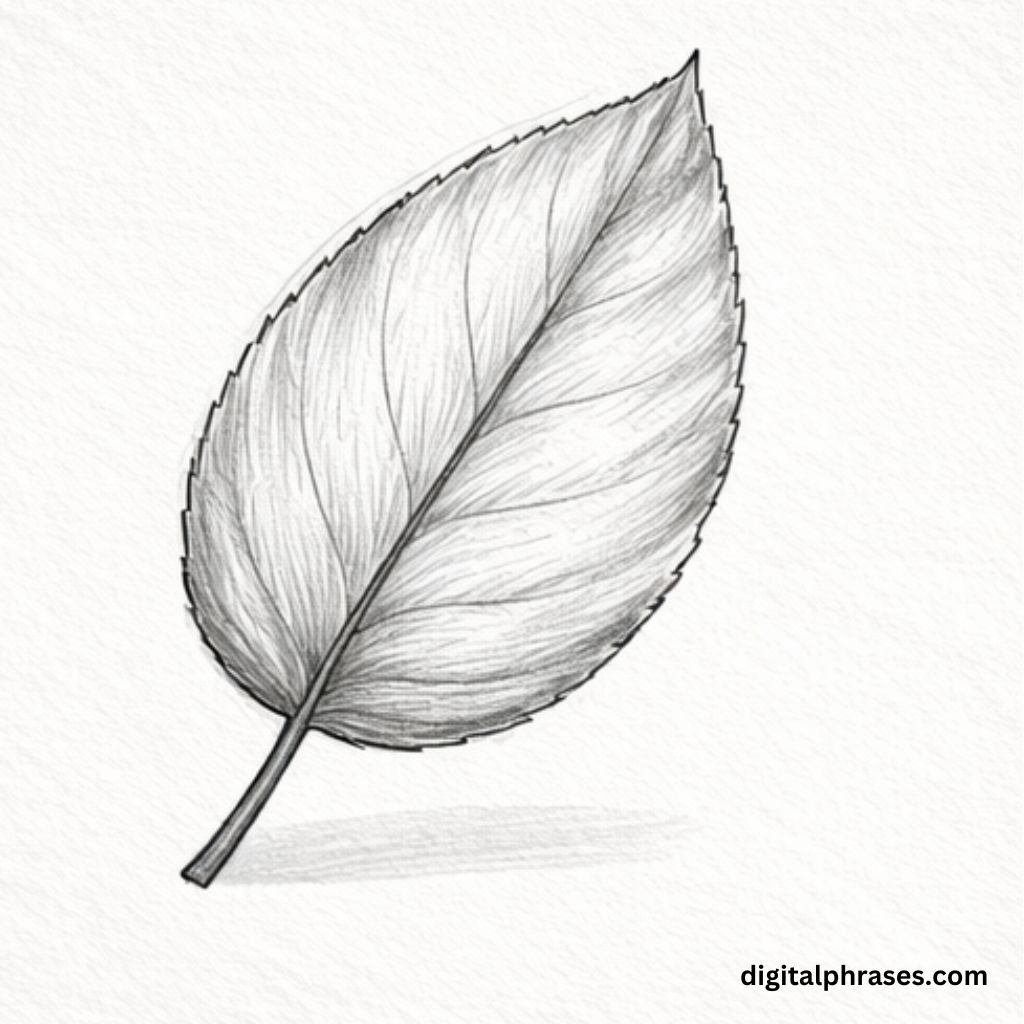
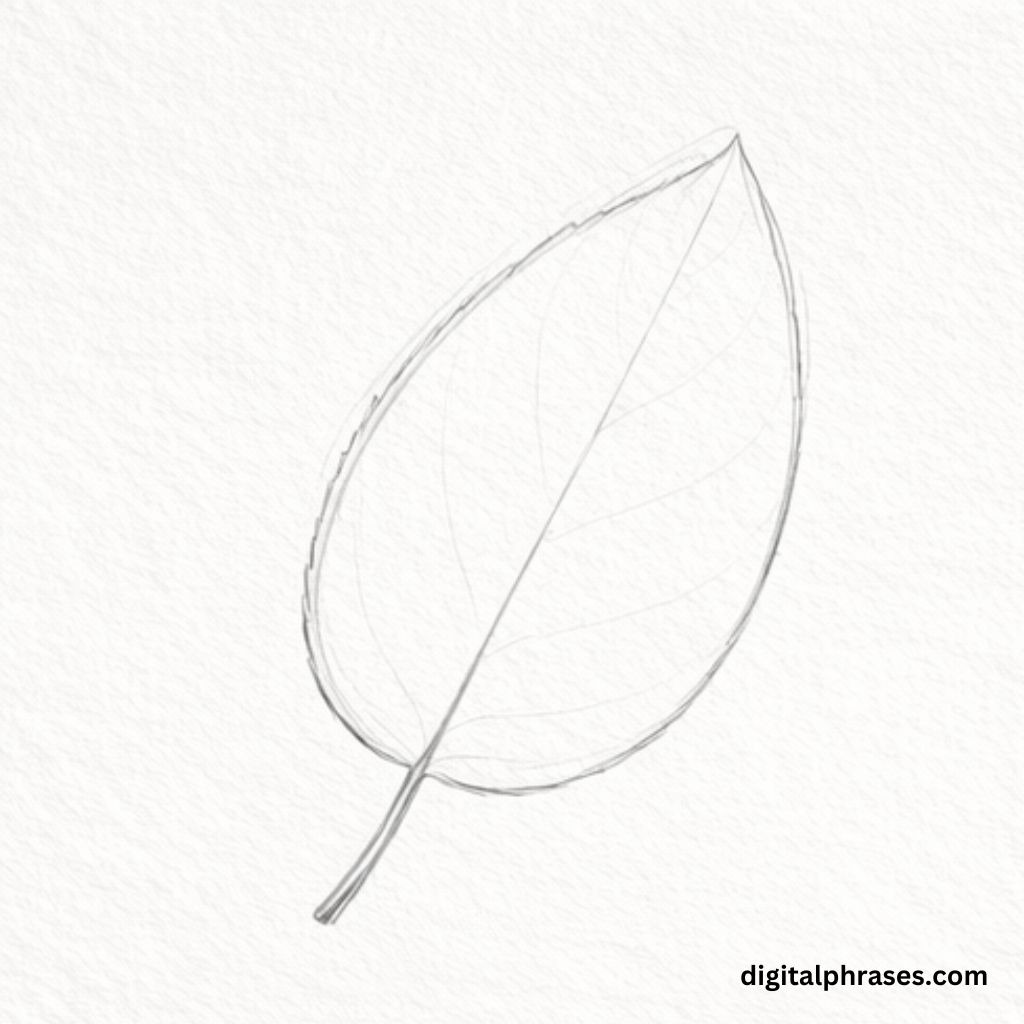
- Draw a single line from the stem through the center of the leaf to the tip. This is the midrib, and it gives the sketch structure.
- Make the midrib gently curved rather than ruler-straight, because real leaves usually bend a little as they grow.
- Use the midrib to “split” the leaf into two halves and quickly check symmetry. The two sides don’t need to be identical, but they should feel believable.
- If you want a leaf that twists slightly, let the midrib curve more and plan for one side to appear a bit thinner than the other.
- Keep the line light at first; later you can darken parts of it to show depth or shadow.
- Decide the edge type: smooth, wavy, or serrated. Then redraw the outline with more confidence, following your initial shape.
- If the leaf is wavy, make small, gentle bumps—avoid repeating the same bump size over and over, or it can look artificial.
- Add side veins branching from the midrib toward the edges. Angle them slightly upward, and vary the spacing so it feels organic.
- Don’t draw every vein perfectly dark. Some can be faint or partially visible, especially near the tip.
- For realism, let a few veins curve subtly instead of being perfectly straight lines.
Step 3 – Clean Line Art and Detail Refinement
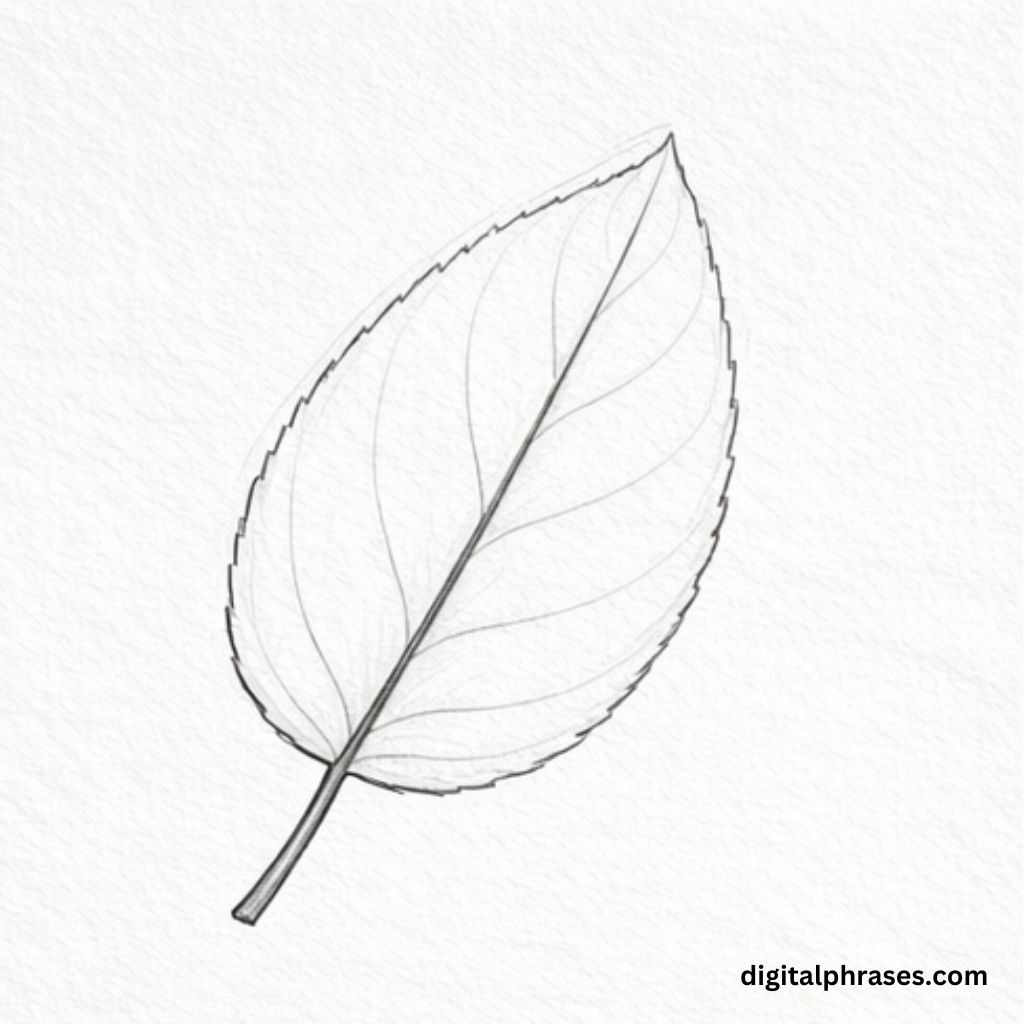
- Erase any messy construction lines, but keep the best guiding marks if they help the final drawing.
- Shade lightly to show form: darken near the base, under the midrib, or along one edge to suggest the leaf is curved.
- Leave a lighter strip or patch as a highlight to make the leaf look slightly glossy or raised.
- Add small details like tiny spots, minor tears, or uneven edges—subtle imperfections make a sketch feel real.
- Finish by darkening only the most important lines (like the final outline and parts of the midrib) so the drawing has clear focus.