How To Draw a Sea Shell
Here’s the guide.
Step-by-Step Guide to Drawing a Sea Shell
Step 1 – Construct the Basic Shape and Proportions
- Begin by lightly sketching the overall silhouette of the sea shell using very soft pencil strokes. At this stage, accuracy is more important than detail.
- Draw a large curved oval or dome-like shape to represent the main body of the shell. This establishes the shell’s mass and direction.
- Add a smaller oval or circle to the side or front of the main shape to indicate the shell’s opening. This secondary shape helps define perspective early on.
- Keep all lines loose and erasable, as these are construction guidelines, not final outlines.
- Pay attention to the tilt and orientation of the shell. Slightly angling it adds realism and prevents the drawing from looking flat.
- Avoid shading or texture for now; focus solely on getting the proportions and placement correct.
- This step acts as the foundation, ensuring the shell feels balanced and naturally positioned on the surface.

Step 2 – Define the Shell’s Volume and Spiral Form
- Refine the initial shape by adding curved contour lines that wrap around the shell, following its natural spiral structure.
- These lines should flow smoothly from the back of the shell toward the opening, helping convey a sense of three-dimensional volume.
- Gradually darken the outer contour while keeping the interior construction lines lighter.
- Begin shaping the shell’s curvature more clearly, making the back fuller and the front slightly narrower.
- Lightly sketch the ground shadow beneath the shell to anchor it and give it weight.
- Maintain consistent spacing between the curved lines to suggest an even, organic growth pattern.
- This step transitions the drawing from a flat outline into a recognizable, rounded shell form.
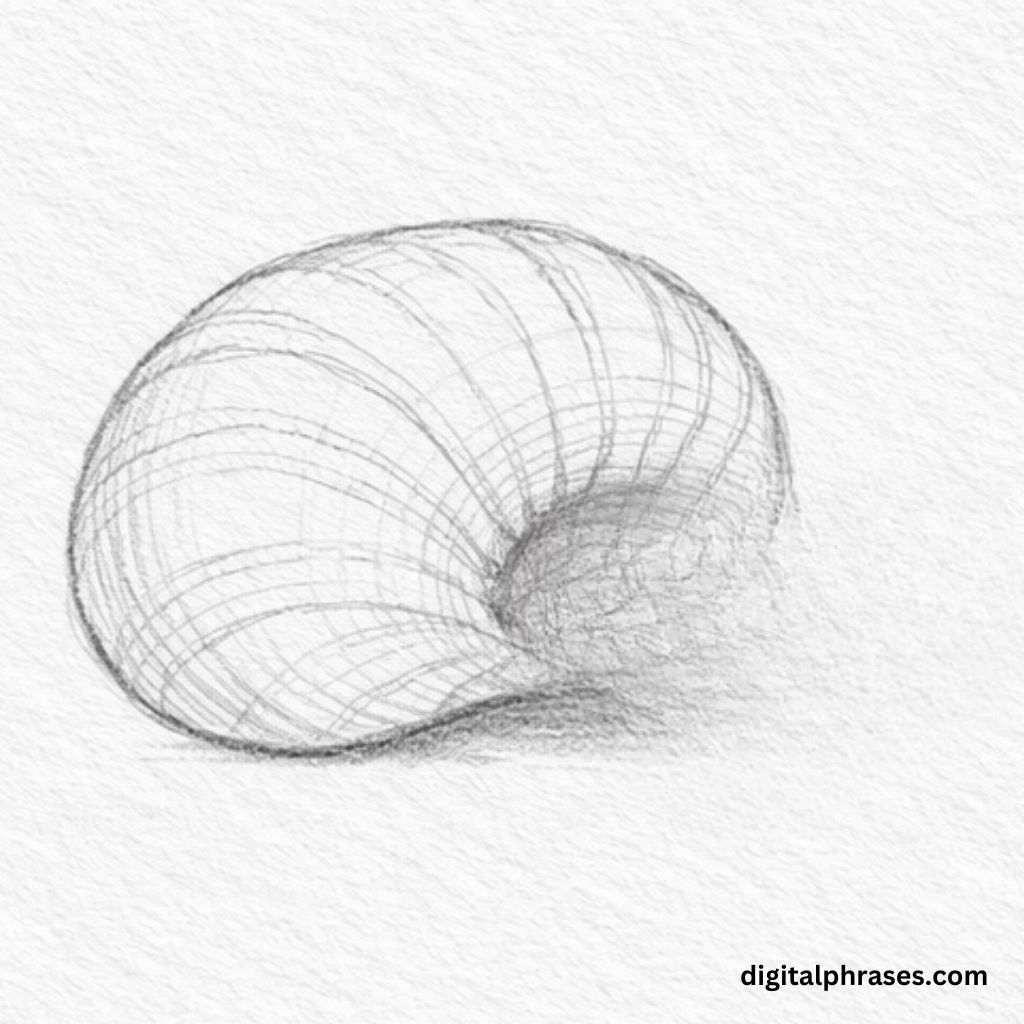
Step 3 – Develop the Opening and Surface Structure
- Focus on the shell’s opening by drawing a thicker rim and a deeper inner curve to show depth.
- Add more contour lines around the opening, making them tighter and closer together to emphasize perspective.
- Begin introducing light shading, especially inside the shell’s opening, to create contrast and depth.
- Strengthen the spiral pattern by refining line flow and adjusting curves for smooth continuity.
- Subtly vary line pressure to suggest changes in surface elevation.
- The shell should now look solid, with a clear interior and exterior relationship.
- This step enhances realism by emphasizing structure and spatial depth.
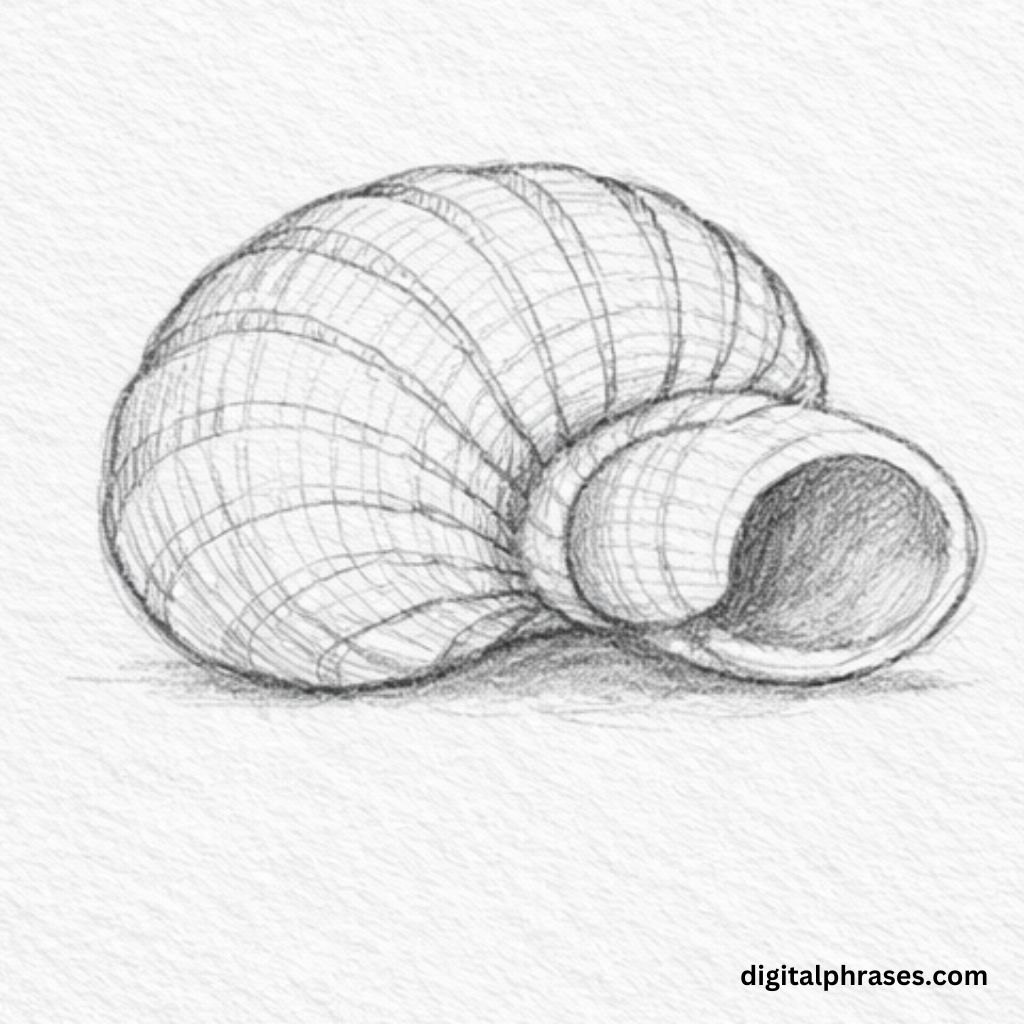
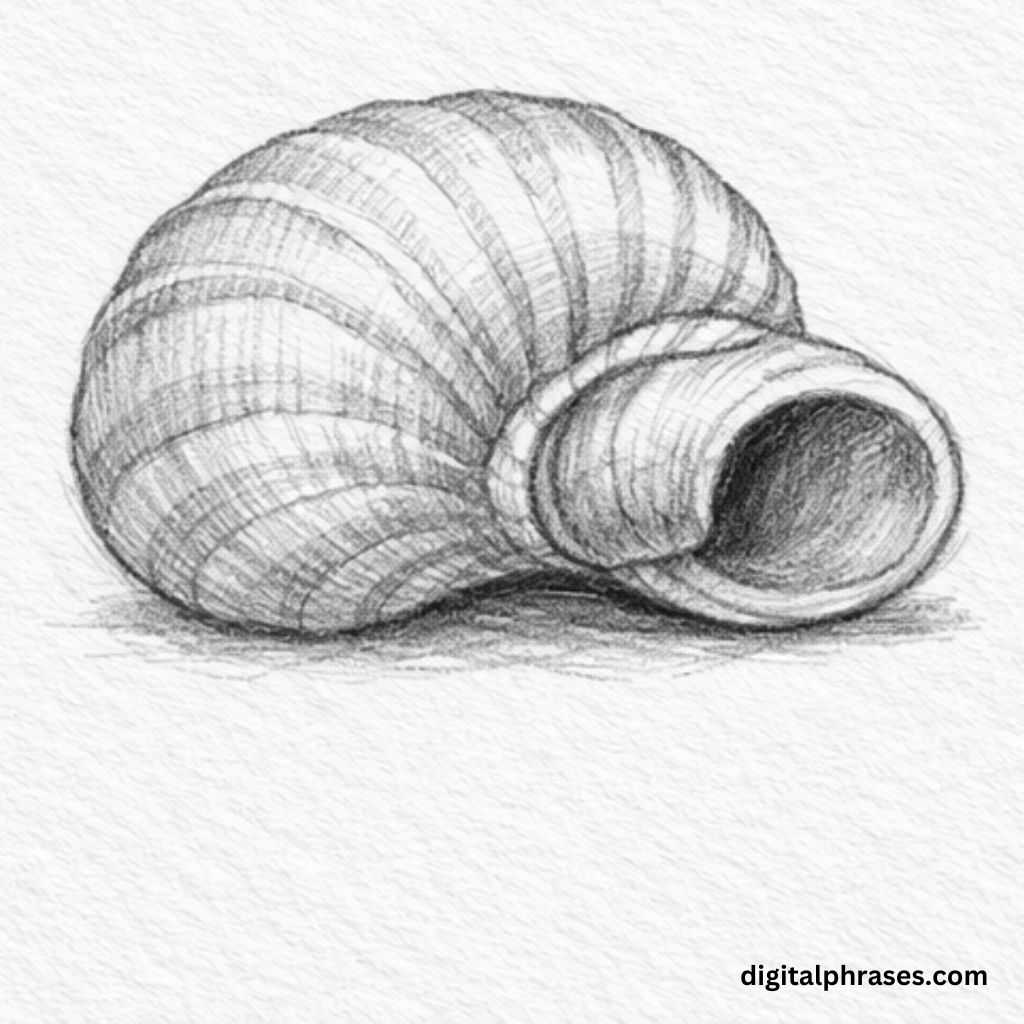
Step 4 – Add Texture, Shading, and Final Details
- Apply layered shading along the shell’s ridges, following the curved contour lines to enhance form.
- Darken areas where the shell overlaps itself or where light would naturally be blocked.
- Add fine textural lines and subtle grooves to represent the shell’s natural ridges and growth marks.
- Smooth transitions between light and shadow to avoid harsh contrasts, keeping the shell organic.
- Refine the ground shadow to match the shell’s shape and direction of light.
- Erase unnecessary construction lines while preserving essential contours.
- Finish by sharpening key edges and deepening shadows inside the opening for a polished, realistic sea shell drawing.