How To Draw a Sea Turtle?
Here are the steps.
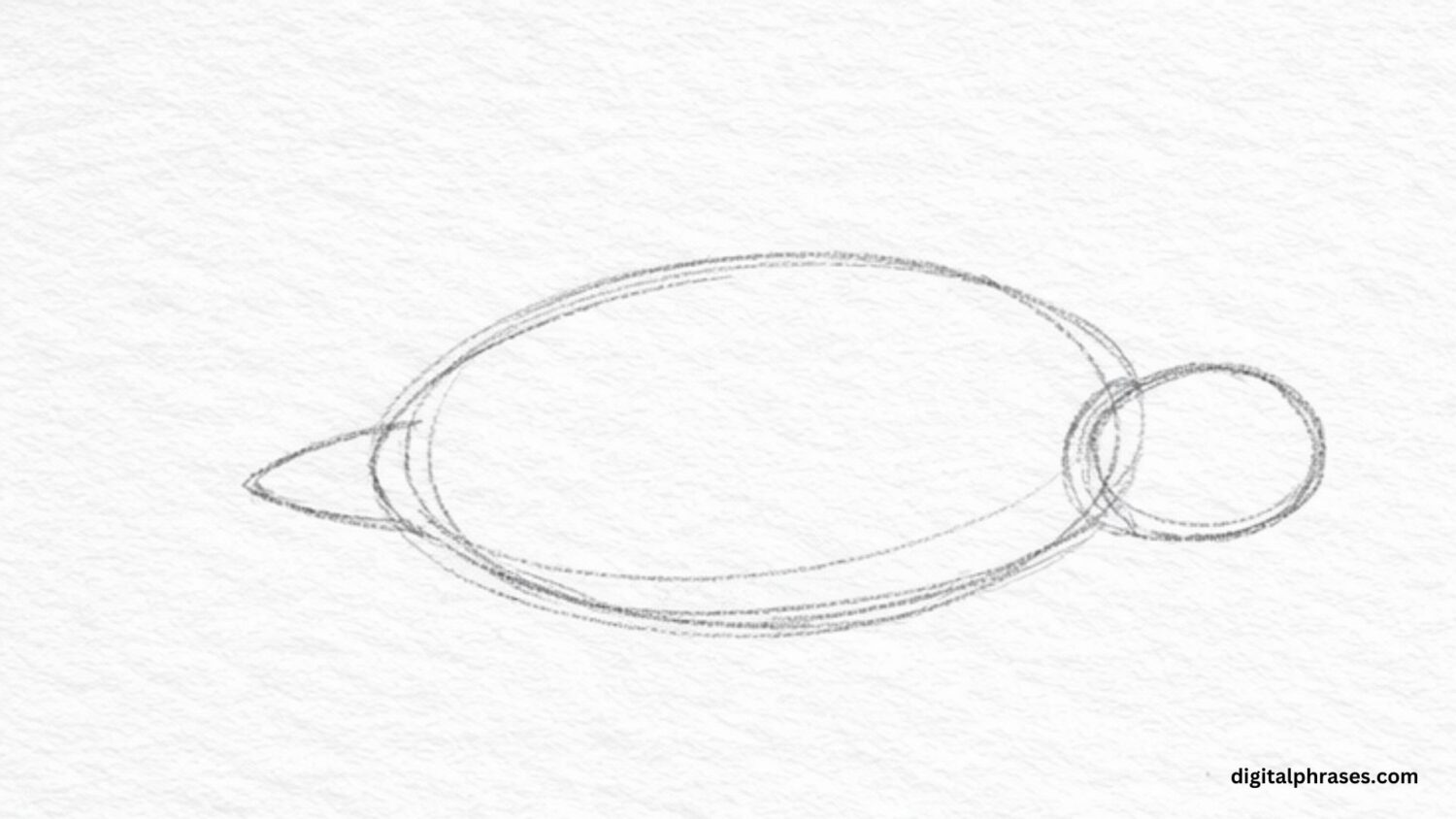
Step 1 – Sketch the Basic Shapes and Proportions
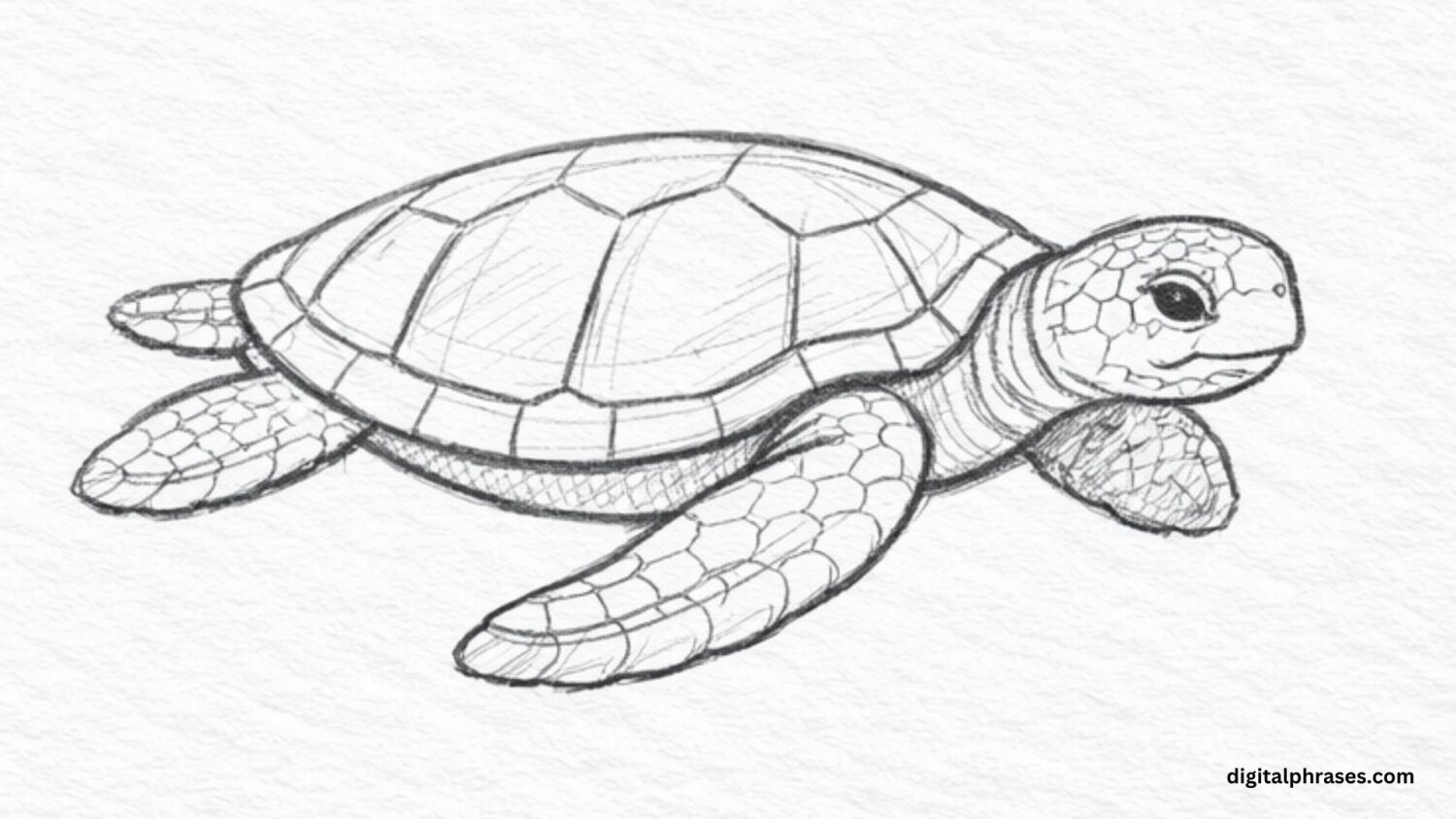
- Begin by lightly drawing a large oval or slightly flattened circle to represent the main shell (carapace) of the sea turtle. This shape is the foundation of your entire sketch, so keep it light and adjustable.
- Add a smaller oval or rounded shape extending from one end of the shell to indicate the head. Sea turtle heads are smooth and rounded rather than sharp or angular.
- Sketch a short, tapered triangle or small curved shape at the opposite end of the shell for the tail. This should be subtle and not overly long.
- Lightly mark a center line across the shell to help keep your drawing symmetrical. This guideline will help when placing flippers and shell patterns later.
- Focus on overall proportions rather than details at this stage. A well-proportioned base will make the later steps much easier and more realistic.
Step 2 – Draw the Flippers and Body Structure
- From the front sides of the shell, draw two long, curved front flippers. These should look like elongated paddles or teardrops, wider near the shell and narrower at the tips.
- Angle the front flippers slightly forward to give the impression that the turtle is swimming gracefully through the water.
- Add two smaller rear flippers near the back of the shell. These are shorter and rounder than the front flippers and help balance the body.
- Connect the head smoothly to the shell using gentle curved lines, avoiding sharp edges. Sea turtles have soft, flowing forms.
- At this stage, check that all limbs feel balanced and evenly spaced on both sides of the body.
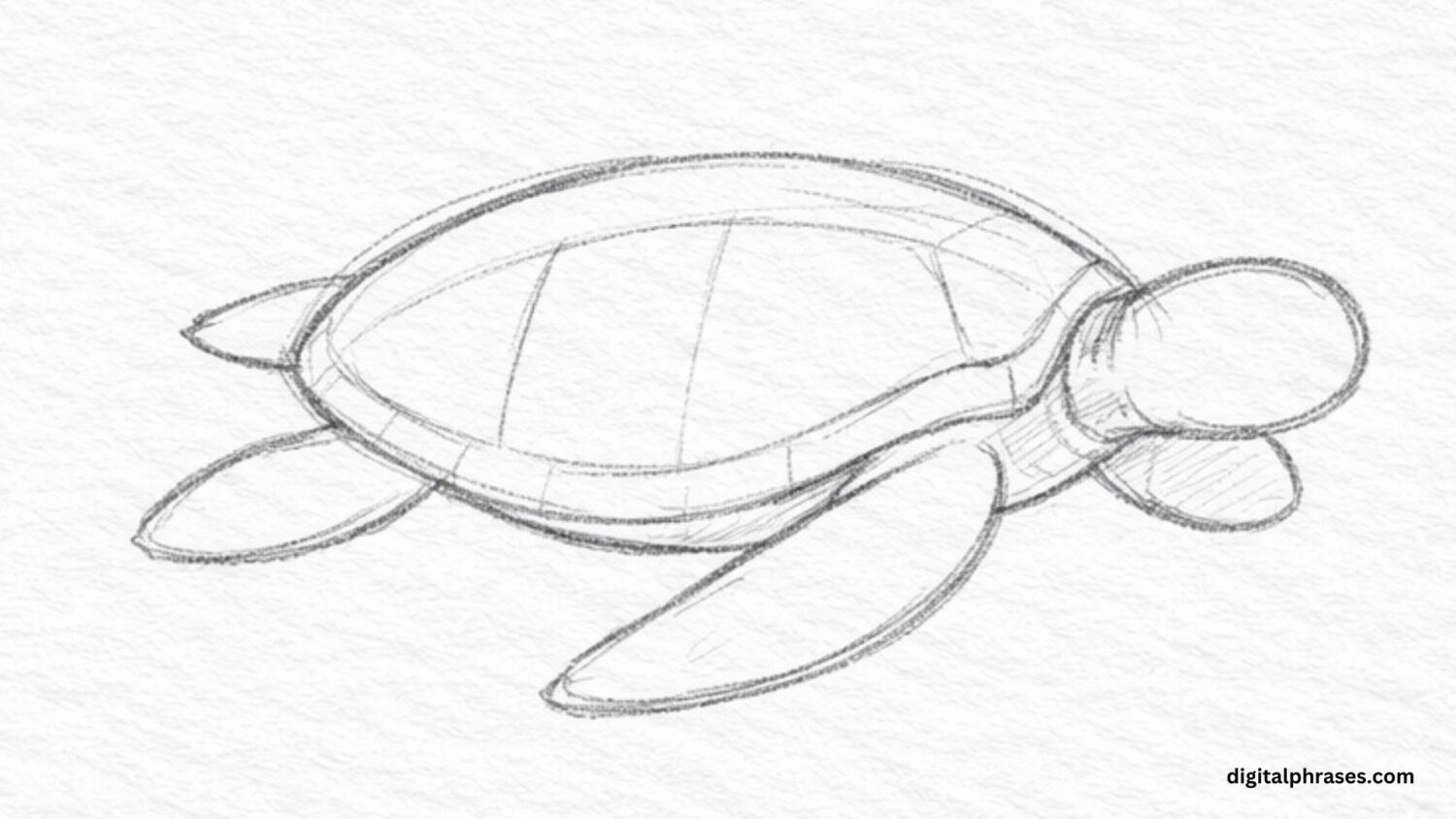
Step 3 – Refine the Outline and Add Facial Features
- Go over your initial lines and begin refining the outline of the shell, flippers, and head. Smooth out any rough or uneven sketch marks.
- Shape the head more clearly by adding a slight beak-like mouth, which is a characteristic feature of sea turtles.
- Draw a small, round eye on the side of the head, keeping it simple and expressive rather than overly detailed.
- Slightly thicken the flippers near the base to make them look strong and muscular.
- Erase or lighten unnecessary construction lines as the turtle’s form becomes clearer and more defined.
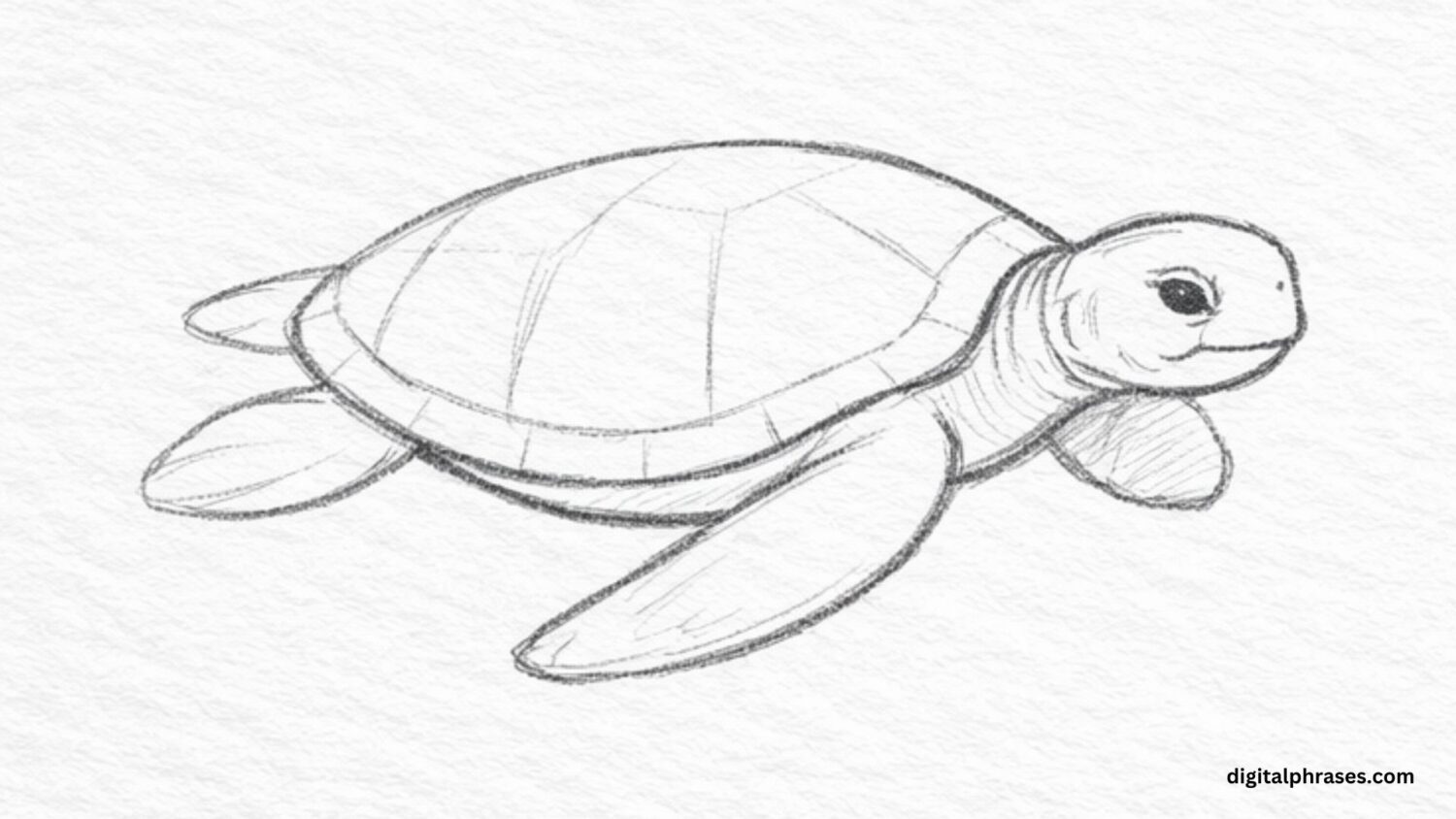
Step 4 – Add Shell Patterns, Texture, and Final Details
- Inside the shell, draw the scute patterns—these are the plate-like shapes that form a natural geometric design. Use soft, curved lines rather than perfect shapes.
- Add light texture lines or small markings on the flippers to suggest skin folds and movement.
- Darken your final outline carefully, emphasizing the outer edges of the shell and flippers.
- Erase all remaining guide lines to clean up the sketch.
- If desired, add light shading under the shell or flippers to give the drawing depth and a sense of three-dimensional form.