How To Draw a Soccer Ball?
Here’s a step by step process.
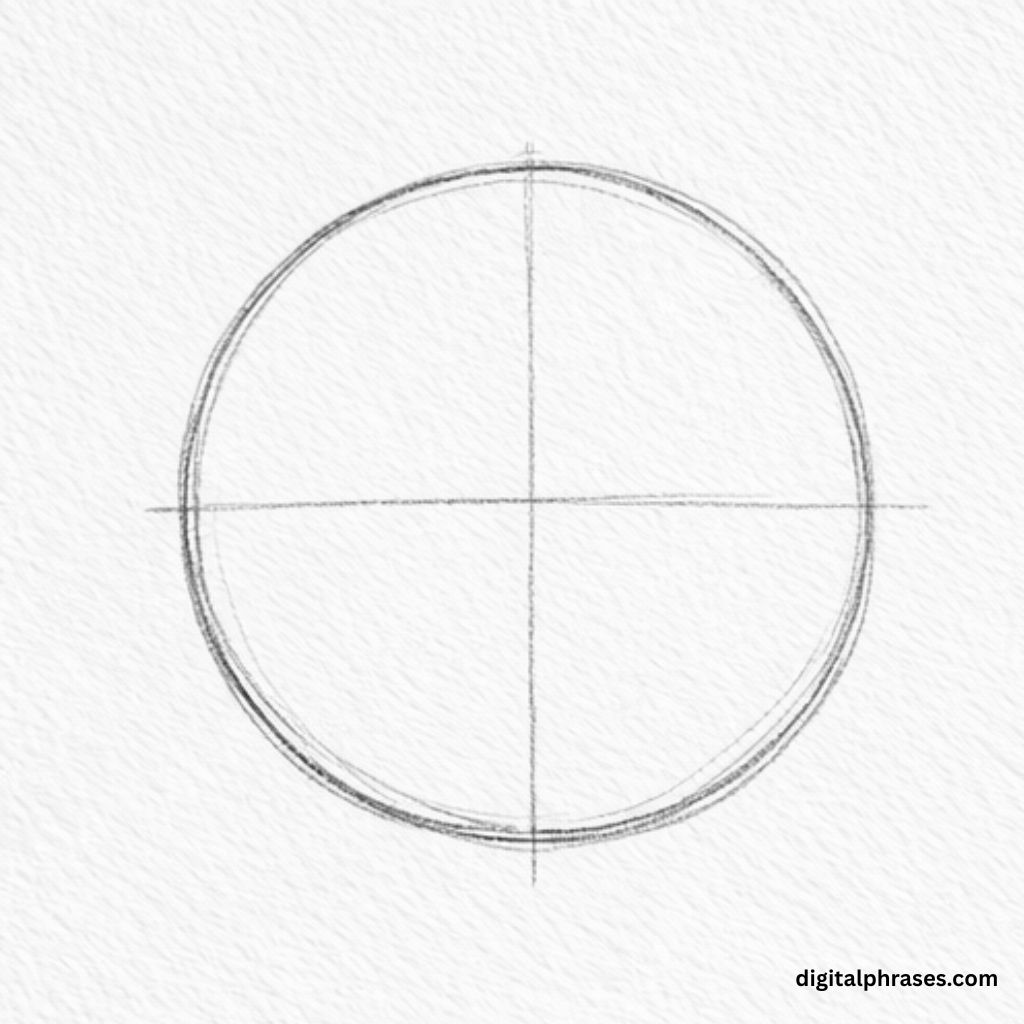
Step 1 – Draw the Base Circle and Guidelines
- Begin by drawing a large, neat circle. This is the outer boundary of the soccer ball, so take your time to make it as round as possible.
- Add a vertical guideline straight down the center of the circle to help keep the design symmetrical.
- Draw a horizontal guideline across the middle of the circle, intersecting the vertical line like a cross.
- Lightly sketch a second faint circle just inside the first if you want a cleaner edge later—this helps when refining the final outline.
- Keep all guidelines very light; they are only there to help place the panels evenly.
- Check spacing: the cross should divide the circle into four roughly equal sections, which will guide the placement of the center panel in the next step.
- Avoid adding any pattern yet—focus only on a clean circle and centered guidelines.
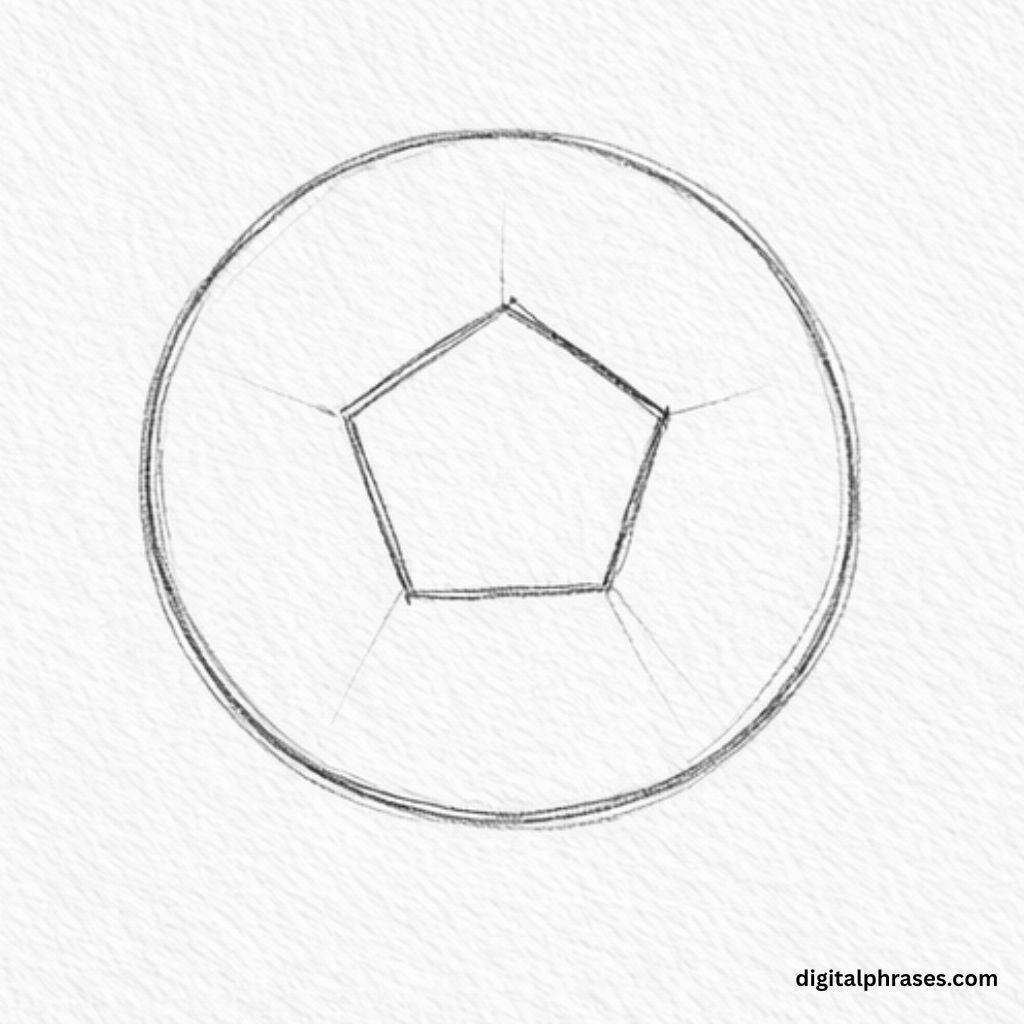
Step 2 – Add the Center Pentagon
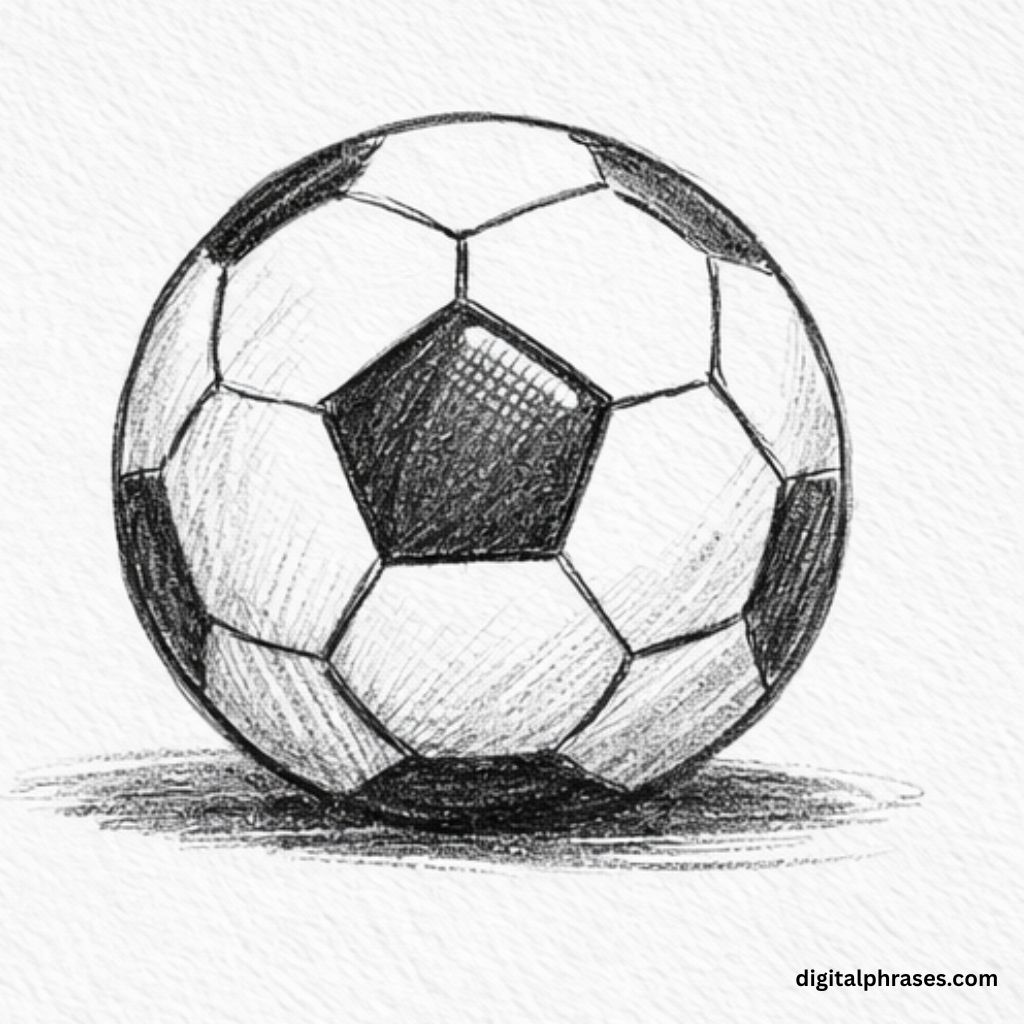
- In the center of the ball, draw a pentagon (5-sided shape). This is the classic central panel seen on many soccer balls.
- Angle the pentagon slightly so it doesn’t look perfectly flat; in the reference, it tilts subtly to give a more 3D feel.
- From the pentagon’s corners, lightly draw short guiding lines outward to suggest where surrounding panels will connect.
- Make sure the pentagon sits comfortably inside the circle, leaving enough space around it for additional shapes.
- Refine the pentagon edges so they are straight but still slightly hand-drawn—don’t over-stiffen them.
- Recheck proportions: the pentagon should be large enough to be the focal panel, but not so large that it crowds the outer edge.
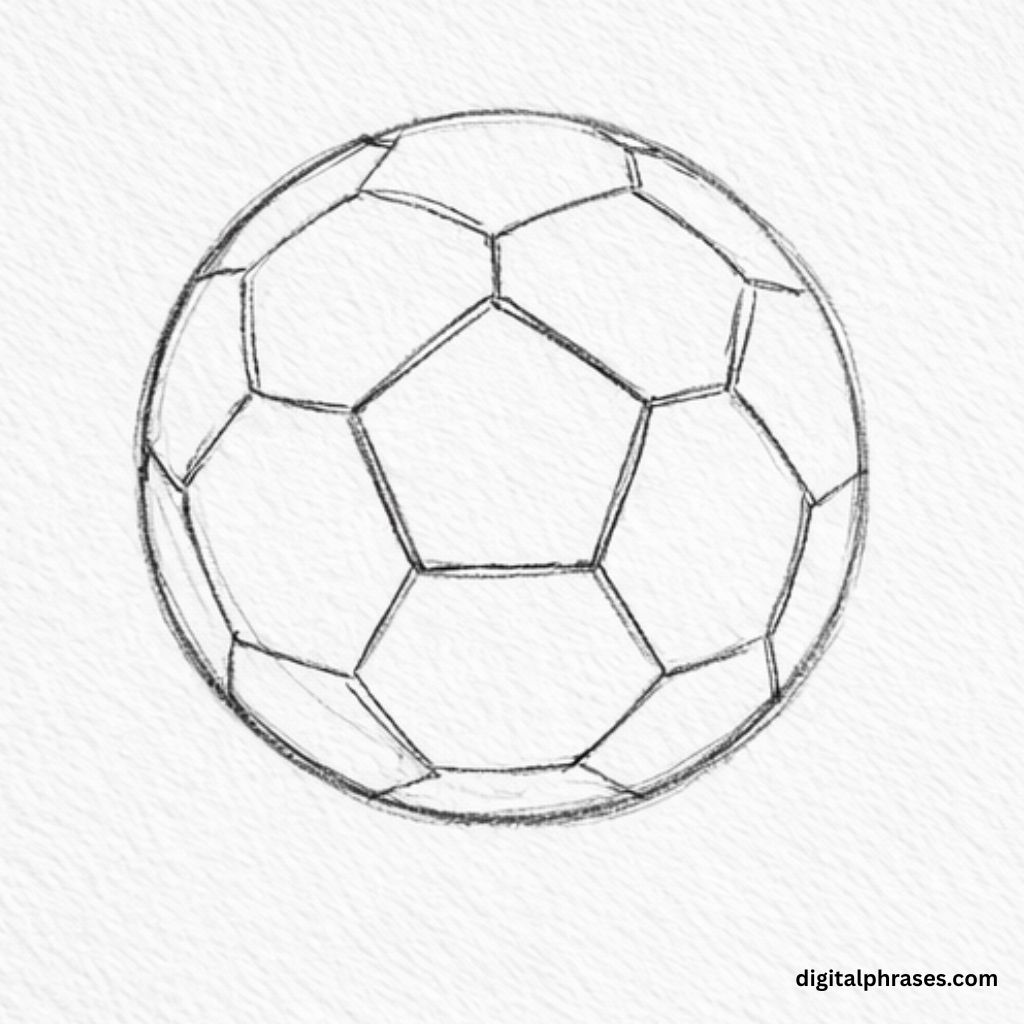
Step 3 – Build the Surrounding Panel Pattern
- Around the center pentagon, begin drawing the connected panels—mostly hexagon-like shapes that wrap around it.
- Add panel edges segment by segment, using the circle boundary and the faint guide lines to keep spacing even.
- Curve the outer panel lines slightly where they approach the edge of the ball to suggest the ball’s round surface.
- Continue adding panels across the top and sides, ensuring that each shape connects cleanly at the corners.
- Keep line weight light while constructing—this stage is about fitting the pattern correctly without harsh outlines.
- Step back occasionally to check symmetry and balance: the pattern should feel evenly distributed rather than clustered on one side.
- Once the pattern is complete, lightly erase or soften any unnecessary guide marks inside the panels.
Step 4 – Shade the Panels and Add a Ground Shadow
- Darken and clean up the final outline of the ball, making the outer circle crisp and confident.
- Fill in the center pentagon with a darker tone (solid shading or dense cross-hatching), matching the reference.
- Shade a few other selected patches (the dark panels around the sides) to create the classic black-and-white soccer ball look.
- Add soft shading on the lighter panels too—especially near edges and overlaps—to give the ball a more 3D, rounded feel.
- Draw a cast shadow beneath the ball as a horizontal, slightly oval dark area, heavier directly under the ball and lighter as it spreads outward.
- Blend the shadow gently with light pencil strokes so it looks grounded rather than a hard outline.
- Erase any leftover construction lines (like the center cross) so only the finished pattern, shading, and shadow remain clean.