How To Draw a Human Heart?
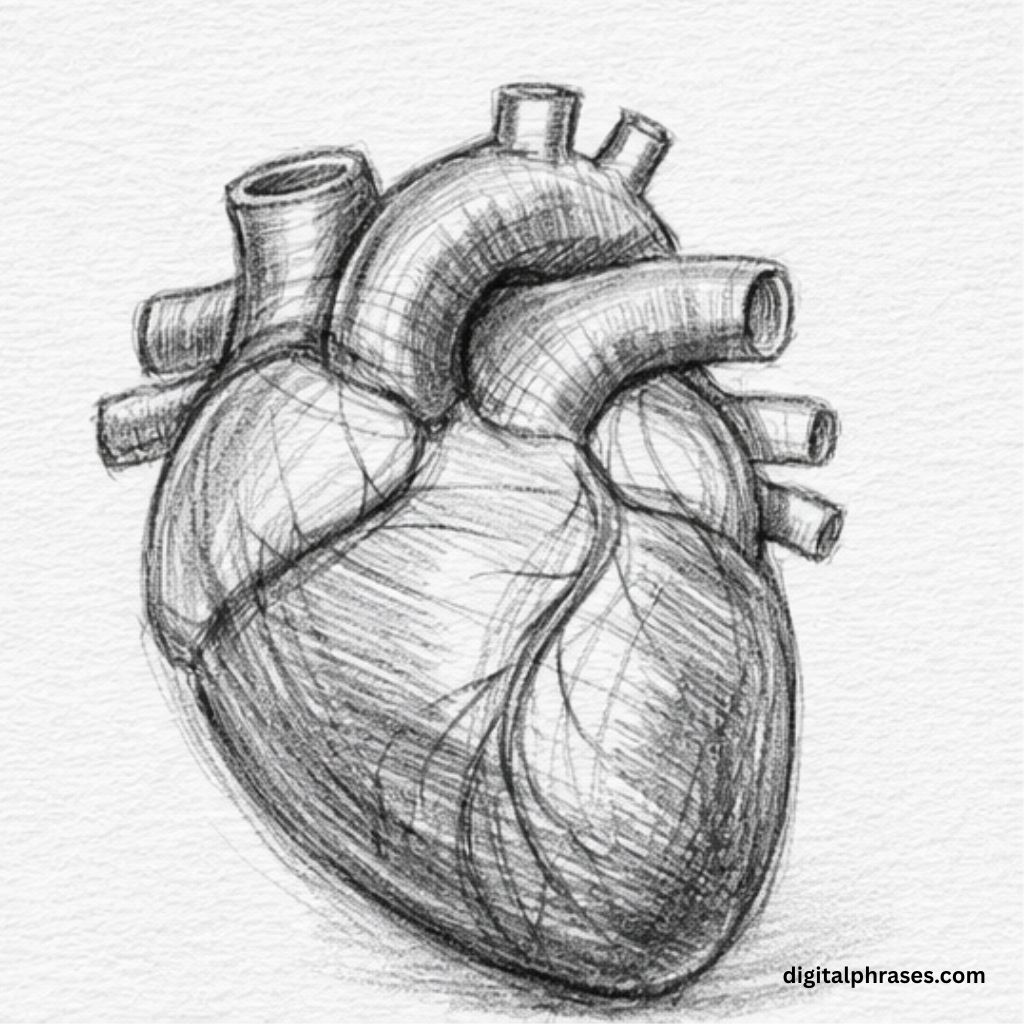
Here’s a human heart.
Step 1 – Sketch the Basic Heart Form and Guidelines
- Start by drawing a tall, slightly tilted oval—this becomes the main overall “mass” of the heart.
- Add a vertical guideline running through the oval to help keep the heart’s halves proportionate.
- Draw a light horizontal guideline across the upper portion of the oval to indicate where the top structures (major vessels) will sit.
- Gently taper the bottom of the oval into a softer point, since the heart narrows toward the lower tip.
- Keep the outline loose and light; this is only a construction shape, not the final contour.
- Check the tilt: in the reference, the oval leans slightly, which helps the heart feel more natural and anatomical.
- Avoid details here—no veins, no tubes yet—just a clean base shape and guide lines that will support everything added later.

Step 2 – Add the Major Vessels and Upper Structures
- Begin drawing the aorta-like arch on the top right area, curving upward and then forward like a thick tube.
- Add a few short cylindrical branches extending from that arch, showing the smaller vessels that split off near the top.
- Sketch a second thick tube rising on the left top side, forming another main vessel opening.
- Lightly block in the upper “cap” area of the heart where these vessels connect, using curved lines that overlap the main oval.
- Start defining the outer heart shape by adding bulges and indentations rather than keeping it perfectly oval.
- Use overlapping lines to show which tubes sit in front and which tuck behind—this layering is what makes the drawing feel 3D.
- Keep everything sketchy and adjustable, since vessel placement may need small corrections before refining.
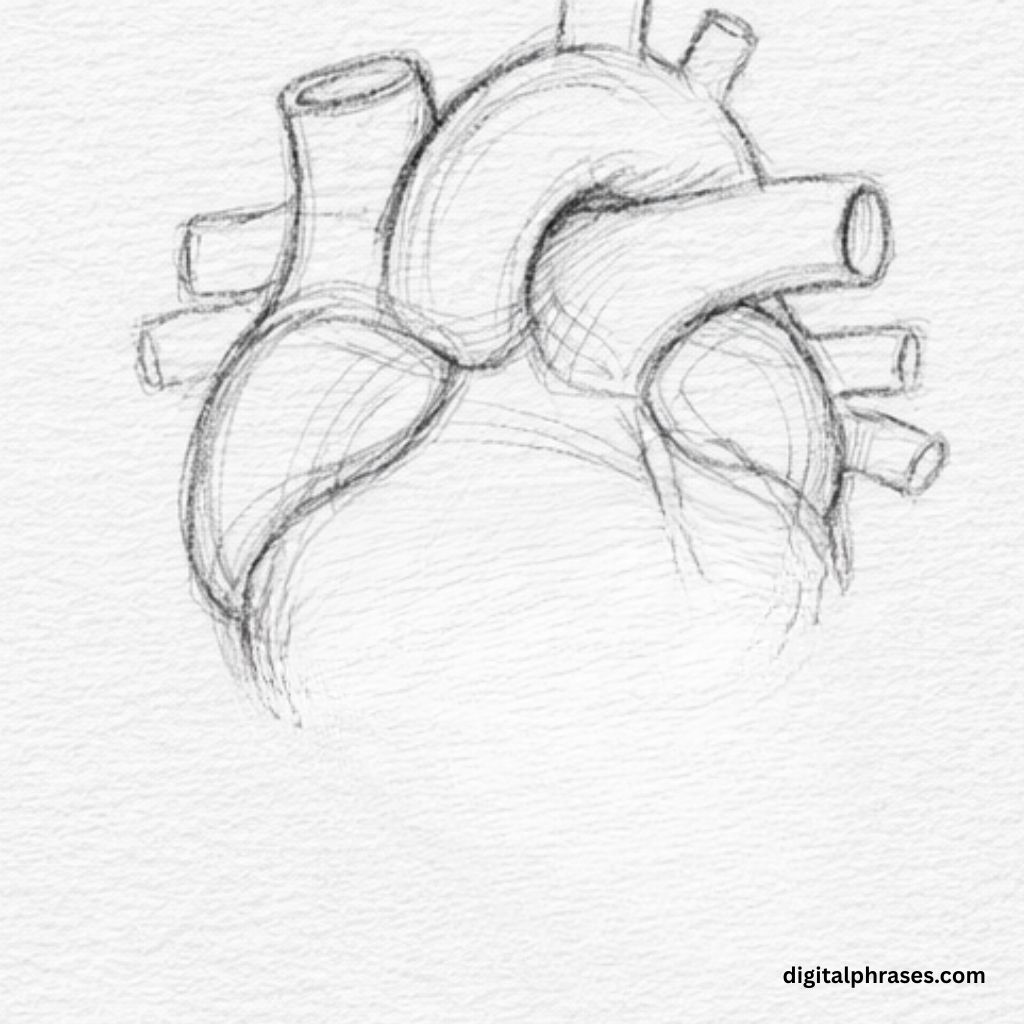
Step 3 – Refine the Heart Outline and Internal Contours
- Strengthen the heart’s main silhouette: round the left side, add a slightly sharper curve on the right, and refine the pointed lower tip.
- Define the separation between major heart sections by adding curving contour lines that run from the top toward the lower portion.
- Smooth the vessels: clean up each tube’s edges, clarify openings, and make the thickness consistent.
- Add subtle folds where vessels connect to the heart, using curved creases rather than straight lines.
- Improve the sense of volume by drawing gentle contour lines that follow the heart’s rounded surface.
- Lightly erase messy construction marks while keeping enough guide lines to maintain the correct proportions.
- At this stage, the drawing should look like a complete heart in line form—clear structure, recognizable anatomy, but still mostly unshaded.

Step 4 – Add Shading, Texture, and Depth for a Finished Look
- Decide on a light direction (the reference suggests light coming from the upper left), then shade the opposite areas darker.
- Use dense cross-hatching along the lower half and right side of the heart to create strong depth and weight.
- Darken the creases and overlaps where vessels sit over the heart, emphasizing shadows in those tucked-in areas.
- Shade inside the vessel openings to make them look hollow and cylindrical.
- Add subtle texture strokes across the heart surface, following the curve of the form so it feels rounded rather than flat.
- Increase contrast gradually: keep highlights lighter and build mid-tones with layered pencil strokes instead of pressing too hard at once.
- Clean the outer contour last, sharpening edges where needed while letting some softer edges remain to match the sketch style.