How To Draw a Sea Horse?
Here are the Steps to Draw a Seahorse Step by Step.
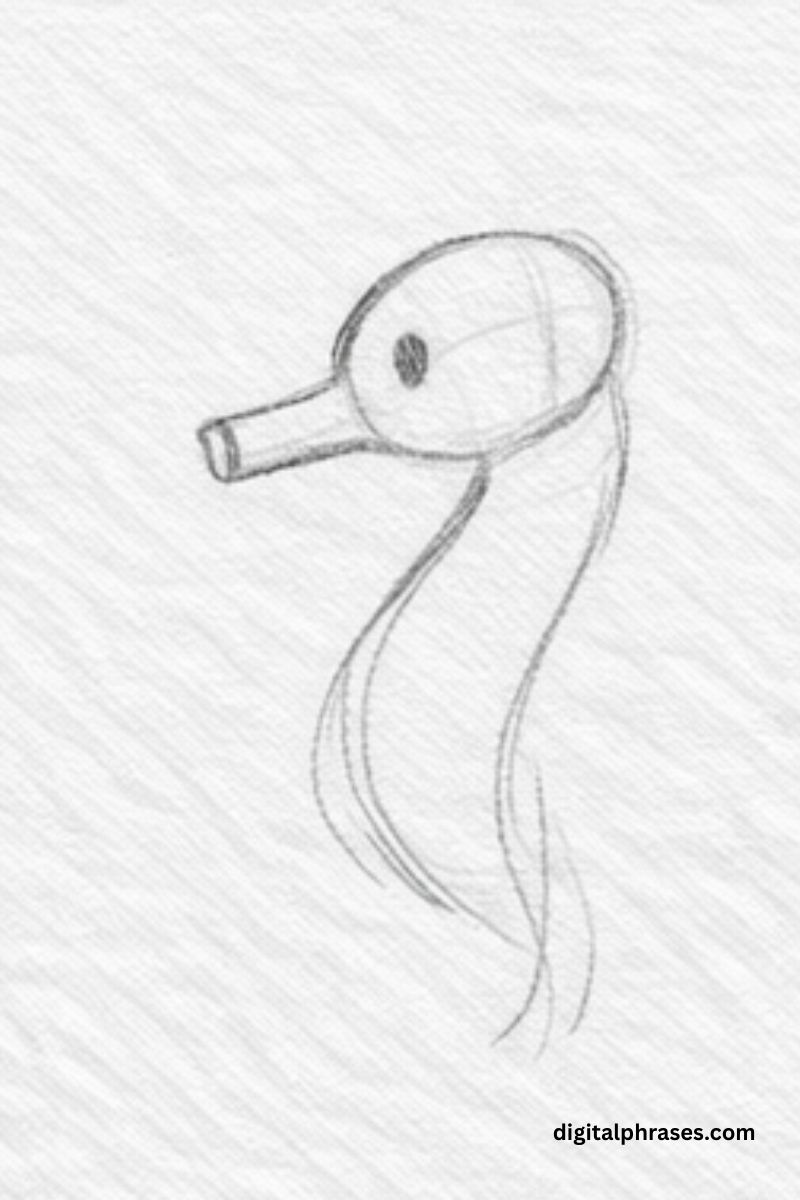
Step 1 – Sketch the Head, Snout, and Flowing Body Line
- Start by drawing a rounded oval for the head, slightly tilted so the seahorse looks like it’s facing sideways.
- Extend a short, straight tube-like snout from the front of the head, keeping it narrow and cylindrical.
- Add a small dark eye dot near the front of the head, leaving a tiny highlight space if you want it to look shiny.
- From the back of the head, draw a long, elegant S-shaped curve downward to form the seahorse’s neck and body flow.
- Suggest the belly line with a second, lighter curve inside the S-shape, giving the body a soft inner edge.
- Keep everything light and sketchy—this step is mainly about capturing the seahorse’s graceful posture and overall gesture.
- Make sure the head feels connected to the curve, not “stuck on,” by slightly rounding the neck area where they meet.
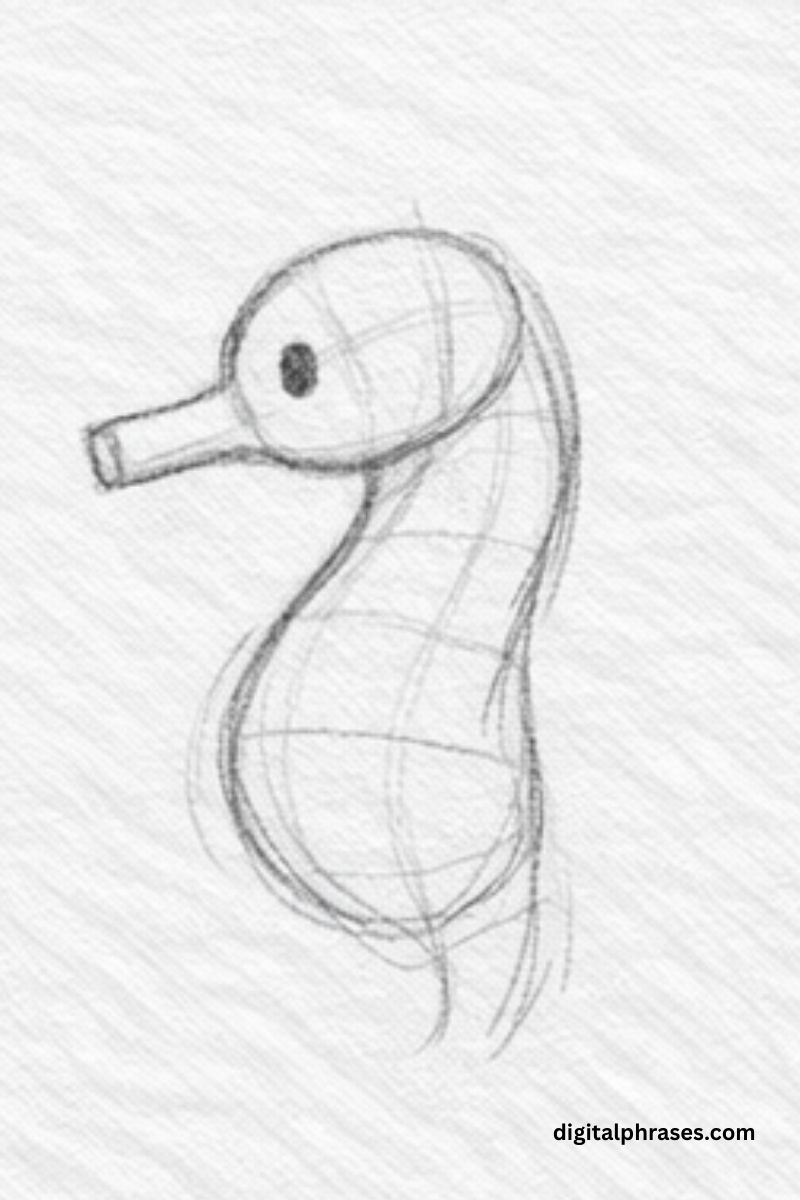
Step 2 – Build the Full Body Shape with Construction Guides
- Thicken the body by drawing an outer contour around the S-shaped spine, creating a rounded torso that bulges slightly in the middle.
- Add a gentle taper as the body goes downward, preparing space for the curled tail later.
- Lightly sketch guideline bands across the body (curved horizontal lines) to show the body wrapping around a 3D form.
- Add a few faint vertical guide lines too, creating a grid that helps place segments evenly.
- Refine the head shape by smoothing the forehead and rounding the back of the skull.
- Keep the snout consistent in width, and slightly round its end so it looks like a small tube.
- Don’t worry about spikes or fins yet—focus on a clean, believable seahorse silhouette with helpful construction lines.
Step 3 – Add Spikes, Fin, and Segment Details
- Along the top of the head and down the back, draw small triangular spikes, spacing them evenly to match the reference.
- Add the side fin near the middle-back area of the body: draw a small fan shape with radiating lines for fin texture.
- Begin defining the seahorse’s segmented armor by strengthening some of the curved grid lines, especially around the belly.
- Refine the torso outline to be slightly more angular in places, since seahorses have bony plates rather than a smooth fish body.
- Start curling the lower body into a tighter curve, hinting at the tail’s spiral shape.
- Darken the eye slightly and add a subtle outline around it so it stands out against the head.
- Lightly erase messy construction marks while keeping enough segment guides to help in the final shading step.

Step 4 – Finalize the Tail Curl, Add Shading, and Draw the Underwater Scene
- Complete the curled tail at the bottom by forming a clear spiral, then add segment rings along it to match the body’s armored texture.
- Darken the seahorse outline and emphasize key edges: the snout, head ridge, belly curve, and the line down the torso.
- Shade the body with layered pencil strokes, making the underside and inner curves darker to create depth and roundness.
- Add extra shading where the spikes meet the back and where the fin attaches, so these features look embedded rather than floating.
- Strengthen the segmented texture by selectively darkening some grid intersections, giving the plates a structured look.
- Draw bubbles around the head area with light circles, varying the size to make them feel natural.
- Add sea plants and simple seabed texture near the bottom using loose, leafy strokes and soft shading for the ground.
- Finish by balancing contrast: keep highlights on the upper body lighter and deepen shadows near the belly and tail curl for a polished, complete drawing.