How To Draw a Human Hand?
Here are the steps.
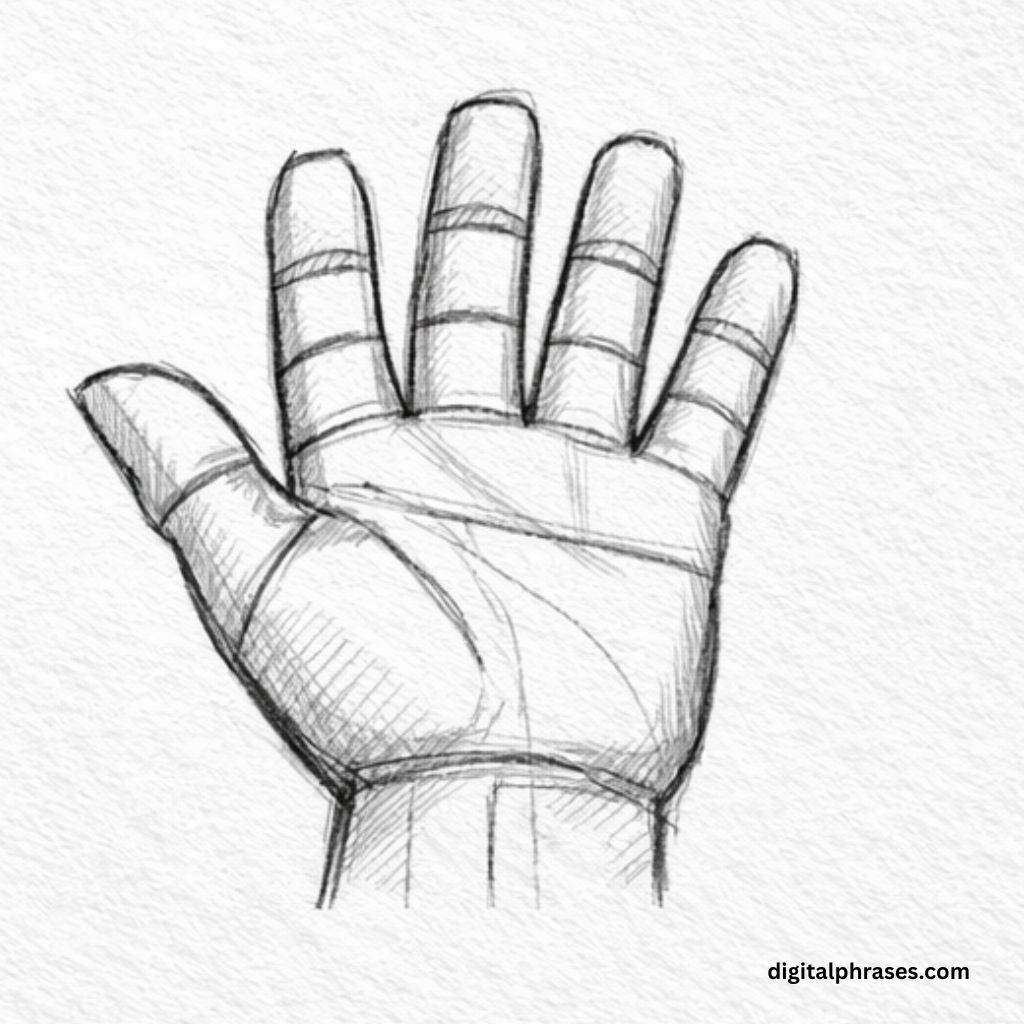
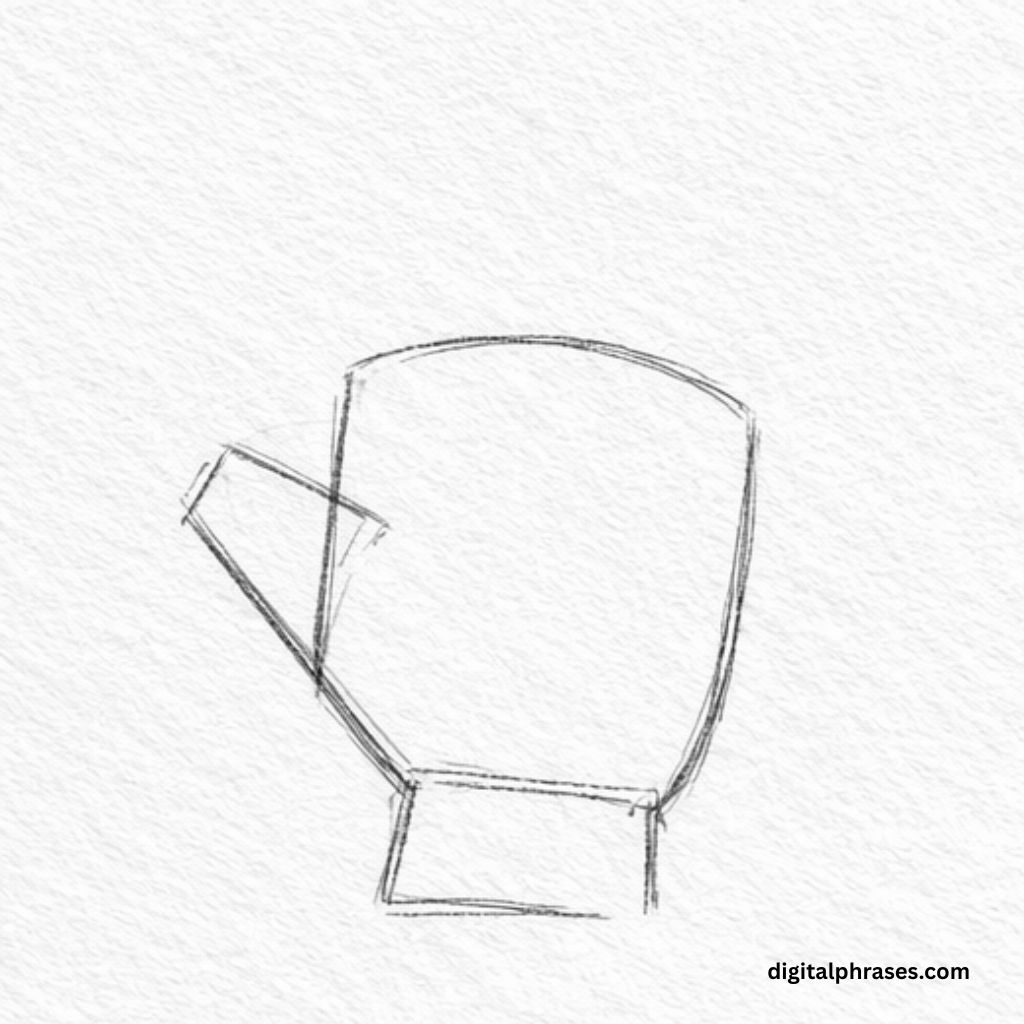
Step 1 – Block In the Palm, Thumb, and Wrist Shapes
- Start with a tall, slightly curved box-like shape for the palm, leaning a little to match the hand’s angle in the reference.
- Add a smaller angled block on the left side to represent the thumb base, keeping it attached to the palm shape.
- Sketch a short rectangular wrist cuff under the palm, wider than the bottom of the hand so it looks supportive.
- Keep the top of the palm slightly rounded rather than perfectly flat, since fingers will emerge from a curved knuckle line.
- Use light, loose strokes and focus on proportion: the palm should be the largest central form, and the thumb block should be shorter and set lower than where the fingers will start.
- Make sure the wrist sits centered beneath the palm so the hand doesn’t feel off-balance.
- Avoid any finger details in this step—this stage is only about simple forms that establish the hand’s structure.
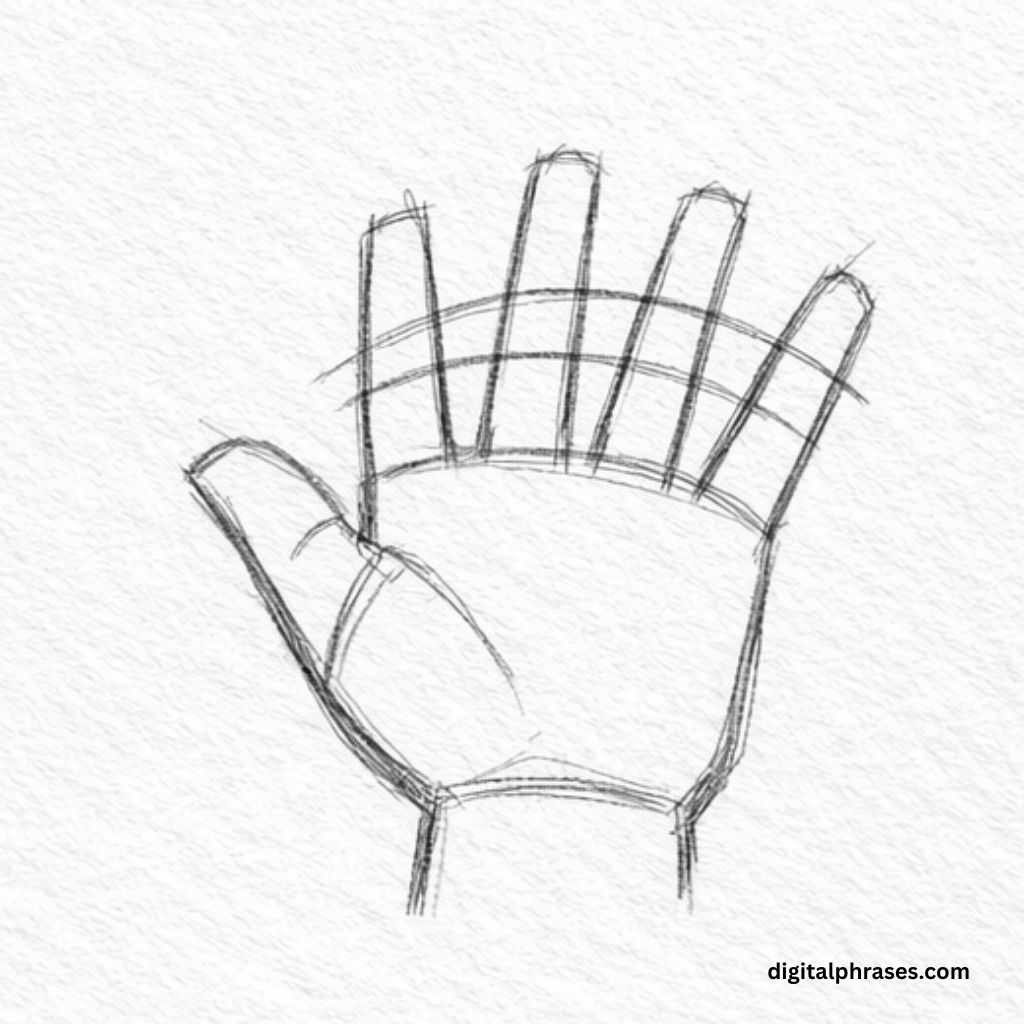
Step 2 – Add Finger Columns and Basic Thumb Form
- From the top of the palm, draw five long finger columns (simple rectangular tubes), spacing them evenly across the top edge.
- Make the middle finger the tallest, with the index and ring slightly shorter, and the pinky the shortest.
- Lightly curve the line where the fingers meet the palm to suggest the natural knuckle arc.
- Refine the thumb by rounding it into a more organic form and adding a curved inner edge where it meets the palm.
- Sketch a large oval/rounded shape at the base of the thumb to show the thumb pad area.
- Add light guide lines across the fingers to mark where the joints will be (these will become the finger segments).
- Keep everything sketchy and adjustable; this step is about placing finger length, spacing, and overall gesture correctly.
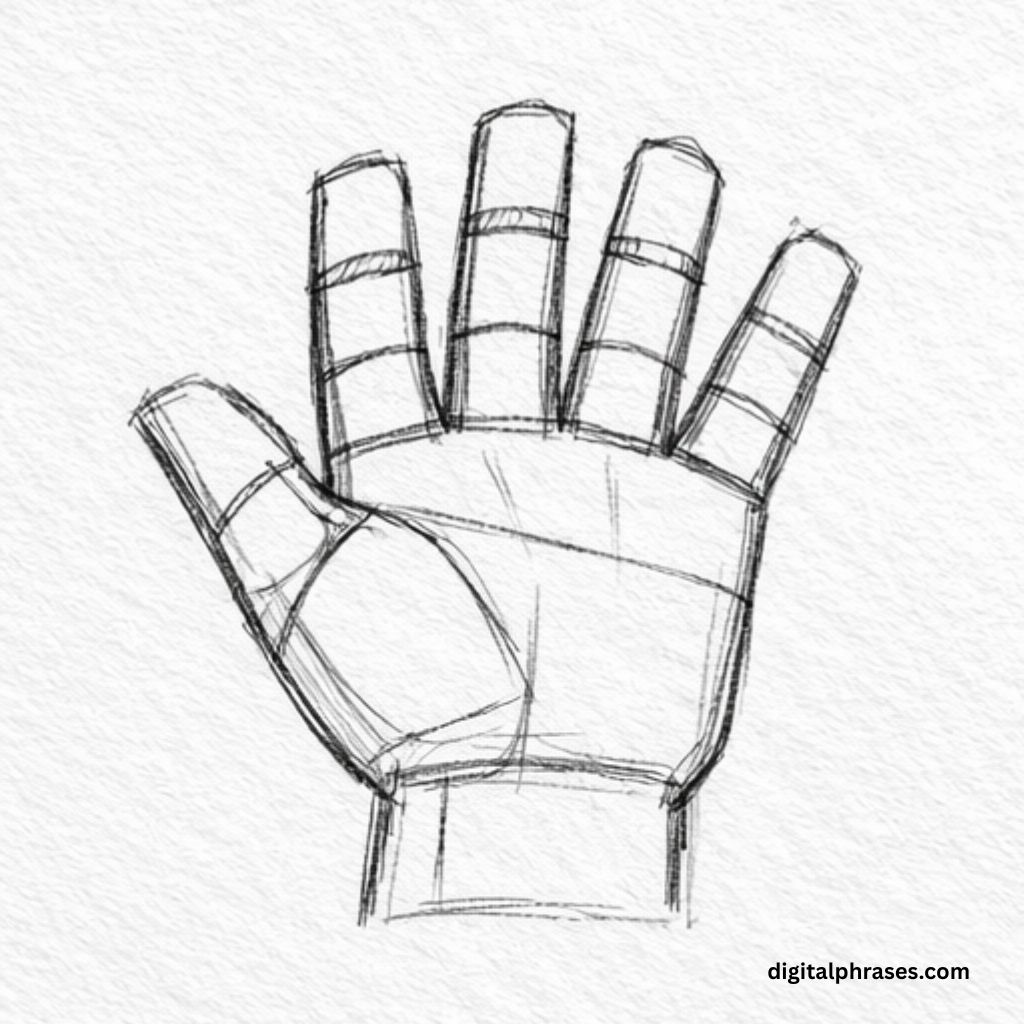
Step 3 – Define Finger Segments, Palm Planes, and Creases
- Divide each finger into clear segments using the joint guides: top segment (tip), middle segment, and lower segment near the palm.
- Slightly taper the fingers so they are thicker near the palm and narrower toward the tips.
- Round the ends of the fingers to avoid a stiff “blocky” look, while still keeping the basic structure.
- Refine the palm by adding a gentle curve along the outer edge and clarifying where the thumb connects.
- Start drawing the main palm crease lines, especially the large curve that arcs from the thumb pad toward the center of the palm.
- Sharpen the wrist connection by adding a slightly curved band where the palm meets the wrist, giving it a more anatomical transition.
- Clean up overlapping construction lines so the hand shape becomes readable: clear silhouette, clear finger spacing, and believable joints.
Step 4 – Refine the Outline and Add Shading for Form
- Darken the final outer contour of the hand, keeping edges smooth and confident while preserving natural curves.
- Add subtle shape changes around joints and knuckles so each finger feels rounded instead of like a flat tube.
- Shade the thumb pad and the side of the palm with soft cross-hatching to show volume and a light source.
- Add light shading between fingers and under the finger bases to create depth and separation.
- Strengthen the palm creases with slightly darker lines, but keep them organic and not overly harsh.
- Shade the wrist area lightly to show it turning away from the light, and blend into the palm so it looks connected.
- Finish by erasing leftover guide marks and balancing contrast: darker in creases and overlaps, lighter on the top planes of the fingers and palm for a clean, finished hand drawing.