How To Draw a Skeleton Hand?
Here’s a step by step process on how to draw a skeleton hand.
Step 1 – Block In the Hand Shape and Wrist Base
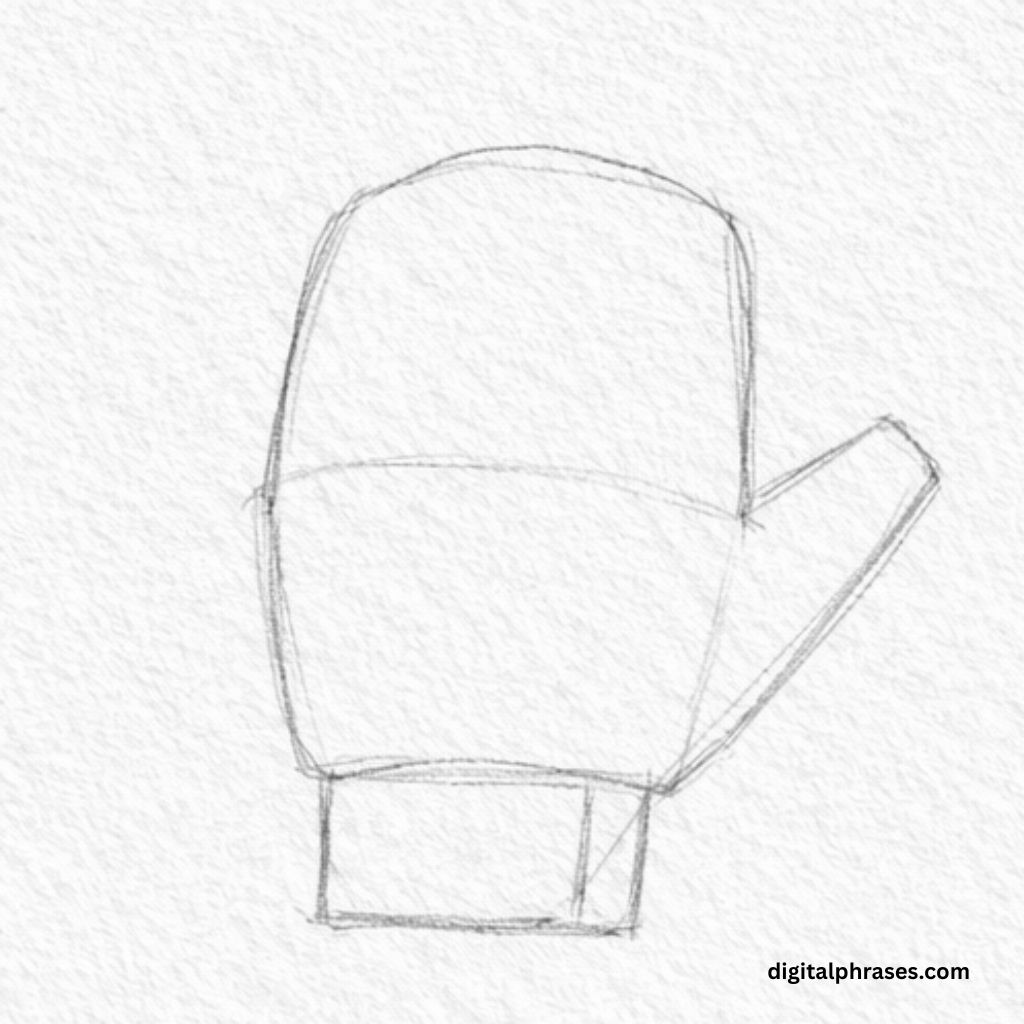
- Start by drawing a large, rounded palm “mitt” shape—a simple, curved rectangle that will act as the overall boundary of the hand.
- Add a light horizontal guideline across the palm shape to help place the knuckle area evenly.
- Sketch a short rectangular wrist block beneath the palm, slightly wider than the bottom edge to suggest the forearm connection.
- On the right side of the palm, draw a long angled wedge to mark the thumb direction and overall hand tilt.
- Keep all lines faint and loose; this is only the construction frame that helps you position the bones correctly later.
- Make sure the palm shape is large enough to fit the knuckle bones (the clustered shapes you’ll draw in the next steps).
- Check the overall gesture: the hand should look like it’s splayed open, with fingers spreading outward from the wrist.
Step 2 – Draw the Finger Bone Layout and Knuckle Cluster
- Replace the simple mitten idea with the skeletal structure by drawing five long finger bone columns (phalanges) extending upward and outward.
- Build each finger using small, straight segments with slight bends, showing where the joints will be.
- At the base of the fingers, draw a cluster of rounded, pebble-like shapes to represent the knuckle/wrist bones (carpals).
- Use circles and ovals that touch each other, forming a compact group at the bottom of the hand.
- Keep finger lengths realistic: the middle finger should be longest, index and ring slightly shorter, and pinky the shortest.
- Angle the thumb outward from the side, making it shorter and thicker than the other fingers.
- Don’t shade yet—focus on correct placement and spacing so the hand looks balanced and bone-like.
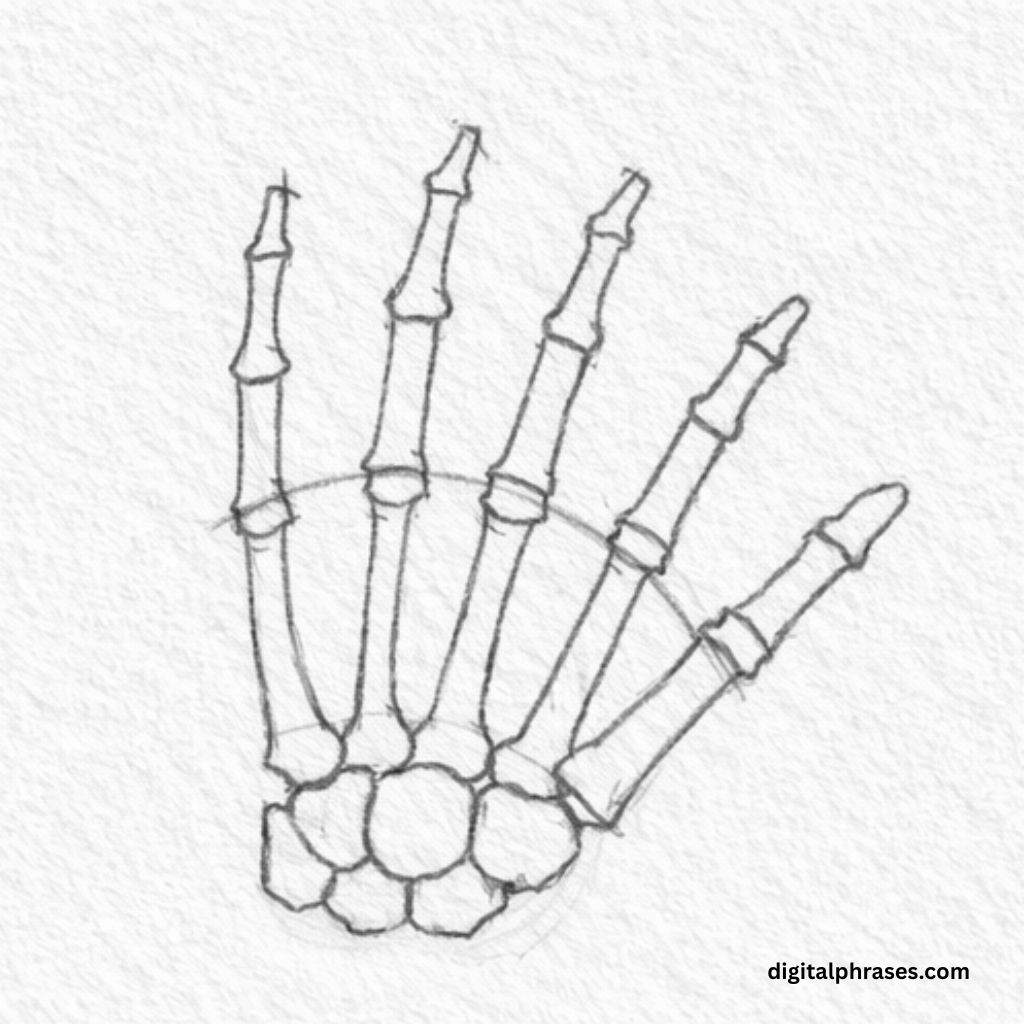
Step 3 – Define Each Bone, Add Joint Shapes, and Clean the Outline
- Thicken the finger segments into more realistic bone forms by widening them slightly near joints and narrowing in the middle.
- Draw clear joint breaks between segments, using small gaps or slight bulges to show where one bone ends and the next begins.
- Refine the fingertips into sharper, tapered ends, matching the bony, pointed look in the reference.
- Clean up the knuckle/wrist bone cluster by darkening the outlines and making the individual rounded bones distinct.
- Add subtle contour lines on the larger finger bones to show their cylindrical volume.
- Improve the thumb bones: make the segments a bit chunkier and angled differently than the fingers, since the thumb rotates outward.
- Erase leftover construction lines from Step 1 so the skeleton hand reads clearly as bones rather than a glove outline.
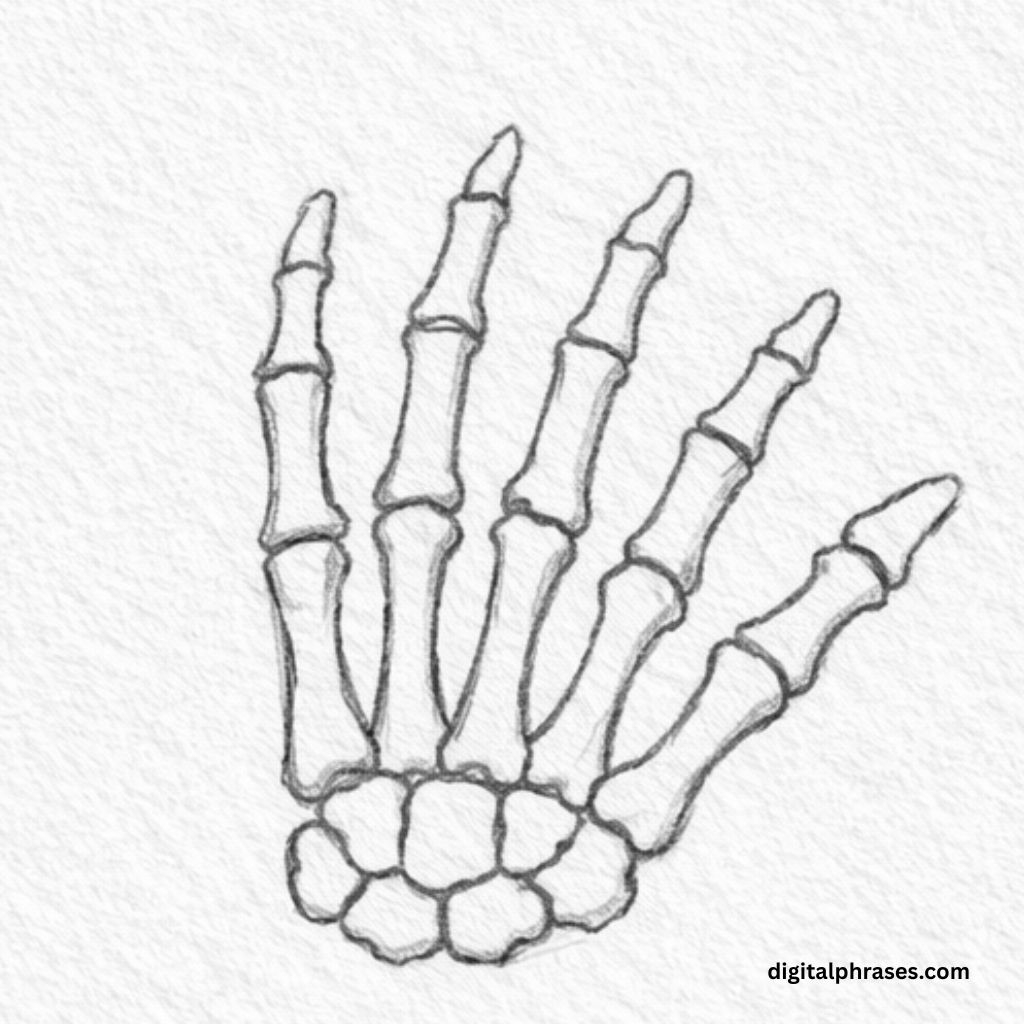
Step 4 – Add Shading, Depth, and Strong Contrast for a Finished Look
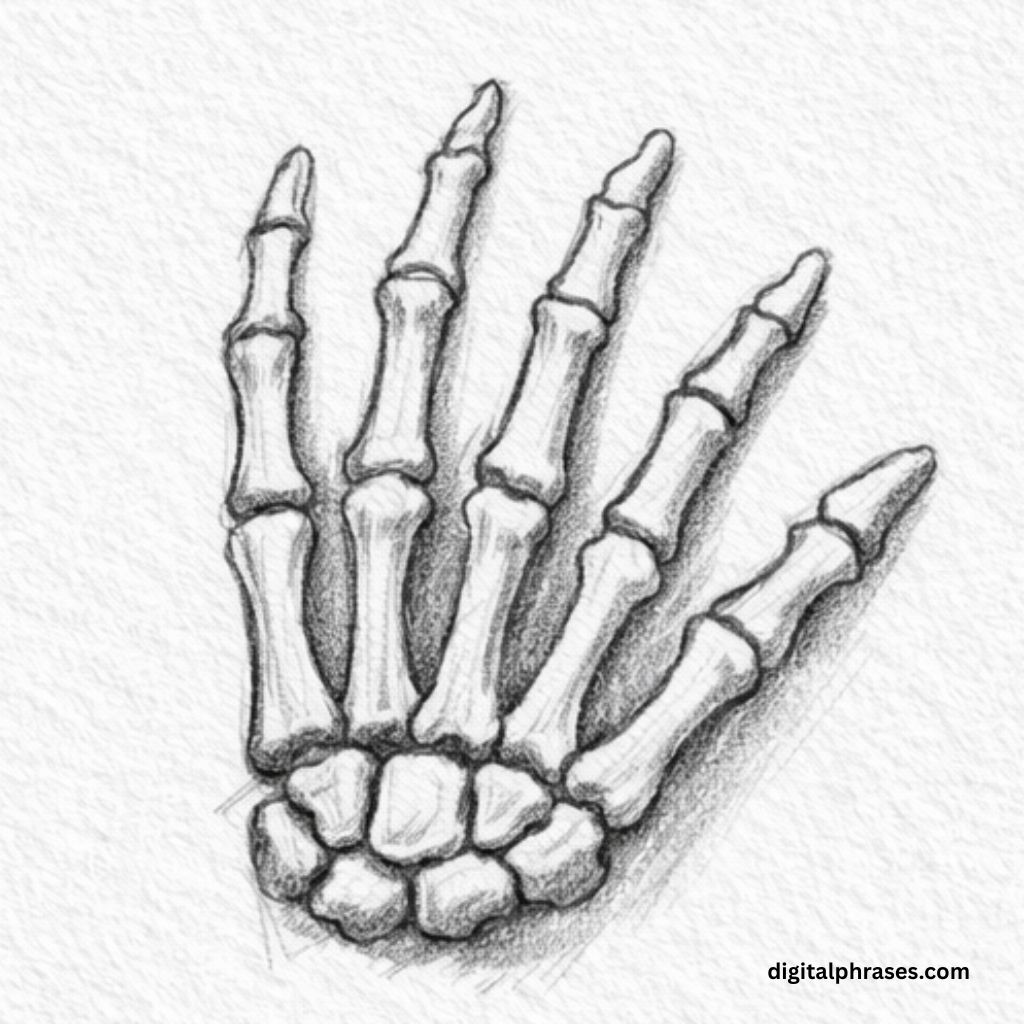
- Darken the outlines of the bones, especially where bones overlap or sit closer to the viewer, to create depth.
- Shade along one side of each finger bone to show roundness, using cross-hatching that follows the bone’s length.
- Deepen the shadows in the joint gaps and between the knuckle bones so the structure looks layered and three-dimensional.
- Add heavier shading beneath the hand (near the wrist cluster) to suggest a cast shadow, grounding it on the page.
- Emphasize highlights by leaving lighter areas on the top surfaces of bones, making them look hard and slightly polished.
- Blend shading lightly around the edges of the knuckle cluster to give it a solid, compact mass.
- Finish by tidying the silhouette, erasing stray sketch lines, and balancing contrast so the skeleton hand looks crisp, dramatic, and complete.