22 Carrot Drawing Ideas
At first glance, carrots seem simple. They’re familiar, cheerful, and totally unpretentious. But that’s where the magic is.
A carrot can be cute or elegant, realistic or wildly imaginative. It can star in a children’s sketchbook, a cozy food illustration, a whimsical character design, or even a polished still-life drawing.
One humble vegetable, endless possibilities.
How many?
You can find out below.
Carrot Drawing Ideas
1
2
3
4
5
6
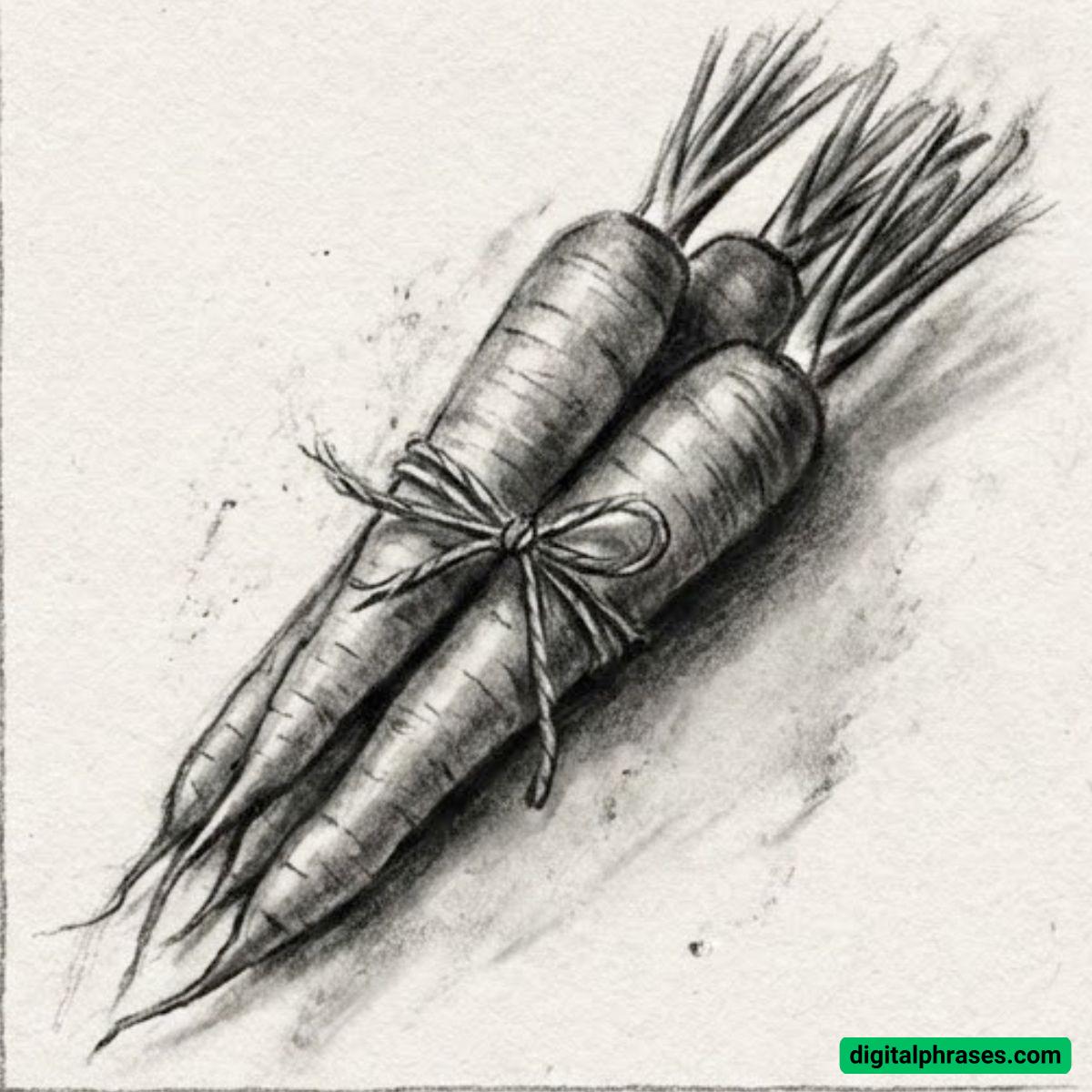
7
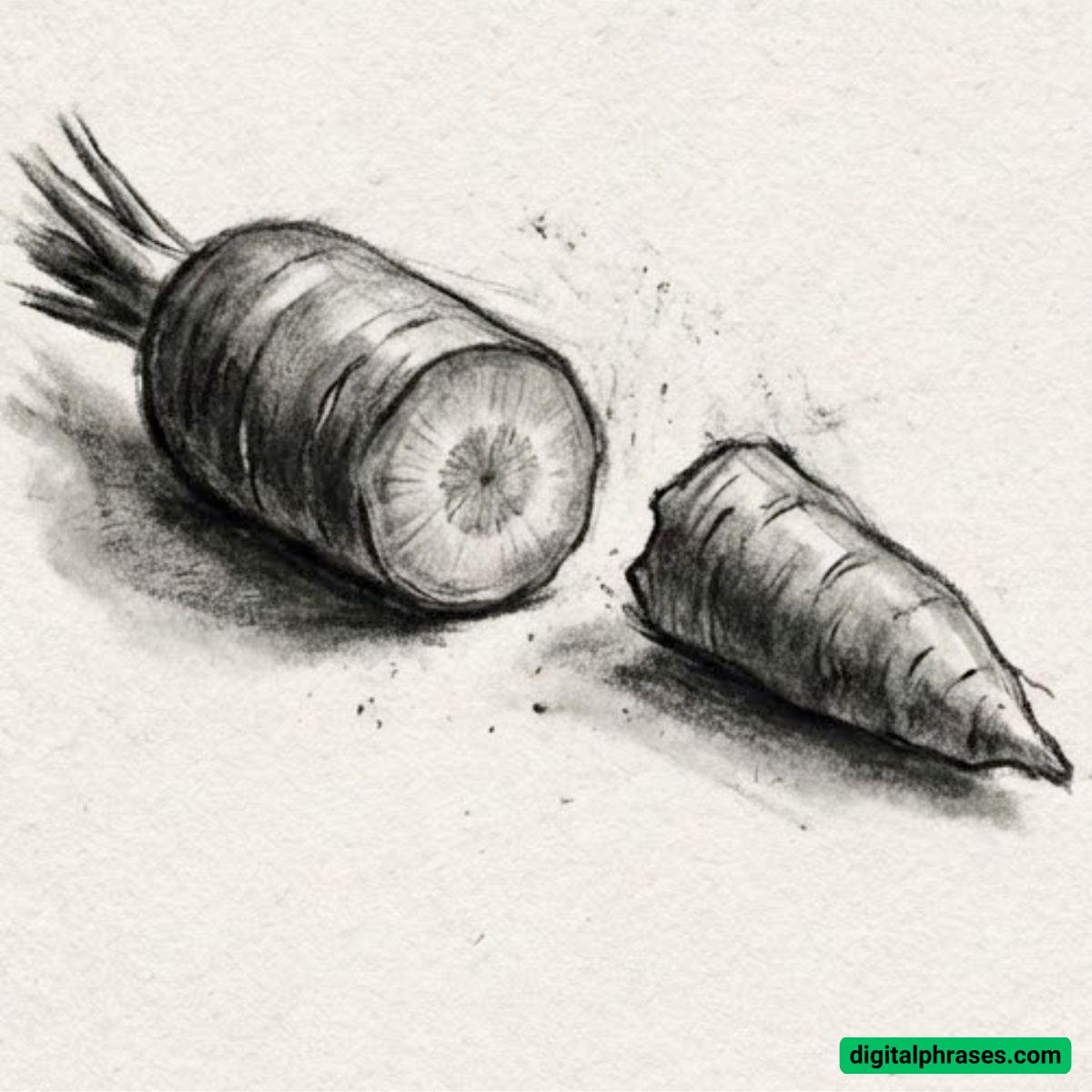
8

9
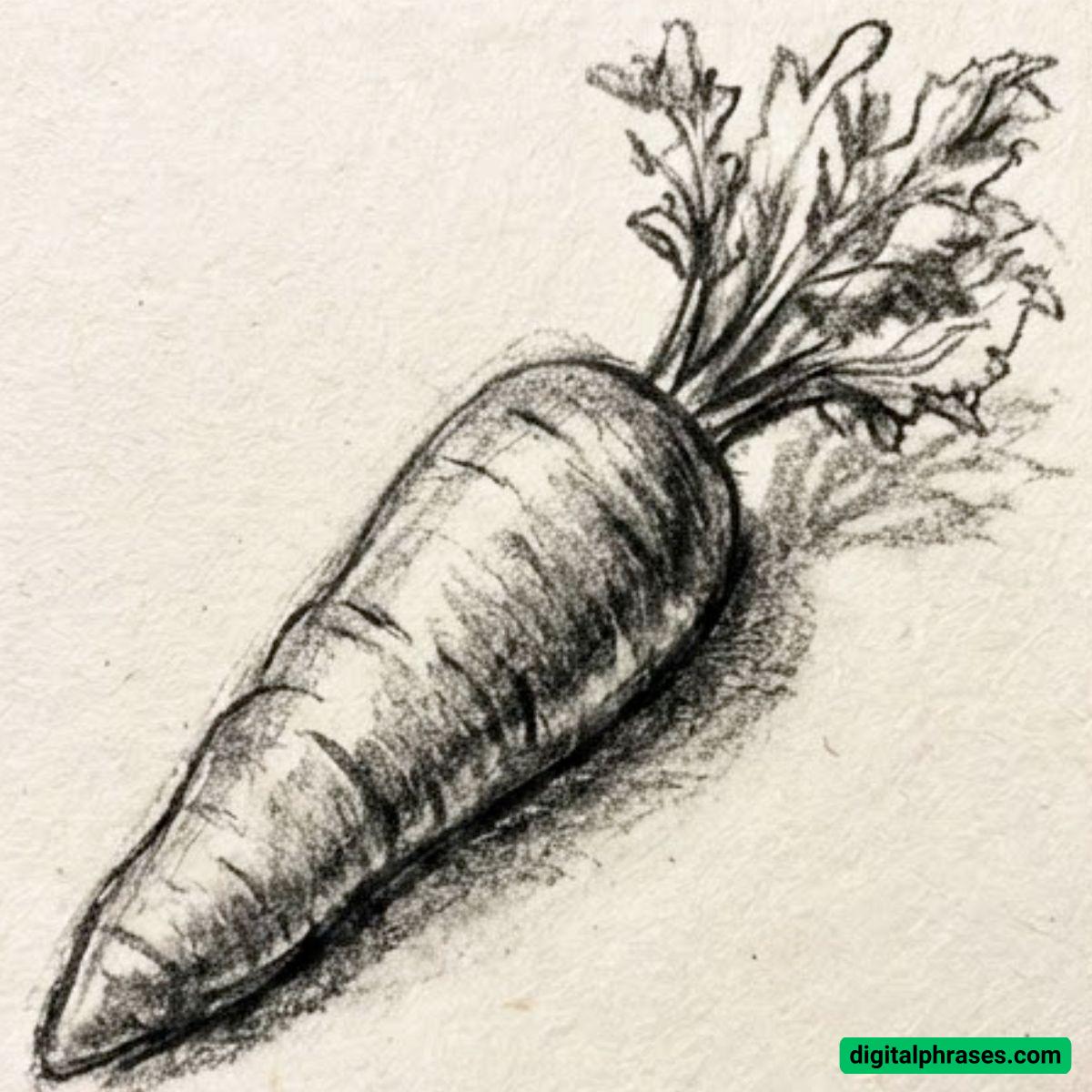
10
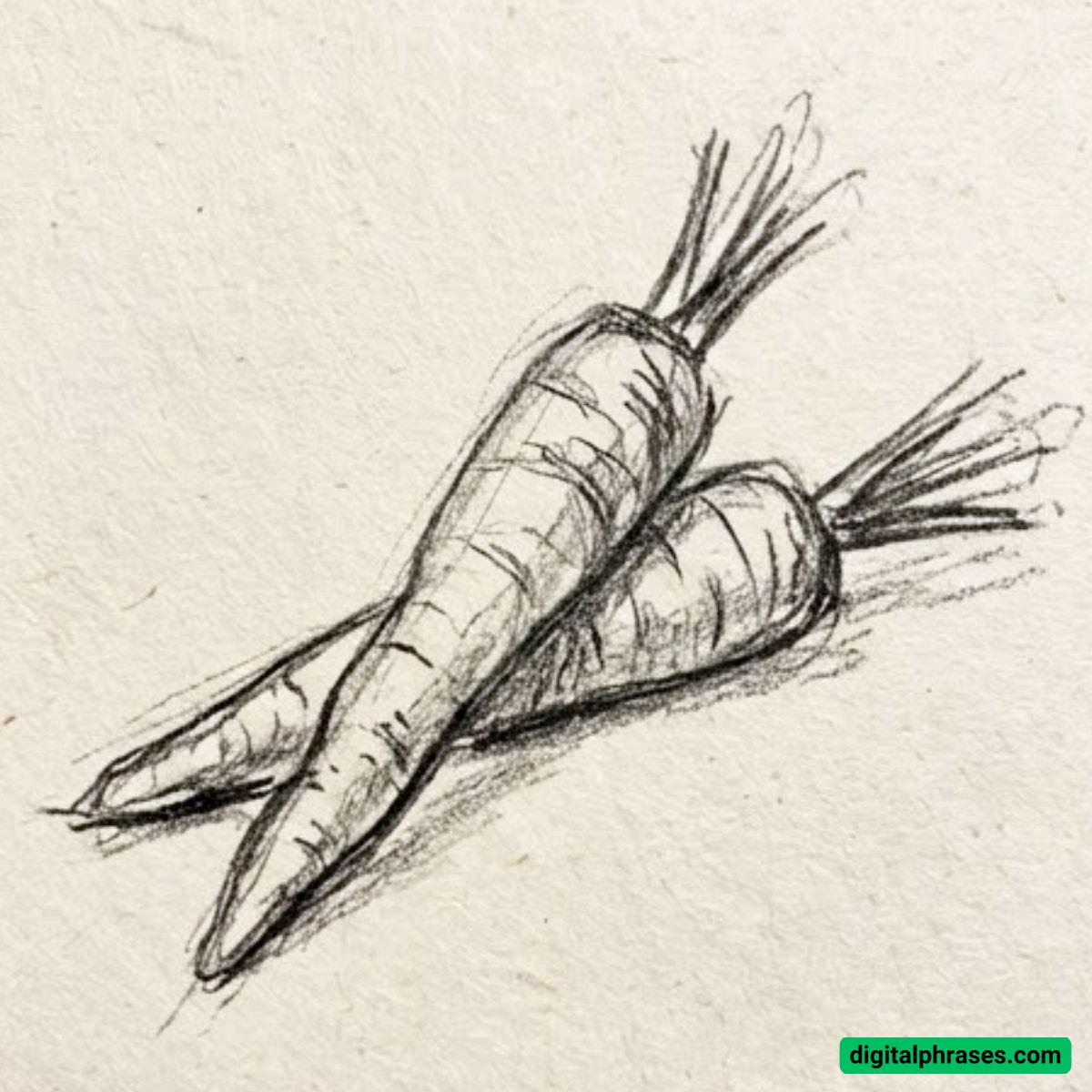
11
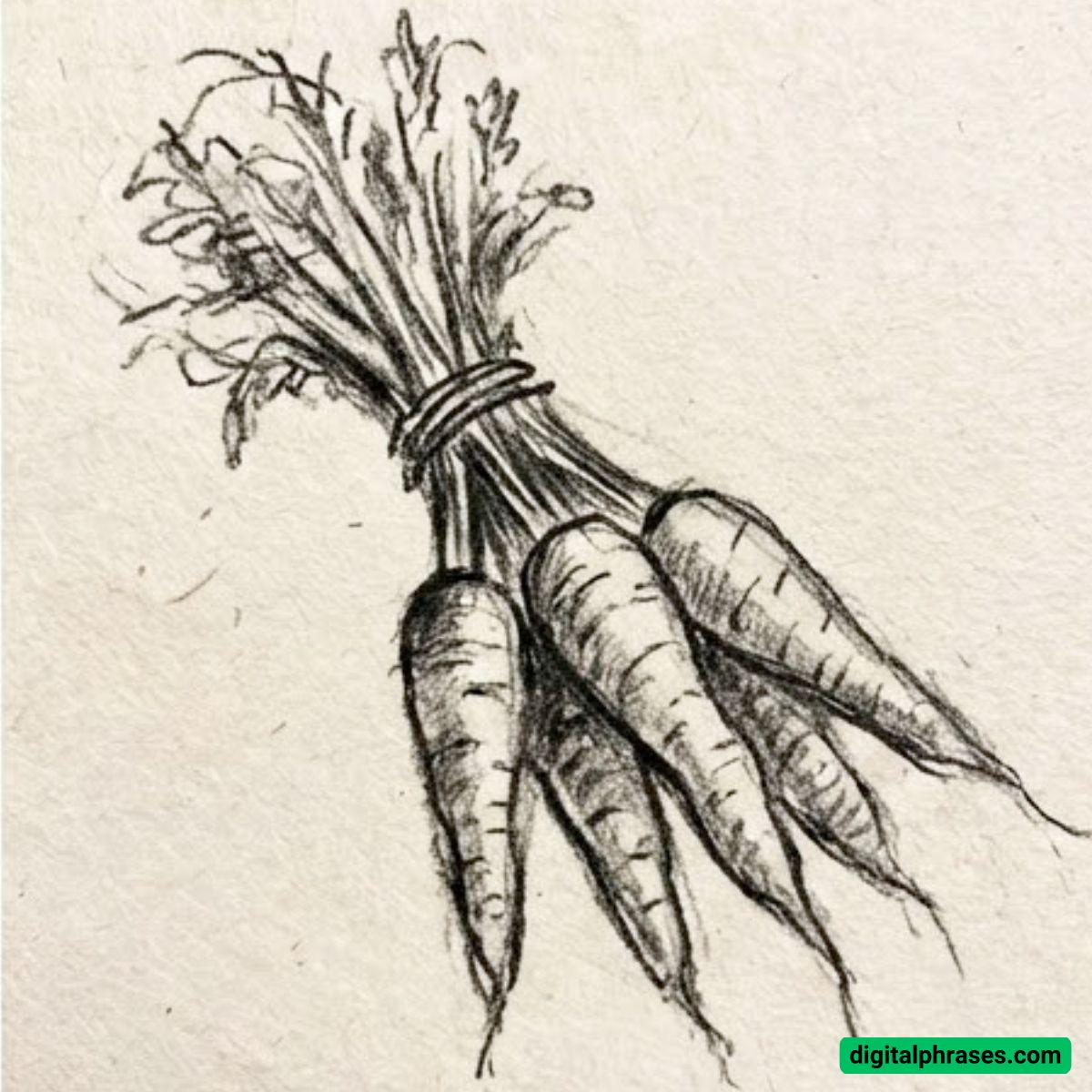
12
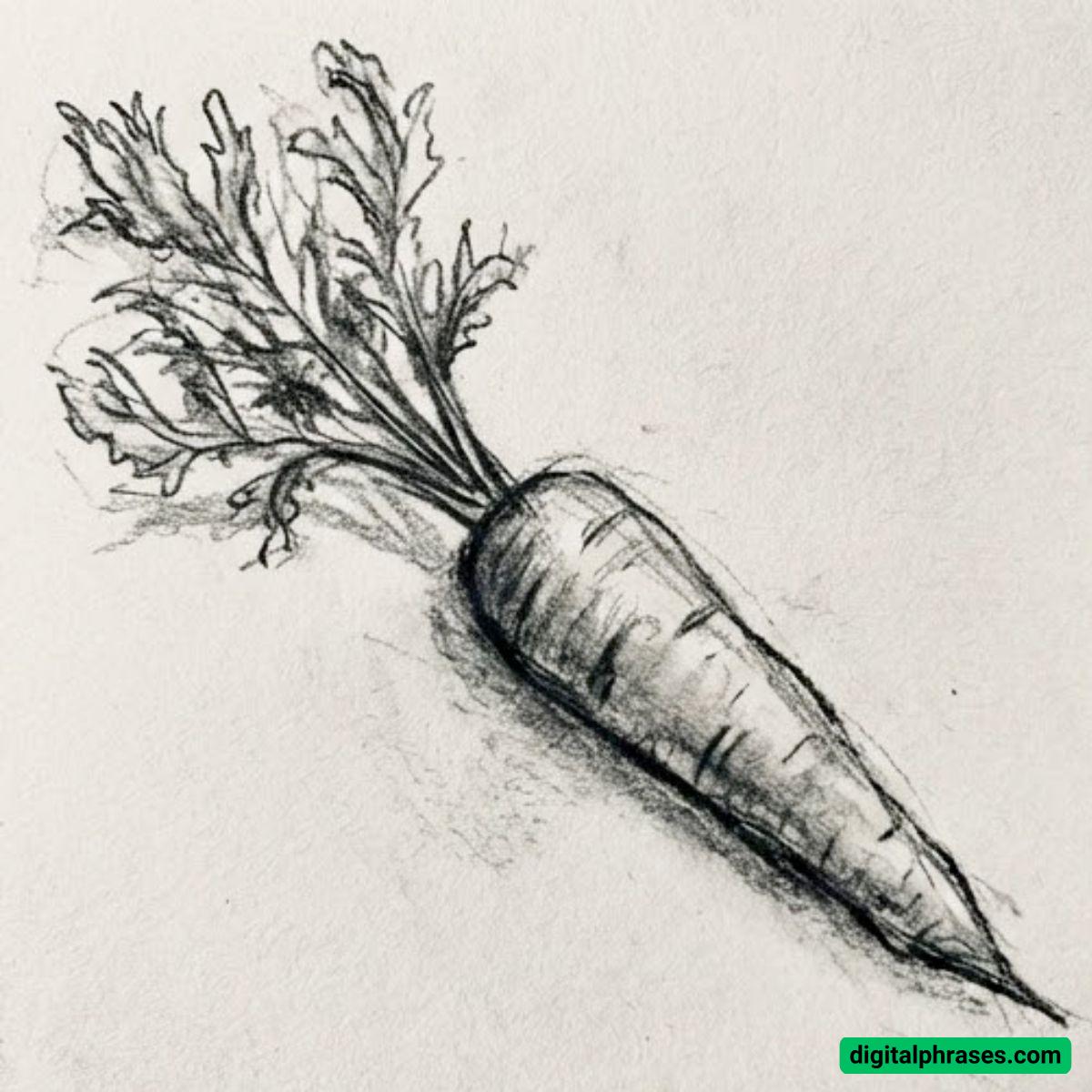
13
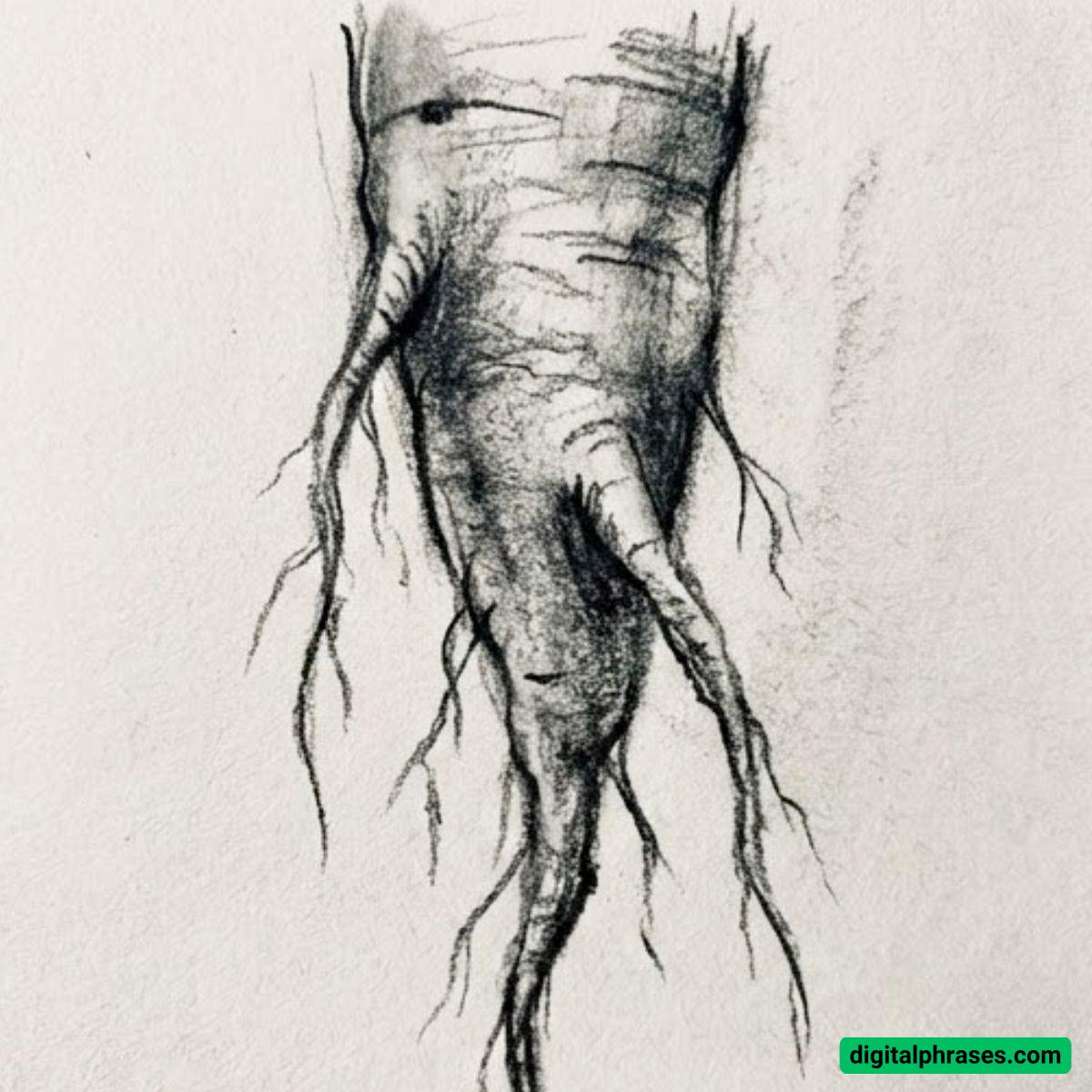
14
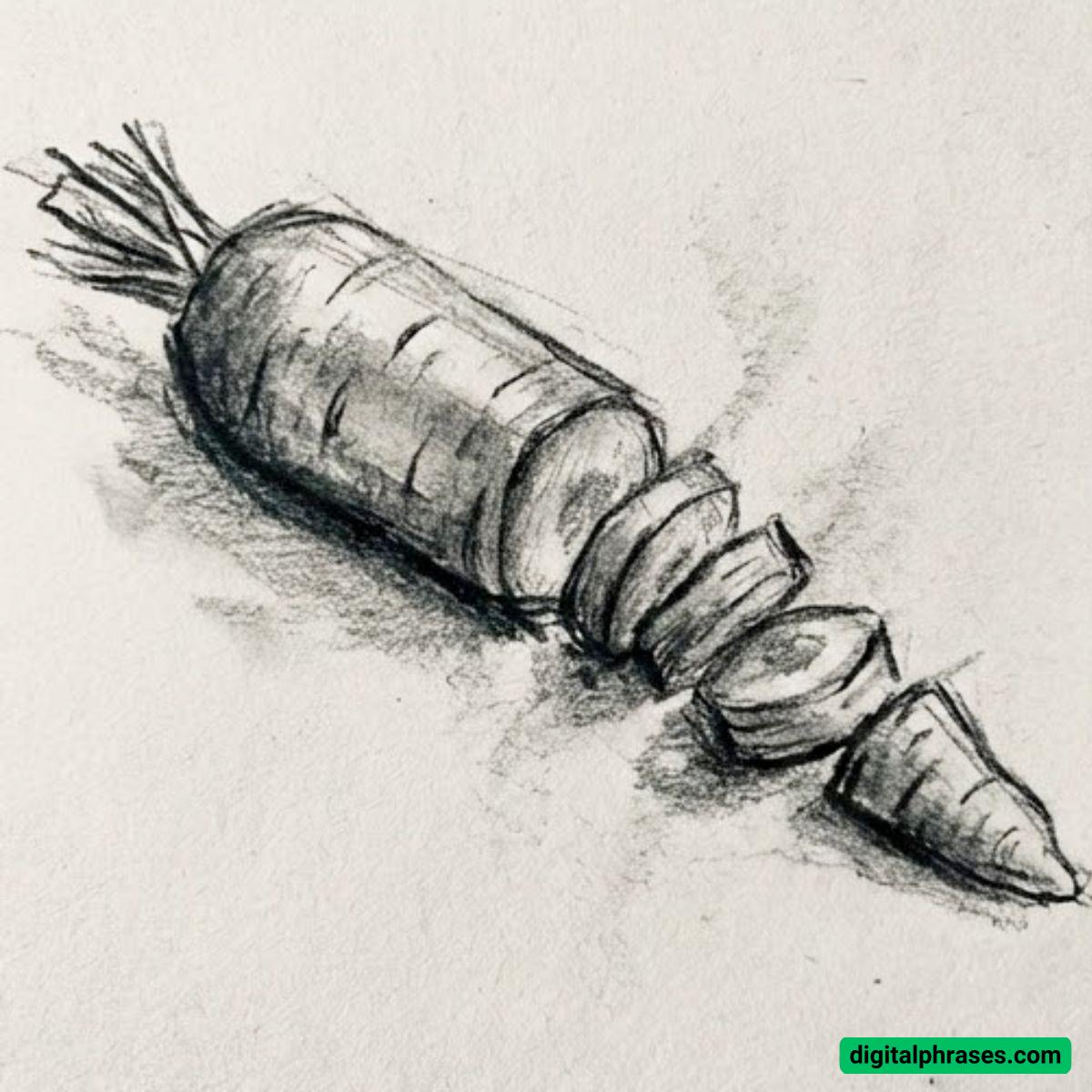
15
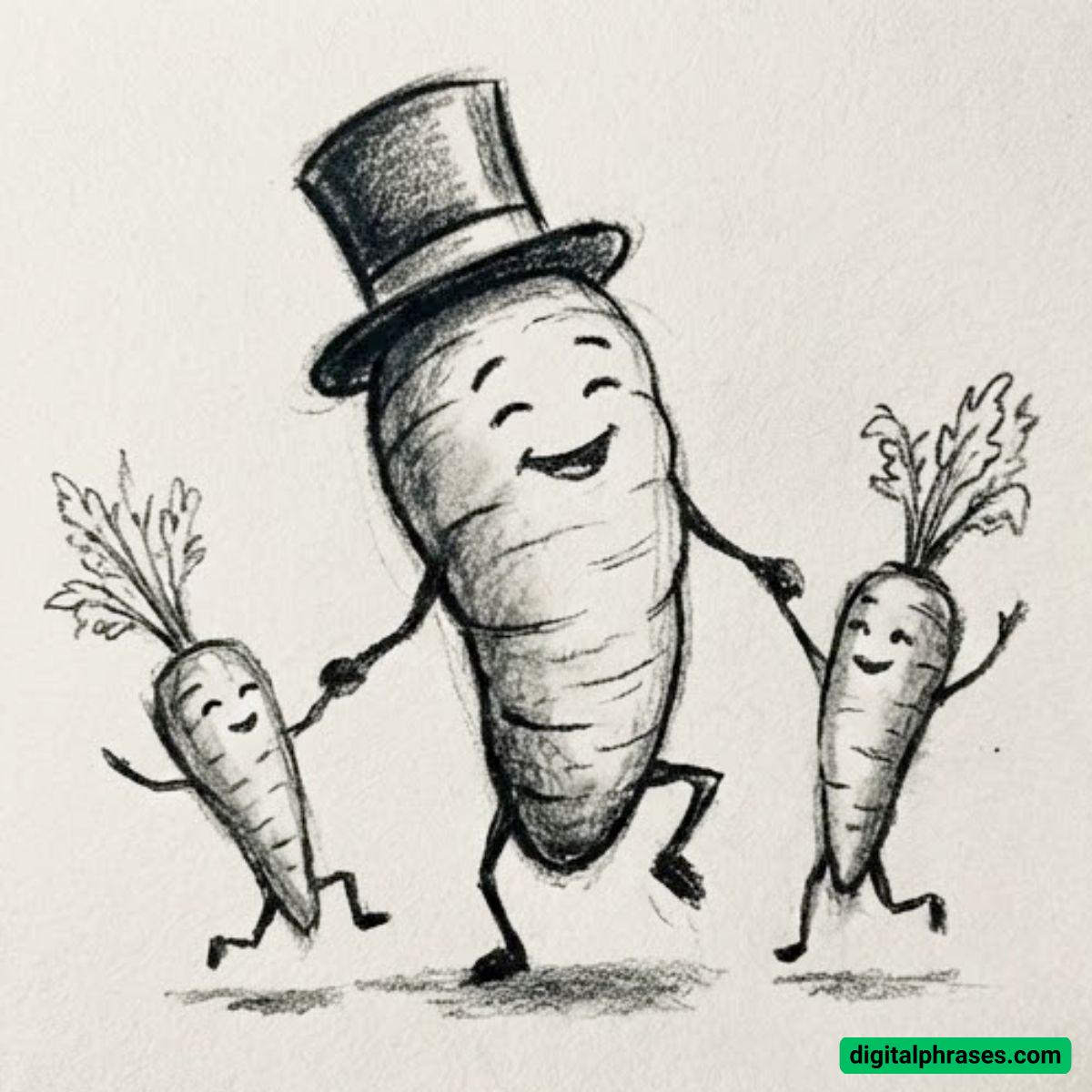
16
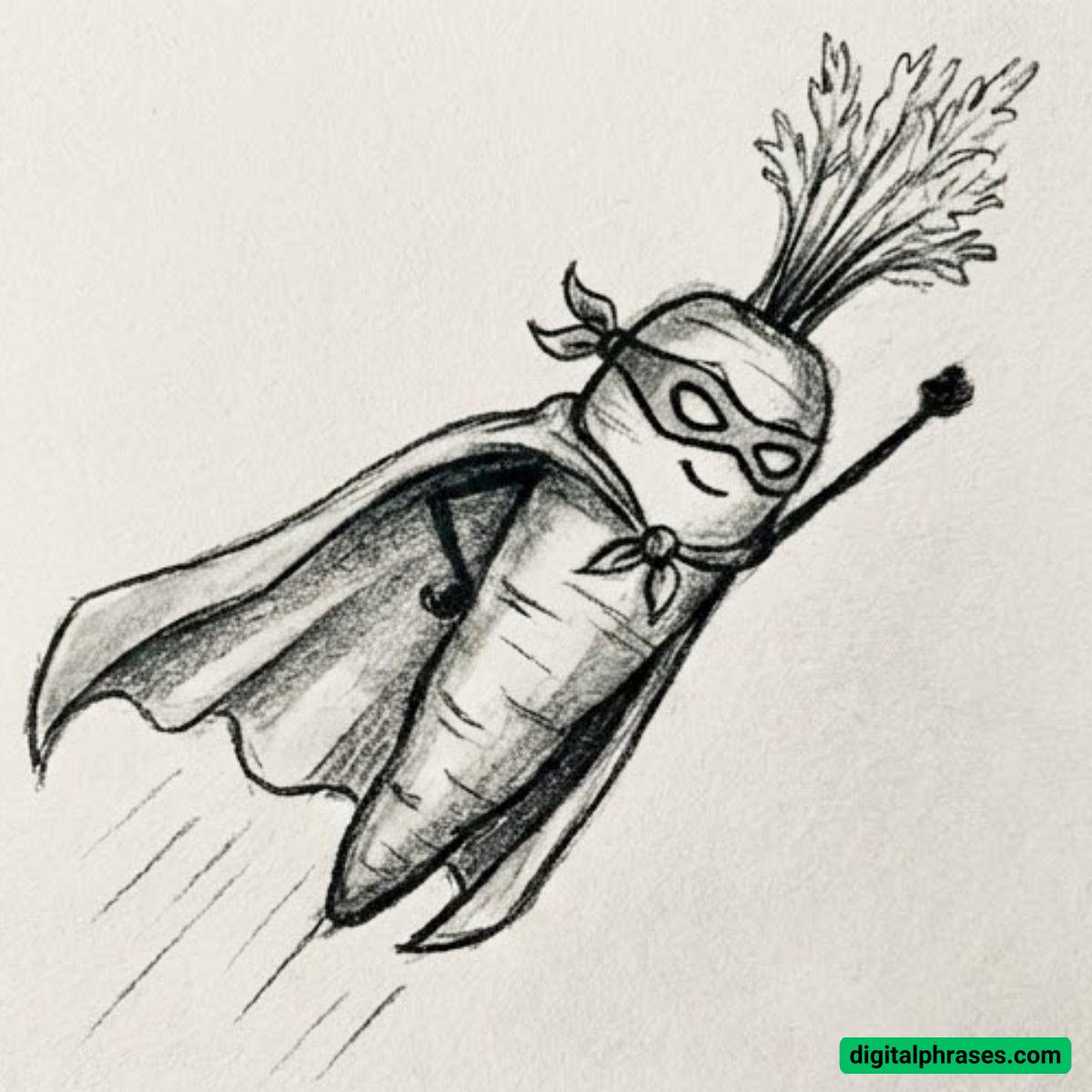
17
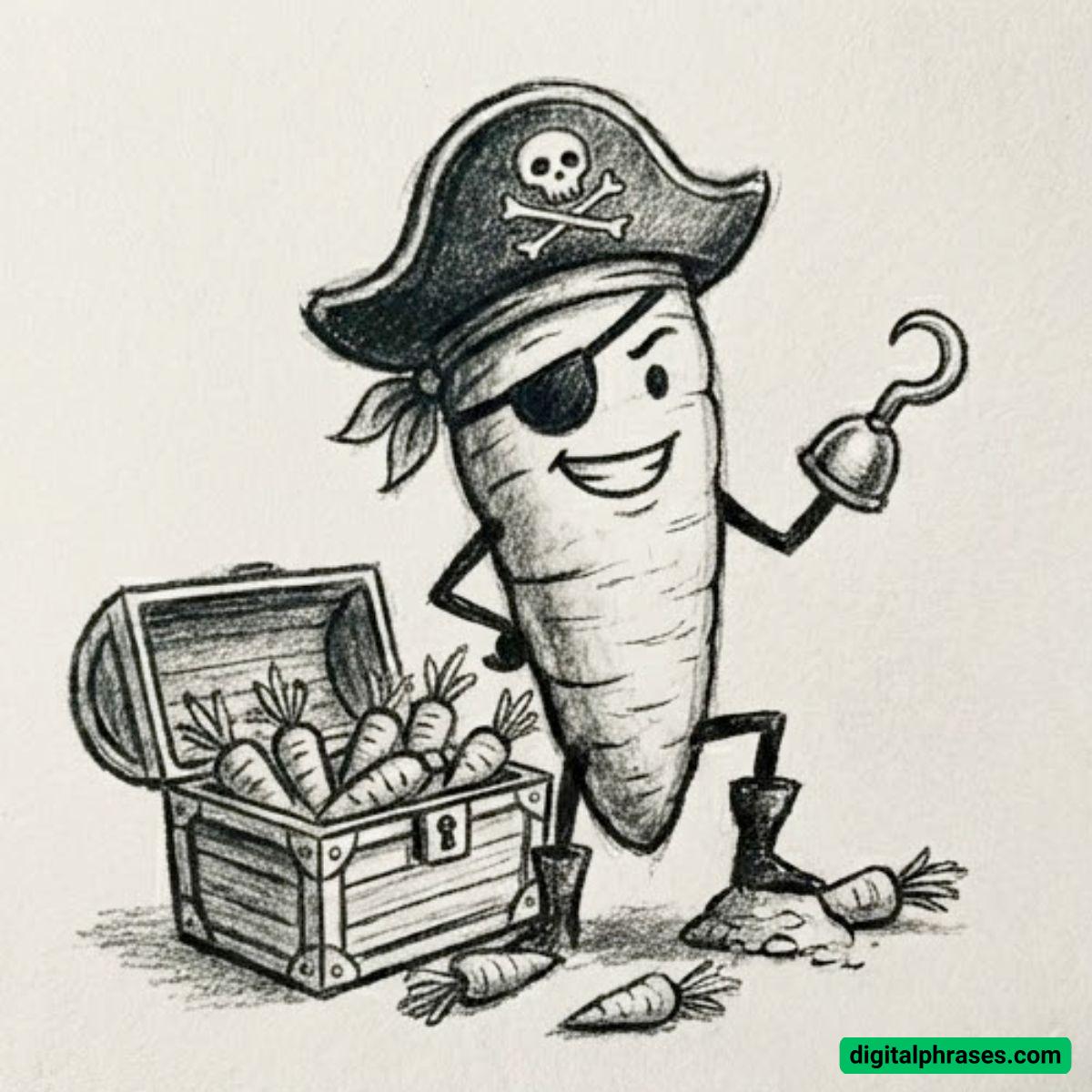
18
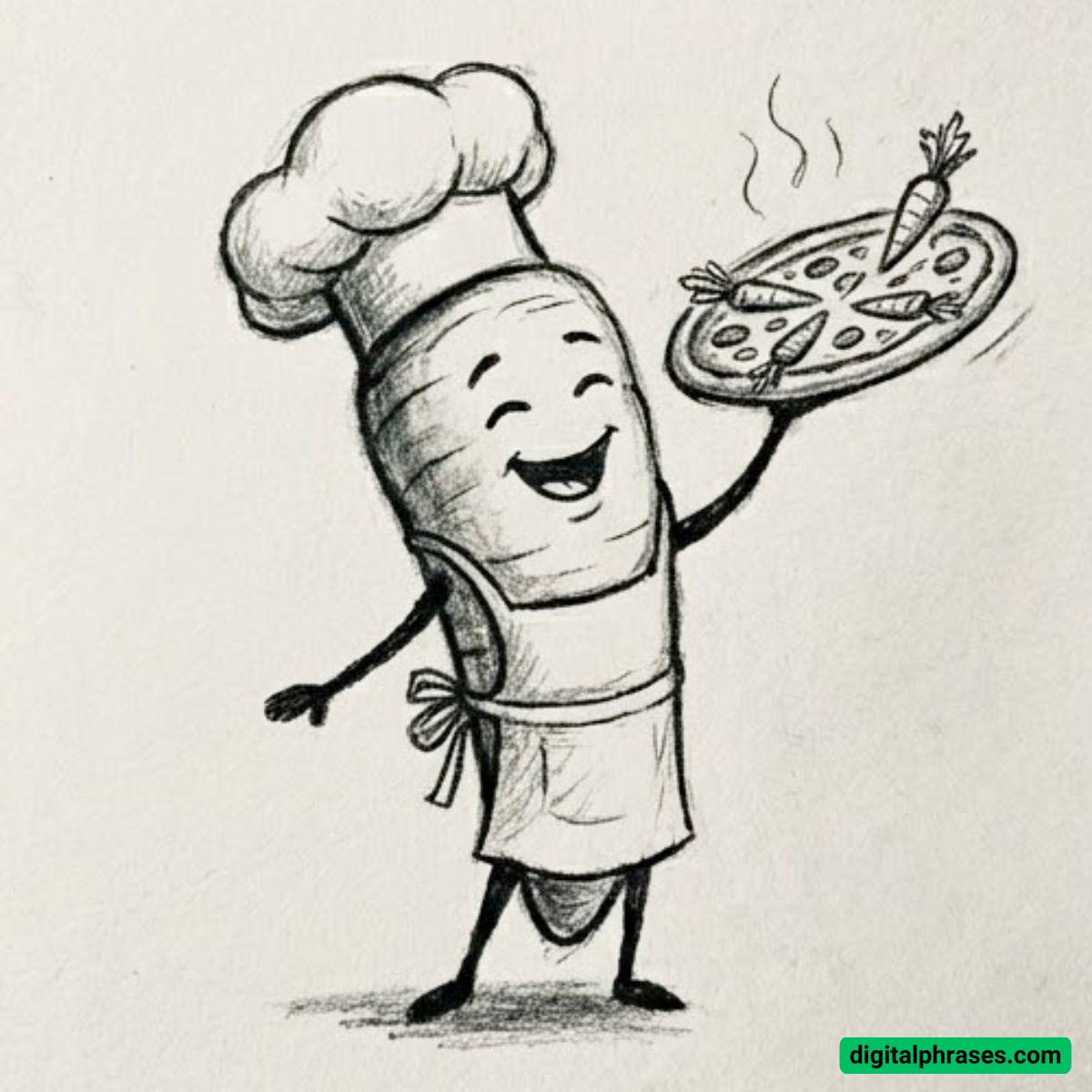
19
20

21
22
Tips To Draw Carrots
Tip 1: Start With Imperfect Shapes
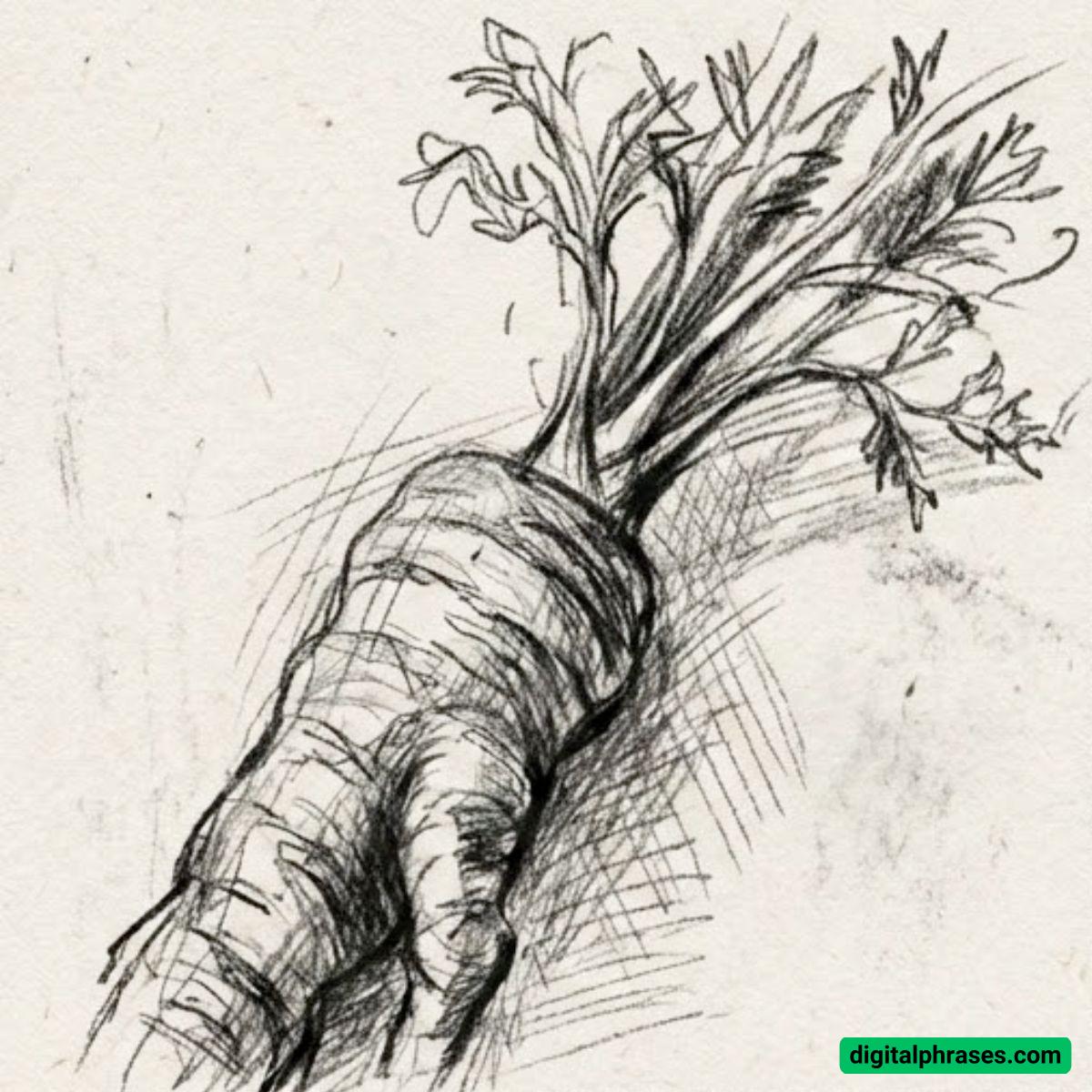
Before you worry about details, focus on the overall shape—and let go of perfection. Real carrots are rarely straight or symmetrical, and that’s a good thing. Begin with a loose, tapered form that’s wider at the top and narrower at the bottom. Let it curve slightly or lean to one side.
These small irregularities instantly make your drawing feel more natural and lively. Think of the carrot as a soft, organic form rather than a rigid object. Sketch lightly at first so you feel free to adjust the shape as you go. The more relaxed your starting lines are, the more confident and expressive your final drawing will look.
Tip 2: Pay Attention to the Leafy Tops
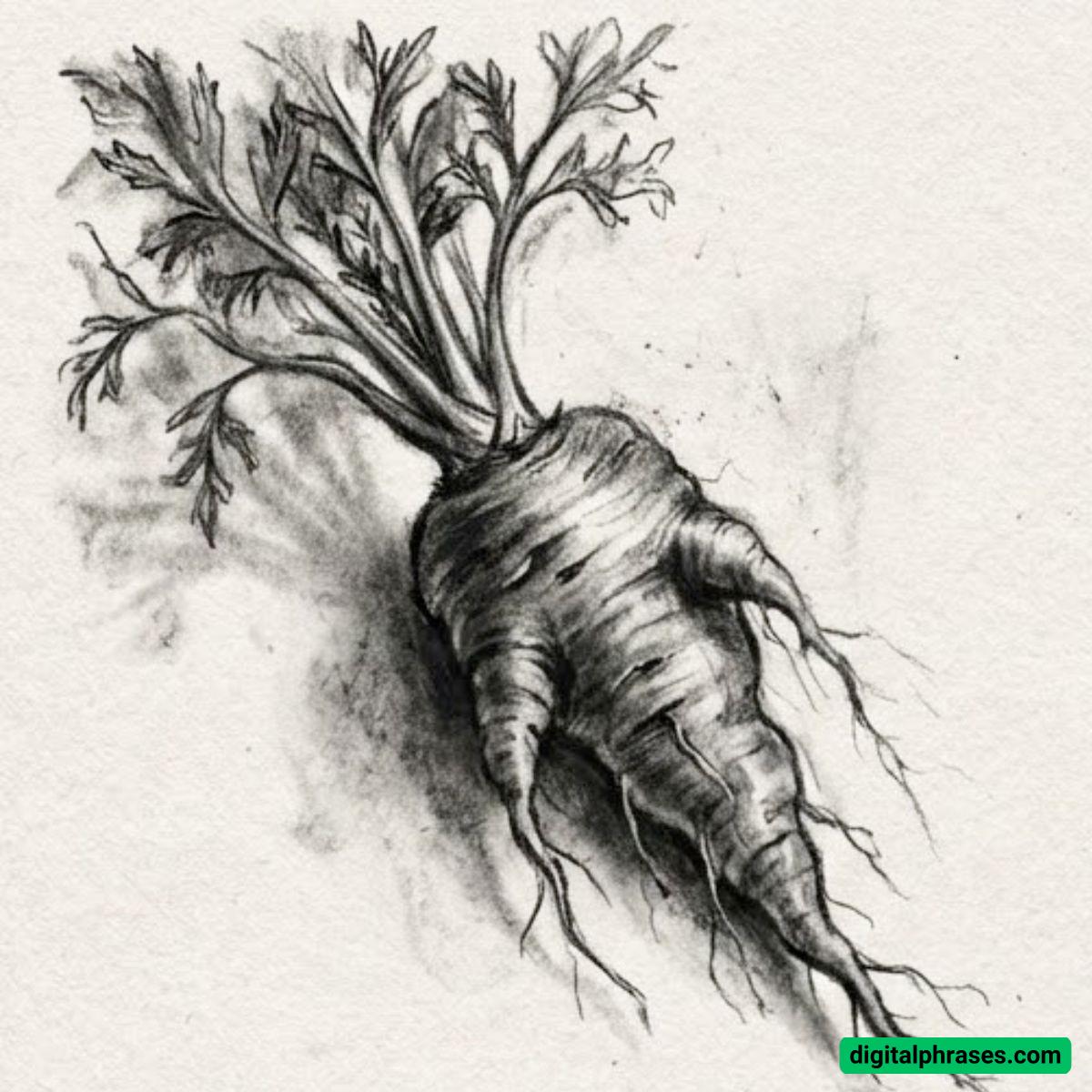
Carrot greens add personality and movement, so don’t rush through them. Instead of drawing each leaf perfectly, think in flowing strokes and clusters.
Start by sketching the main stems coming out from the top, then add smaller leaf shapes branching off. Let the lines overlap and vary in direction. This creates a sense of fullness and energy.
The leafy top is also a great place to experiment—make it wild and messy for a playful carrot, or neat and elegant for a more polished illustration. Either way, it adds balance and visual interest to your drawing.
Tip 3: Use Subtle Texture Lines
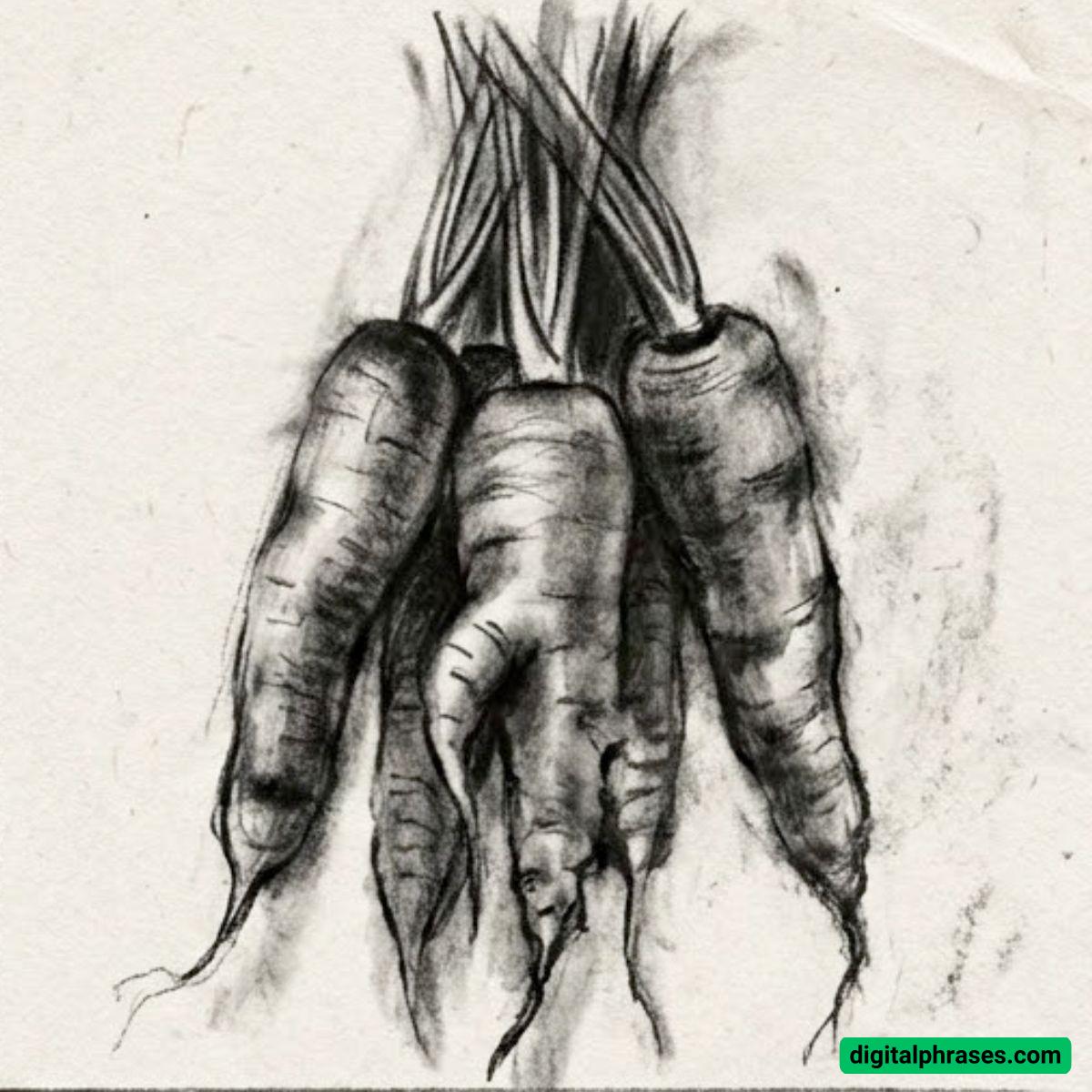
Carrots have gentle ridges and surface lines that run horizontally across the body. Adding these small details can make a big difference.
Lightly draw short, uneven lines following the curve of the carrot. Avoid spacing them too evenly—nature loves randomness. These texture marks help your carrot feel three-dimensional and grounded.
If you’re working digitally or with ink, keep the lines soft and minimal so they enhance the drawing rather than overpower it. Texture should support the shape, not distract from it.
Tip 4: Play With Shading and Light
Shading is what turns a flat carrot into a believable one. First, decide where your light source is coming from. Then gently darken the opposite side using soft strokes.
Carrots often have subtle color shifts, so even in black-and-white drawings, gradual shading works best. If you’re using color, try layering warm oranges with hints of yellow or red, keeping the highlights lighter and more vibrant. This adds depth without making the carrot look heavy.
Take your time here—slow shading creates smooth, satisfying results.
Tip 5: Experiment With Style and Personality
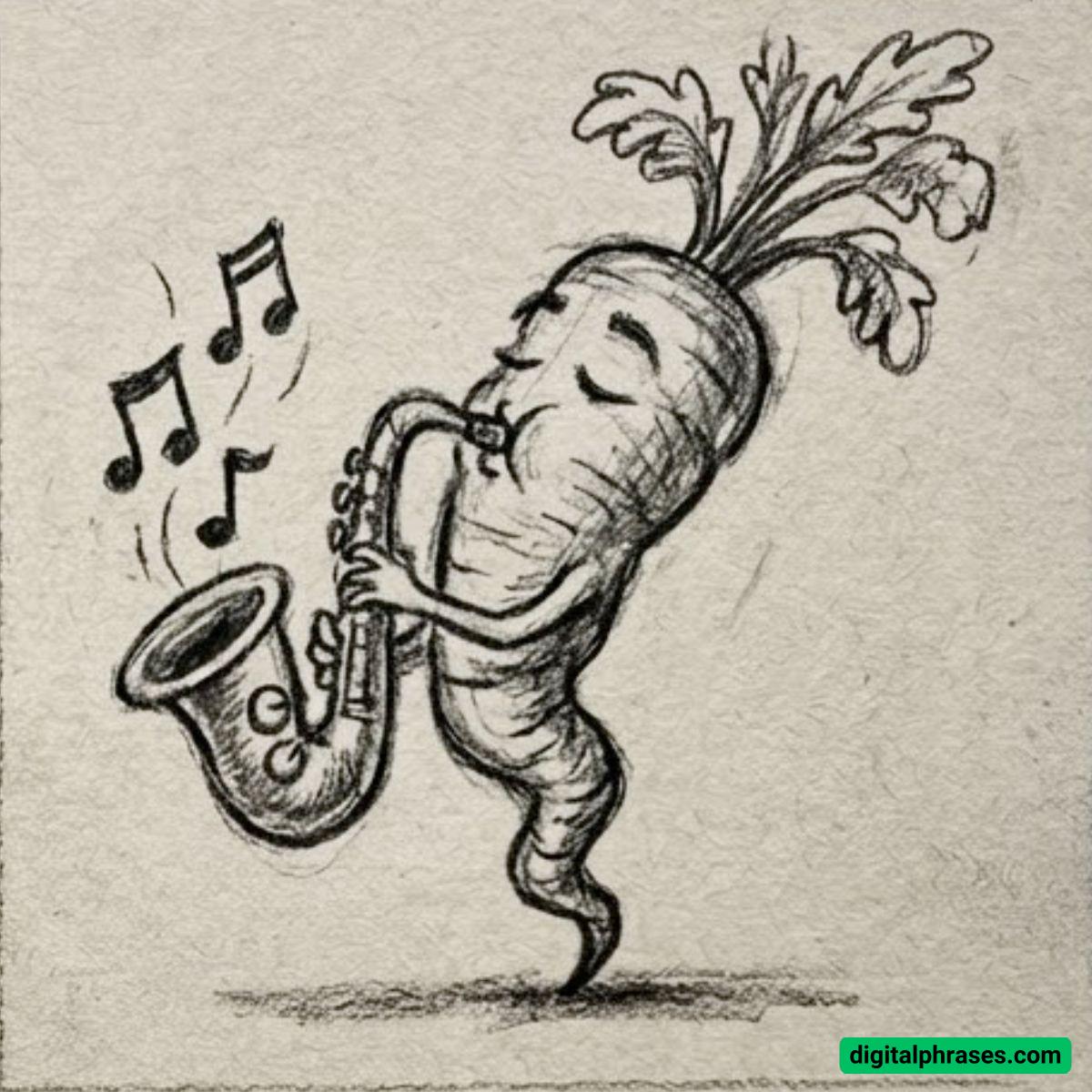
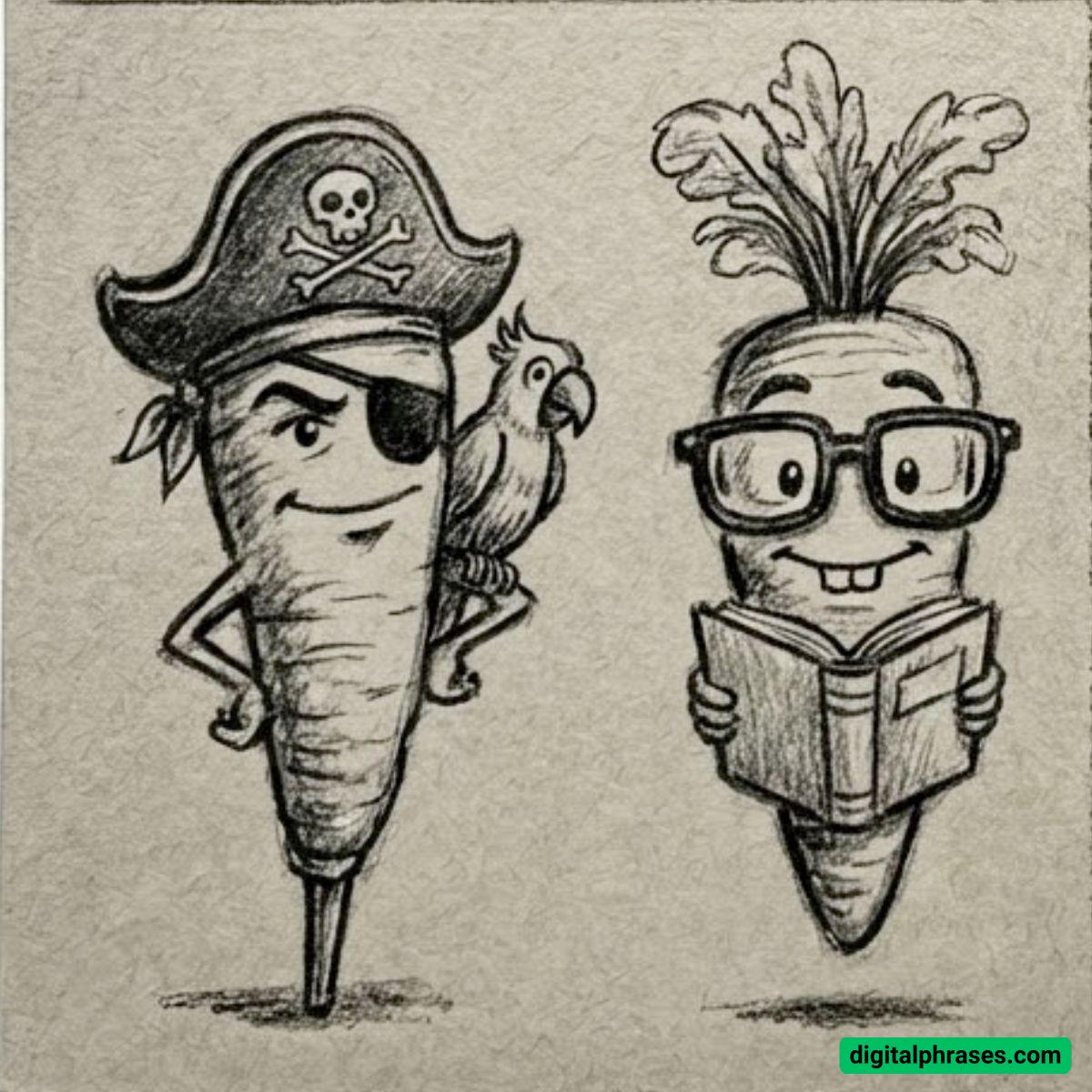
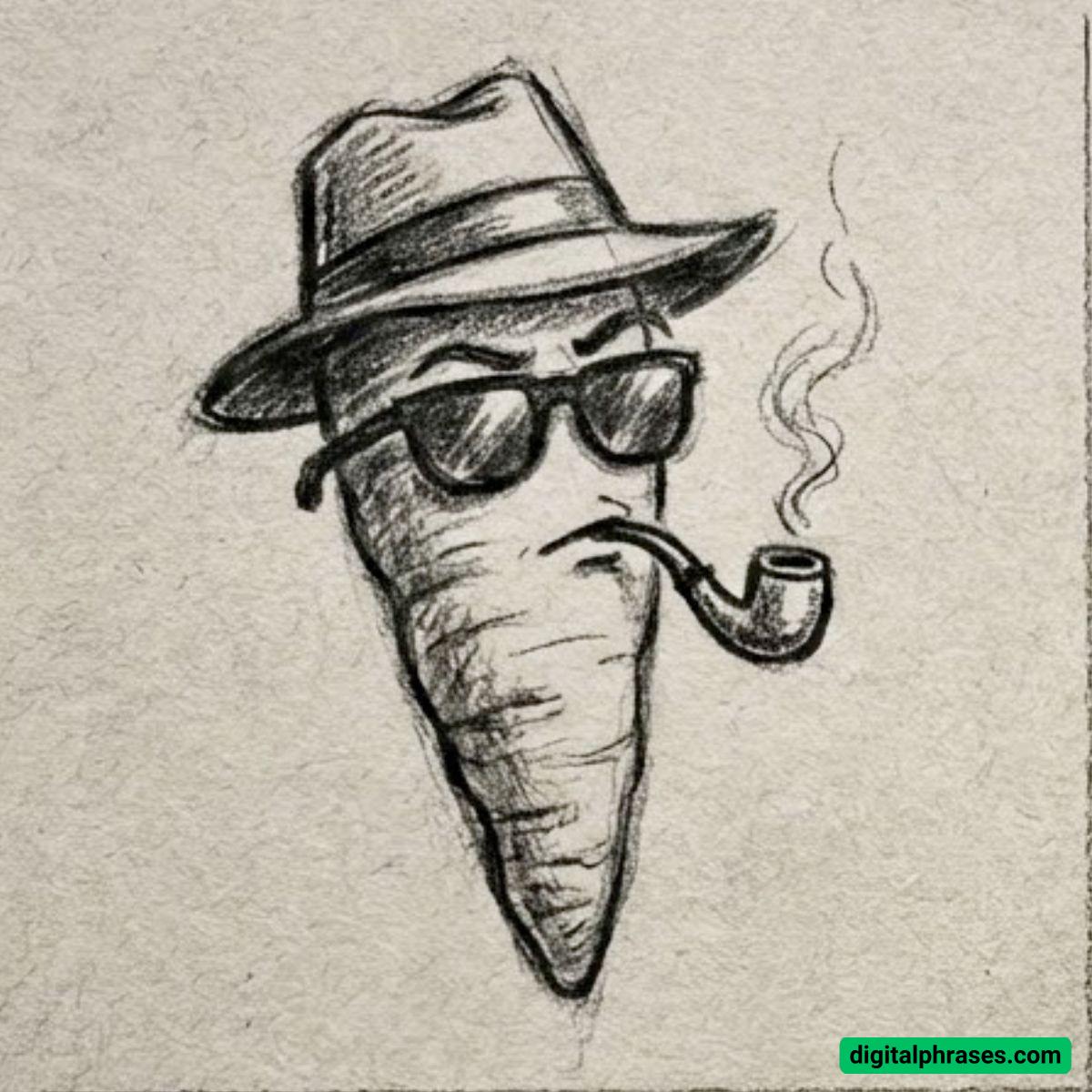
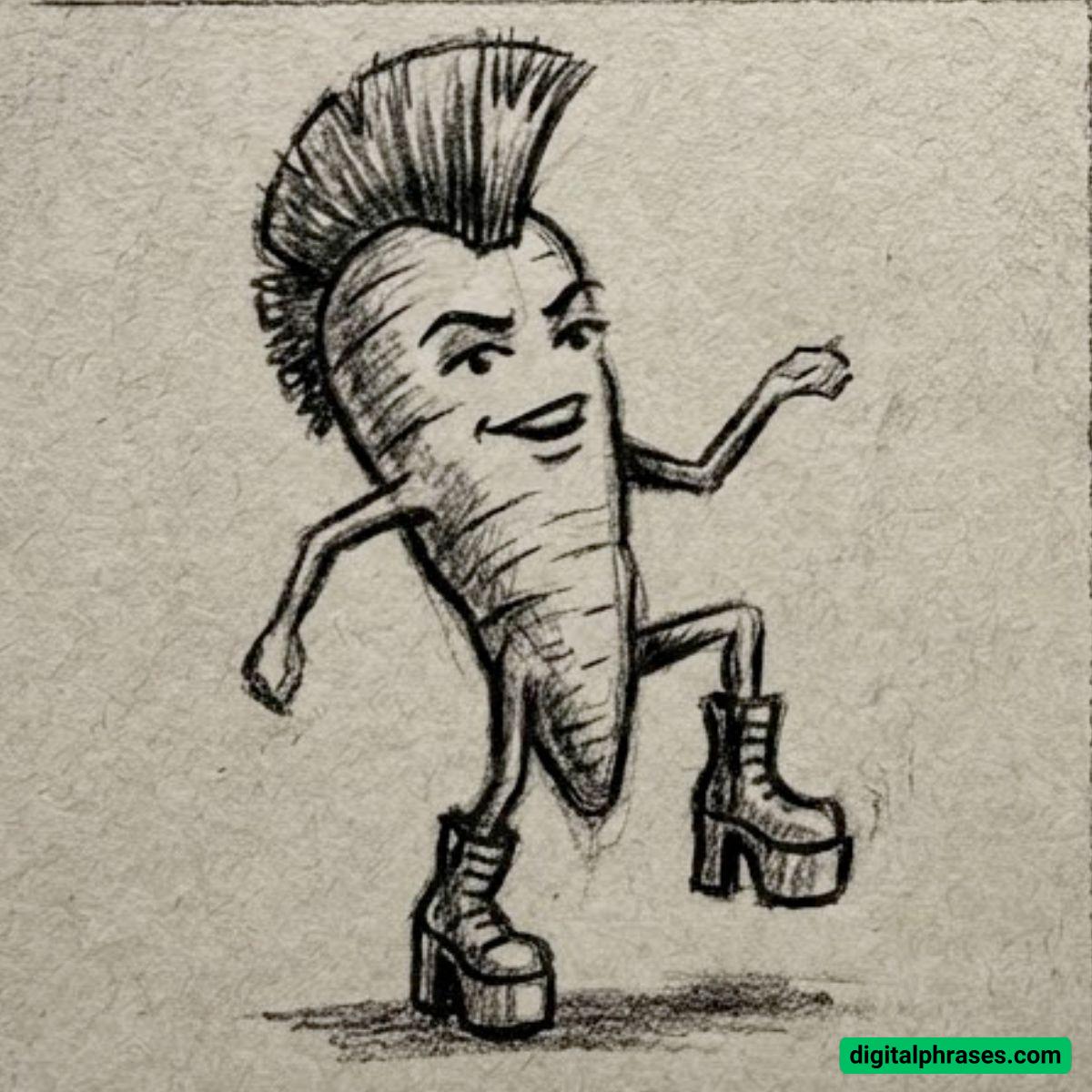
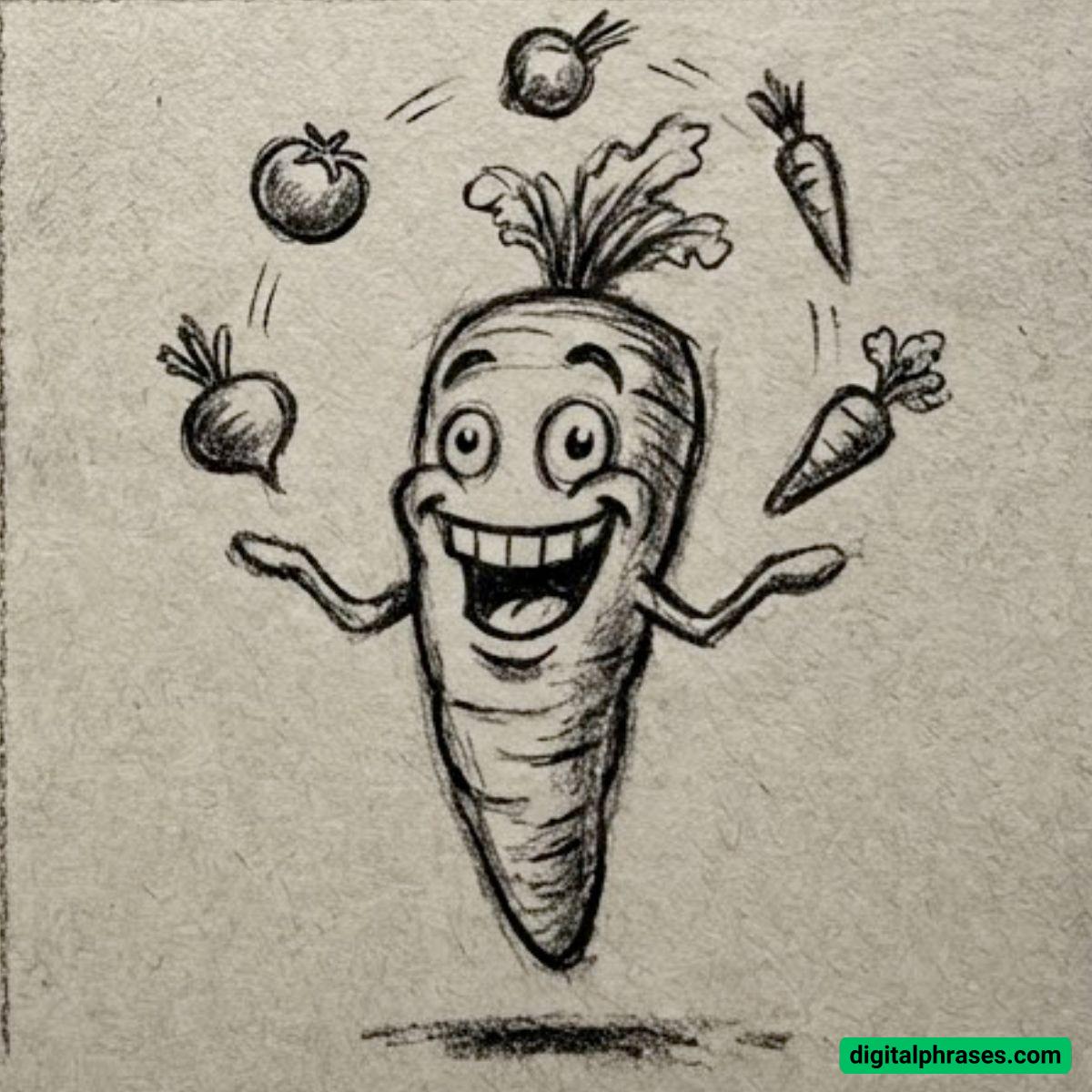
Once you’re comfortable with the basics, have fun with it. Turn your carrot into a cartoon character, give it a face, or place it in a scene. Try realistic sketches one day and playful doodles the next.
Drawing carrots is a low-pressure way to explore your artistic voice. The more you experiment, the more confident you’ll feel. Remember, every carrot you draw is practice—and practice doesn’t have to be boring. It can be curious, joyful, and a little bit weird.