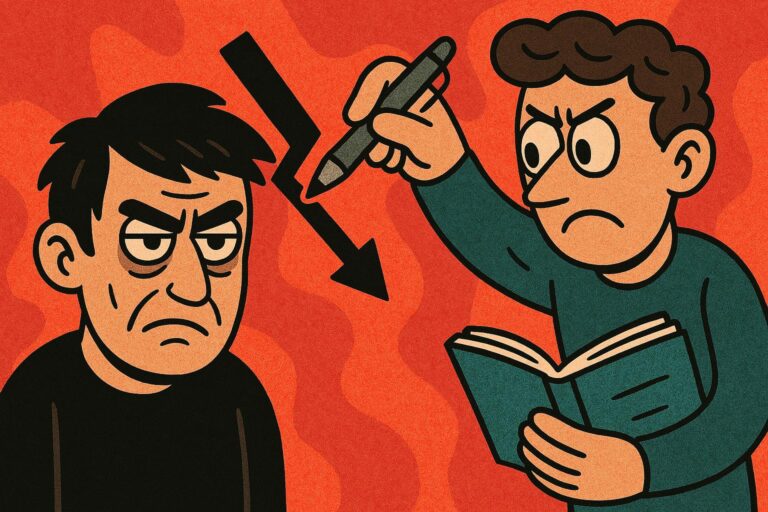
How To Turn Your Villain into an Anti-Hero in Your Story
Let me confess something: I love a good villain. Not the cardboard cutout “I want to destroy the world because I’m evil” type. I mean the ones who make me pause and think, “Okay… I don’t agree with you, but I kind of get it.”
And honestly? That’s where anti-heroes are born.
If you’ve ever tried to turn a villain into an anti-hero, you’ve probably realized it’s harder than it sounds. You can’t just flip a switch and make them nice. Readers can smell forced redemption from a mile away. What actually works is something much deeper. You’re not making them good. You’re making them understandable.
That shift changes everything.
Why People Love a Redeemed Villain
Here’s what I’ve noticed: audiences don’t fall in love with anti-heroes because they suddenly become saints. They fall in love because they become human.
Think about Zuko from Avatar: The Last Airbender. He starts off obsessed with capturing Aang. He’s angry, prideful, desperate for approval. For a long time, he is the villain. But when we learn about his abusive father and his internal shame, everything changes. We don’t excuse what he does. We understand why he does it.
That’s powerful.
Or look at someone like Loki in the Marvel universe. He betrays, manipulates, and literally invades Earth. But once we see his jealousy, his need for validation, and his complicated relationship with Thor, he stops being a mustache-twirling villain. He becomes something more interesting.
What this tells me is simple: people don’t crave perfection. They crave complexity.
When you turn a villain into an anti-hero, you’re giving readers emotional friction. They’re rooting for someone they probably shouldn’t root for. That tension is addictive.
Change the Why, Not the Personality
This is where most writers slip up.
They think turning a villain into an anti-hero means softening them. Making them kinder. Less sharp. Less dangerous.
But here’s the truth: if you smooth out all their rough edges, you lose what made them compelling in the first place.
Instead of changing who they are, change why they do what they do.
Take Severus Snape from Harry Potter. He’s bitter, sarcastic, cruel at times. That never really changes. What changes is our understanding of his motivation. When we learn he’s been protecting Harry out of love and guilt all along, his actions take on a new layer. He’s still unpleasant. He’s still harsh. But now there’s depth behind it.
That’s the key. Don’t rewrite their personality. Reframe it.
Maybe your villain isn’t power-hungry. Maybe they’re terrified of being powerless again.
Maybe they’re not heartless. Maybe they learned long ago that caring equals vulnerability.
When you shift the motivation, readers experience a mental click. Suddenly the character’s behavior makes sense. And once something makes sense, it becomes emotionally accessible.
Practical Ways to Make the Shift Feel Real
Alright, let’s get into some techniques I’ve found incredibly effective.
Give Them a Personal Code
Even the darkest characters usually have lines they won’t cross. And if they don’t, that’s your opportunity to give them one.
Maybe they never harm children.
Maybe they always keep their word.
Maybe they only target corrupt institutions, not innocent people.
That personal code does two things. It makes them consistent. And it gives readers a foothold to stand on.
Think of Dexter. He’s literally a serial killer. But he only kills other murderers. That code reframes him. He’s not safe. But he’s not chaotic evil either. He operates by rules.
And readers love rules.
Introduce a Bigger Threat
One of my favorite strategies is escalation.
If your villain is the worst person in the room, it’s hard to sympathize. But introduce someone worse? Now we’ve got perspective.
Suddenly your villain’s skills are useful. Necessary, even.
This is common in war stories or dystopian fiction. The ruthless warlord becomes an uneasy ally when an even more brutal empire invades. The crime boss teams up with the hero to stop a terrorist threat.
We don’t forget what they’ve done. But now we see them fighting something worse. That shift naturally nudges them toward anti-hero territory.
Give Them Something to Lose
Nothing humanizes a character faster than emotional stakes.
A sibling.
A child.
An old friend.
A lover.
When a villain genuinely cares about someone, their decisions start to crack open. They hesitate. They protect. They sacrifice.
Look at Jaime Lannister in Game of Thrones. At first, he’s arrogant and morally questionable. But as we see his loyalty to his family and later his complicated growth through Brienne, we start to see vulnerability beneath the armor.
And vulnerability is gold.
Let Them Struggle With Change
Here’s something I feel strongly about: redemption should be messy.
If your villain decides to be better and immediately becomes heroic, readers won’t buy it. Growth takes friction. They should relapse into old habits. They should make questionable choices. They should feel conflicted.
That internal war is what makes the transformation believable.
In Avatar, Zuko doesn’t switch sides once and magically become good. He struggles. He betrays Iroh. He makes mistakes. That back-and-forth makes his eventual shift earned.
When you show that struggle, readers don’t just witness change. They experience it.
Make the Change Feel Earned
This might be the most important part.
Readers are surprisingly forgiving. But they are not naive.
If a villain becomes an anti-hero without consequences, it feels cheap. Other characters shouldn’t instantly trust them. Their past actions should still matter. Some people should never forgive them.
That lingering tension makes the transformation powerful.
I always ask myself: what did this character pay for their change?
Did they lose status?
Did they sacrifice power?
Did they admit something humiliating?
Growth should cost them something.
And here’s the thing I love most about anti-heroes: they don’t become pure. They become redirected.
They might still be arrogant. Still ruthless. Still morally gray. But now their edge is pointed somewhere else.
That’s the magic.
When you turn a villain into an anti-hero, you’re not erasing their darkness. You’re giving it purpose. And when darkness has purpose, it becomes fascinating instead of flat.
Honestly, that’s what keeps readers hooked. Not goodness. Not evil.
But the messy, complicated space in between.
Practical Ways to Make the Shift Feel Real
If you’re anything like me, you don’t just want theory. You want tools. You want to know what to actually do on the page so this transformation doesn’t feel like you’re dragging your villain into the light by force.
So let’s get practical. These are the techniques I’ve used (and seen used beautifully) to move a villain into anti-hero territory without losing what made them compelling in the first place.
Give Them a Personal Code
This is one of my favorite tricks because it’s subtle but powerful.
A villain with no boundaries feels chaotic. A villain with rules feels intentional.
Maybe your crime lord refuses to traffic children.
Maybe your assassin never kills someone who begs for mercy.
Maybe your tyrant genuinely believes they’re preventing a worse war.
That personal code is the crack in the armor. It shows there’s something underneath the brutality.
Think about John Wick. He’s a lethal machine. But his violence is governed by loyalty and grief. He honors markers. He respects certain traditions. That code makes him predictable in a satisfying way, and predictability builds trust with readers.
When you introduce a code, you’re saying, “This character isn’t random. They operate by principles.” Even twisted principles are still principles.
And once readers see principles, they start leaning in.
Introduce a Bigger Threat
Perspective changes everything.
If your villain is the worst person in the room, there’s no room for redemption. But if someone more dangerous walks in? Suddenly your villain becomes… useful.
This works especially well in fantasy, sci-fi, and thrillers.
Imagine a ruthless general who’s been conquering neighboring kingdoms. Then an ancient, inhuman force awakens—something that doesn’t negotiate, doesn’t reason, doesn’t stop. Now that same general is humanity’s best shot at survival.
We don’t forget what they’ve done. But we re-evaluate them.
You see this in The Suicide Squad. These are criminals—violent, unstable people. But when faced with an existential threat, they become the team you need. Not because they’re good. Because they’re capable.
And capability is attractive.
By raising the stakes, you create space for moral realignment without personality change. Your villain doesn’t become nicer. They become necessary.
Let Someone See the Good in Them First
Sometimes, the shift doesn’t begin with the villain. It begins with someone else.
A child who trusts them.
An old mentor who refuses to give up on them.
A rival who challenges their worldview.
That outside perspective forces self-reflection.
Zuko’s transformation wouldn’t have worked without Uncle Iroh. Iroh saw goodness in him long before Zuko could see it himself. That steady belief becomes a mirror. Eventually, Zuko has to ask, “What if he’s right?”
When another character believes in your villain before the audience does, it plants a seed.
And here’s something I’ve learned: readers often adopt the emotional cues of other characters. If someone we respect sees potential in the villain, we start looking for it too.
That’s powerful narrative psychology.
Make Them Fail at Being Better
This is non-negotiable for me.
Redemption arcs that go smoothly feel fake. Real change is awkward and inconsistent.
Maybe your villain tries to spare someone… and it backfires.
Maybe they attempt honesty… and it gets them manipulated.
Maybe they protect someone… but do it in an unnecessarily brutal way.
Growth is clumsy.
Look at Jaime Lannister again. His early attempts at honor don’t suddenly erase his past. He still struggles with pride and old loyalties. That tension is what makes him interesting.
When your character fails at being better, readers see effort. And effort earns sympathy.
Not perfection. Effort.
Shift the Point of View
If readers only see your villain from the outside, they’ll stay emotionally distant.
But when you let us into their thoughts? Everything changes.
Show the hesitation before they give a cruel order.
Show the flicker of doubt.
Show the memory that flashes before they pull the trigger.
Walter White from Breaking Bad is a fascinating case. We start inside his perspective. We understand his fear of dying, his resentment, his wounded pride. Even as he becomes monstrous, we understand the path he took.
Now, he’s not a redeemed anti-hero in the end. But for a long stretch, we’re emotionally entangled with him because we see his reasoning.
And once readers understand reasoning, they start rationalizing alongside the character.
That’s where the shift happens.
Make the Change Feel Earned
Now let’s talk about what separates a decent transformation from a truly satisfying one.
It’s cost.
If your villain becomes an anti-hero without paying for their past, the whole thing collapses.
Let Consequences Linger
Other characters shouldn’t magically forgive them. That’s not realistic, and readers know it.
If your villain burned down a village, someone survived. Someone remembers. Someone hates them.
That tension shouldn’t vanish just because your character switches sides.
In Avatar, when Zuko joins Team Avatar, no one throws a party. Katara is openly hostile. Trust takes time. That resistance makes the arc believable.
Forgiveness is slow. Suspicion is natural. And that friction makes the shift feel grounded.
Make Them Sacrifice Something Real
This part matters so much.
Growth should hurt.
Maybe they lose power.
Maybe they lose status.
Maybe they lose the only person who ever approved of them.
If your villain’s identity was built on dominance, choosing compassion should feel like tearing off armor.
In The Hunger Games, when characters rebel against the Capitol, they risk everything—safety, comfort, reputation. That’s what makes their choices meaningful.
If there’s no sacrifice, there’s no transformation.
Keep Their Flaws Intact
This is where I see writers get nervous. They think once a villain shifts toward anti-hero, they have to become noble.
Nope.
Let them stay sarcastic.
Let them stay ruthless when necessary.
Let them stay a little dangerous.
An anti-hero is compelling because they still feel unpredictable.
Think of someone like The Mandalorian. He protects Grogu fiercely. But he’s still a bounty hunter. Still pragmatic. Still willing to bend rules.
That edge is what keeps him interesting.
If you remove the darkness completely, you don’t get an anti-hero. You get a rebranded hero.
Show Internal Conflict
Even after the shift, the war inside them shouldn’t be over.
Maybe they still crave power.
Maybe they still fantasize about revenge.
Maybe they question whether they deserve redemption.
That internal tension keeps them alive on the page.
And honestly? It makes them relatable.
Because real people don’t just wake up transformed. We wrestle with our worst impulses. We justify things. We doubt ourselves.
When your former villain wrestles with their darkness instead of pretending it’s gone, readers see authenticity.
And authenticity builds attachment.
Before You Leave
If there’s one thing I hope you take away from this, it’s this: you don’t turn a villain into an anti-hero by cleaning them up. You do it by deepening them.
Give them reasons.
Give them conflict.
Make them pay for change.
Let them stay sharp, flawed, and complicated.
Because at the end of the day, readers aren’t looking for purity. They’re looking for people who feel real.
And sometimes the most real characters are the ones who started in the dark and chose, slowly and imperfectly, to step somewhere slightly better.