18 Daffodil Drawing Ideas
Daffodils aren’t just pretty yellow flowers; they’re tiny explosions of optimism, drama, and fresh-start energy.
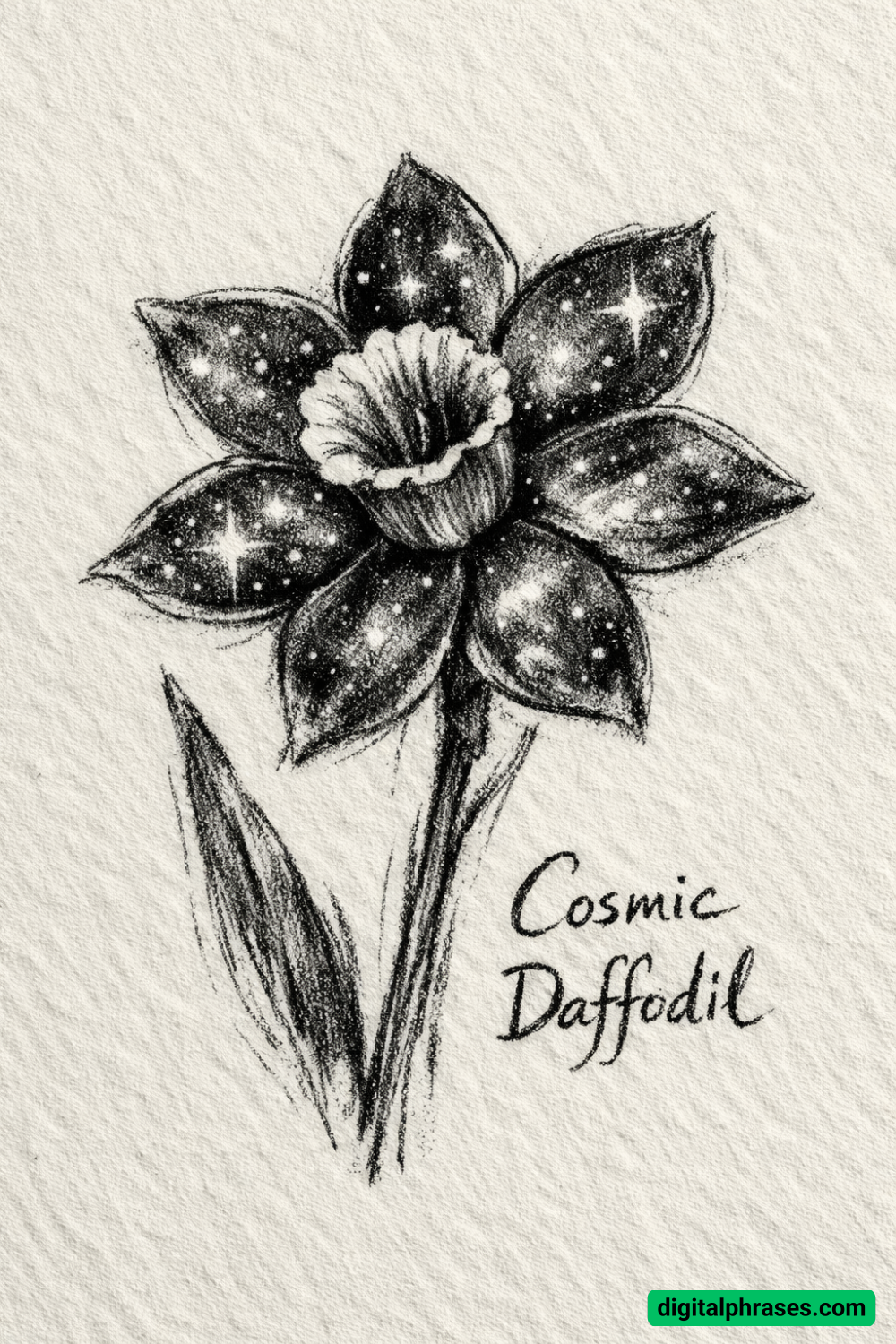
Whether you’re stuck in a creative rut or just itching to draw something that feels alive, daffodils are the perfect muse. In this list of daffodil drawing ideas, you’ll find everything from soft, cozy sketches to bold, imaginative concepts that push your style a little further.
Let’s begin.
Daffodil Drawing Ideas
1
2
3
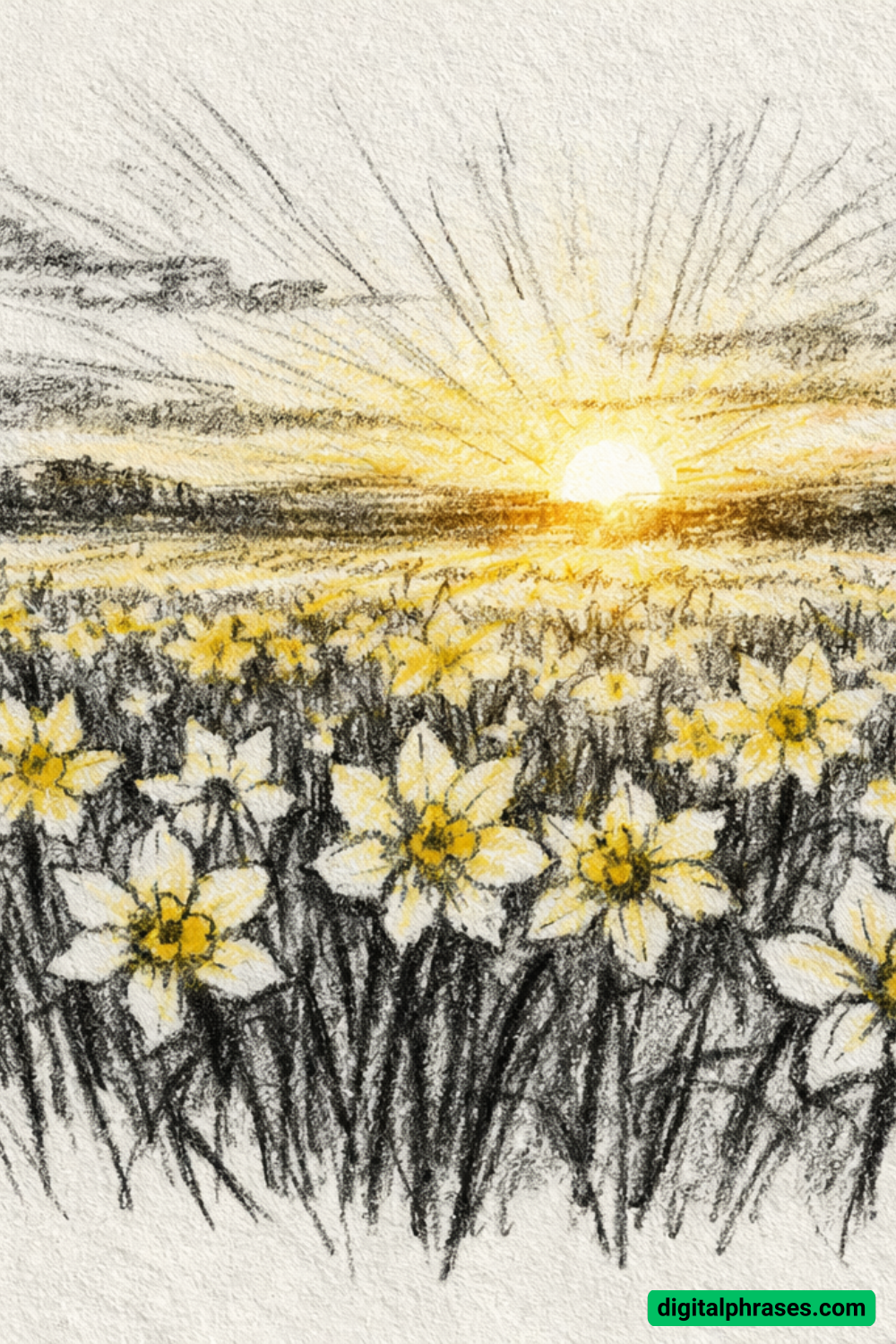
4
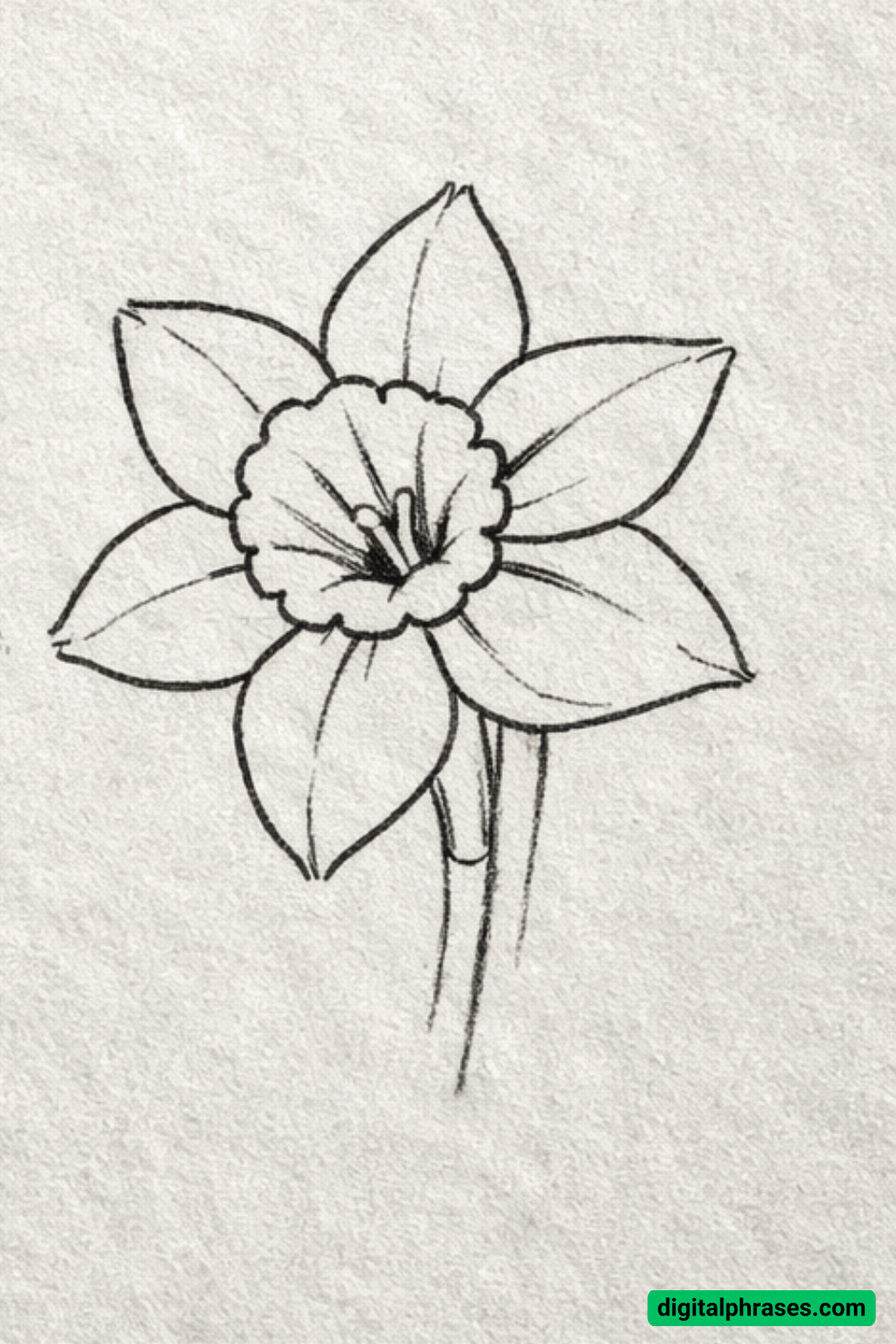
5
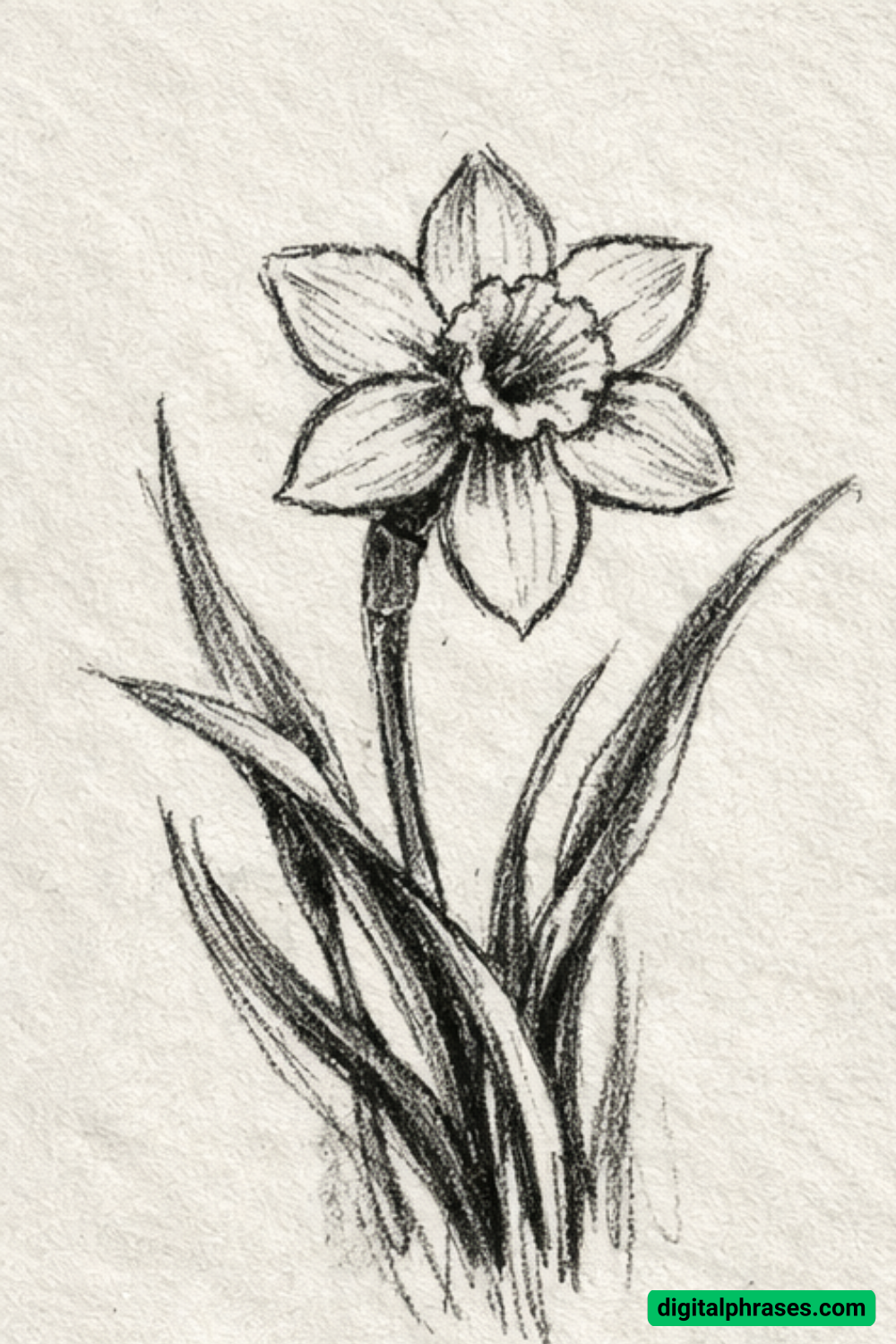
6
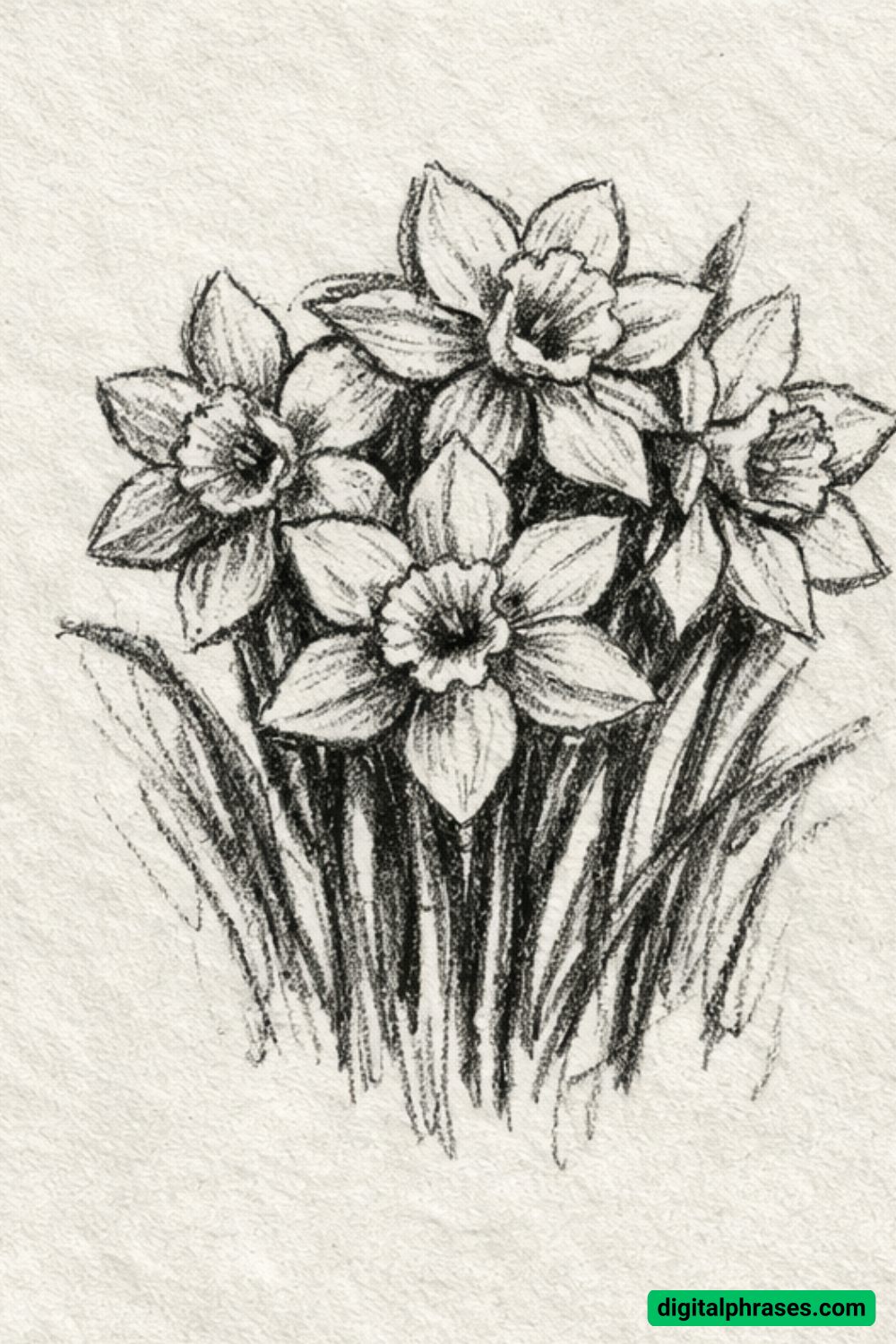
7
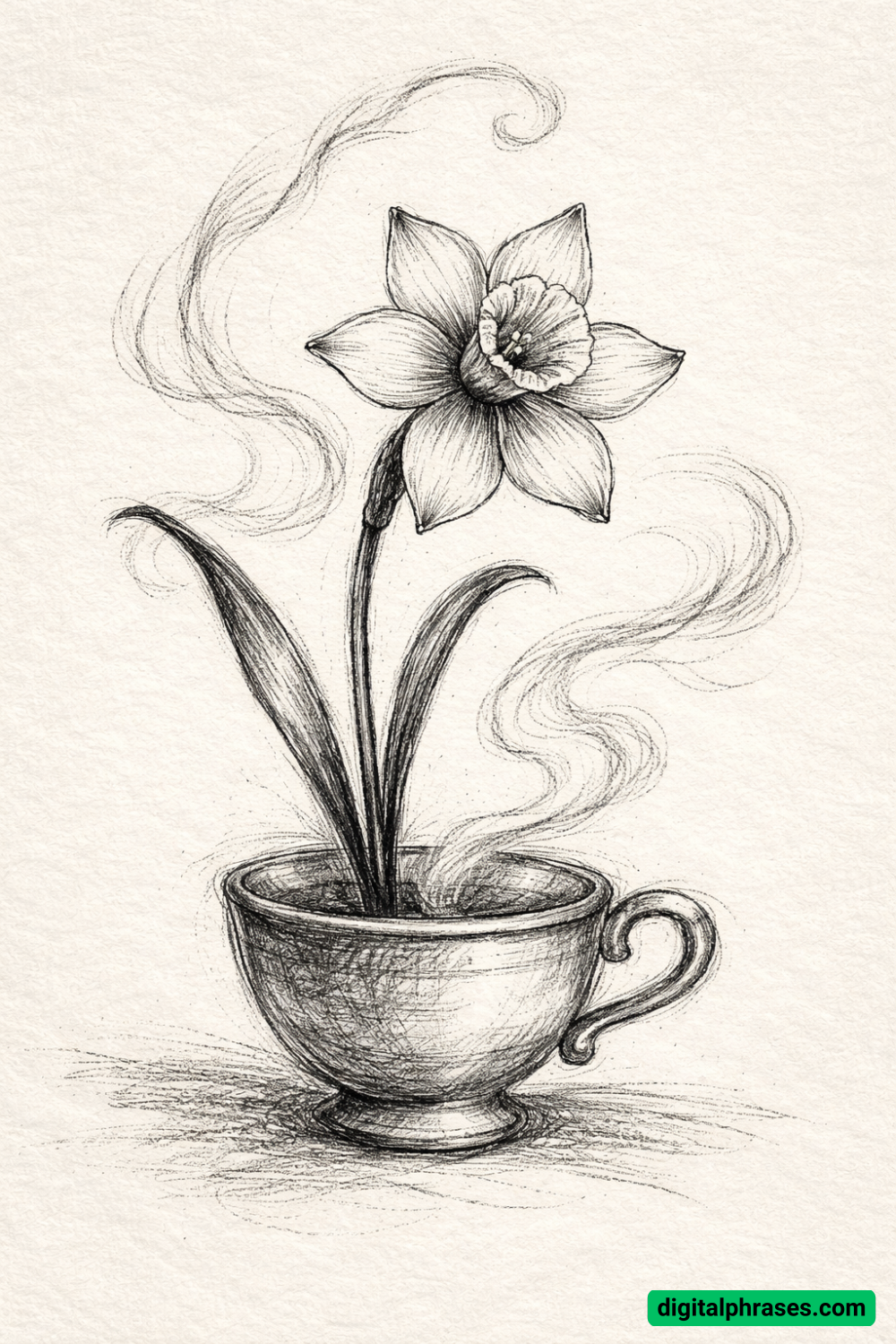
8
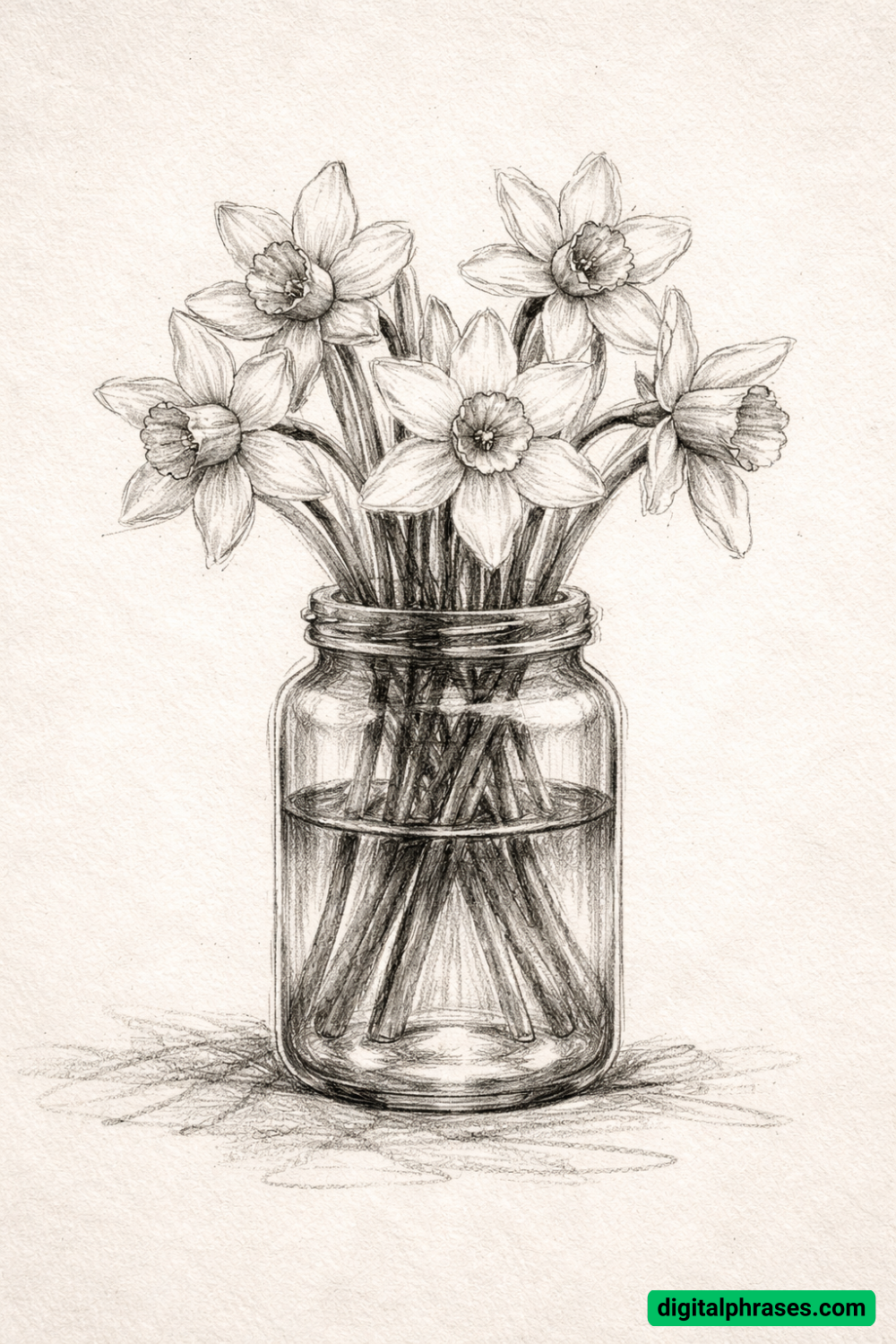
9
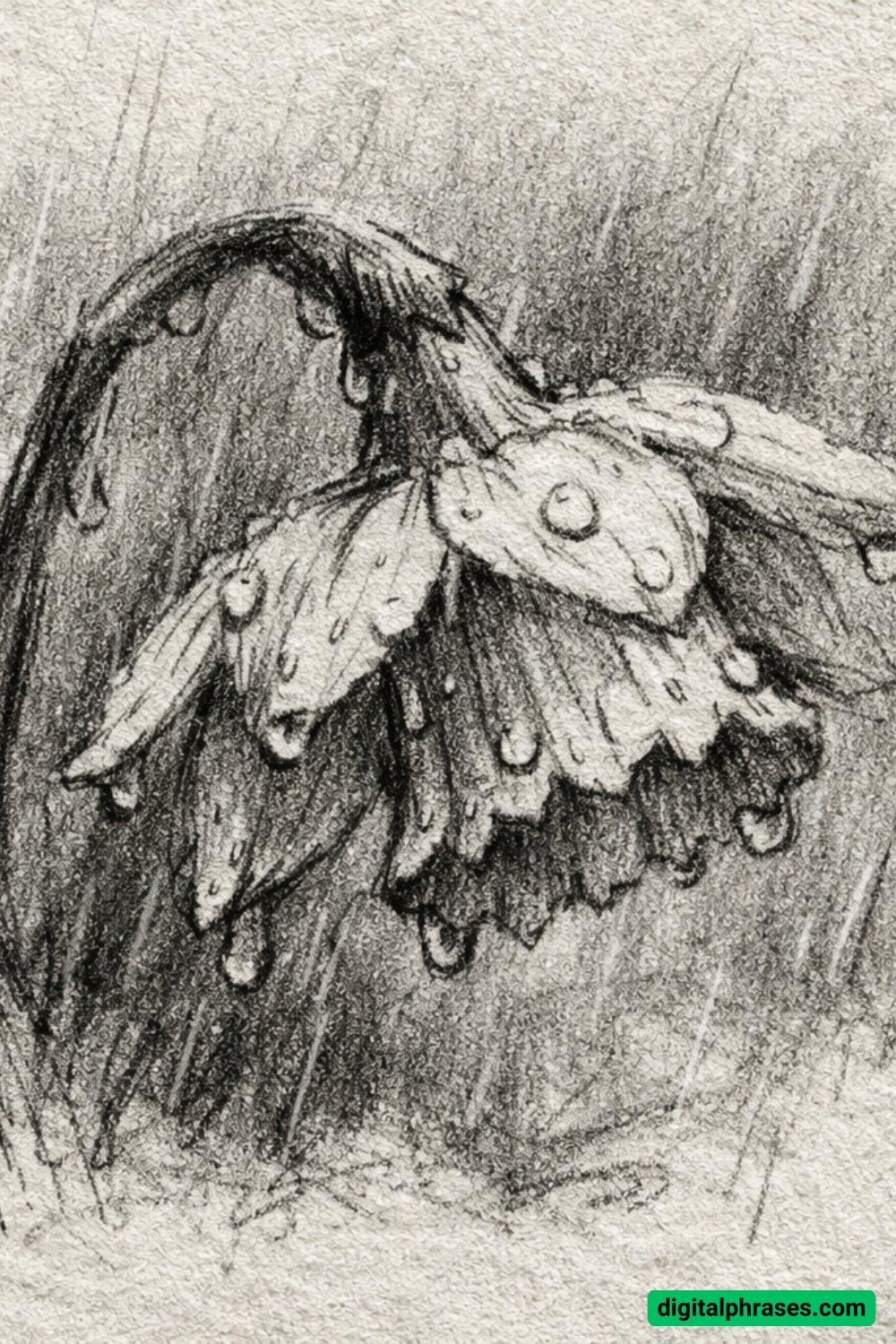
10
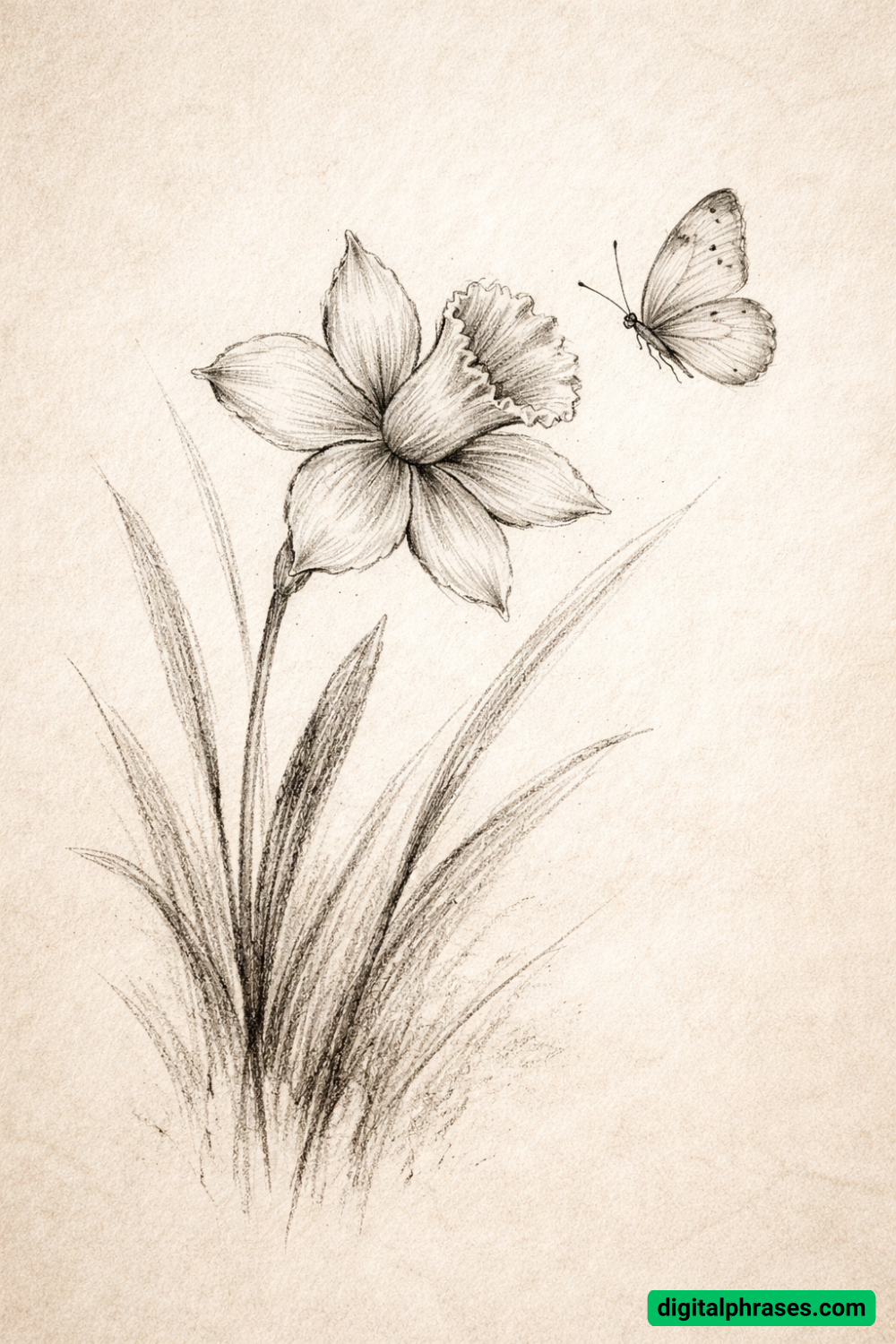
11
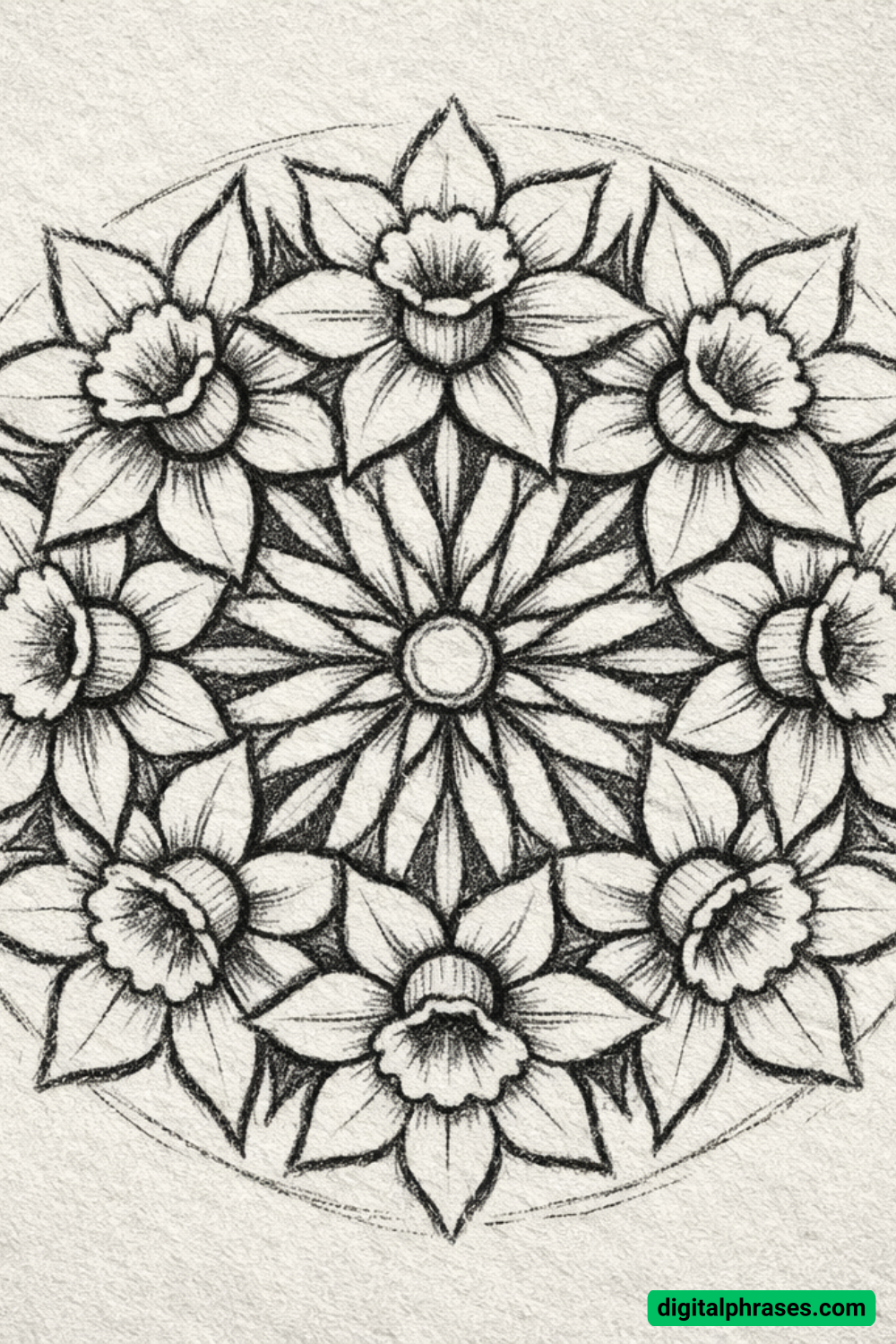
12
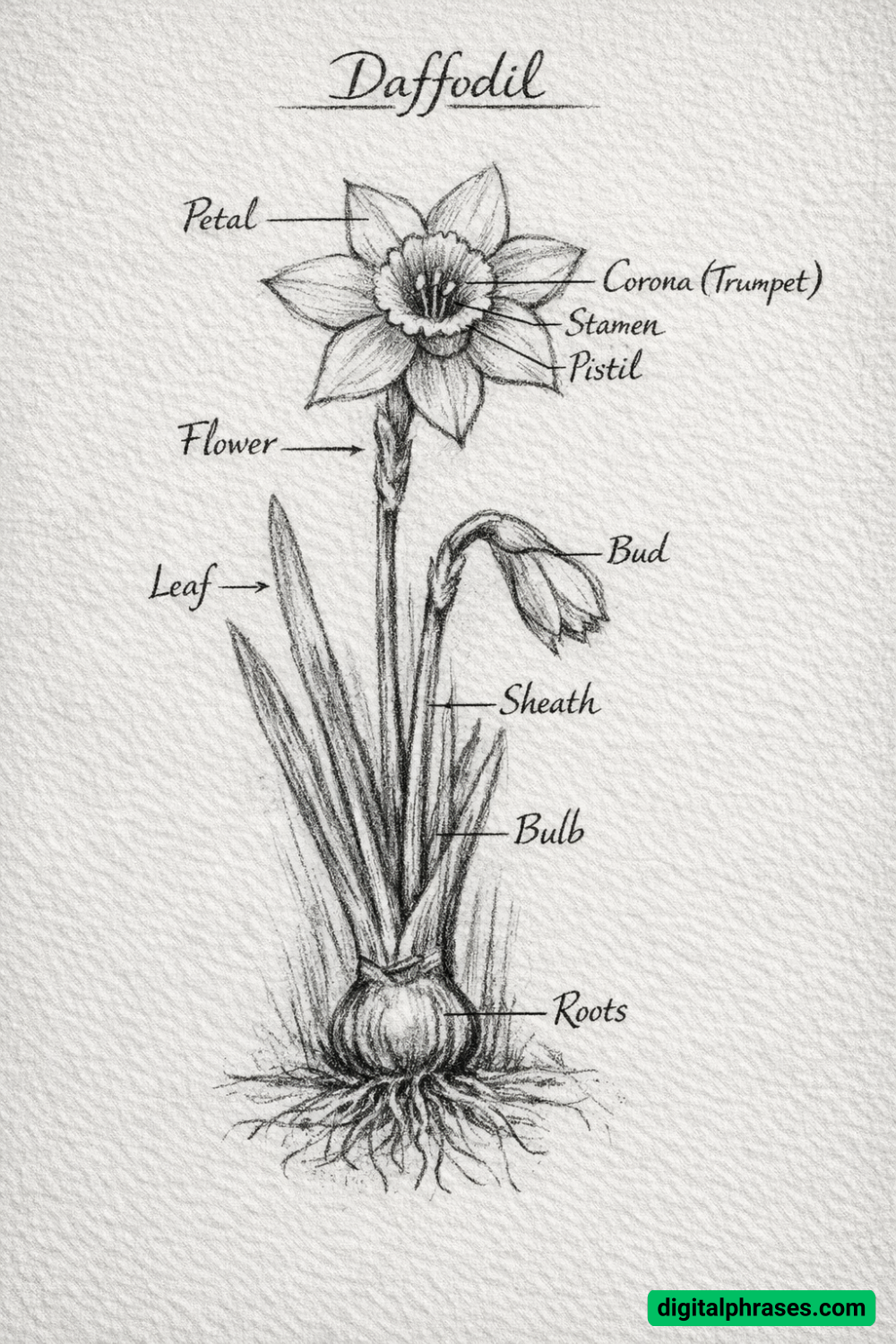
13
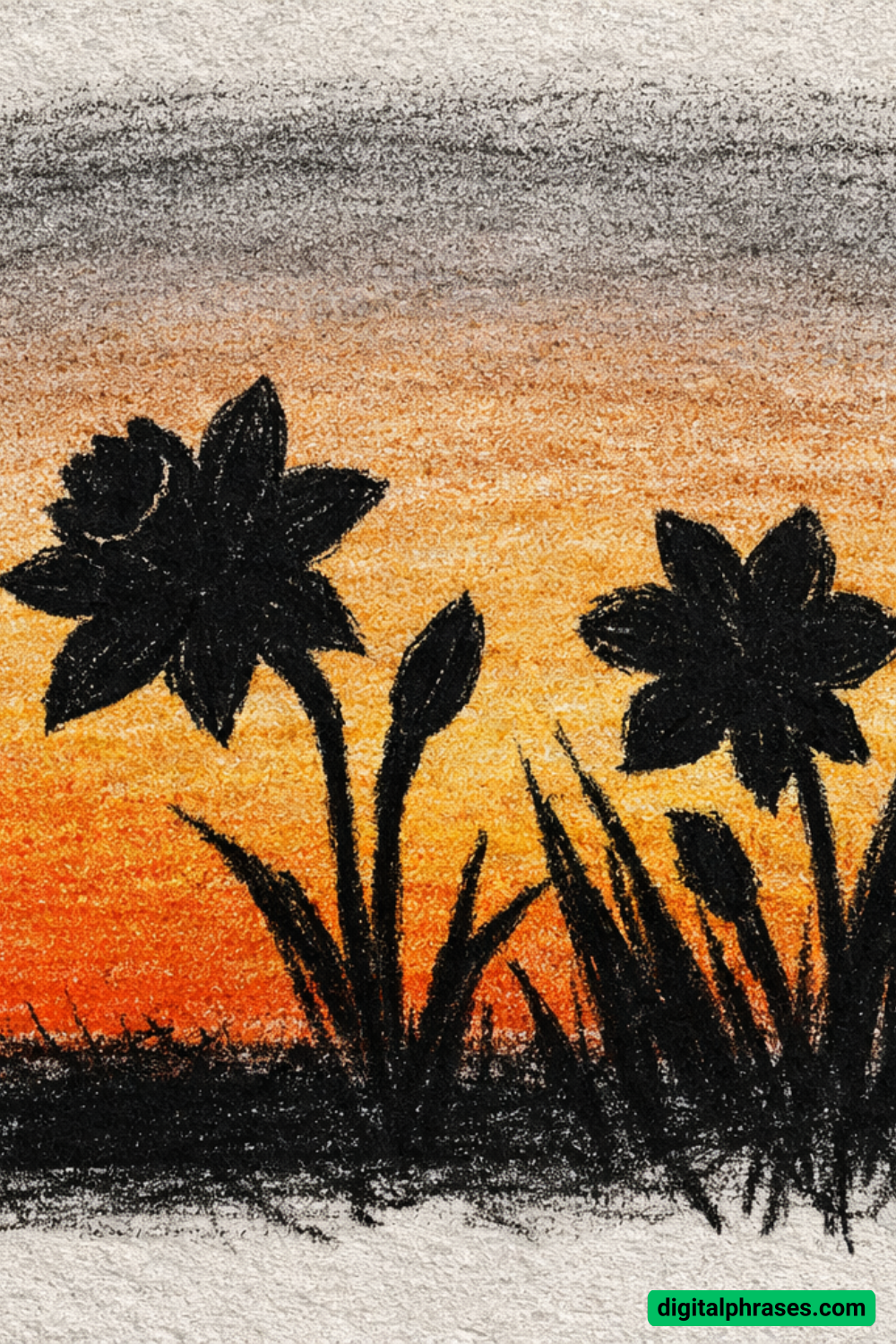
14
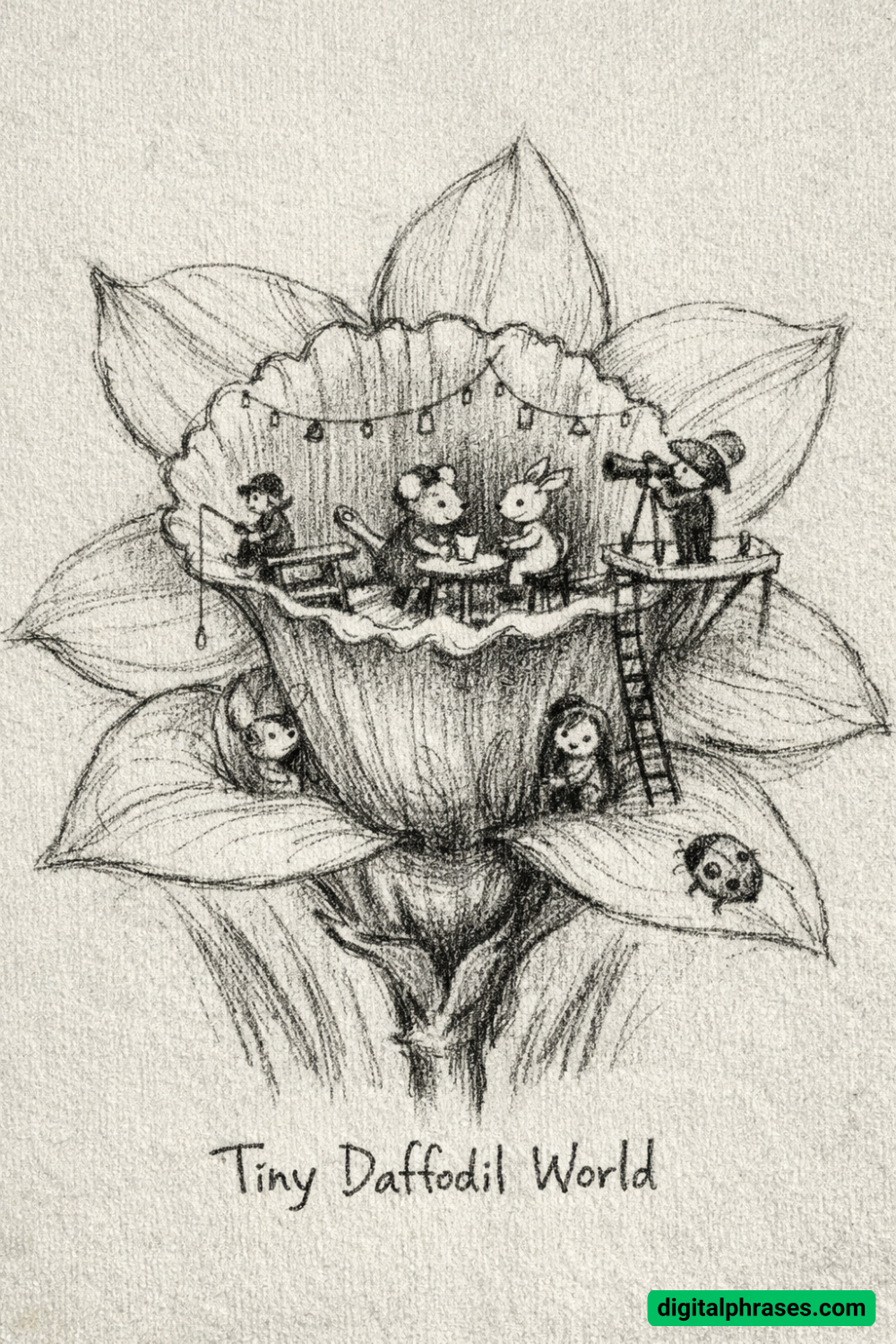
15
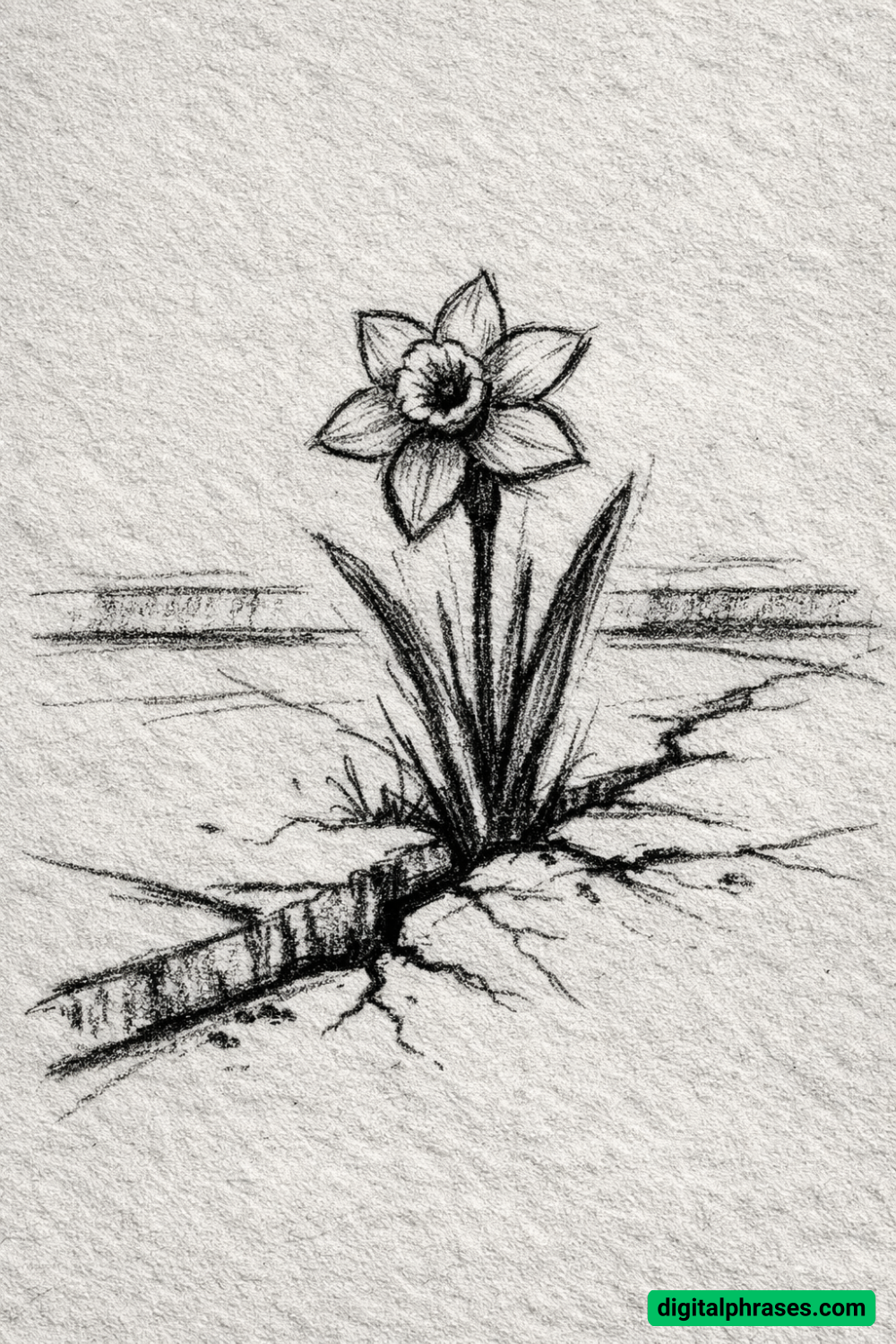
16
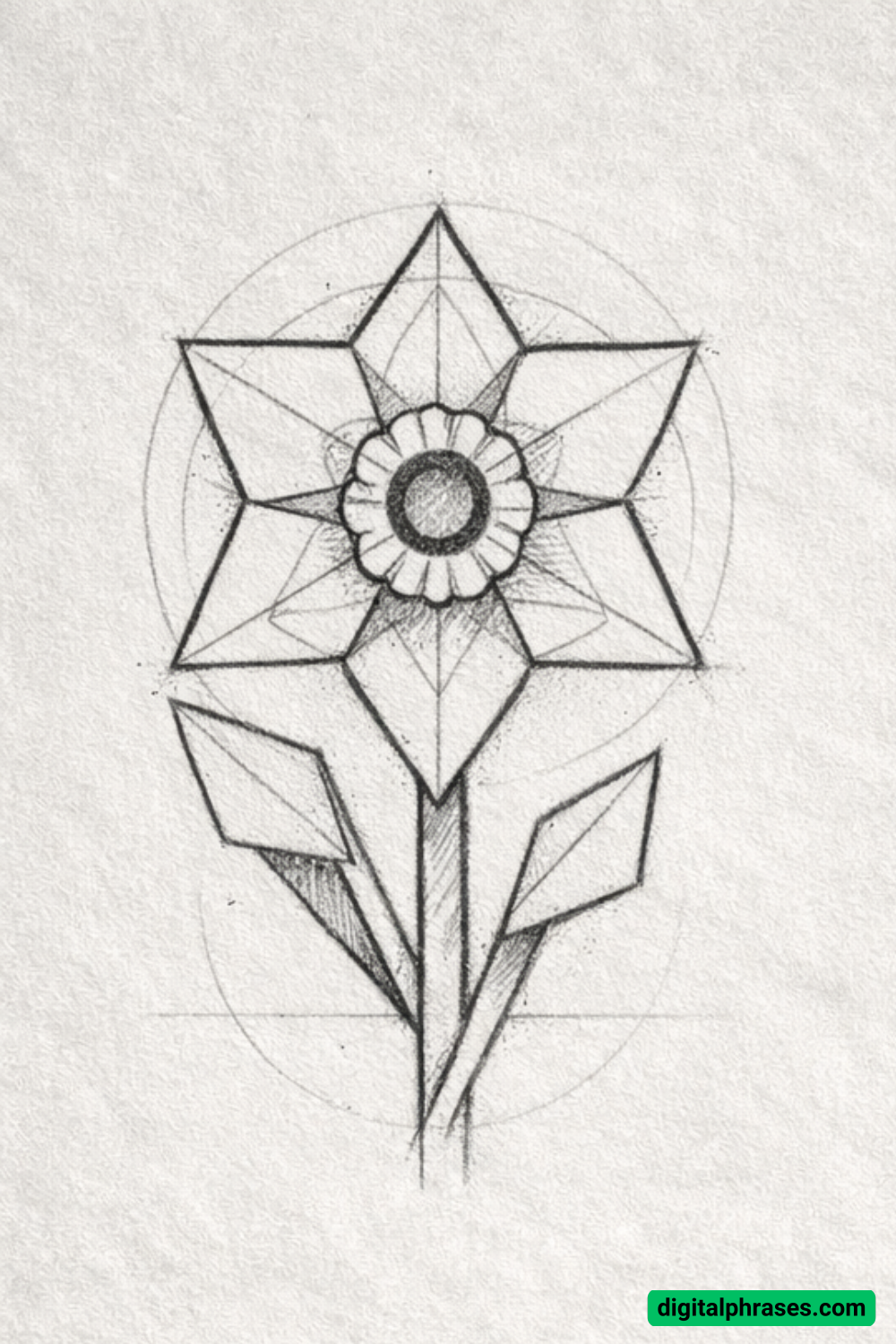
17
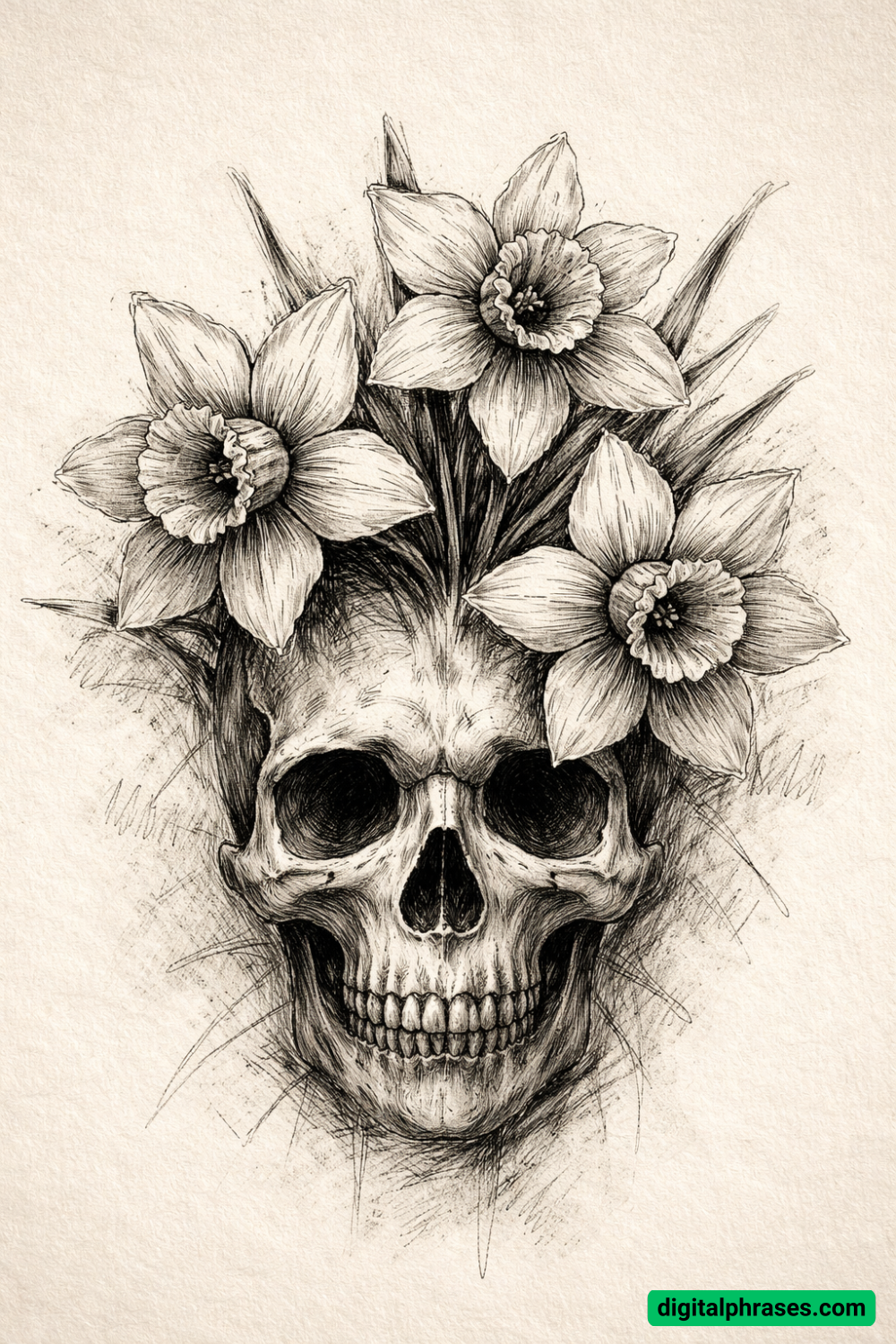
18
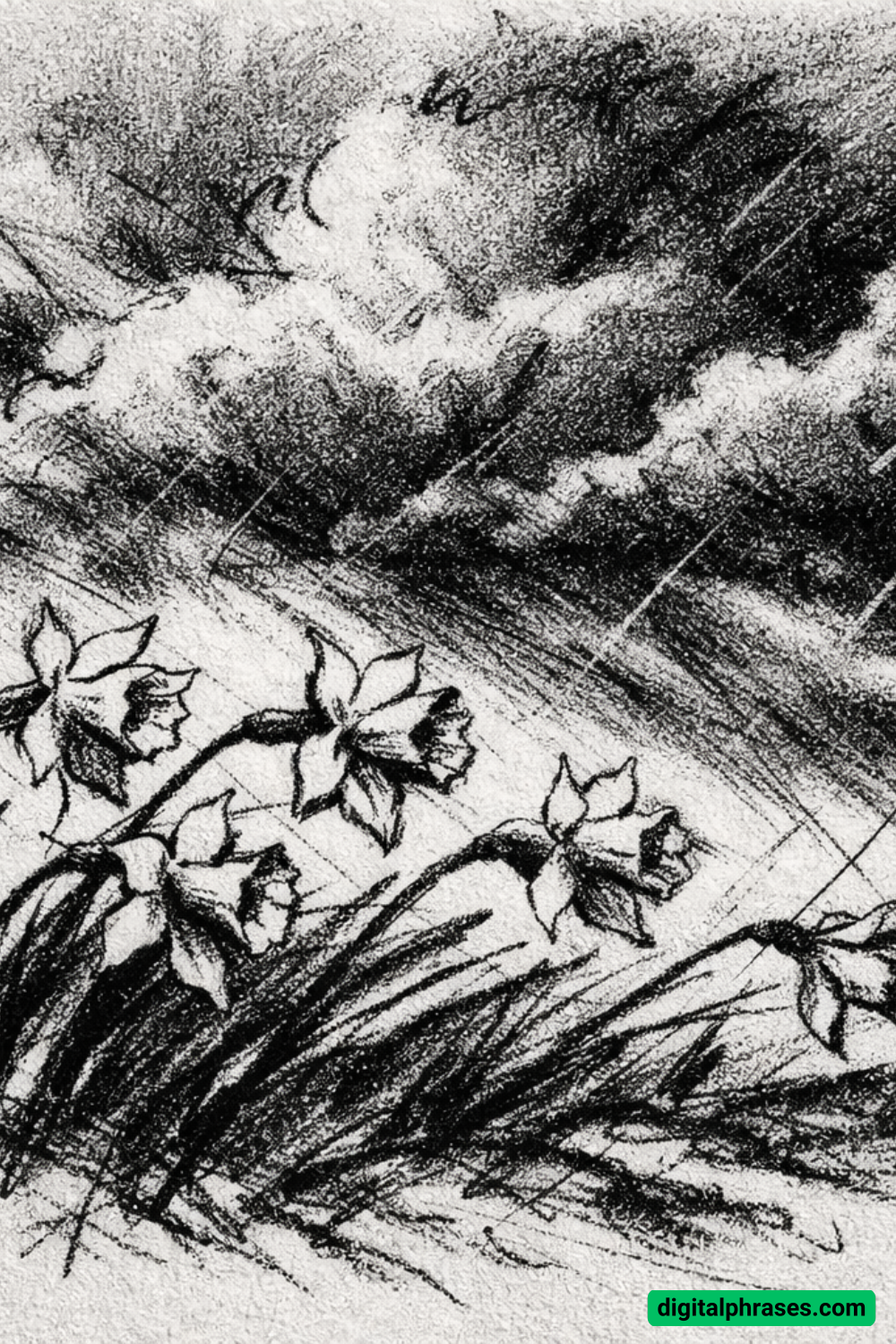
19
Tips on Drawing Daffodils
1. Understand the Structure Before You Add Details
Daffodils look simple at first glance, but their structure is a little sneaky. They’re made up of three main parts:
- The trumpet (corona) in the center
- Six petals (tepals) arranged around it
- A long, slightly curved stem with narrow leaves
Before you jump into shading or texture, take time to block in the basic shapes. Lightly sketch the trumpet as a short cylinder or flared cup. Then place the petals around it like a loose star or pinwheel. This step helps prevent flat-looking flowers.
A common mistake is drawing the daffodil face-on like a perfect circle with evenly spaced petals. In real life, daffodils tilt, twist, and overlap. Try drawing them from different angles—side view, three-quarter view, or slightly from above. This gives your drawing more depth and makes it feel alive instead of decorative.
If you can, look at real reference photos or an actual daffodil. Notice how the trumpet often casts a shadow onto the petals and how the petals curve backward at the edges. Those little structural quirks are what make your drawing feel believable.
2. Use Flowing Lines to Capture the Flower’s Gesture
Daffodils have a natural rhythm to them. The stems curve gently, the petals flare outward, and the whole flower tends to lean as if it’s reaching for sunlight. Start your drawing with gesture lines—long, loose strokes that capture the overall flow before you commit to clean outlines.
Think of the stem as a soft “S” curve rather than a stiff pole. Let your lines breathe. This will keep your daffodil from looking rigid or mechanical. Even if you’re going for realism, a bit of exaggeration in the curves can add elegance and life.
When refining your lines, avoid outlining everything with the same pressure. Vary your line weight:
- Thicker lines for areas in shadow or closer to the viewer
- Thinner lines for delicate petal edges and distant parts
This subtle variation instantly adds depth and sophistication to your drawing, even in simple line art.
3. Pay Attention to Petal Texture and Overlap
Daffodil petals are smooth but not flat. They often have faint veins running from the base outward, and the edges can be slightly ruffled. Don’t overdo the texture, but suggest it with light, directional lines. This keeps the petals from looking like paper cutouts.
Finally, don’t be afraid to stylize. You can push the trumpet shape, exaggerate the curves, or simplify the petals into graphic shapes. Studying real daffodils builds your foundation—but your personal style is what makes your drawings memorable.
4. Use Light and Shadow to Give the Flower Volume
Shading is what turns a flat sketch into a form with presence. Decide on a light source before you start shading—top left, top right, or directly above—and be consistent. The trumpet of the daffodil is especially fun to shade because it has a hollow interior. The inside will usually be darker, with a soft gradient moving outward.
For petals, use gentle gradients rather than harsh shading. Petals are thin and slightly translucent, so shadows are soft and light. If you’re working in pencil, build your tones slowly with light layers. If you’re using ink, consider using hatching or stippling to keep the shading airy.
Also, don’t forget cast shadows. A daffodil leaning over might cast a shadow on its own leaves or on the ground. These subtle touches anchor the flower in space and make the scene feel grounded.
5. Experiment with Composition and Mood
Instead of always drawing a single daffodil centered on the page, play with composition. Try:
- Cropping the flower so part of it goes off the edge of the page
- Drawing a small cluster instead of one bloom
- Placing the daffodil in an environment (a jar, a field, a rainy window sill)
Composition affects mood. A lone daffodil with lots of negative space can feel peaceful or melancholic. A bunch of daffodils packed together feels joyful and energetic. You can also use background shapes or light shading to suggest atmosphere without fully rendering a scene.
Finally, don’t be afraid to stylize. You can push the trumpet shape, exaggerate the curves, or simplify the petals into graphic shapes. Studying real daffodils builds your foundation—but your personal style is what makes your drawings memorable.