13 Fairy Wings Drawing Ideas
Too many wing designs end up looking the same—pretty, sure, but forgettable.
If you’re itching to level up your fantasy art, it’s time to break out of the basic butterfly mold and start designing wings with personality, power, and story baked into every line.
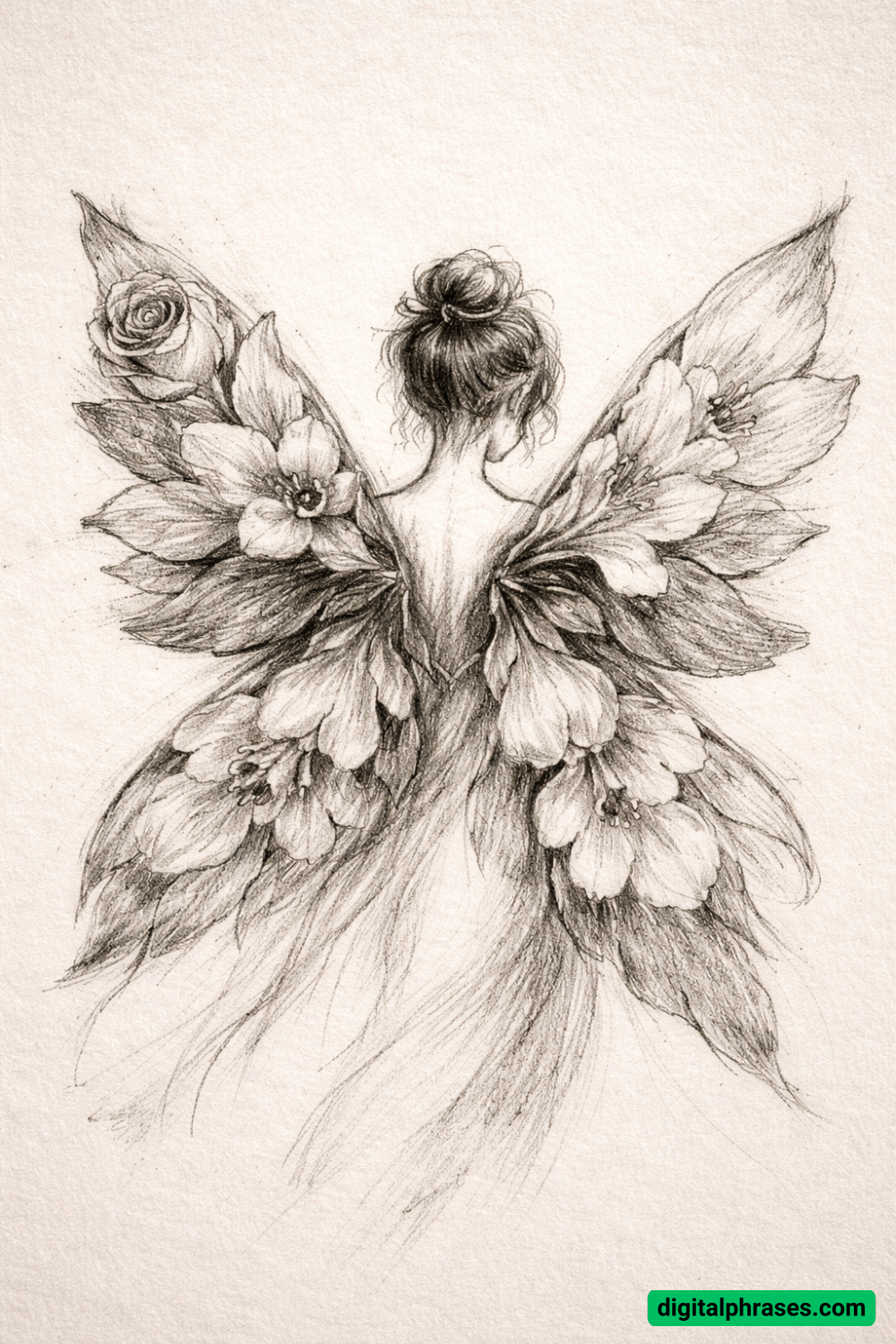
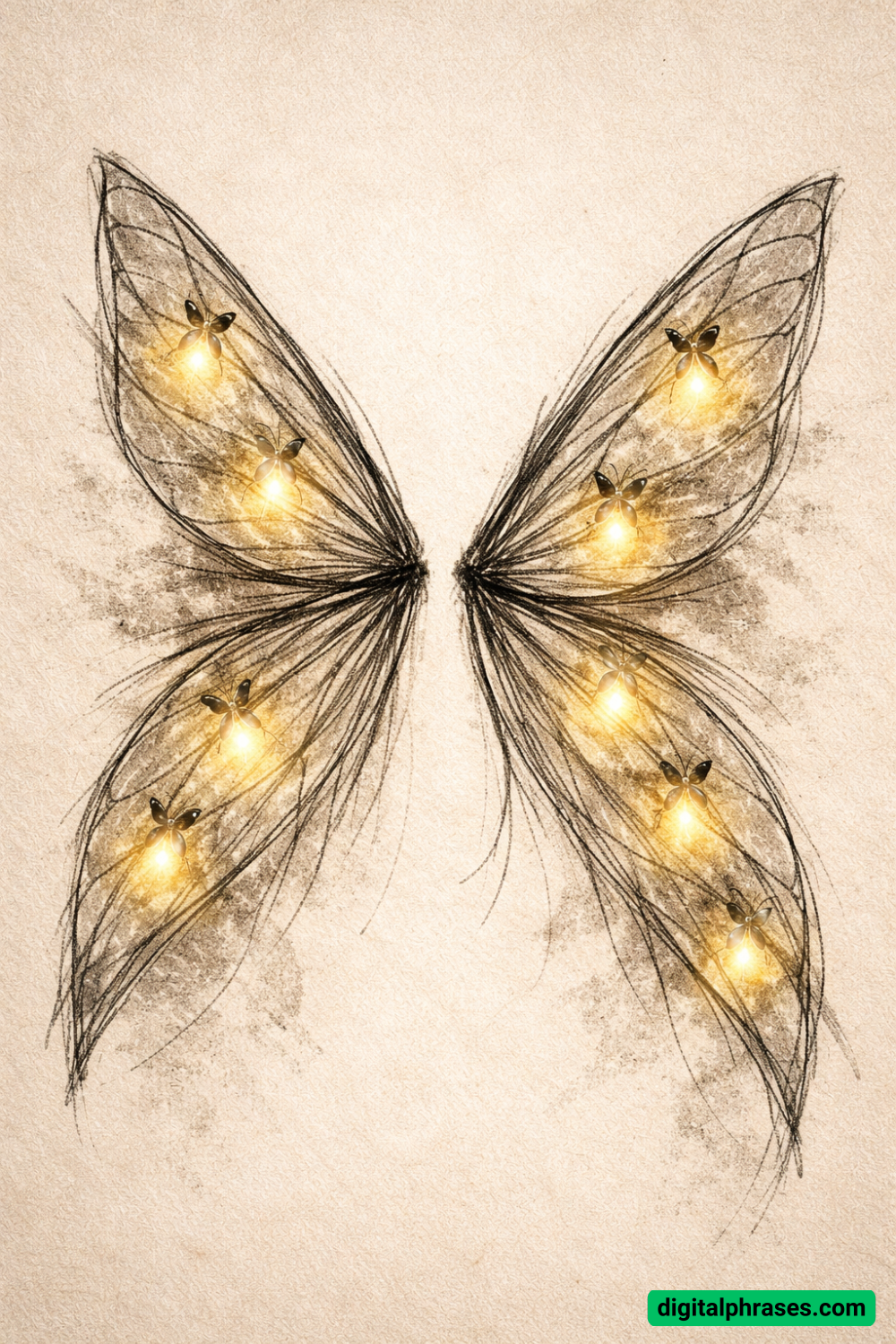
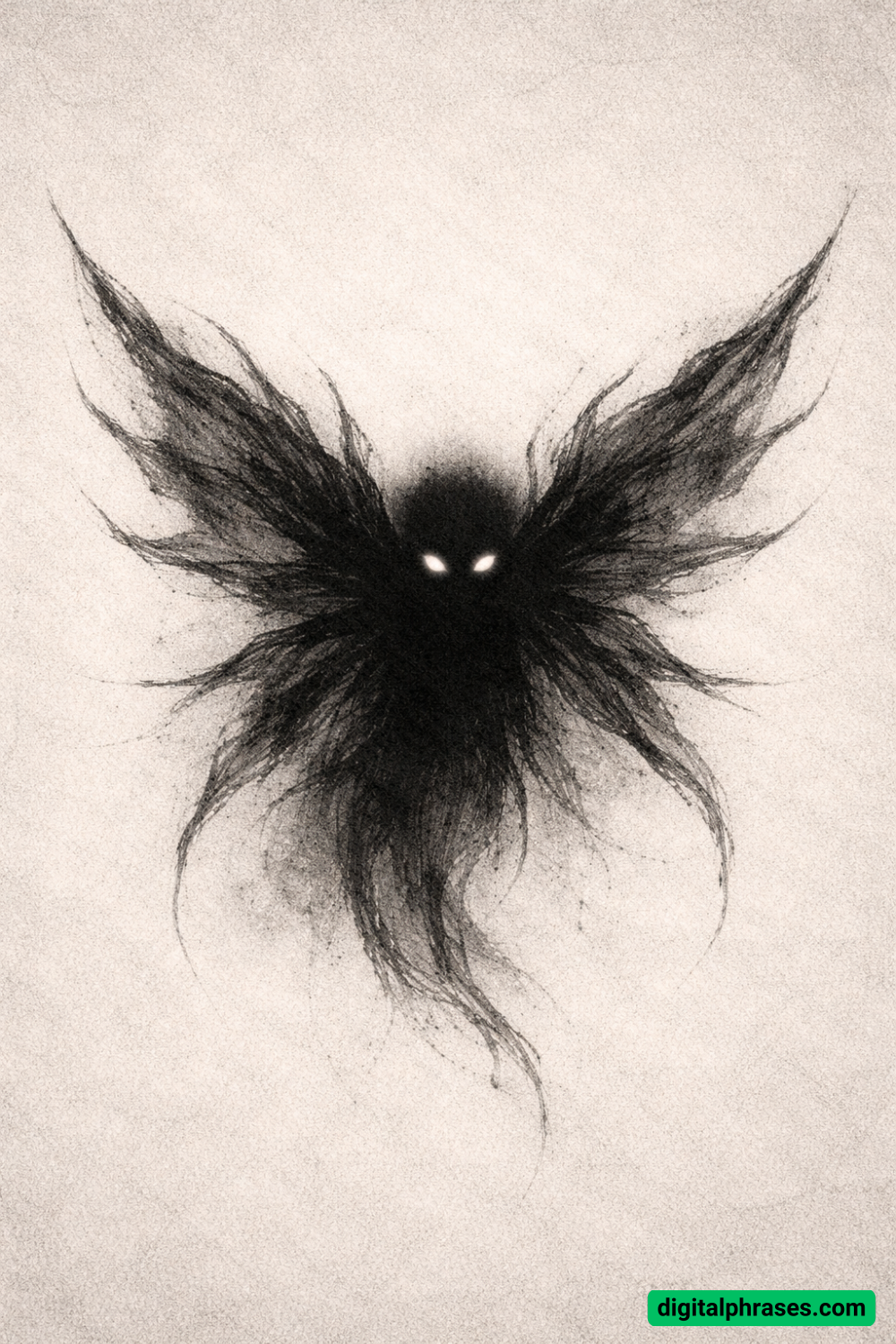
Here are some of the fairy wings drawing ideas to get you started.
Fairy Wings Drawing Ideas
1
2
3
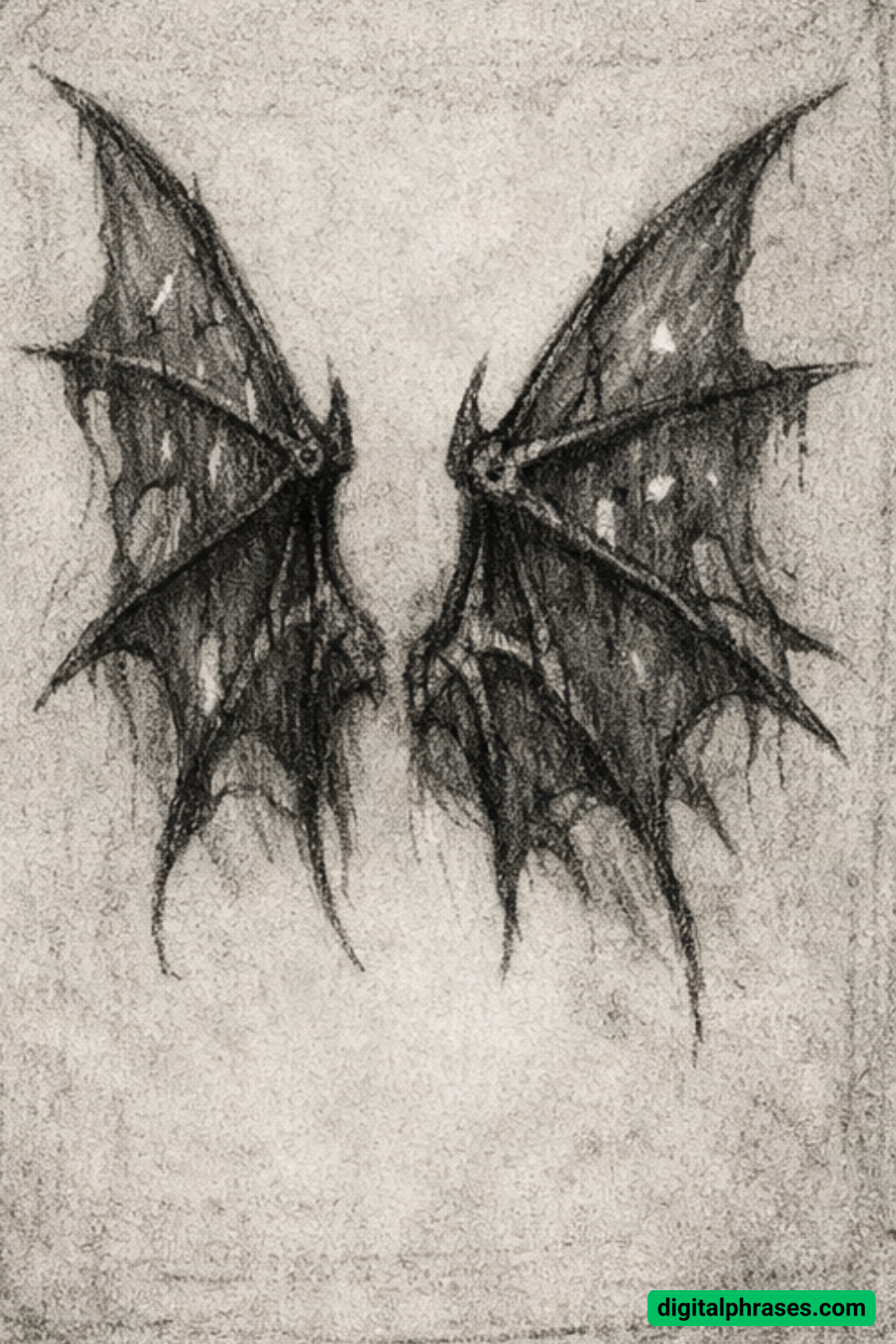
4
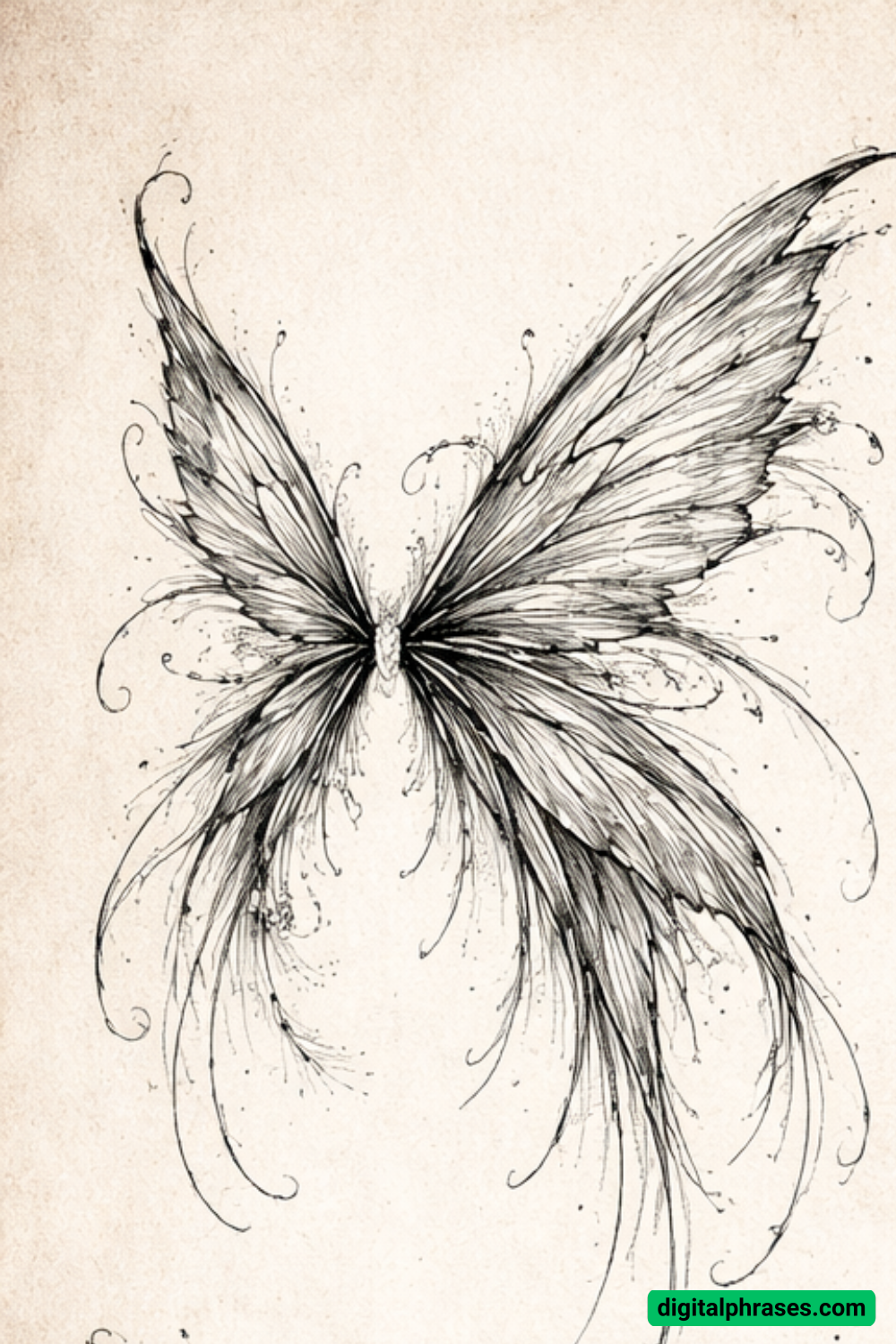
5
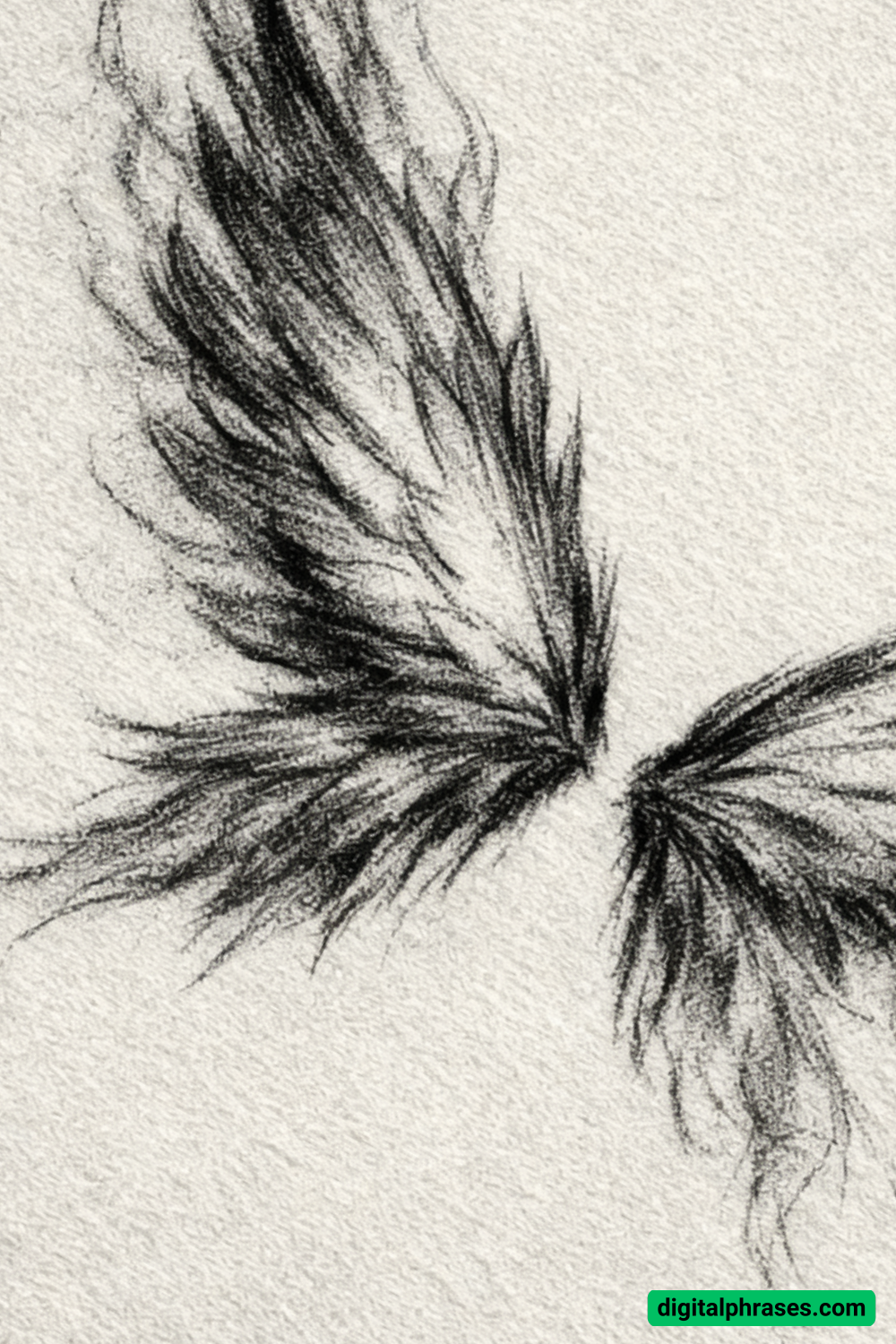
6
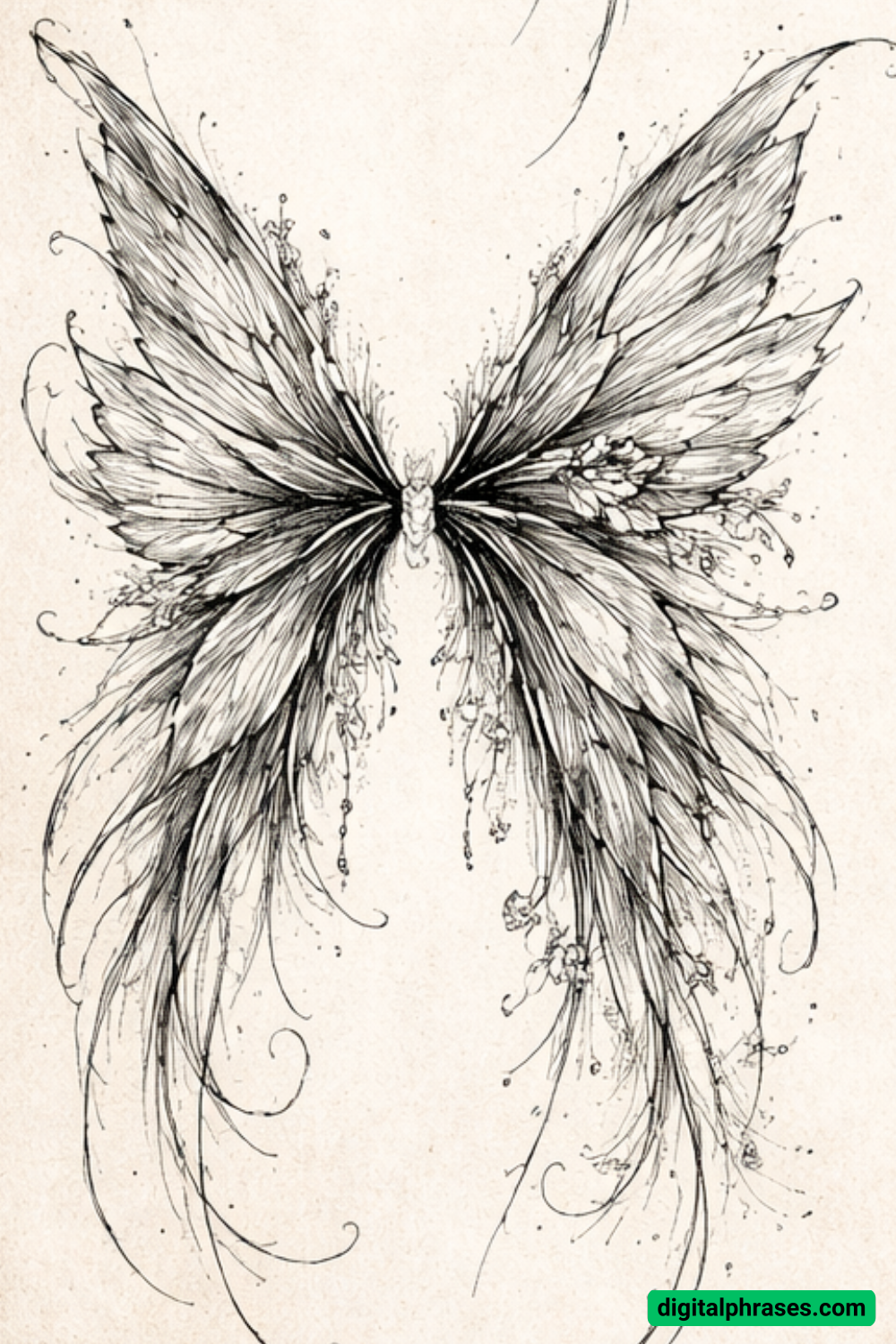
7
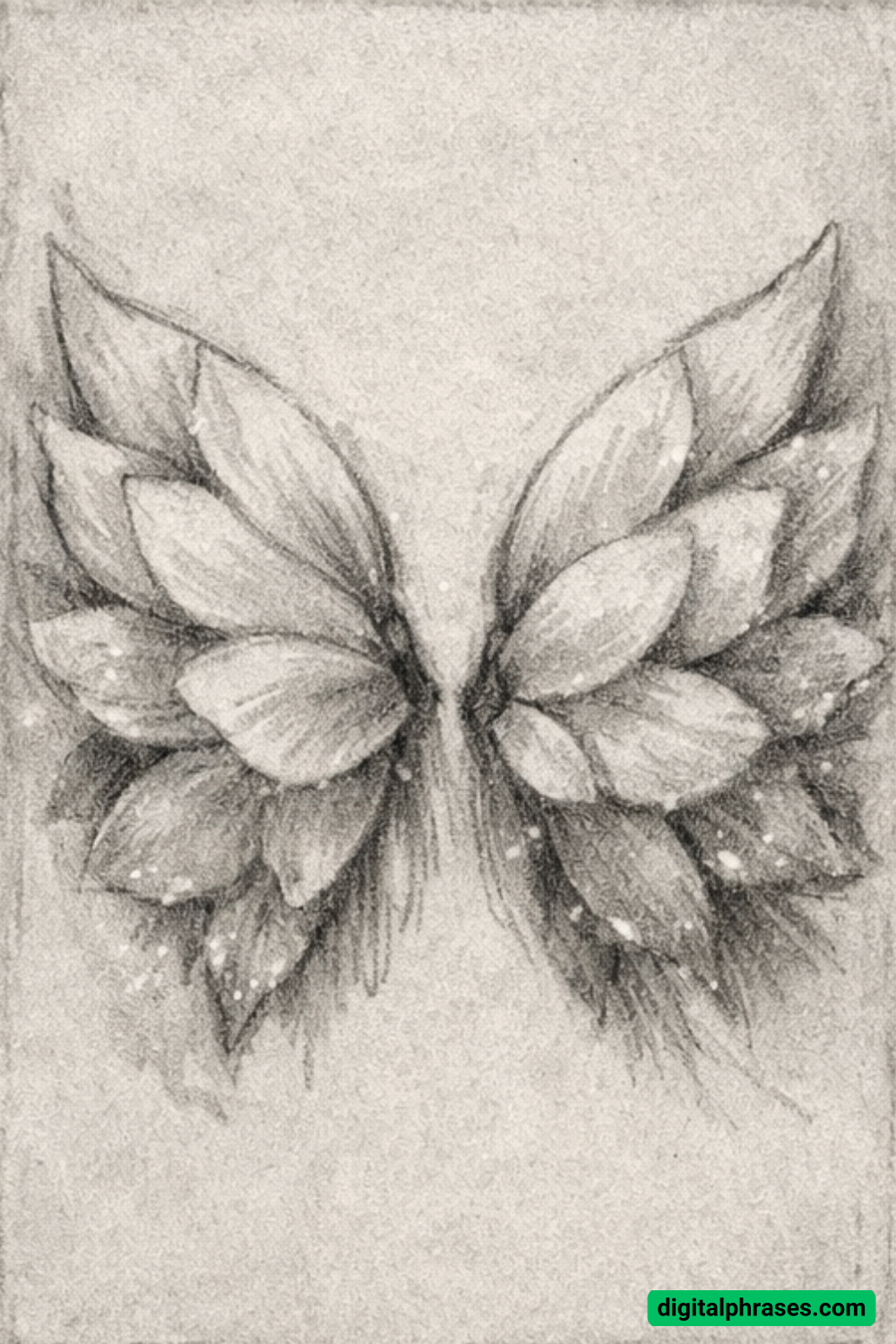
8
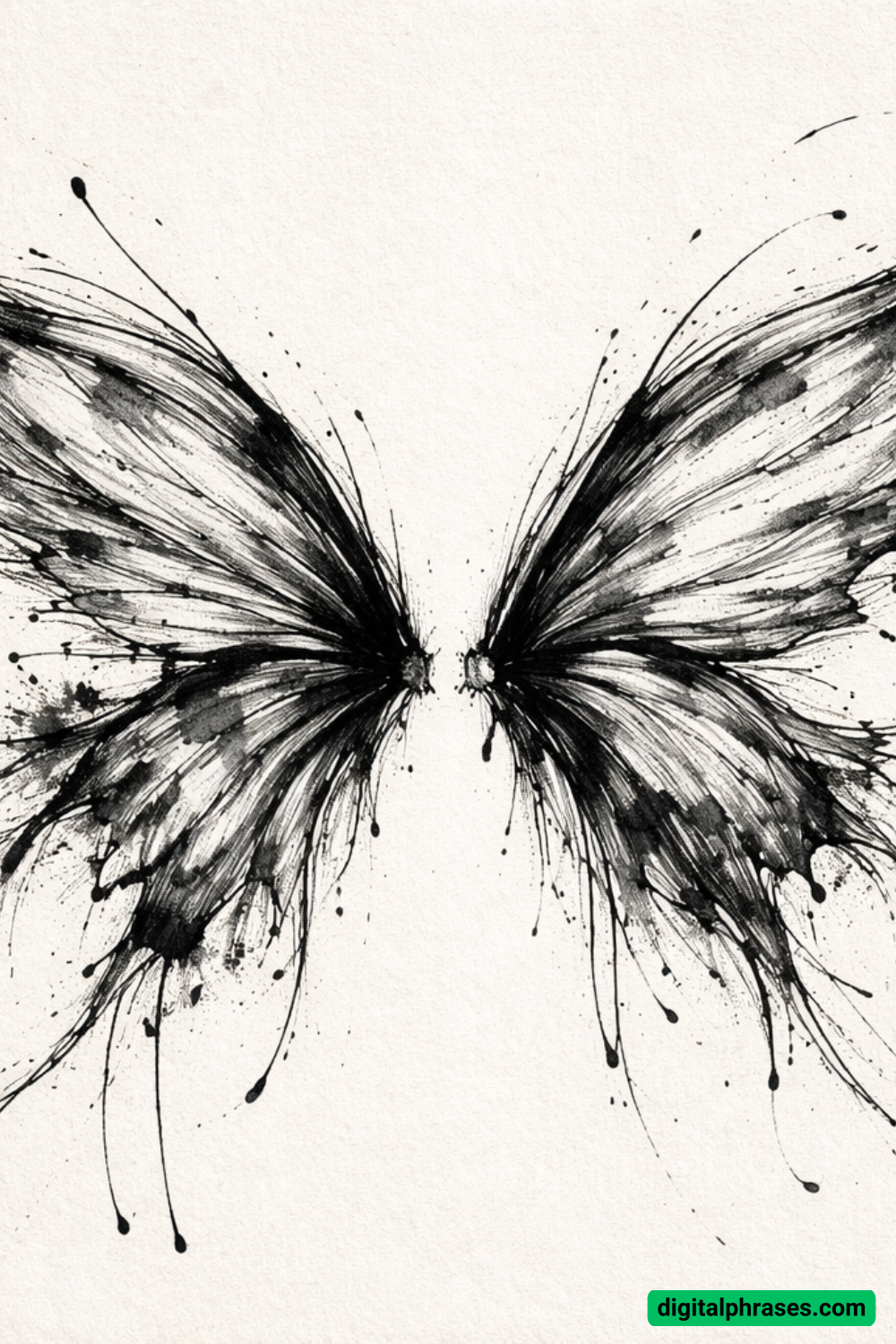
9
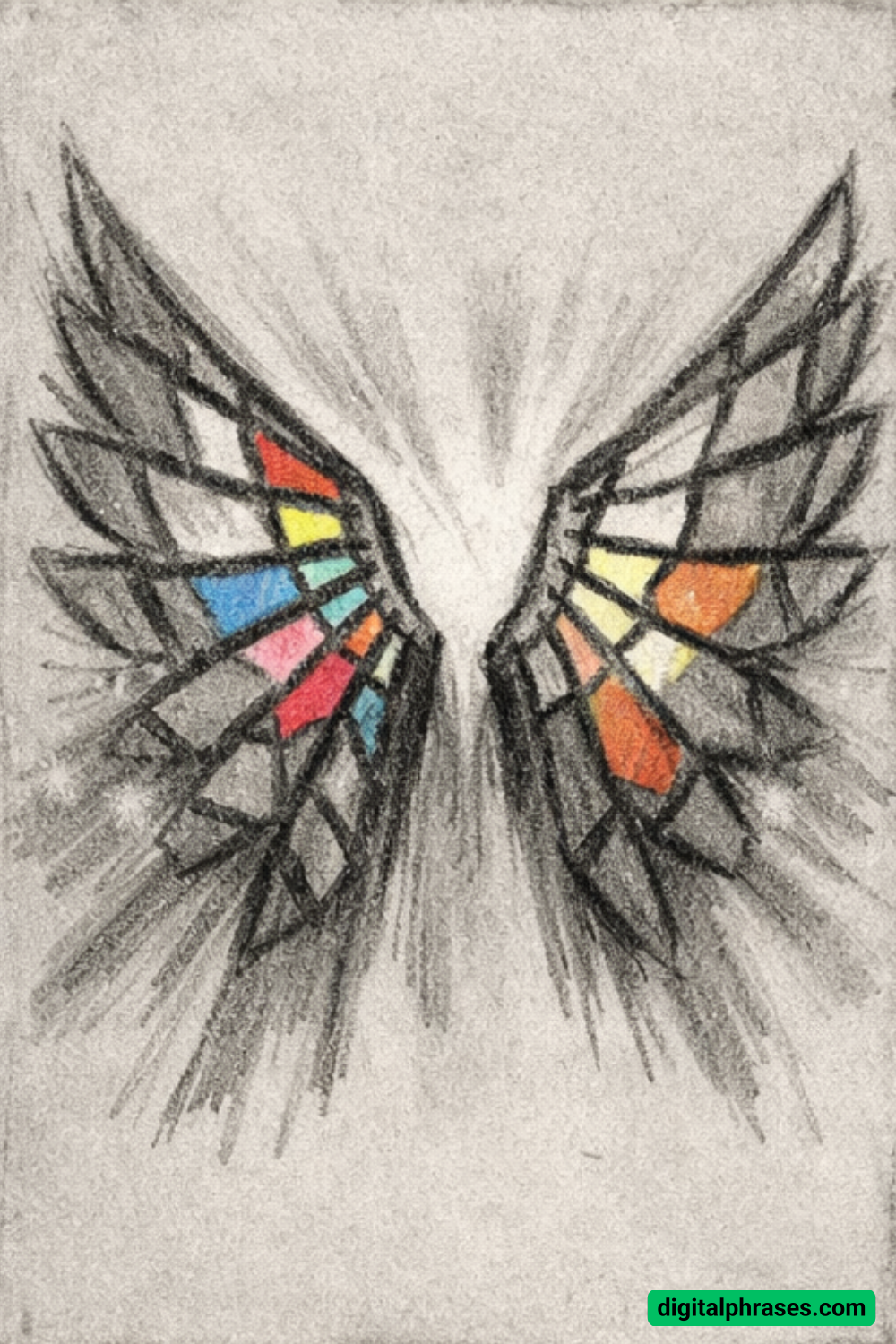
10
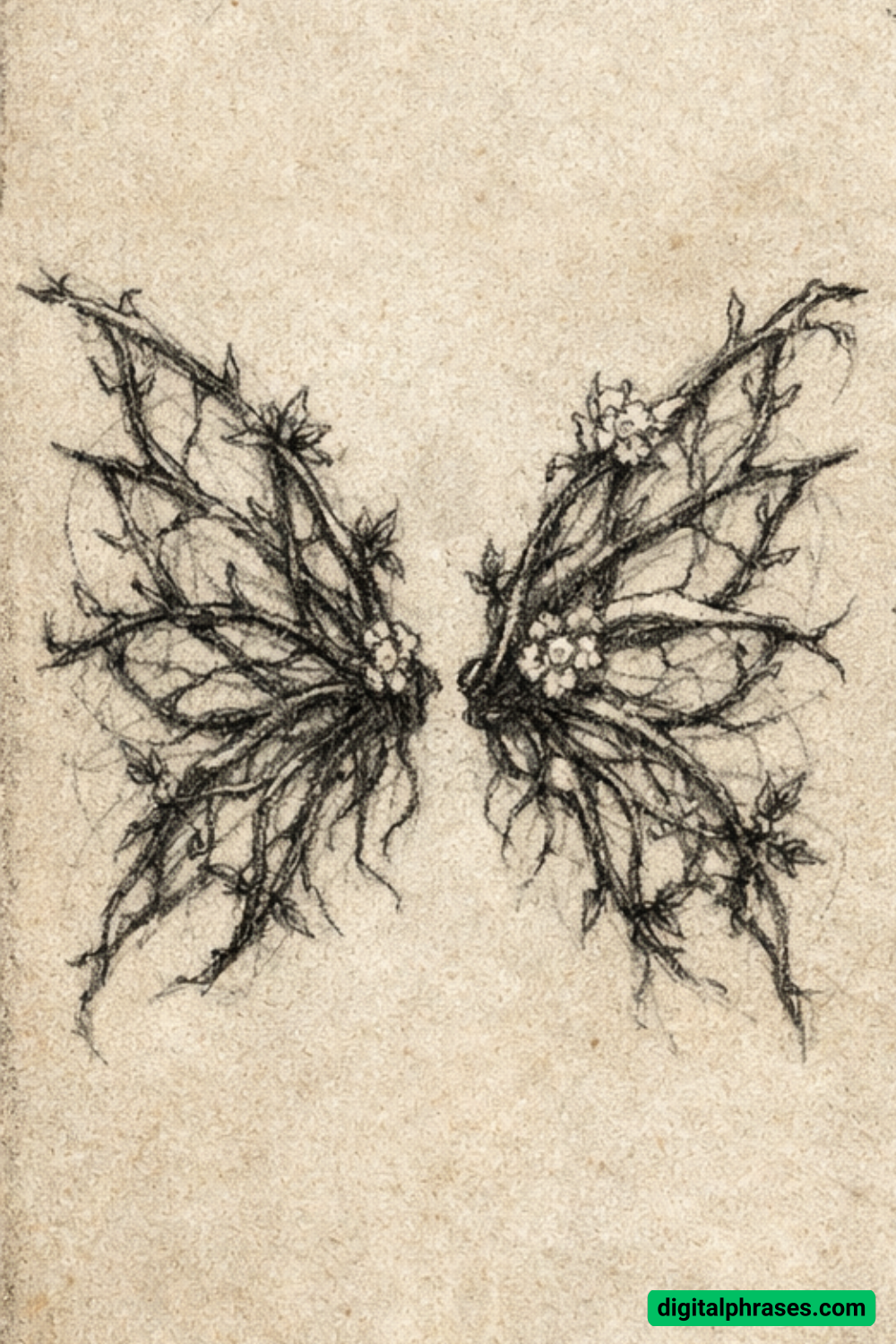
11
12
13
Tips on How To Draw Fairy Wings
1. Study Real Wings for Believable Structure
Even fantasy wings feel more convincing when they’re grounded in reality. Look at butterfly wings, moth wings, dragonfly wings, bat wings, and bird wings. Each has a unique structure:
- Butterfly and moth wings are wide, patterned, and symmetrical.
- Dragonfly wings are thin, veiny, and translucent.
- Bat wings have a visible bone structure with stretched membrane.
- Bird wings are layered with feathers and have clear joints.
When you understand these natural forms, you can remix them into fairy wings that feel organic rather than random. Try sketching a few real wings first, then stylize them—stretch the proportions, simplify shapes, or exaggerate curves. This foundation helps your fantasy designs look intentional instead of messy.
2. Build Wings from Simple Shapes First
Before you dive into details, block in the wings using basic shapes like ovals, teardrops, triangles, or long leaf-like forms. This helps with composition and symmetry. Wings are large visual elements, so if the overall shape feels awkward, no amount of detail will fix it.
A good approach:
- Draw a central guideline for the fairy’s back.
- Sketch one wing using simple shapes.
- Mirror that shape for the other wing.
- Adjust the pose slightly so they don’t look stiff and identical.
Once the silhouette looks good, you can layer details on top—veins, feathers, cracks, petals, or patterns. Strong silhouettes make wings readable even from far away, which is especially important for character design.
3. Make the Wings Match the Fairy’s Personality
Wings are storytelling tools. Ask yourself: What kind of fairy is this? Gentle, mischievous, dark, royal, wild, ancient? Let that guide your design choices.
- Soft, rounded wings suit kind or innocent fairies.
- Sharp, spiky wings fit darker or villainous characters.
- Elegant, elongated wings work for royal or ethereal fairies.
- Tattered or asymmetrical wings can suggest age, battle, or mystery.
You can also reflect environment and element: forest fairies might have leaf-like wings, fire fairies might have ember patterns, and moon fairies could have glowing, translucent wings. When wings reflect character, they stop being decoration and start becoming part of the narrative.
4. Add Texture and Layered Details
Flat wings often look boring. Texture brings them to life. Think about what the wings are made of and show it visually:
- Veins in insect wings
- Feather layers in bird-like wings
- Cracks in crystal wings
- Soft fuzz on moth wings
- Veins in leaves or petals
Use line weight variation to suggest depth—thicker lines for the main structure, thinner lines for delicate details. Layering is key: overlapping feathers, petals, or membranes creates visual richness and makes the wings feel dimensional.
5. Use Light, Transparency, and Glow for Magic
Fairy wings shine when you play with light effects. Many fairy wings look magical because they are translucent, glowing, or reflective.
Tips:
- Lightly shade the wings so parts look see-through.
- Add highlights along edges to suggest glassy or delicate surfaces.
- Use glow effects around veins, patterns, or tips for a magical feel.
- Let background light pass through parts of the wing to make it feel airy.
If you work digitally, soft brushes and layer modes can create glow. If you work traditionally, white gel pens, light watercolor washes, or colored pencils can help achieve luminous effects.
6. Experiment, Break Rules, and Design Variations
Don’t settle on your first design. Push yourself to explore weird ideas: asymmetrical wings, broken wings, floating wing fragments, wings made of smoke, constellations, or stained glass. Design multiple versions of the same fairy’s wings to see what feels strongest.
A great exercise:
- Draw the same fairy with three different wing styles.
- One realistic, one elegant, one experimental.
This builds creativity fast and helps you discover your own visual style. Fairy wings are fantasy—so let your imagination go wild. The more you experiment, the more unique and memorable your designs will become.