21 Palm Tree Drawing Ideas
Palm trees are one of the easiest and most relaxing things to draw. Their simple shapes—long trunks, flowing leaves, and tropical vibe—make them perfect for beginners, while still leaving plenty of room for creativity.
In this blog, you’ll find some amazing palm tree drawing ideas that range from super simple to a bit more creative. Use them for practice, inspiration, or just to unwind with a sketchbook.
1

2

3

4

5

6

7

8

9

10

11

12

13

14
15

16

17

18

19

20
21

Tips For Drawing Palm Trees
Start with Simple Shapes
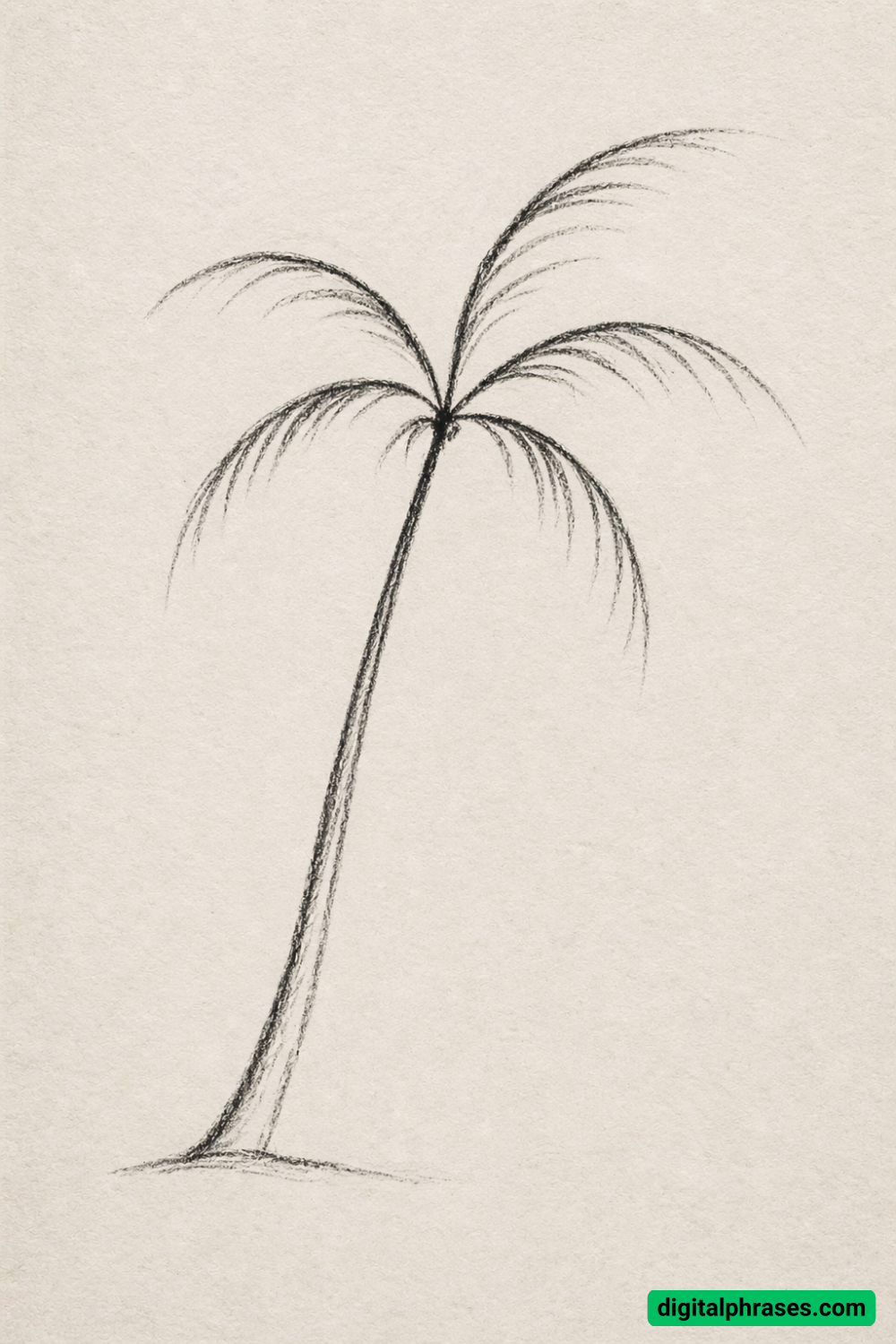
Don’t overcomplicate your palm tree from the beginning. Break it down into basic shapes—draw a slightly curved line for the trunk and sketch loose, thin lines spreading out for the leaves. Think of it as building a structure rather than aiming for perfection right away. Once the basic form is in place, you can slowly add more detail. This approach keeps your drawing clean and prevents frustration, especially if you’re just starting out.
Keep the Leaves Loose and Flowing
Palm leaves aren’t stiff or perfectly symmetrical. Let your lines flow naturally and avoid making each leaf identical. Start from the center and draw long, slightly curved strokes outward. You can add smaller strokes along each leaf to give it texture. The more relaxed your hand is, the more natural your palm tree will look. Don’t worry about neatness—slight imperfections actually make it feel more realistic.
Add Texture to the Trunk
A plain trunk can make your drawing look flat. To improve it, add simple horizontal lines or small curved marks along the trunk to suggest texture. You don’t need to draw every detail—just a few well-placed lines can make a big difference. Keep the texture uneven and organic rather than perfectly spaced, since real palm trees have natural variation.
Play with Different Angles
Instead of always drawing straight, upright palm trees, experiment with angles. Try a slightly curved trunk or a leaning tree as if it’s shaped by coastal winds. You can also draw palm trees from different perspectives—like looking up from the ground or viewing them from a distance. Changing angles adds variety and makes your sketches more interesting.
Practice with Small Variations
Repetition doesn’t have to be boring. Draw multiple palm trees, but tweak each one slightly—change the height, leaf spread, or trunk curve. These small variations help you understand the form better and build confidence. Over time, you’ll develop your own style naturally without forcing it.