How To Draw a Basketball?
Here’s the step by step process of drawing a basketball.
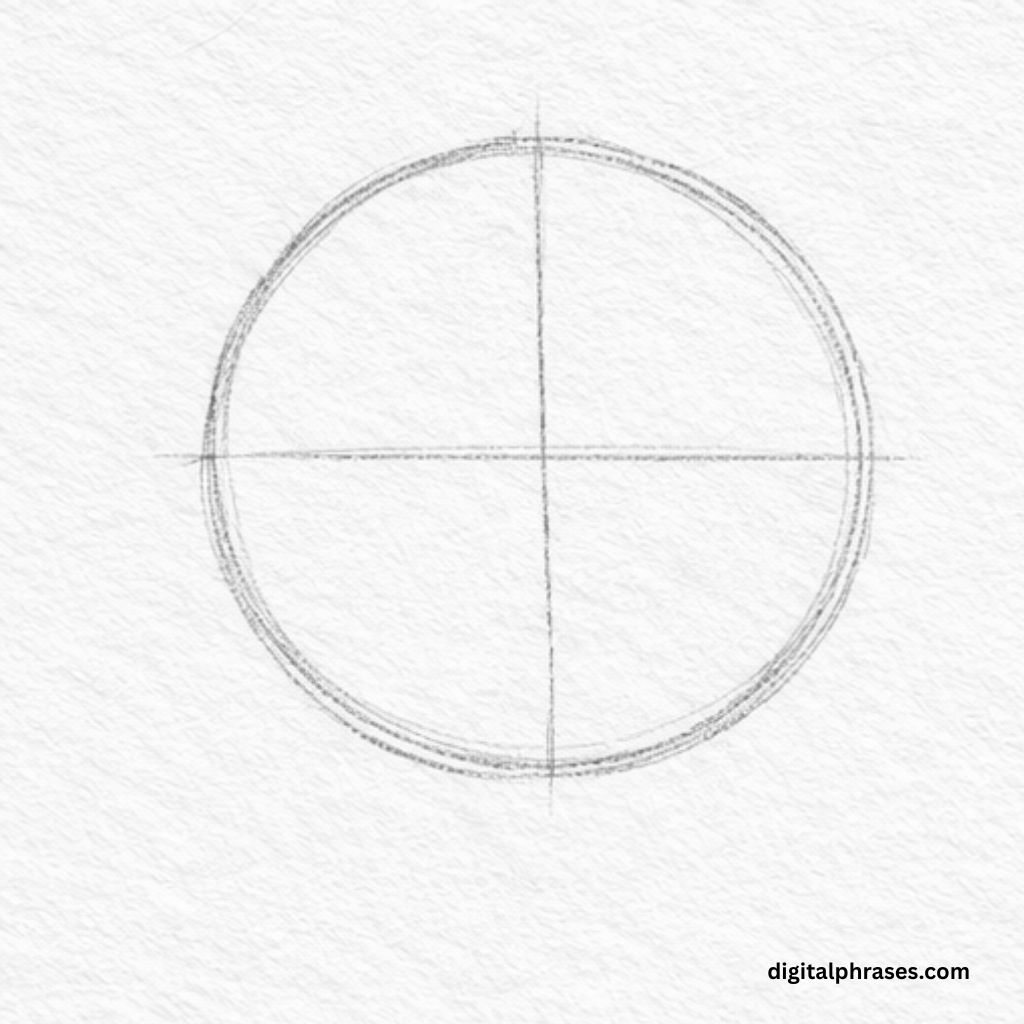
Step 1 – Draw the Circle and Basic Guidelines
- Begin by drawing a large, clean circle to form the outer shape of the basketball.
- Lightly sketch a vertical guideline through the center of the circle so you can keep the seams balanced.
- Add a horizontal guideline across the middle, creating a simple cross that divides the ball into four sections.
- Keep the guidelines faint; they are only used for alignment and will be erased later.
- If needed, trace the circle a second time very lightly to smooth out bumps and make the outline more even.
- Check that the cross meets at the true center—this will help the curved seam lines look symmetrical.
- Avoid adding any seam details yet; this step is only about setting up the correct proportions and placement.
Step 2 – Add the First Curved Seams
- Draw two long, curved vertical seam shapes on the left and right sides of the ball.
- Each seam should look like a tall “parenthesis” curve, bending inward slightly as it travels through the circle.
- Add a third curved seam closer to the center, creating the classic basketball panel flow.
- Make sure the seam lines follow the roundness of the ball—curves should feel like they wrap around a sphere, not like flat stripes.
- Keep the seam lines light and adjustable while you place them, especially where they approach the edge of the circle.
- Check spacing: the seam sections should look evenly distributed, with no side feeling too crowded.
- Refine the outer circle slightly if the seams reveal any unevenness in the ball’s outline.
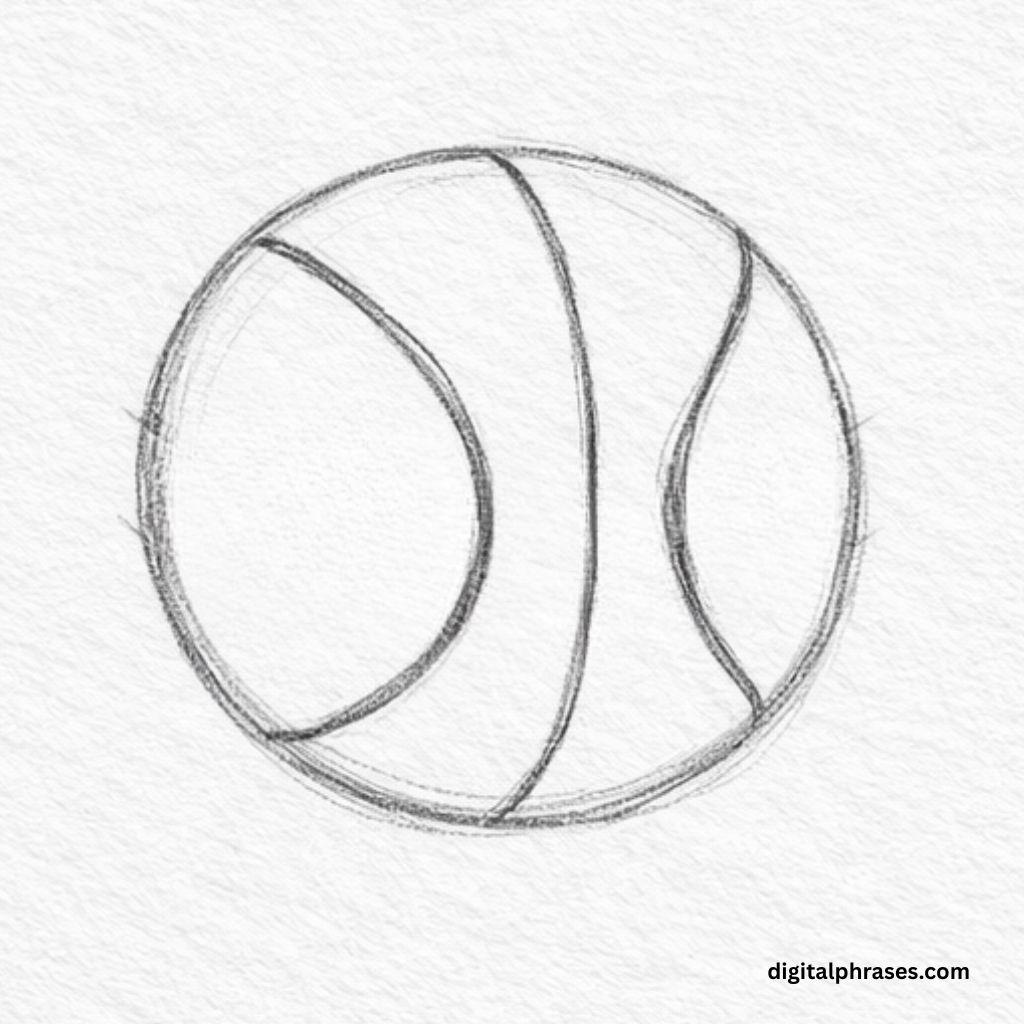
Step 3 – Draw the Horizontal Seam and Clean the Layout
- Add a curved horizontal seam that crosses the ball from left to right, slightly arcing to match the ball’s 3D surface.
- Where the horizontal seam meets the vertical seams, make sure the intersections connect cleanly and naturally.
- Adjust the seam thickness lightly by tracing over them once more so they read clearly against the ball surface.
- Erase or soften the original cross guidelines if they distract from the seam pattern.
- Recheck the curve directions: seams should always curve as if they’re wrapping around a round object.
- Smooth any wobbly lines and keep the seam endpoints clean at the ball’s edge.
- At this stage, the basketball should look complete in line form, with clear panel seams but minimal shading.
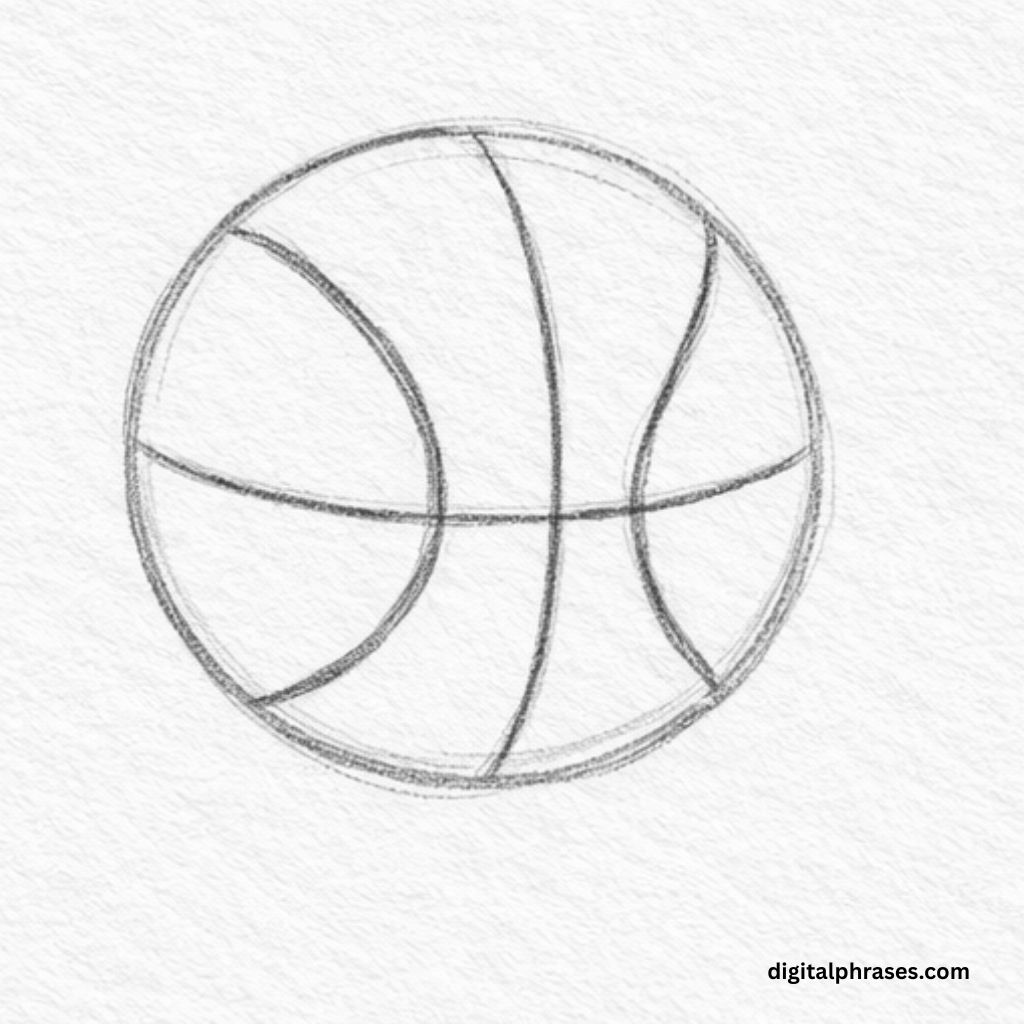
Step 4 – Shade the Ball and Add a Cast Shadow
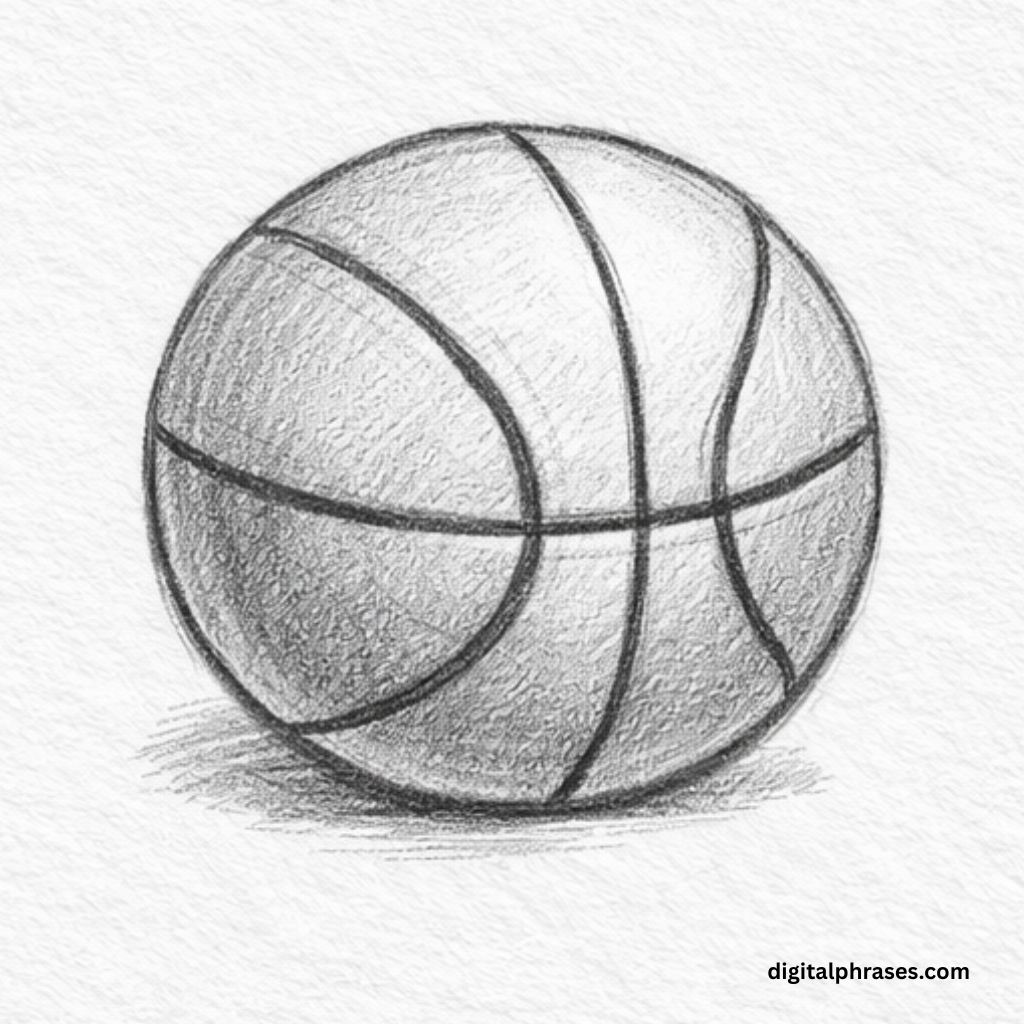
- Darken the seam lines slightly to make them stand out, as shown in the final reference image.
- Shade the ball with soft pencil strokes, keeping one side lighter and the opposite side darker to suggest a light source.
- Build shading gradually: start with a light mid-tone, then deepen shadows near the darker edge and along some seam boundaries.
- Leave a lighter highlight area on the brighter side of the ball to make it look round and glossy.
- Add subtle shading near the bottom edge of the ball to increase the sense of weight.
- Draw a cast shadow underneath as a flattened oval, darkest directly under the ball and lighter as it spreads outward.
- Blend the shadow into the surface with gentle strokes so the ball feels grounded, not floating.
- Finish by erasing any leftover construction marks and tidying the outline for a clean, finished basketball drawing.