How To Draw a Brick?
Here are the steps.
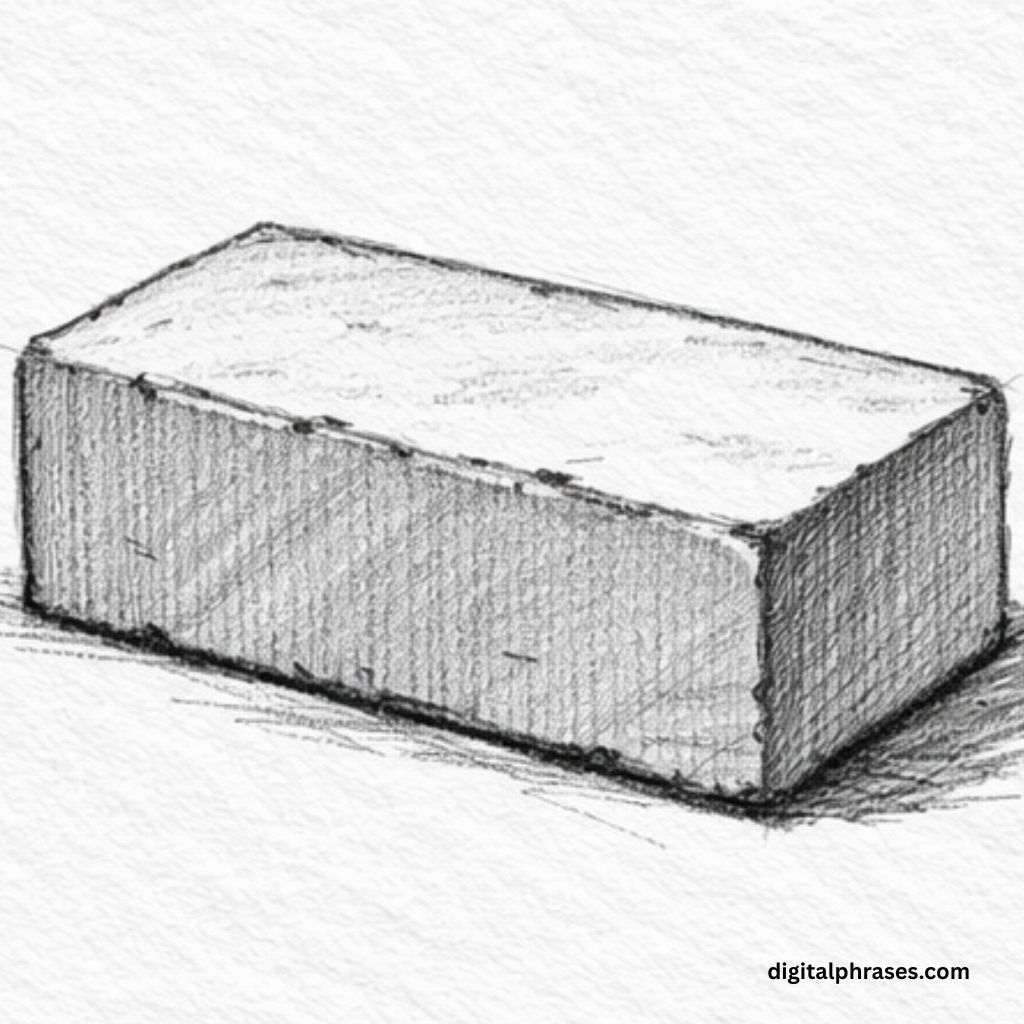
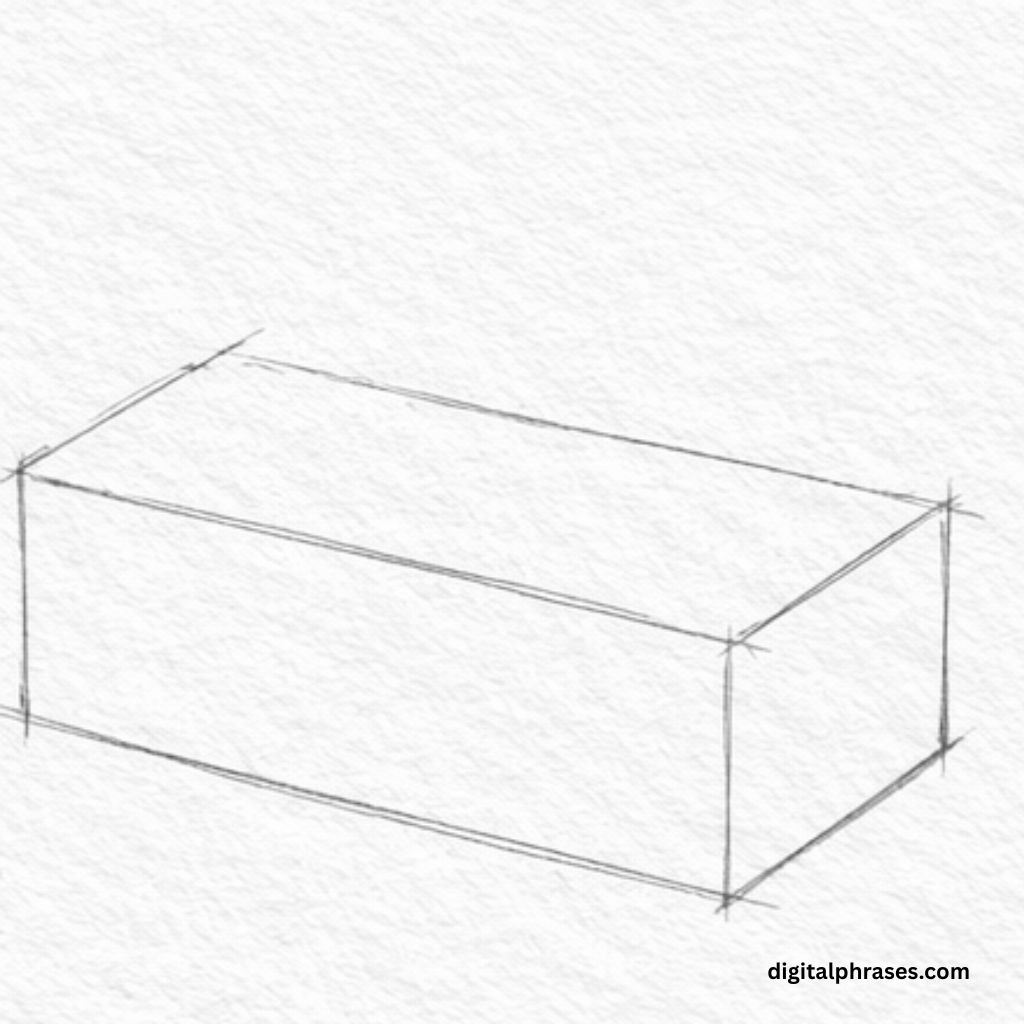
Step 1 – Sketch the Brick as a Simple 3D Box
- Start by drawing a long rectangle for the top face of the brick, slightly angled so it shows perspective.
- From the corners of that top face, draw short connecting lines downward to begin forming the side faces.
- Close the shape by drawing the bottom edges, creating a full rectangular prism (box).
- Keep the lines very light and straight, using quick sketch strokes rather than heavy outlines.
- Make sure the far edges are slightly shorter than the near edges to create depth and a believable 3D angle.
- Add tiny corner marks or guide ticks (like in the reference) if it helps you keep corners aligned.
- Don’t add shading or texture yet—this step is only about getting the brick’s proportions and perspective correct.
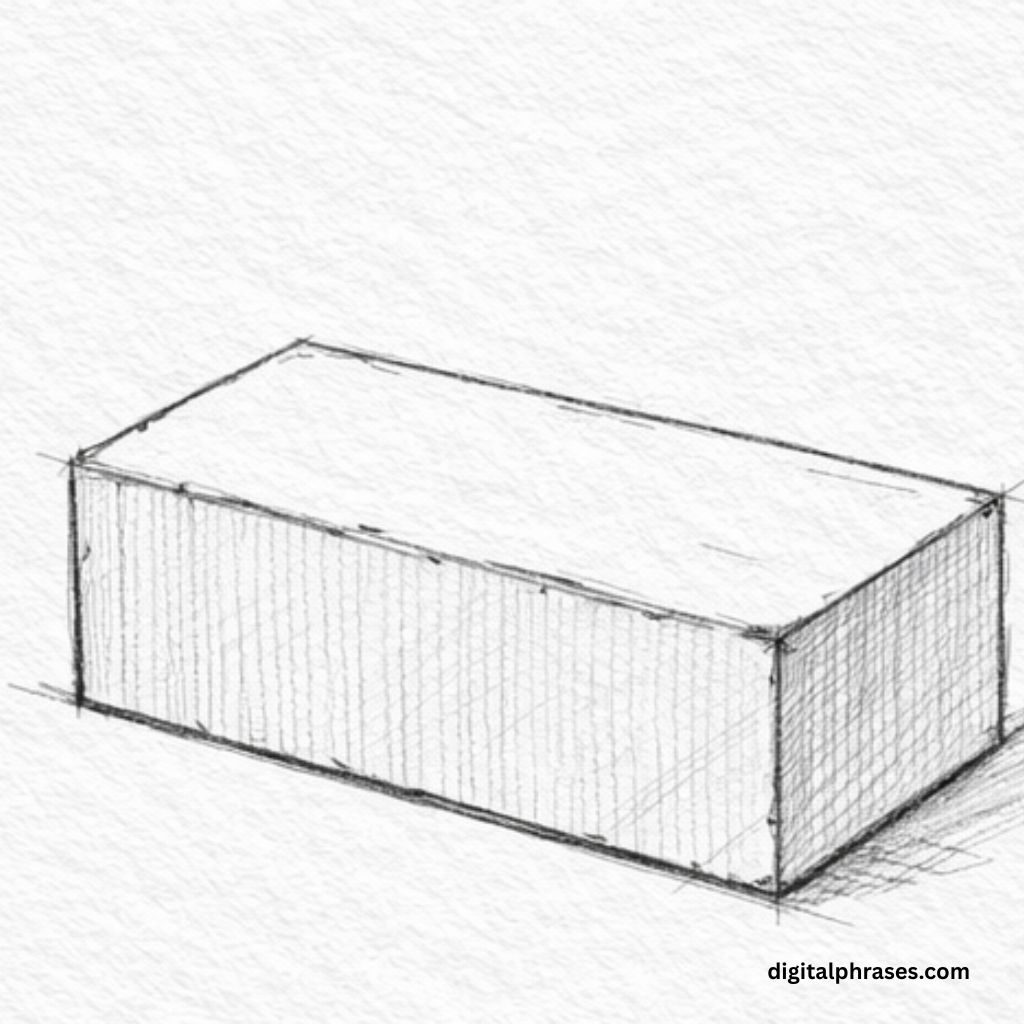
Step 2 – Strengthen the Outline and Add Basic Shading Planes
- Trace over the main edges of the box with slightly darker lines, keeping corners crisp and clean.
- Identify the three visible planes: top face, front/side face, and end face.
- Begin shading the side face with light, vertical pencil strokes to separate it from the top plane.
- Add a faint shadow tone on the end face as well, slightly darker than the side if it’s turned farther from the light.
- Keep the top face mostly light, with only minimal shading near edges to show a subtle surface angle.
- Lightly suggest a ground shadow behind or beside the brick, but keep it very soft at this stage.
- Maintain consistent perspective by checking that all parallel edges stay aligned in direction.
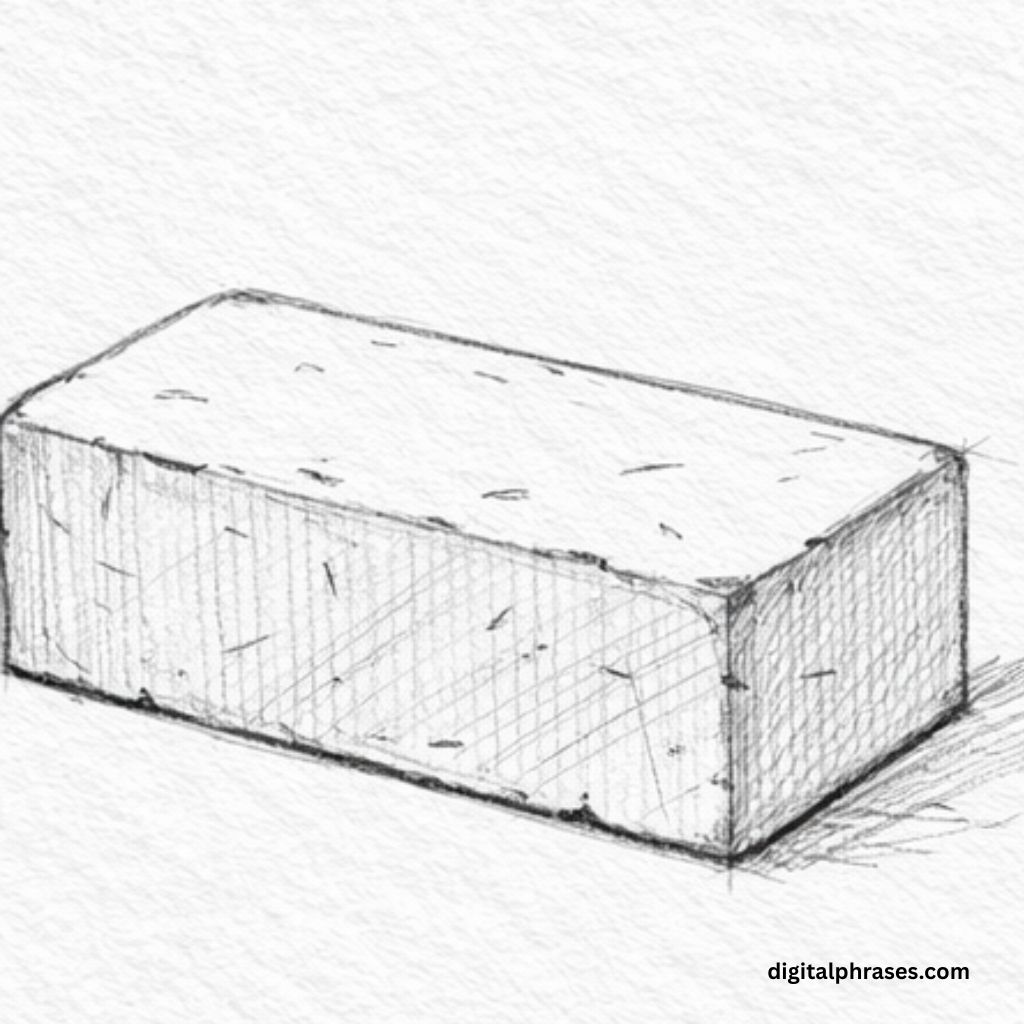
Step 3 – Add Texture and Surface Imperfections
- Start adding small pits, speckles, and tiny marks across the brick faces to suggest a rough material.
- Lightly break up the clean edges by adding subtle unevenness—bricks are rarely perfectly sharp in real life.
- Strengthen the shading on the side face with more layered strokes, keeping the texture visible through the shading.
- Add gentle tonal variation on the top face: slightly darker near one edge, lighter near the highlight area.
- Scatter a few texture marks on the side and end faces, but keep them irregular so it doesn’t look like a pattern.
- Refine the cast shadow line on the ground, lightly extending it behind the brick to show it sitting on a surface.
- At this stage, the brick should look solid and textured, but not yet fully contrasted or finished.
Step 4 – Deepen Contrast and Finish the Brick’s Realistic Look
- Darken the deepest shadows along the bottom edges where the brick meets the ground to make it feel heavier and grounded.
- Increase shading on the side and end faces, using denser cross-hatching or layered strokes for stronger depth.
- Add slightly darker tone under the top edge to show a subtle overhang and thickness.
- Enhance surface texture by emphasizing a few pits and rough marks, especially in shadowed areas where they stand out more.
- Clean up and sharpen the silhouette, making sure the brick’s outline is clear without being overly thick everywhere.
- Strengthen the cast shadow behind/under the brick, darkest closest to the brick and fading as it stretches outward.
- Finish by balancing the tones: the top face remains the lightest, the side face mid-tone, and the far end face the darkest (depending on your chosen light direction), creating a convincing 3D brick.