How to Draw a Forest
Here’s the simple and easy steps on how to draw a forest.
Step-By-Step Process on How To Draw a Forest
Step 1: Establish the Composition and Basic Structure
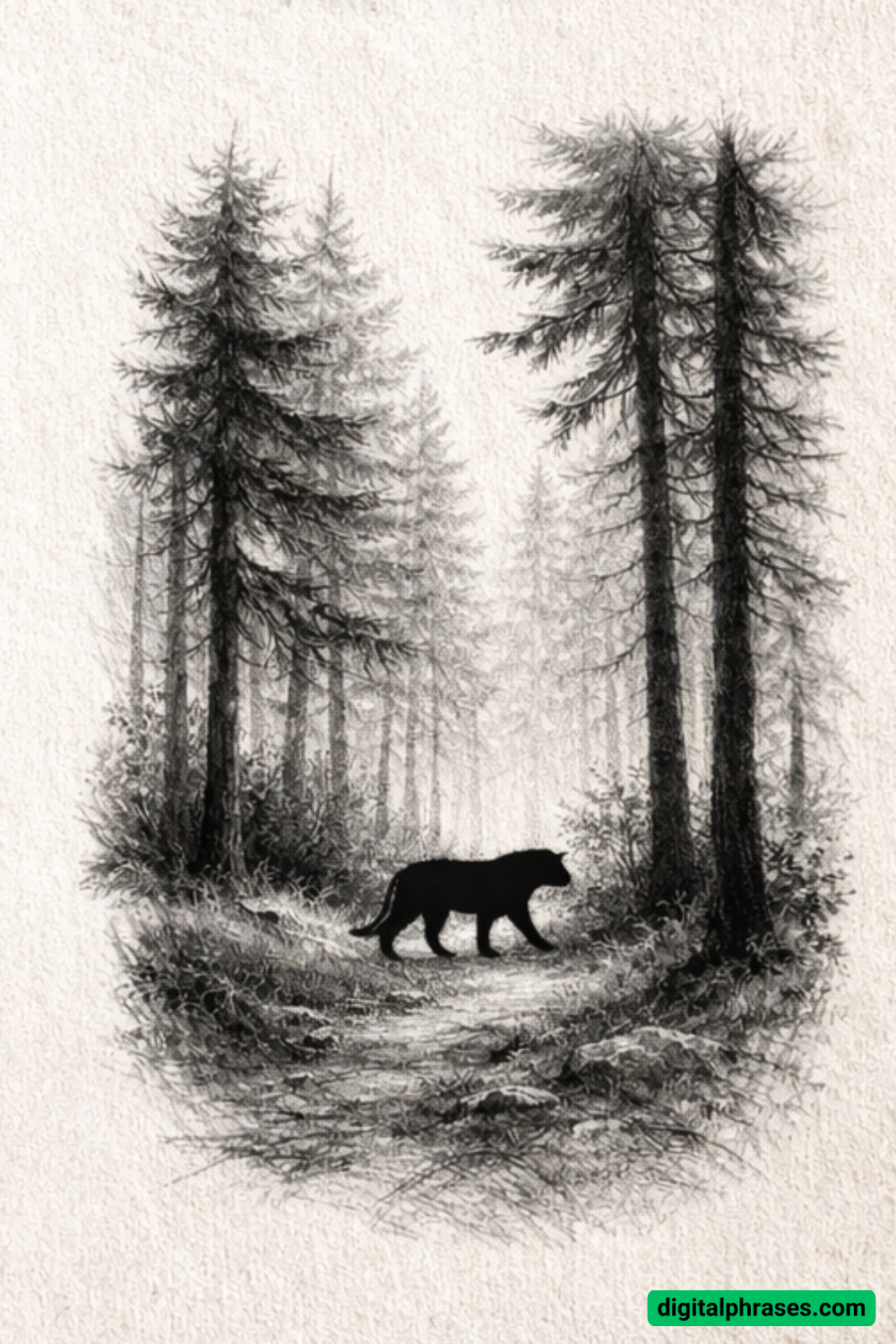
Begin very lightly using a hard charcoal stick or charcoal pencil. Outline a portrait-oriented frame to guide your composition. Sketch two tall vertical lines to indicate the main foreground tree trunks. Keep your lines faint and loose.
Lightly draw a winding path starting from the lower center of the page and curving inward toward the middle distance. Add simple vertical strokes in the background to mark distant trees. Do not add details yet — this stage is only about placement, proportion, and flow.
Focus on:
- Vertical balance of trees
- Direction of the path
- Overall spacing and breathing room
Keep everything soft and minimal.
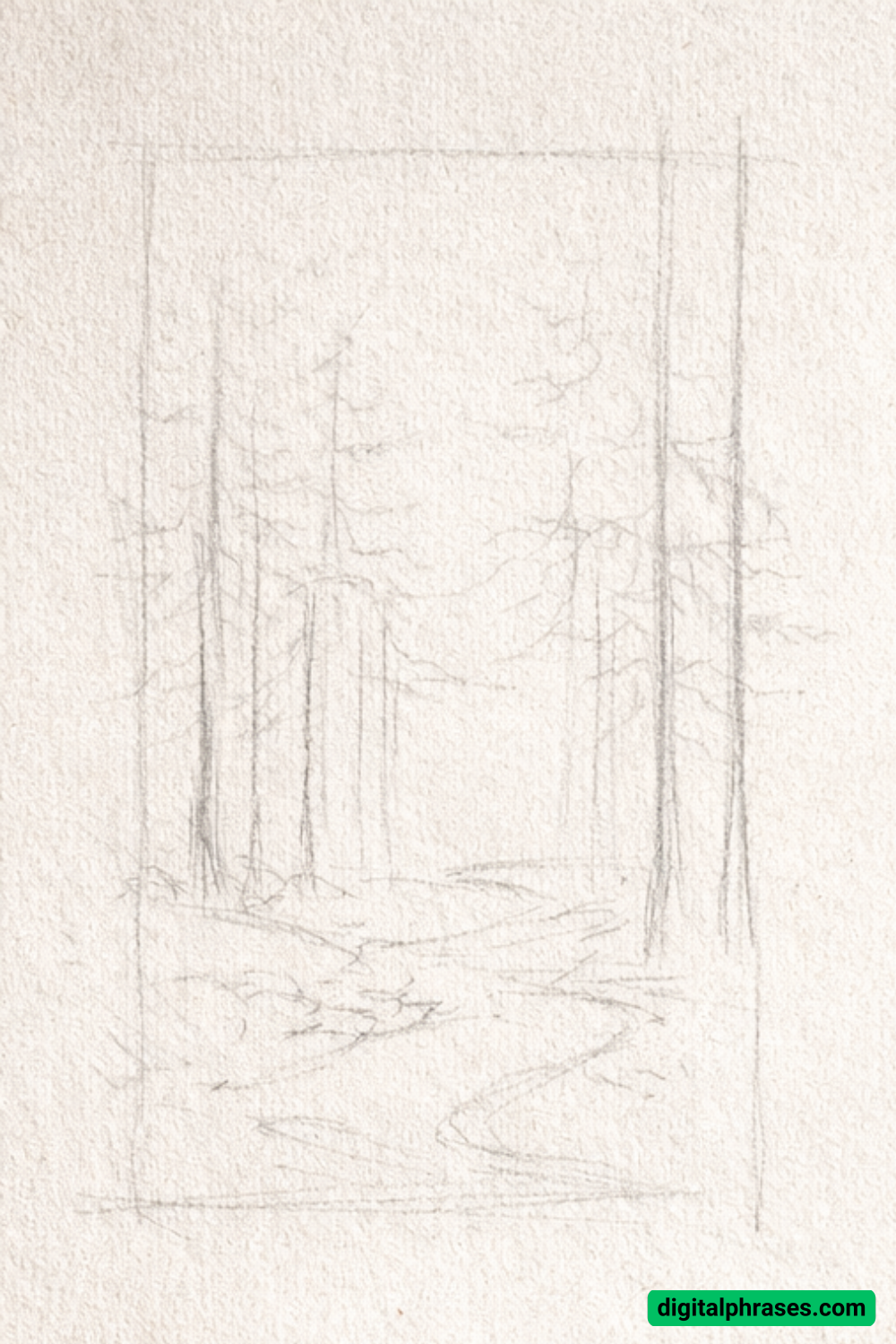
Step 2: Develop the Foreground Trees
Now begin defining the two main trees. Darken the trunks using the side of the charcoal for natural bark texture. Avoid straight, rigid edges — trees are organic and slightly irregular.
Add branches extending outward and slightly upward. Use quick, tapering strokes so the branches become lighter toward the tips. Build density closer to the trunk and let the outer edges stay airy.
Introduce subtle shading at the base of the trunks to anchor them to the ground. Keep background trees lighter and thinner to create separation.
Focus on:
- Strong contrast in foreground
- Varied pressure for texture
- Organic, imperfect line work
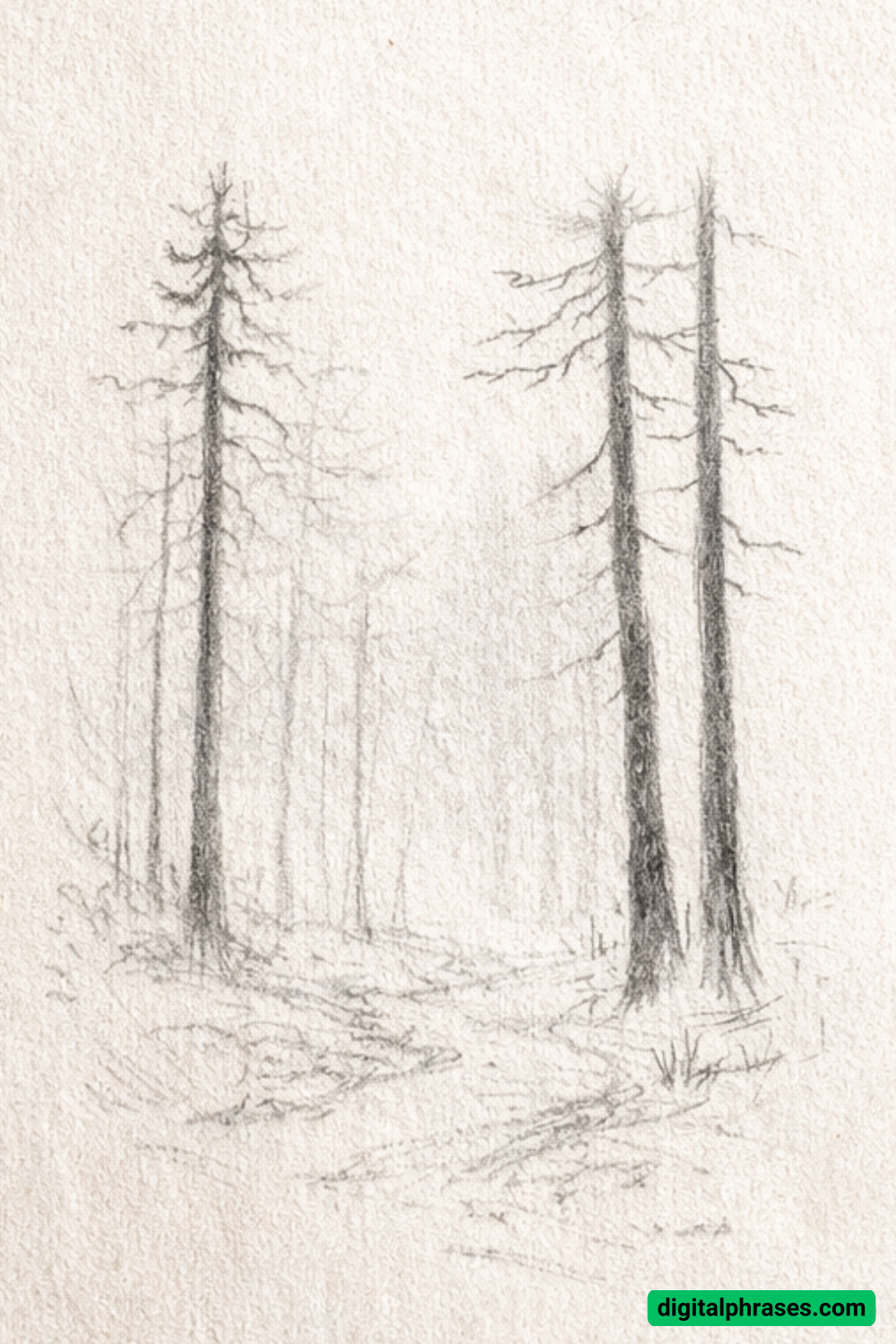
Step 3: Create Depth and Atmosphere
To achieve the misty forest effect, gently smudge charcoal in the midground and background using a tissue or blending stump. This softens the distant trees and creates atmospheric perspective.
Redraw background tree trunks lightly over the blended areas so they appear faint and receding. Reduce detail as objects move further back.
Shade the path slightly darker along its edges and lighter toward its center to suggest depth and direction. Add light undergrowth using loose, scattered strokes.
Focus on:
- Softer contrast in distance
- Gradual fading of detail
- Smooth blending for fog effect
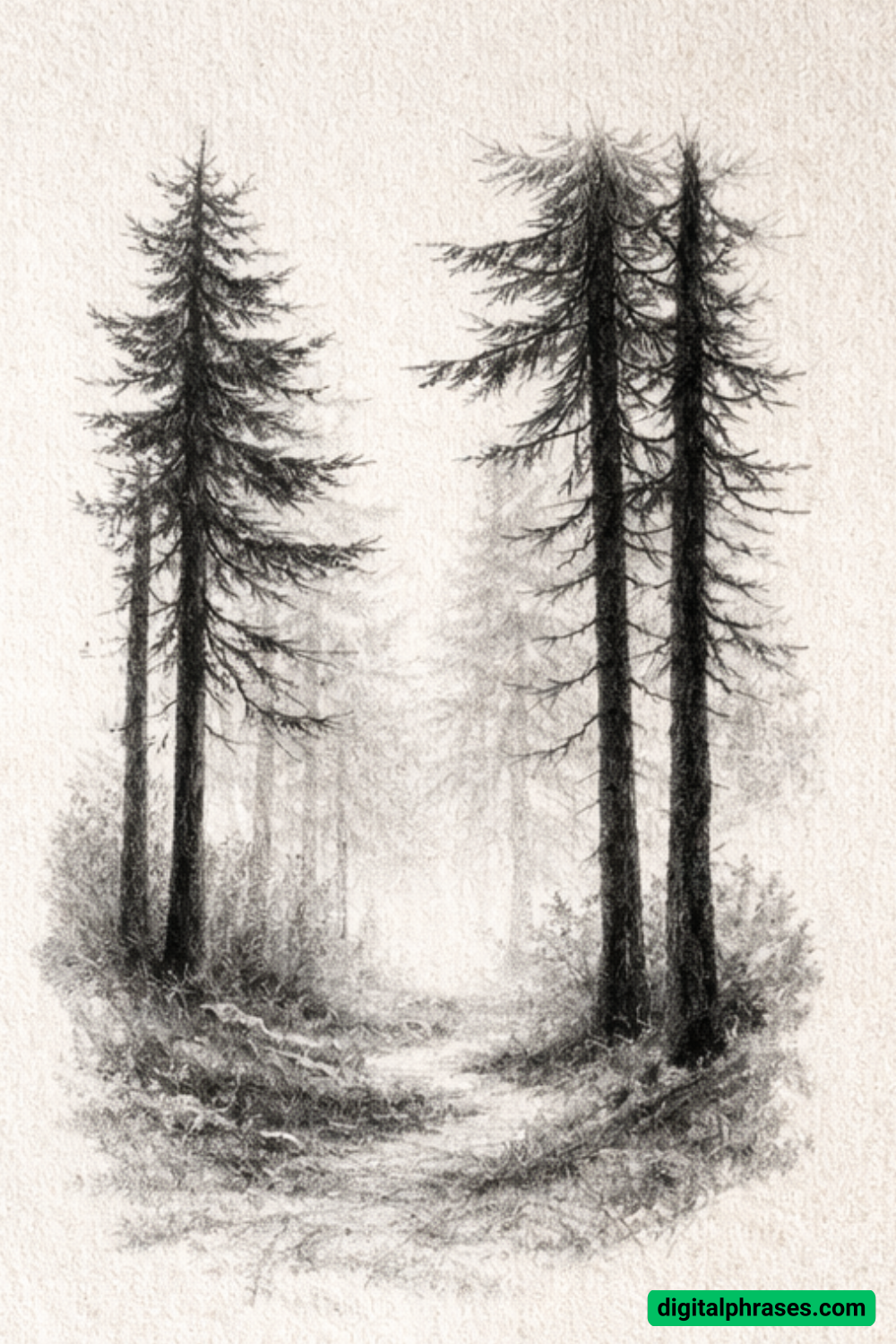
Step 4: Refine Ground Texture and Add the Silhouette
Deepen shadows around the foreground tree bases and along one side of the path to enhance dimension. Add small rocks, grass, and shrub textures using quick, broken strokes. Avoid overworking — let the charcoal’s natural grain show.
Now introduce an animal silhouette in the midground along the path. Keep it simple and solid. Ensure the edges are slightly softened so it blends naturally with the environment rather than appearing cut out. Position it so it feels integrated within the jungle, partially grounded by subtle shadow beneath its feet.
Finally, use a kneaded eraser to lift highlights along the path and lightly on trunk edges to create contrast and focus. Stop once the balance of light and dark feels harmonious — minimalism is key.