How To Draw a Hibiscus Flower
Here is the simple process.
Step-by-Step Guide to Drawing a Hibiscus Flower
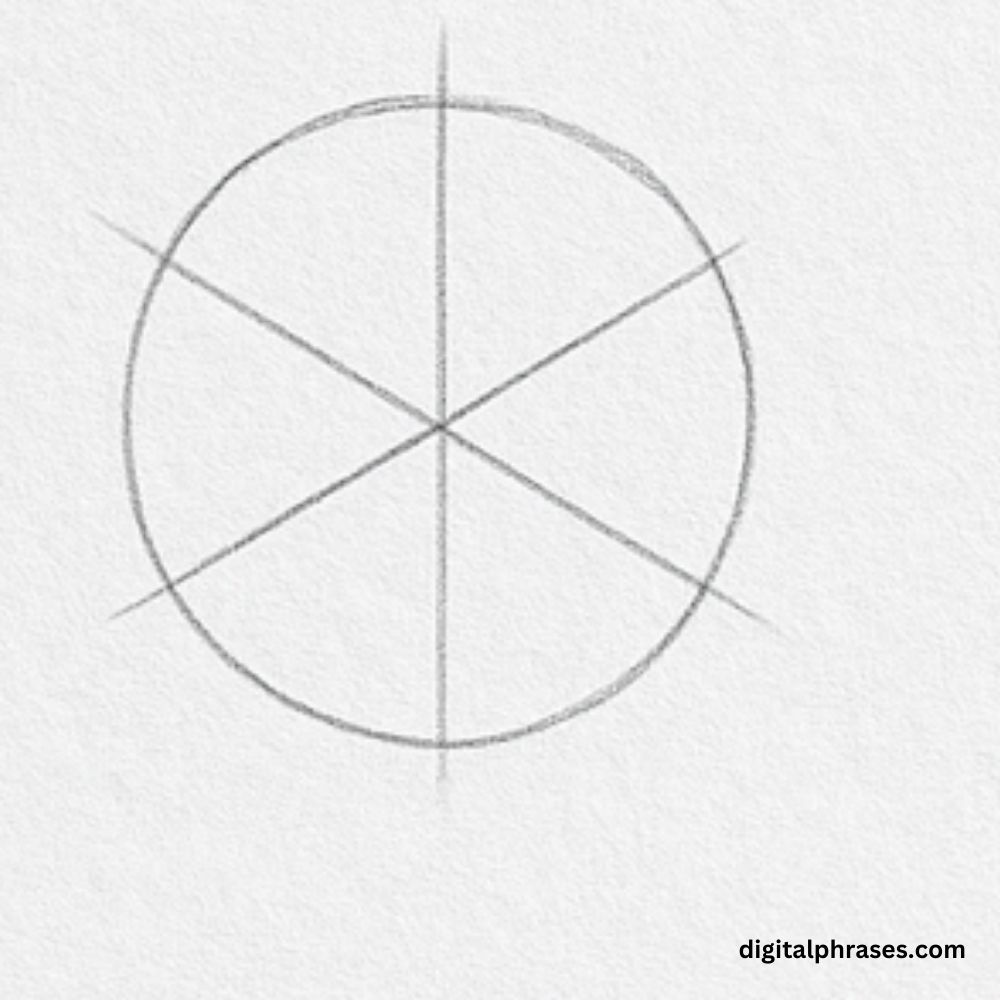
Step 1 – Draw the Basic Construction Circle
- Begin by lightly sketching a large circle; this will act as the overall boundary of the hibiscus flower.
- Inside the circle, draw straight guideline lines that intersect at the center, dividing the circle into roughly five equal sections.
- These guidelines help maintain symmetry and ensure that each petal is evenly spaced.
- Keep your pencil pressure light so these construction lines can be erased later.
- At this stage, focus only on proportion and balance rather than details.
Step 2 – Sketch the Petal Shapes
- Within each divided section, start drawing the outline of a petal.
- Hibiscus petals are broad and rounded, slightly wider at the outer edge and narrower near the center.
- Draw five petals radiating outward from the center, following the guide lines.
- Allow the edges of the petals to overlap slightly for a natural look.
- Add a small circle in the center where all petals meet; this marks the flower’s core.
- Ensure the petal sizes are consistent, though slight variations add realism.
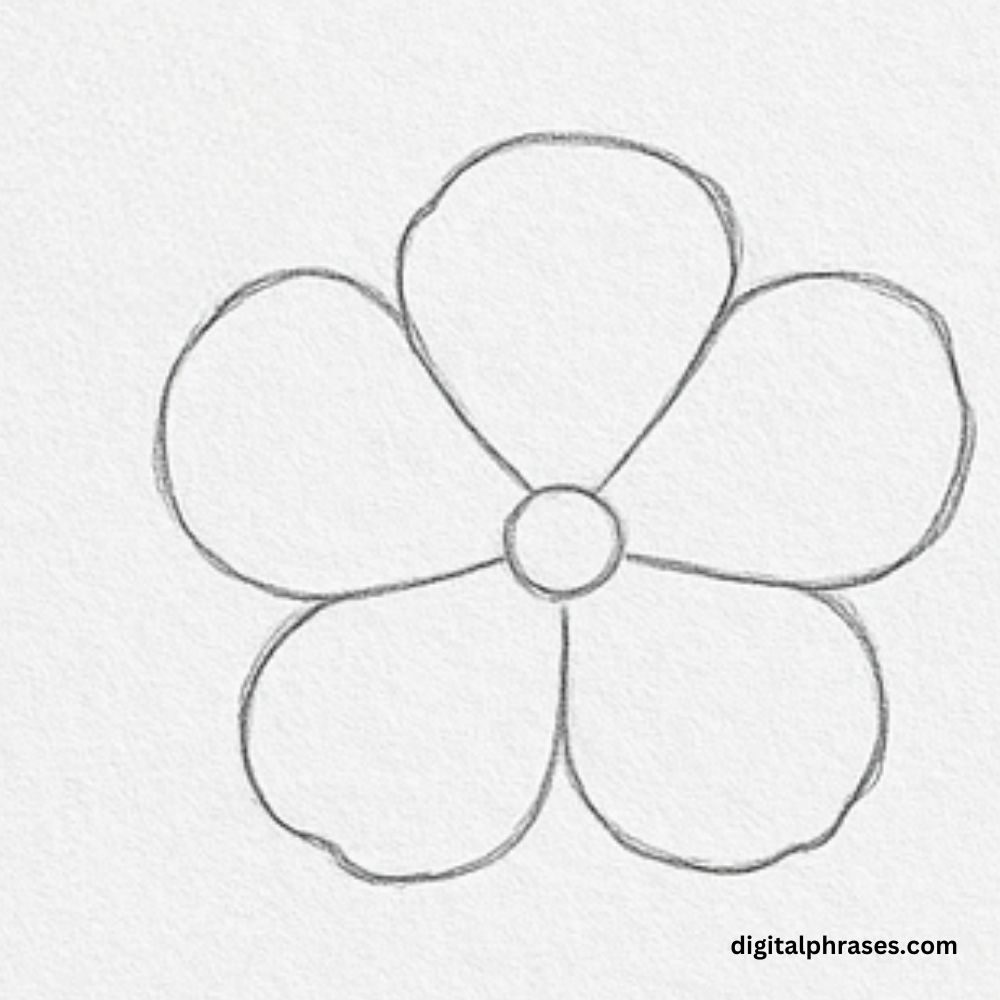
Step 3 – Refine the Petal Outlines
- Go over each petal outline and smooth the curves.
- Add gentle waves or soft scallops to the outer edges of the petals to avoid a stiff appearance.
- Erase or fade the original guideline lines once the petal shapes are clear.
- Make the base of each petal slightly tapered as it approaches the center.
- This step transforms the rough sketch into a more organic flower form.
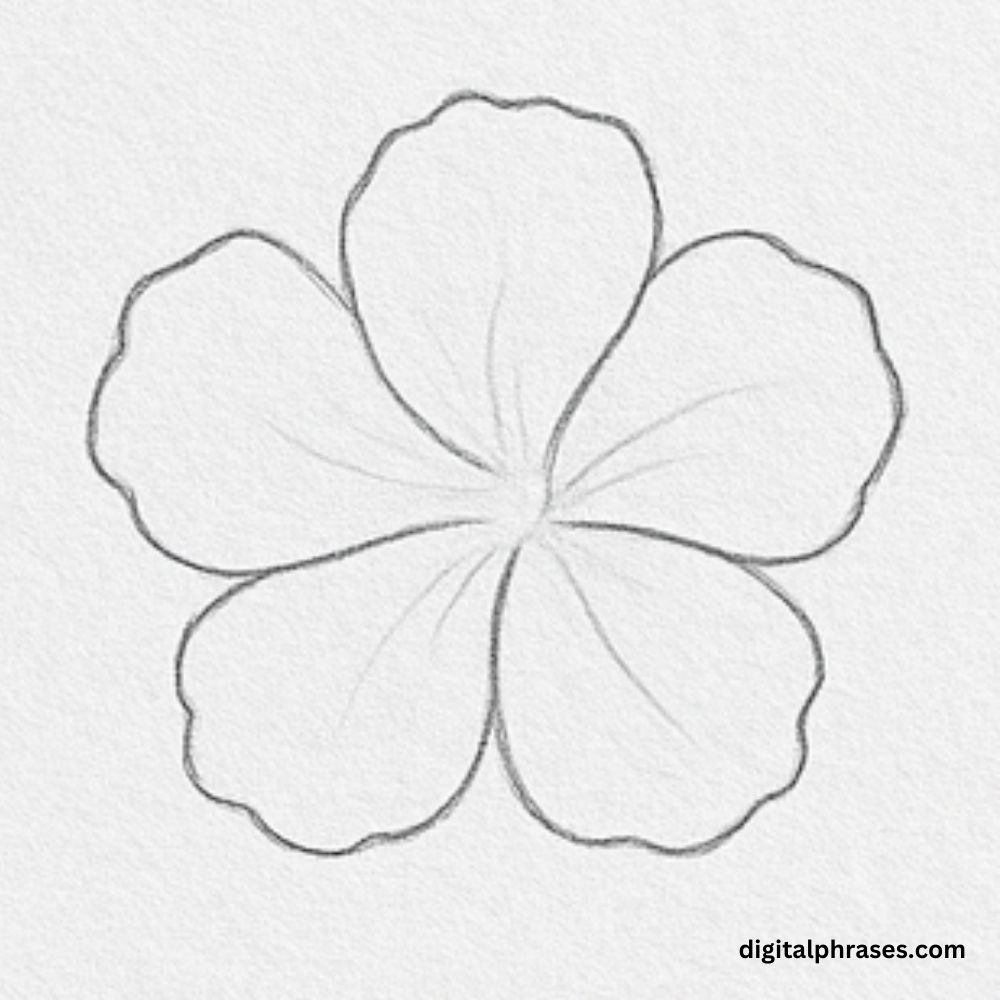
Step 4 – Add Veins and the Stamen
- From the center of the flower, draw fine curved lines extending outward along each petal.
- These lines represent the natural veins found in hibiscus petals.
- Keep the veins subtle and evenly spaced, following the contour of each petal.
- On one petal side, sketch the hibiscus stamen extending outward.
- Add small oval or circular shapes at the end of thin filaments to represent pollen-bearing anthers.
- This detail is essential, as the long stamen is a defining feature of hibiscus flowers.
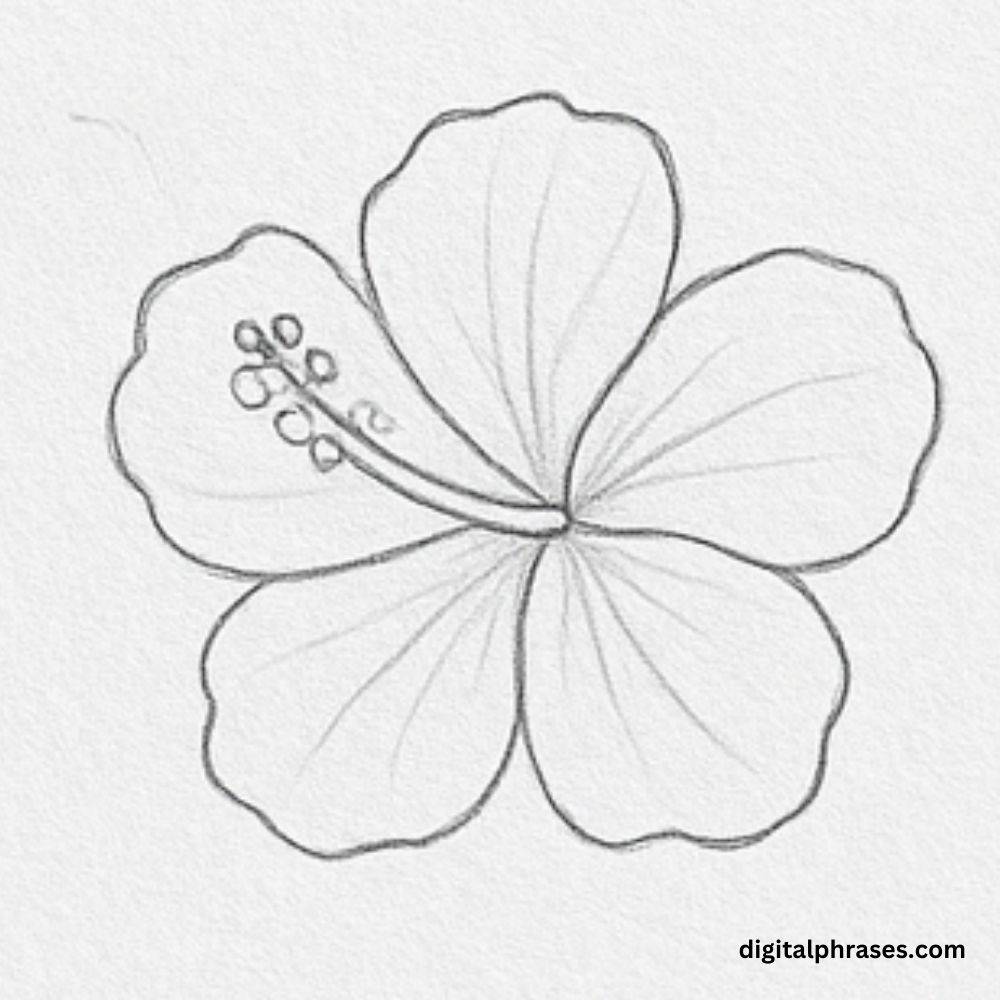
Step 5 – Final Detailing and Clean-Up
- Darken the main outlines of the petals and stamen to make the flower stand out.
- Add additional fine lines near the center to create depth and texture.
- Gently shade near the petal bases to give the flower a sense of volume.
- Erase all remaining construction marks and unnecessary sketch lines.
- Review the drawing for symmetry and flow, adjusting curves where needed.
- The final result should look soft, balanced, and natural, clearly resembling a hibiscus bloom.