How To Draw a Lemon
Step-by-Step Guide to Drawing a Lemon
Step 1 – Draw the Basic Oval Shape
- Begin by lightly sketching a simple oval on your paper using a pencil. This oval forms the foundational shape of the lemon.
- The oval should be slightly tilted rather than perfectly vertical or horizontal, as lemons often appear at an angle and this adds a natural look.
- Avoid pressing hard with your pencil at this stage. The goal is to keep the lines loose and adjustable so corrections are easy.
- Focus on proportion: the oval should not be too round like a circle, nor too long like an egg. A balanced oval helps the lemon look realistic later.
- This step is about capturing the overall silhouette, not details, so resist the urge to add texture or shading yet.

Step 2 – Refine the Outline and Add Lemon Ends
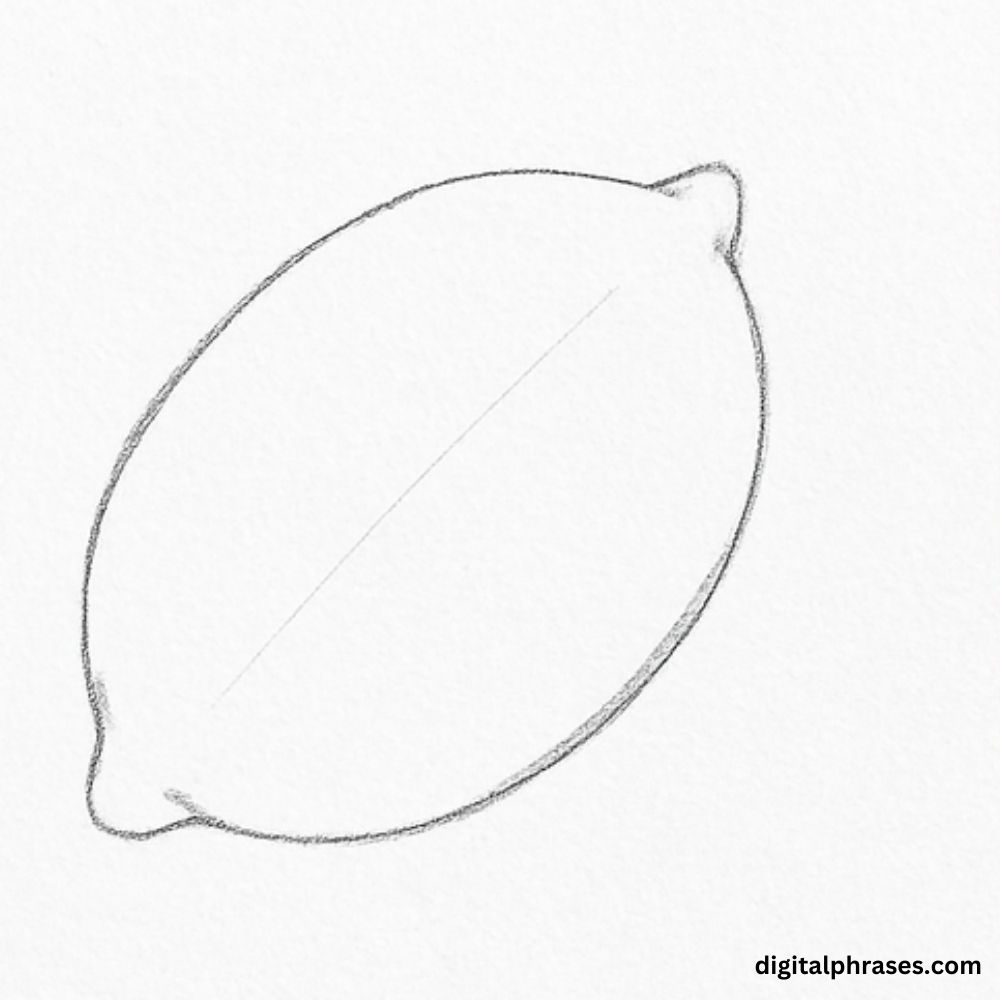
- At one end of the oval, draw a small pointed bump to represent the lemon’s tip. This is usually slightly off-center.
- On the opposite end, add a smaller, rounded nub to show where the lemon was attached to the stem.
- Gently adjust the sides of the oval so they look slightly uneven—real lemons are not perfectly symmetrical.
- Lightly draw a faint guideline running lengthwise through the lemon to help maintain balance and perspective.
- Erase or soften parts of the original oval if needed, blending the new shapes into one smooth outline.
Step 3 – Add Surface Texture and Details
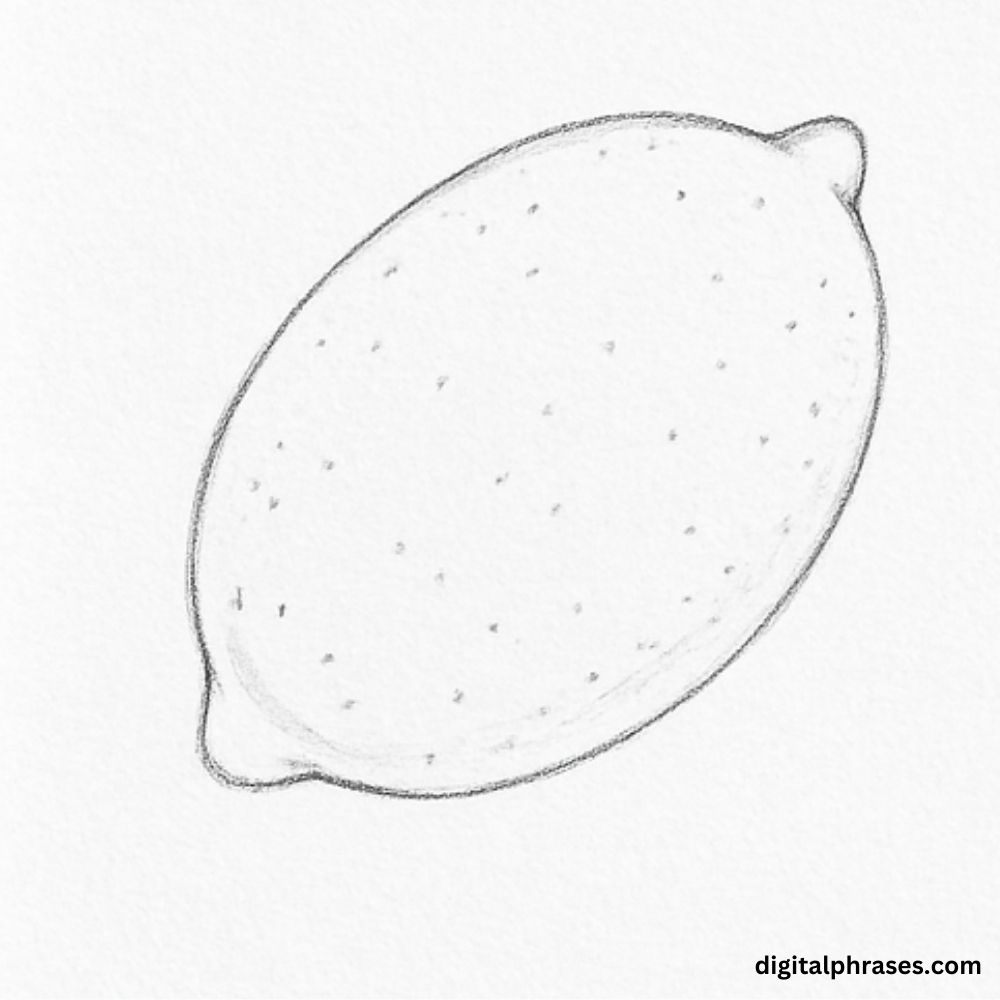
- Start placing tiny dots and short marks across the surface to represent the lemon’s porous skin.
- Keep the dots unevenly spaced; clustering some areas more than others makes the texture look natural.
- Maintain a light touch with your pencil so the texture does not overpower the drawing.
- Refine the outline once more, smoothing transitions where the tip and stem meet the body.
- At this stage, the lemon should clearly look like a lemon even without shading, thanks to its shape and texture.
Step 4 – Shade and Finalize the Drawing
- Begin shading lightly along one side of the lemon to suggest a light source coming from the opposite direction.
- Gradually build darker tones near the bottom and edges to give the lemon a three-dimensional appearance.
- Add a soft shadow beneath the lemon to anchor it to the surface and prevent it from looking like it’s floating.
- Blend the shading smoothly using gentle pencil strokes, keeping the highlights lighter for contrast.
- Finally, erase any unnecessary guidelines and darken the final outline slightly to complete the drawing.

By following these steps progressively, you move from a simple shape to a detailed and realistic lemon. Each stage builds on the previous one, helping you understand form, texture, and shading in a clear and structured way.