Skip to content
Step-by-Step Guide On How To Draw a Lily Pad
Step 1 – Draw the Basic Circular Shape
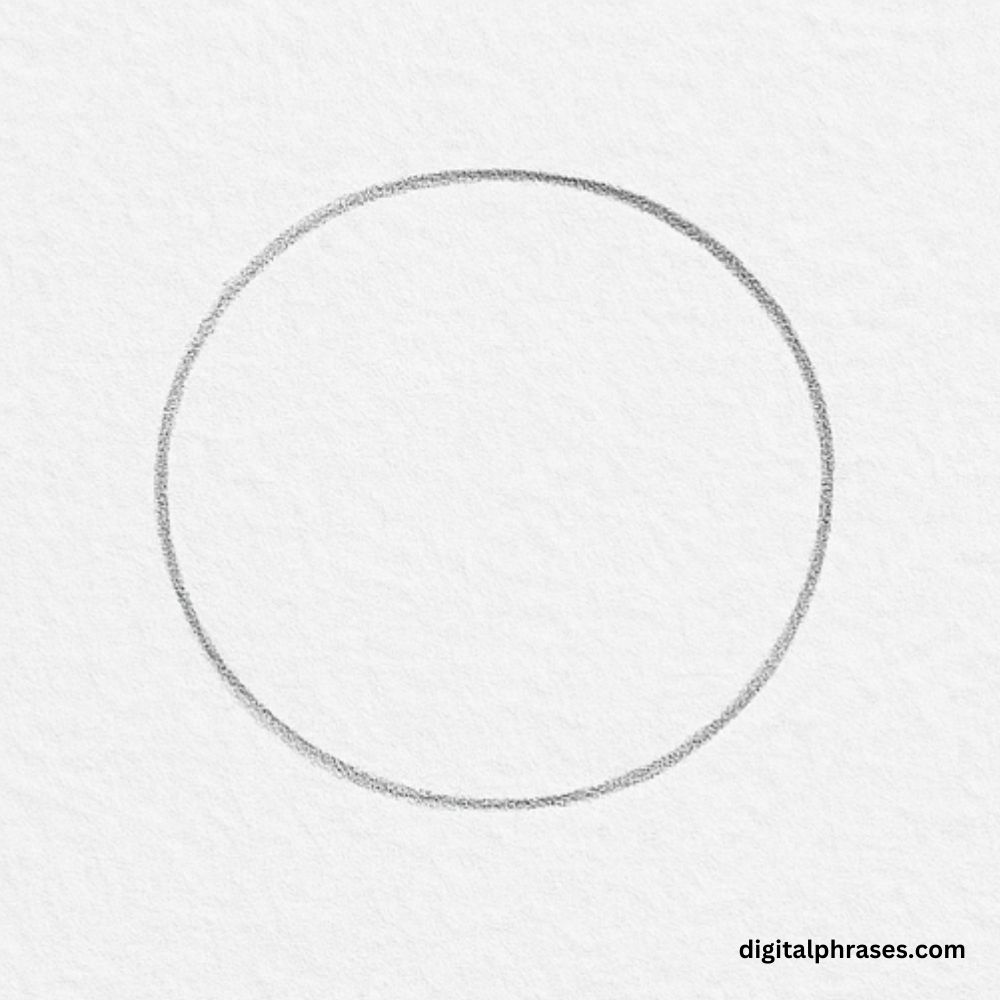
- Begin by lightly sketching a simple circle, as shown in the first image.
- The circle does not need to be perfectly symmetrical; a slightly uneven outline makes the lily pad look more natural.
- Use light pencil pressure so you can easily erase or adjust the shape later.
- This circle represents the overall boundary of the lily pad floating on water.
- Avoid adding any details at this stage—focus only on getting the size and placement right.
- The circle should be wide rather than tall, helping suggest the flat, floating nature of a lily pad.
- If needed, redraw the circle once or twice until you are satisfied with the proportion.
- Think of this step as creating the foundation upon which all other details will be added.
- Keep your hand movements smooth and relaxed to avoid jagged edges.
- Once complete, pause and check that the circle looks balanced from all sides.
Step 2 – Create the Characteristic Notch
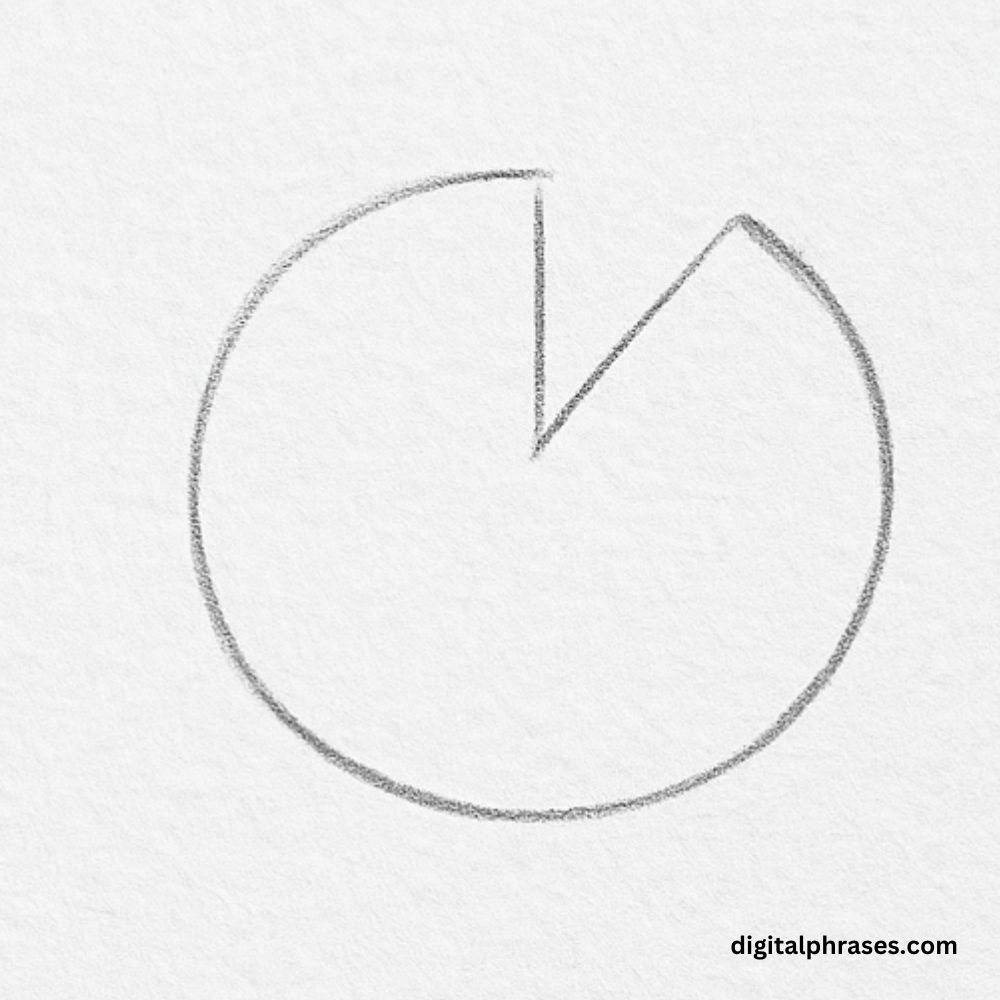
- From the top edge of the circle, draw two straight or slightly angled lines that meet near the center.
- These lines form a triangular cut-out, which is a defining feature of a lily pad.
- This notch represents the natural split where the lily pad grows and opens.
- Make sure the notch does not go all the way to the center; stopping slightly short keeps the pad realistic.
- Erase the curved portion of the circle that falls inside the triangular shape.
- The opening should look intentional, not too wide and not too narrow.
- Slightly curve the edges of the notch instead of keeping them perfectly straight.
- This adds an organic, plant-like appearance rather than a geometric one.
- Review the overall shape to ensure the notch blends smoothly into the circular outline.
- Darken the final outline lightly once you are satisfied with the shape.
Step 3 – Add Inner Veins and Thickness along with Finishing Touches
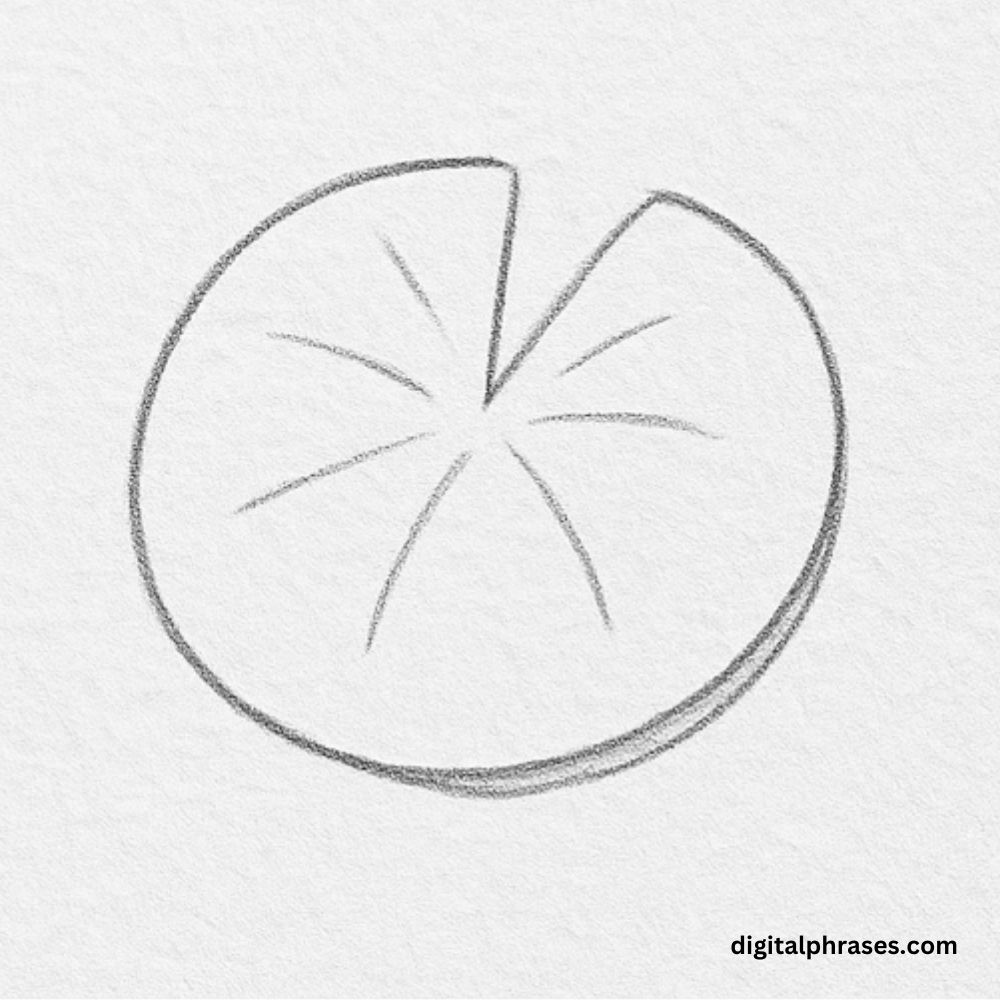
- Draw several curved lines radiating outward from the base of the notch toward the edges.
- These lines represent the natural veins found on a real lily pad.
- Keep the lines subtle and uneven to avoid a stiff or mechanical look.
- Do not overcrowd the surface—leave space between veins for clarity.
- Add a slight second outline along part of the edge to show thickness.
- This overlapping line suggests that the lily pad is floating above water rather than being flat.
- Lightly shade beneath the edge to enhance the three-dimensional effect.
- Ensure the shading remains soft and minimal to keep the drawing clean.
- Refine the outer contour by smoothing any rough sections.
- Step back and check that the lily pad looks balanced, organic, and complete.
wpDiscuz