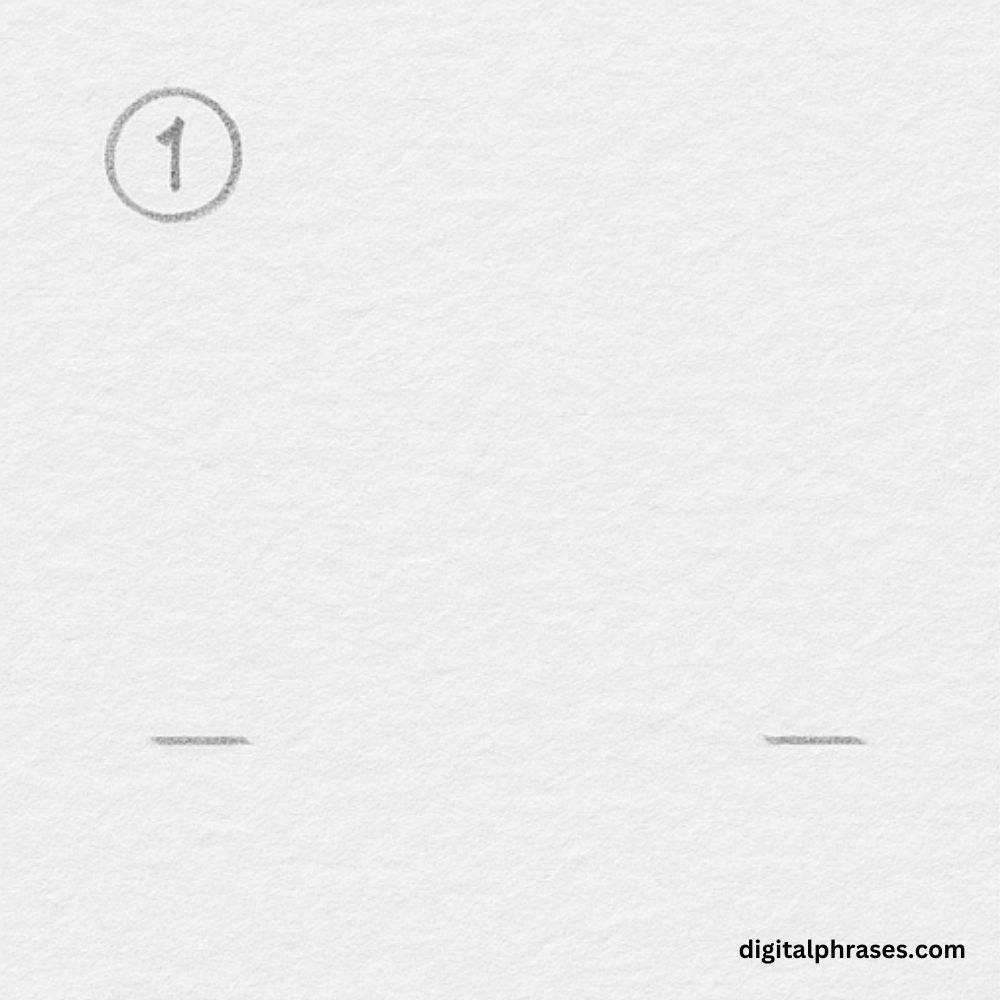
Lightly place two small horizontal dashes near the bottom of your page, one on the left and one on the right, leaving plenty of space between them.
Keep both marks at the same height so your rainbow will look balanced and not tilted.
Think of these marks as the “feet” where the rainbow will touch the ground (or where clouds will sit later).
Don’t press too hard with your pencil here—these are guide marks, and you may want to erase or adjust them.
Check the spacing: a wider gap makes a bigger rainbow, while a smaller gap makes a tighter, smaller arch.
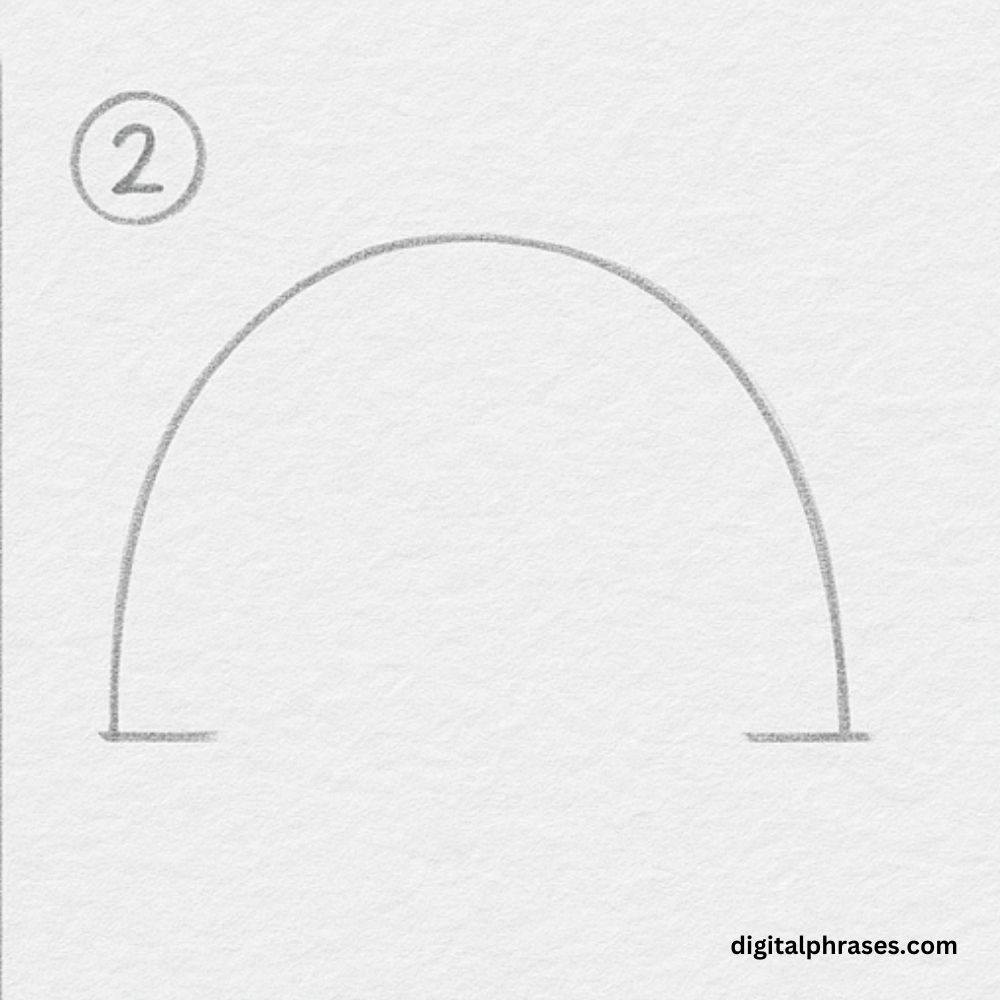
Step 2 – Draw the Main Rainbow Arch
Starting at the left dash, draw a smooth curved line that rises upward and then comes back down to meet the right dash.
Aim for a rounded “U” shape turned upside down, like a bridge or a dome.
Try to make the curve symmetrical: the highest point should sit roughly in the middle between the two dashes.
If your line looks bumpy, redraw it lightly until it looks smooth—rainbows look best with clean, flowing curves.
Keep the ends of the arch open and neat, because later you’ll add extra bands and clouds near those ends.
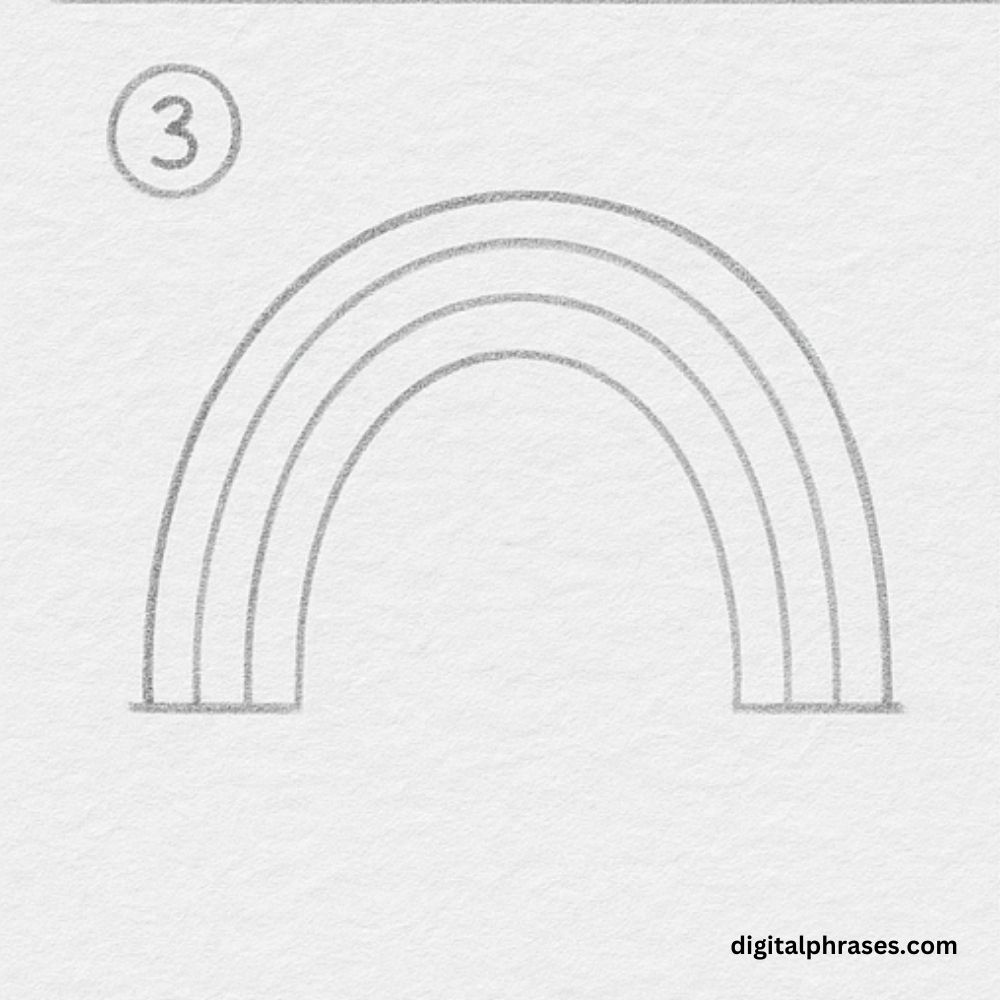
Step 3 – Add Multiple Parallel Bands
Inside the first arch, draw another curved line that follows the same shape, creating a second band.
Repeat this process to add more arches, each one slightly smaller and evenly spaced from the previous line.
Focus on consistent spacing between the lines—this helps the rainbow look tidy and “striped” in an organized way.
Make sure all the arches start and end around the same lower area, leaving a little vertical space at the bottom for clouds.
Once the bands are complete, you should see a rainbow made of several curved stripes, all nested inside one another.
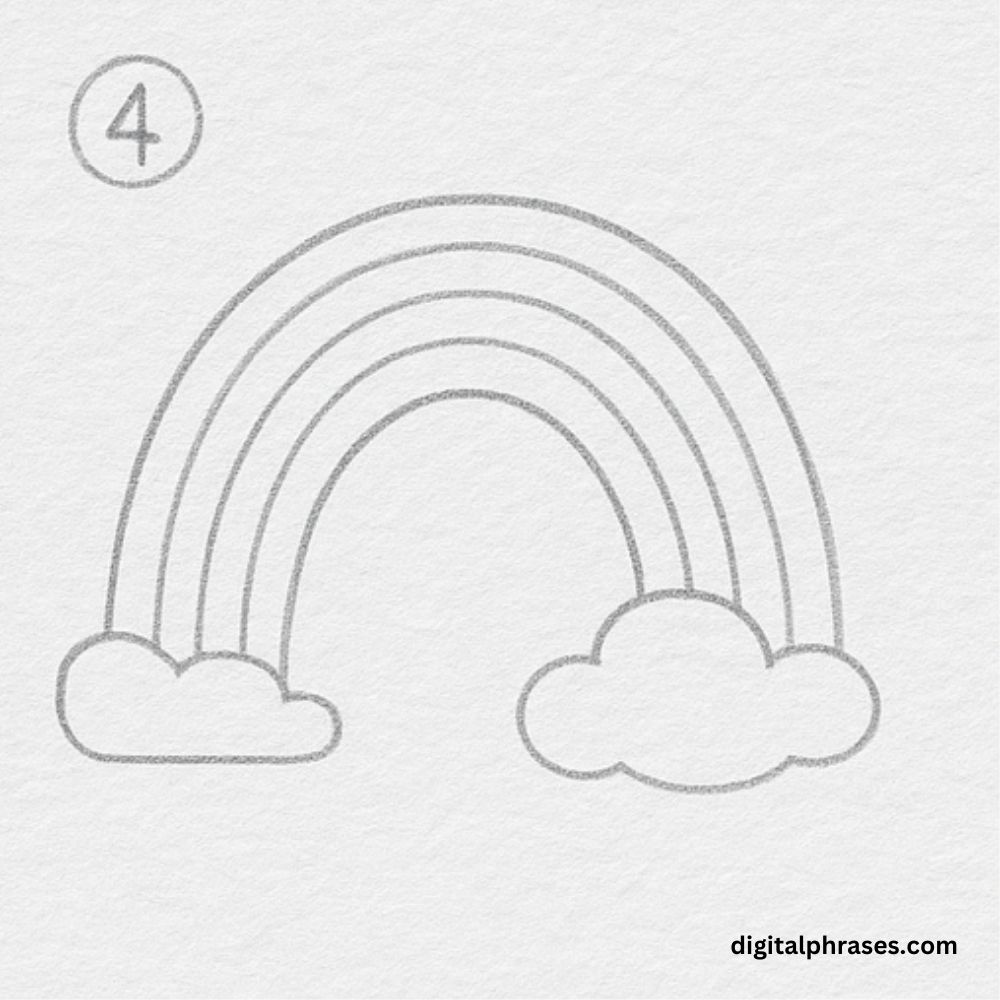
Step 4 – Draw Clouds at Both Ends and Finish
At the lower left end of the rainbow, draw a small cloud using a series of rounded bumps (like soft scallops) and connect it back into a fluffy shape.
Repeat the same idea on the lower right end, making a second cloud that covers the rainbow’s base.
Let the clouds overlap the rainbow ends slightly—this makes it look like the rainbow is emerging from behind them.
Darken the final outline carefully: trace over the rainbow bands and cloud edges with a firmer pencil line or a pen.
Erase any leftover guide marks or messy sketch lines, especially the original dashes if they’re still visible.
If you want to complete the drawing, color the bands in classic rainbow order (red, orange, yellow, green, blue, indigo, violet) and keep the clouds lightly shaded for a soft, puffy look.