How To Draw a Sandpaper?
Here are the steps towards drawing a sandpaper.
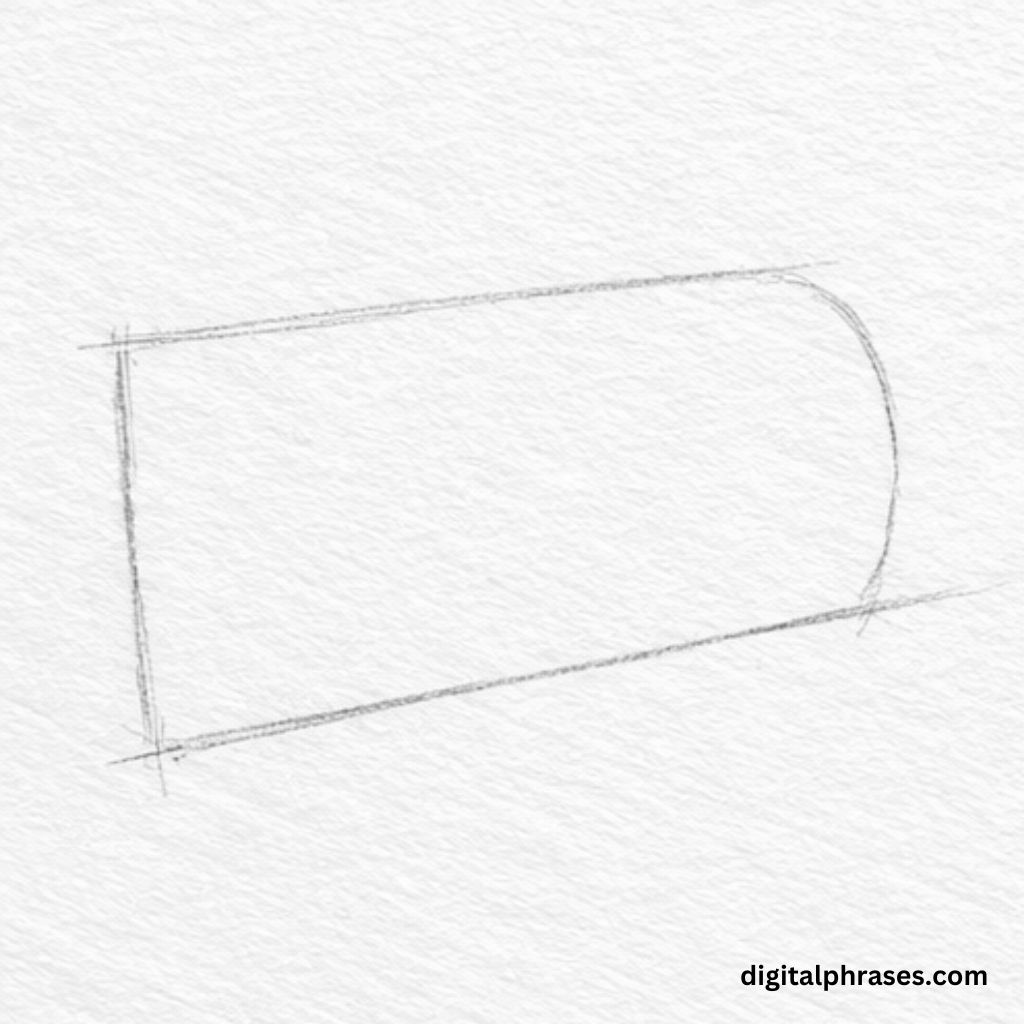
Step 1 – Laying Out the Rolled Sandpaper Shape
- Begin by imagining the sandpaper as a flexible sheet rolled into a cylindrical form rather than a solid object.
- Lightly sketch a long horizontal rectangle to define the length and width of the sandpaper roll.
- On one end of the rectangle, draw a smooth curved line to indicate the rounded edge created by the roll.
- Add faint perspective guidelines so the roll appears slightly angled instead of perfectly flat.
- Keep the lines soft and sketchy, focusing only on proportion and placement.
- Ensure the top and bottom edges subtly taper to suggest depth and perspective.
- Do not add texture or heavy outlines yet; this step is purely about establishing the overall form.
- This initial framework helps capture the basic silhouette of rolled sandpaper before adding complexity.
Step 2 – Defining the Roll and Layered Structure
- Darken the outer contour of the sandpaper roll, smoothing the curves to make the form more natural.
- Draw an elliptical opening at the front to show where the sandpaper curls inward.
- Add a second inner ellipse to represent the thickness of the sandpaper layers.
- Sketch the loose flap or overlapping edge at the bottom, indicating that the sandpaper is partially unrolled.
- Refine the curvature of the roll so it feels flexible rather than rigid.
- Begin adding light shading inside the roll to suggest depth, keeping strokes consistent with the curve.
- Emphasize the edges where layers overlap to distinguish separate sheets of sandpaper.
- At this stage, the object should clearly read as rolled sandpaper rather than a generic cylinder.
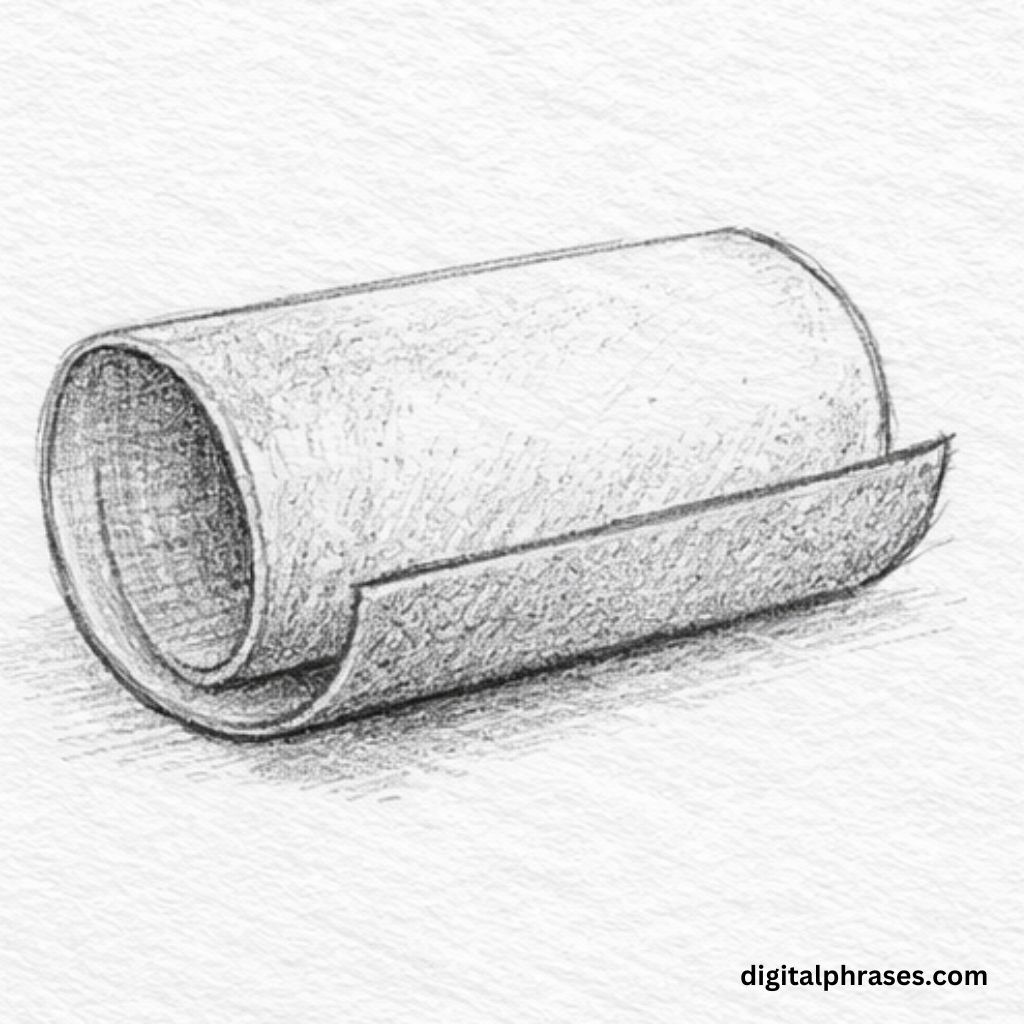
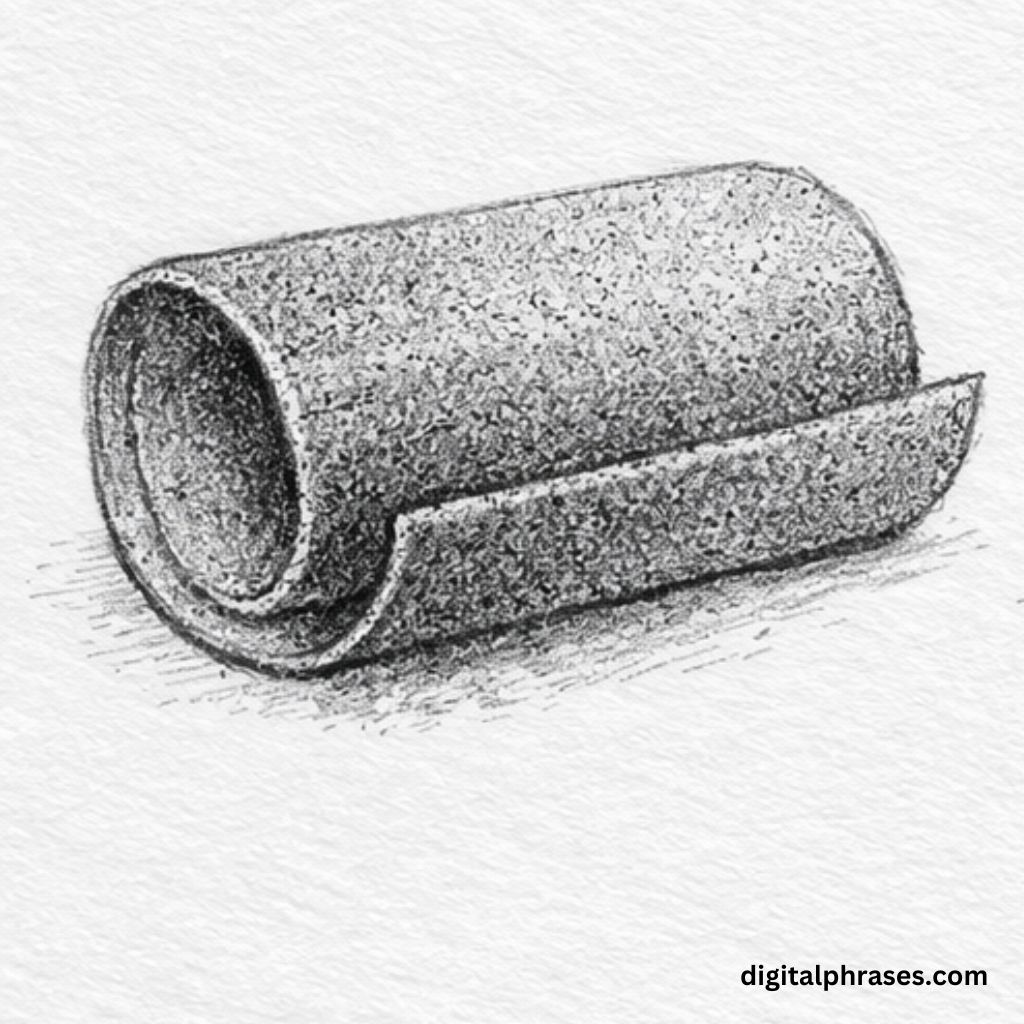
Step 3 – Adding Grit Texture, Shading, and Realism
- Start applying fine stippling and small dot patterns across the surface to represent the gritty texture of sandpaper.
- Increase the density of dots in shadowed areas to enhance contrast and depth.
- Darken the interior of the roll, making the inner layers appear progressively darker toward the back.
- Add subtle shading along the outer curve to emphasize the cylindrical shape while maintaining a rough surface feel.
- Reinforce the loose flap edge with slightly darker lines and texture to show separation from the main roll.
- Apply a soft cast shadow beneath the sandpaper to ground it on the surface.
- Vary pressure and spacing of texture marks to avoid uniformity and keep the surface visually interesting.
- Erase remaining construction lines and refine edges to achieve a clean, finished drawing.
- This final step brings the sandpaper to life by combining form, texture, and shading into a realistic illustration.