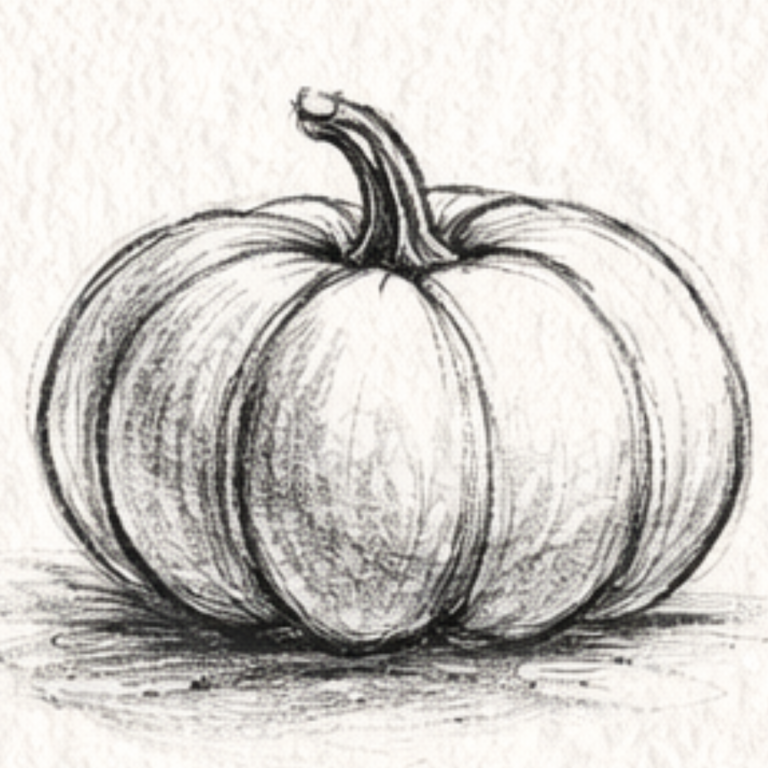
How To Draw a Summer Beach
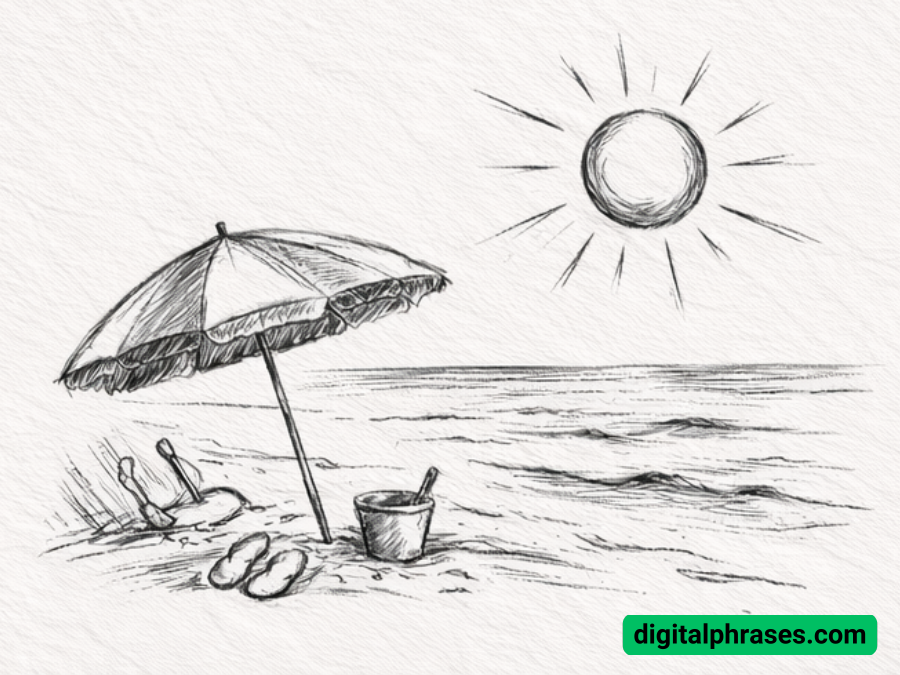
Here’s a simple tutorial on drawing a summer beach.
Step-By-Step Process On How To Draw a Summer Beach
Step 1: Light Foundation Sketch
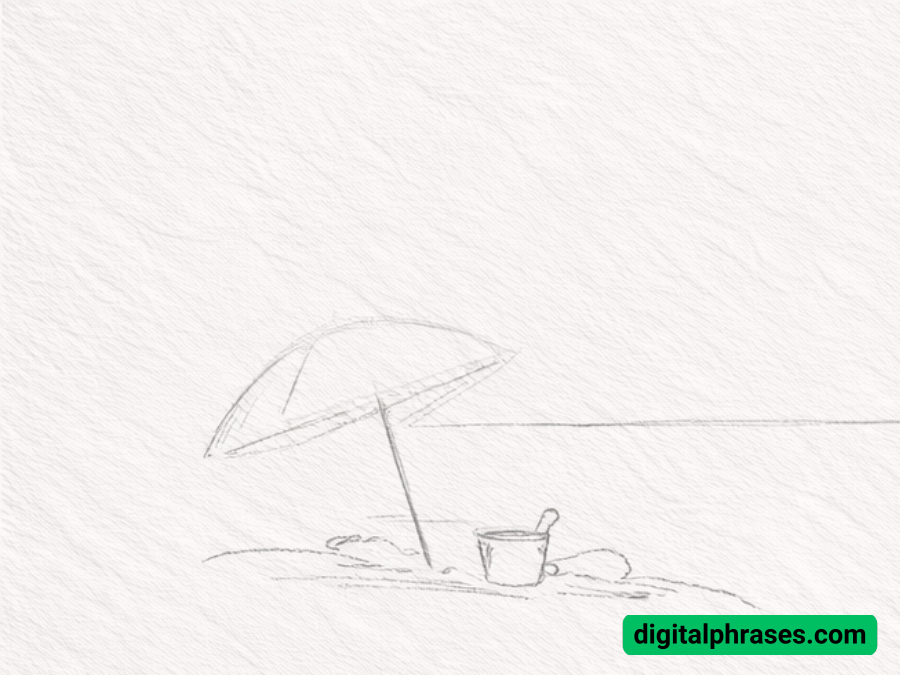
Begin by lightly sketching a horizontal line across the paper to establish the horizon where the sea meets the sky. Keep your pencil pressure soft so the lines remain faint and adjustable.
Next, loosely outline the main elements: draw a simple curved shape for the beach umbrella canopy and a straight vertical line for the pole. Add a small cylindrical shape for the bucket near the base of the umbrella. Indicate the sandy ground with a few uneven contour lines. At this stage, focus only on placement and proportions—avoid adding details or shading.
Step 2: Defining Main Forms
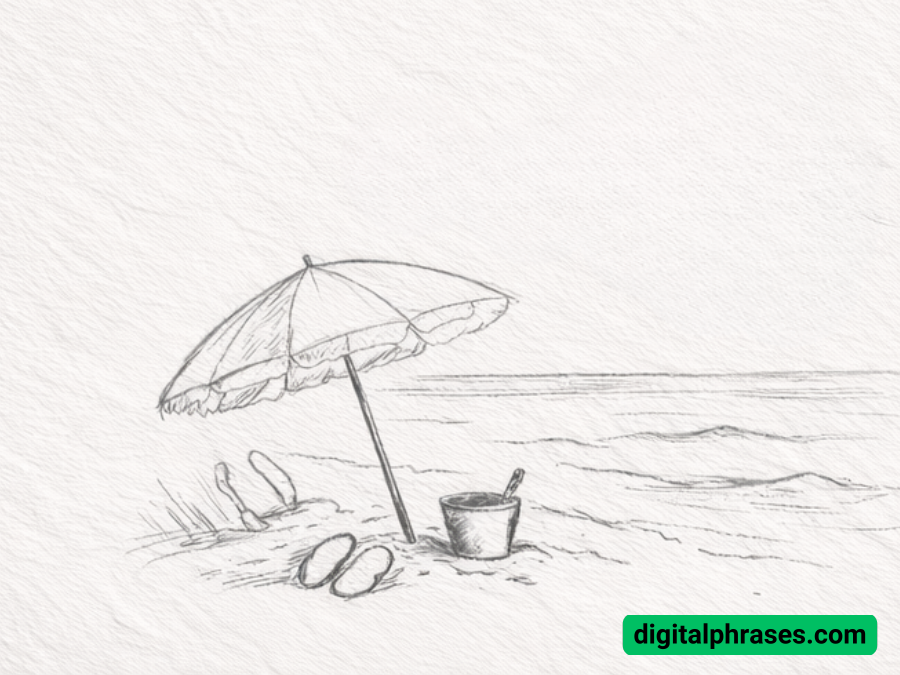
Refine the umbrella by defining its segmented panels with gentle curved lines radiating from the top center. Slightly thicken the pole and clarify the bucket’s rim and base to give it dimension.
Add simple shapes for additional objects like flip-flops and a small sand shovel beside the bucket. Strengthen the shoreline and begin sketching subtle wave lines in the water using light, flowing strokes.
The drawing should now clearly represent the beach setting, though still without heavy shading.
Step 3: Adding Background Elements and Depth
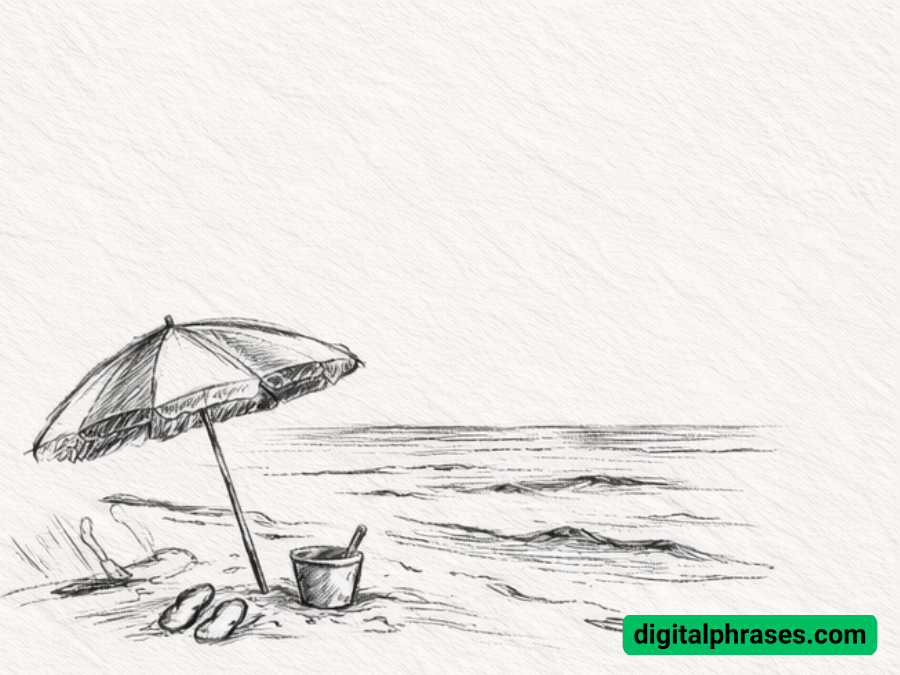
Develop the ocean further with layered, horizontal strokes to create gentle wave movement. Start introducing light shading beneath the umbrella canopy and along the sand to suggest shadow and depth. Use controlled cross-hatching to build texture while maintaining a soft, sketch-like appearance.
Step 4: Add the Sun, the Final Details and Shading
Sketch the sun in the sky as a clean circle and add thin radiating lines around it to suggest sunlight. Include a few minimal “V”-shaped birds in the distance.
Deepen the shading under the umbrella to enhance contrast and create a stronger focal point. Add texture to the sand using short, irregular strokes and refine the wave crests with darker accents. Emphasize object edges selectively—such as the umbrella ribs, bucket rim, and flip-flops—while keeping the overall look minimalist. Balance highlights and shadows so the composition feels cohesive, ensuring the rough white textured paper remains visible as part of the artwork’s character.