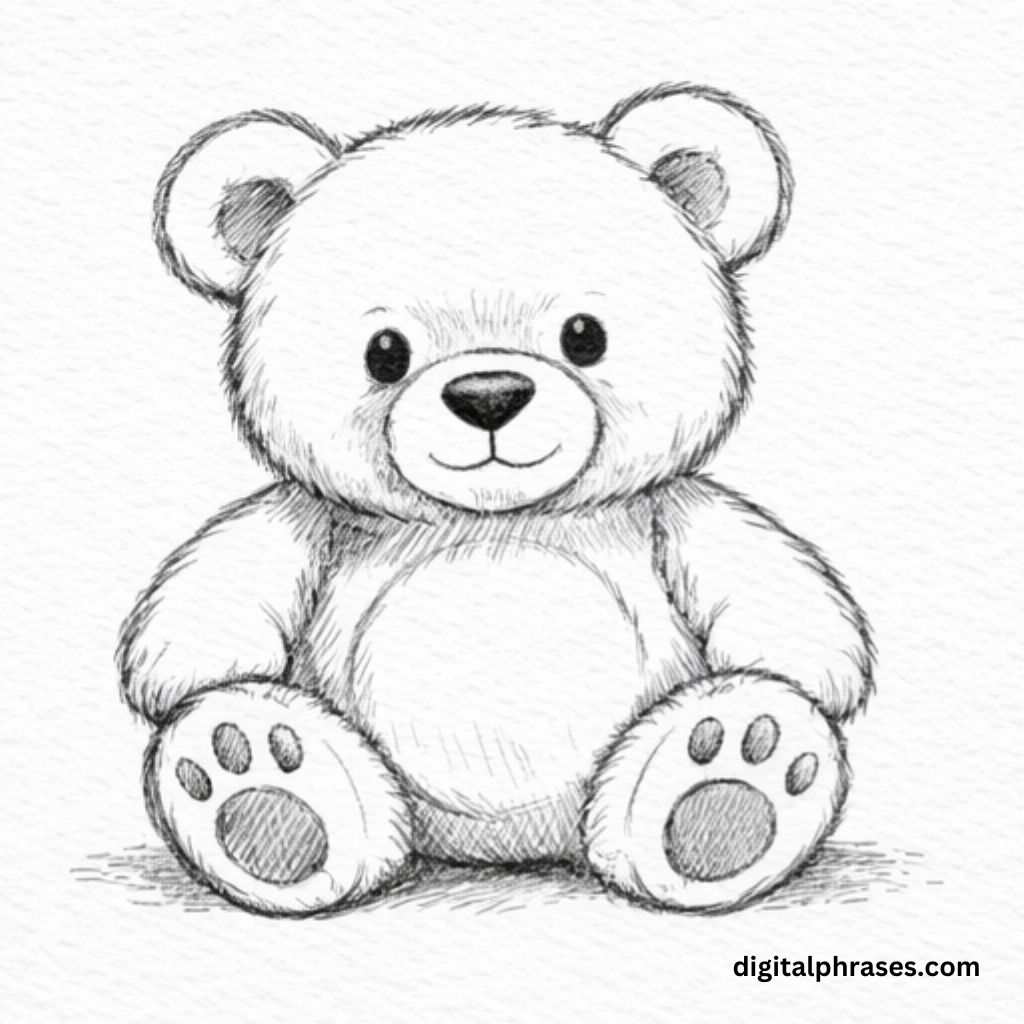
How To Draw a Teddy Bear?
Here are the steps.
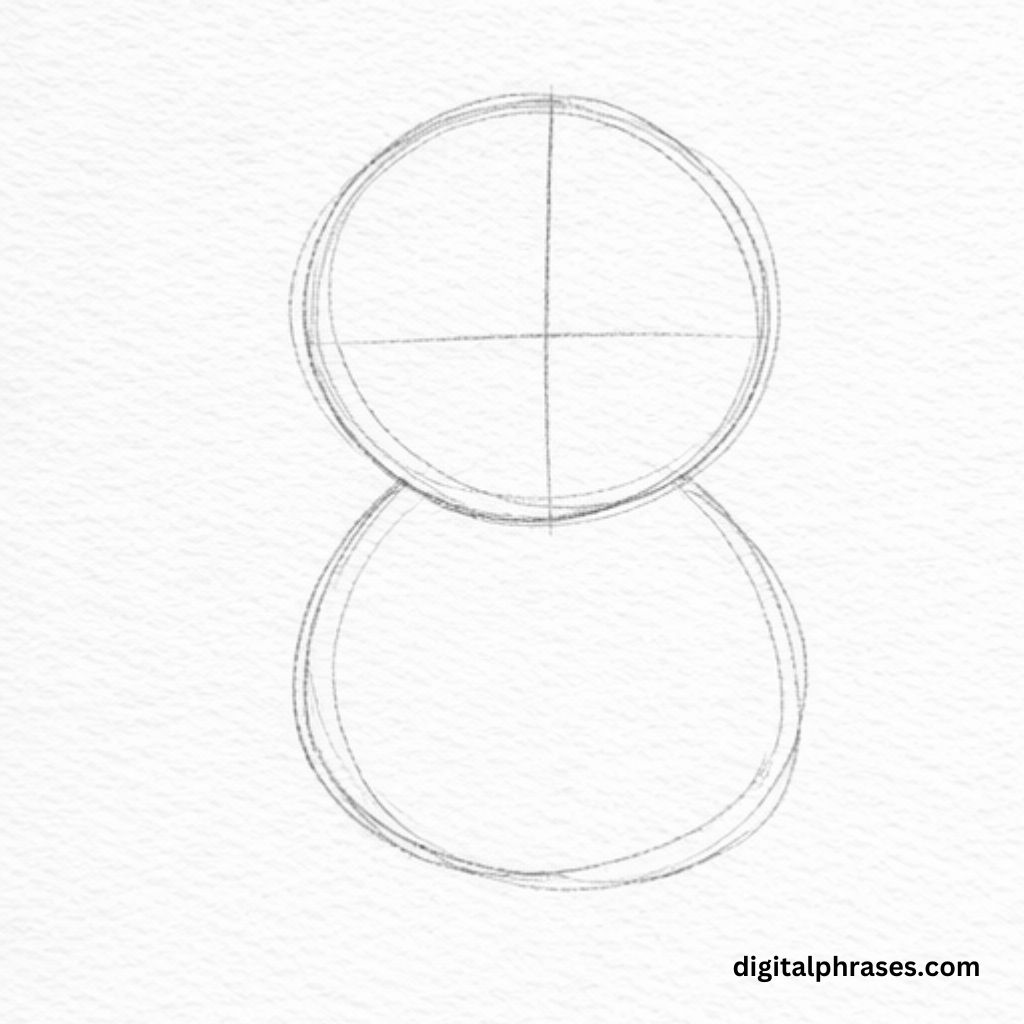
Step 1 – Planning the Basic Structure
- Start by choosing the pose and mood of your teddy bear. Decide whether it will be sitting, standing, waving, or holding an object, as this choice will guide the entire sketch.
- Lightly sketch the basic framework using very soft pencil strokes so mistakes are easy to erase. Use simple geometric shapes rather than details at this stage.
- Draw a large circle for the head and a slightly larger oval or circle for the body to give the teddy a soft, cuddly proportion.
- Add a vertical and horizontal guideline across the head to help place facial features symmetrically.
- Keep your hand relaxed and avoid pressing hard; this stage is about planning, not perfection.
- Check the overall balance of the shapes to ensure the teddy does not look tilted or uneven.
Step 2 – Building the Body and Limbs
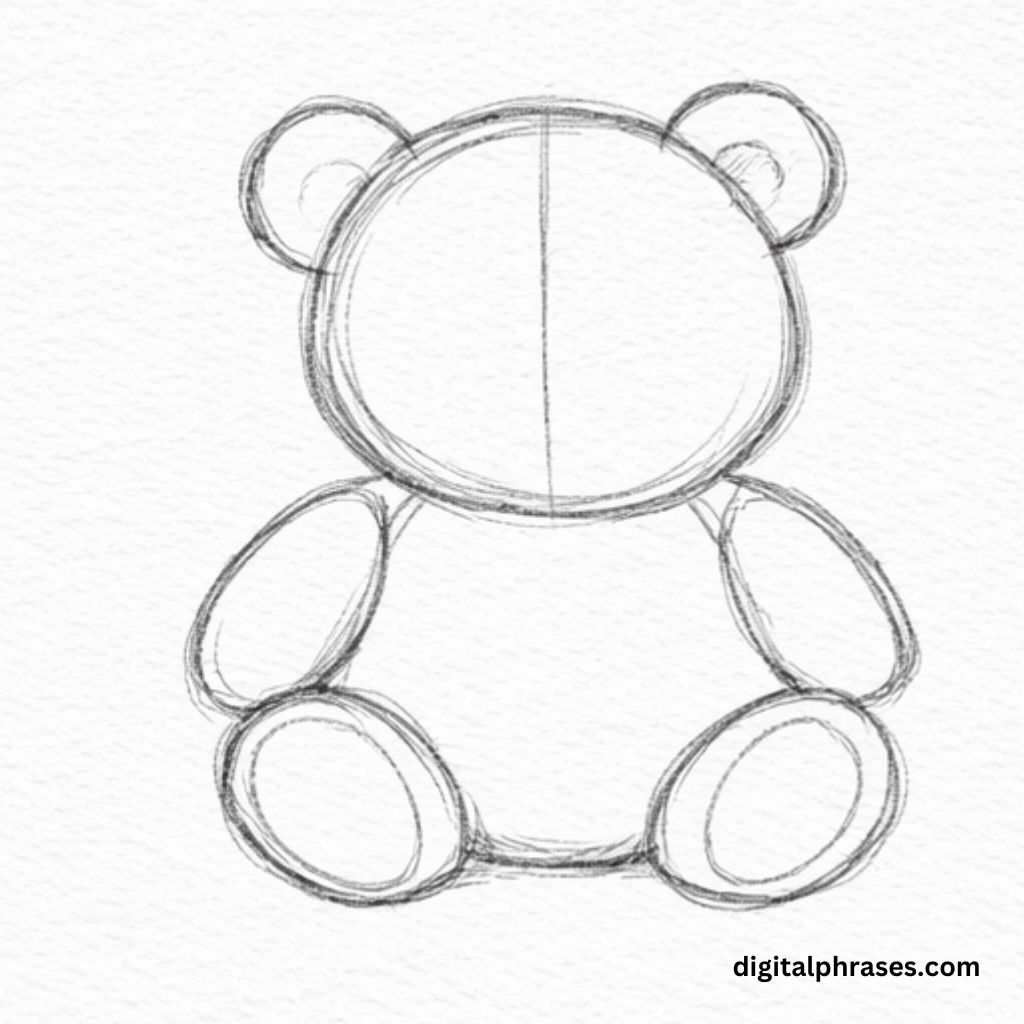
- Attach smaller circles or half-circles on top of the head to represent the ears, placing them evenly on both sides.
- Sketch elongated ovals for the arms, keeping them slightly rounded to maintain a plush and friendly appearance.
- Draw shorter, wider ovals for the legs and feet, positioning them to support the body naturally.
- Make sure the arms and legs are proportionate to the body so the teddy looks soft rather than stiff.
- Connect all shapes smoothly, avoiding sharp corners, since teddy bears are known for their gentle curves.
- Step back and review the sketch to confirm that the pose feels natural and balanced.
Step 3 – Adding Facial Features and Details
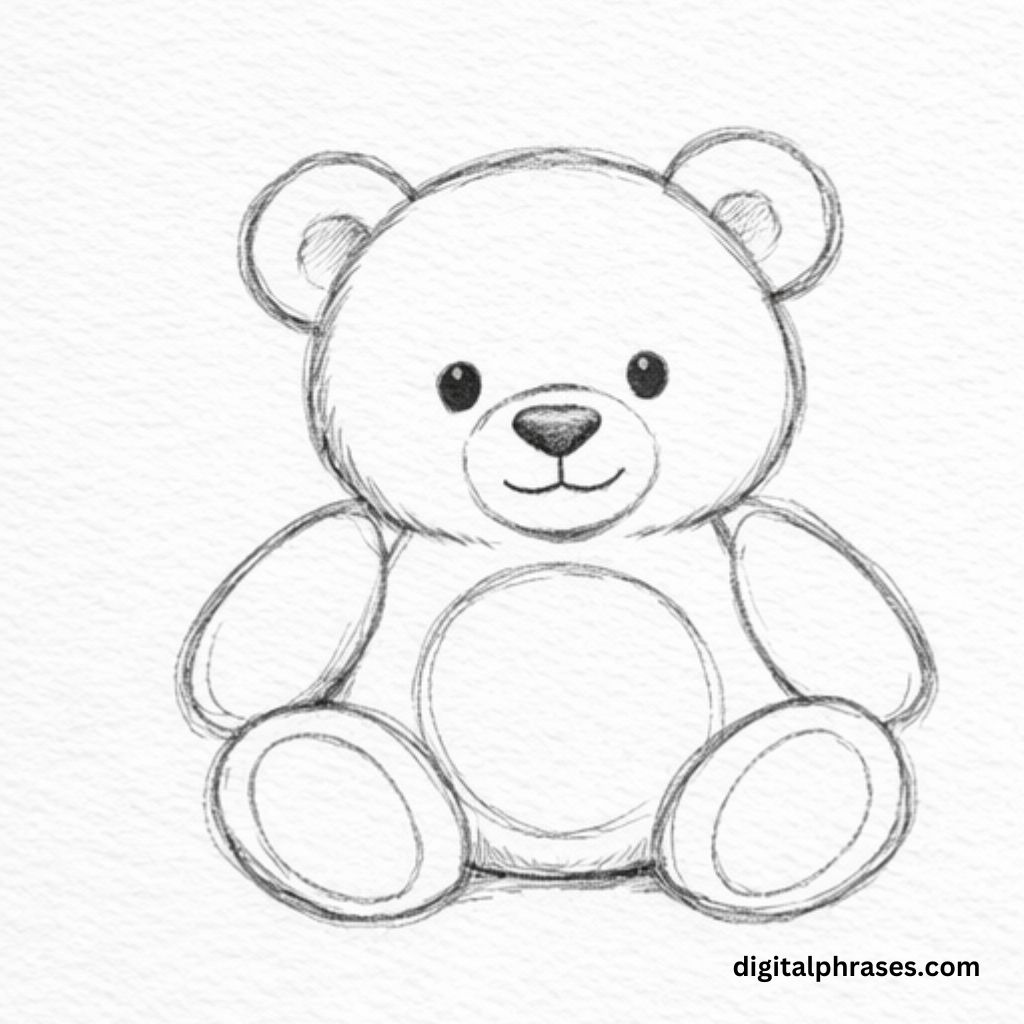
- Use the guidelines on the head to carefully place the eyes, keeping them slightly below the horizontal centerline for a cute expression.
- Draw small round or oval eyes, leaving tiny highlights to make them look lively and friendly.
- Add a rounded triangle or oval for the nose, centered on the vertical guideline.
- Sketch a short curved line beneath the nose to form the mouth, keeping it simple and warm.
- Draw a lighter oval on the belly area to represent the teddy bear’s fabric patch or fur variation.
- Add small details like paw pads or stitching lines if you want a classic teddy bear look.
Step 4 – Refining, Outlining, and Shading
- Slowly darken the final outline, smoothing the curves and correcting any uneven lines from earlier steps.
- Erase unnecessary guidelines and construction shapes once you are confident with the final form.
- Add short, gentle strokes around the outline to suggest soft fur rather than drawing individual hairs.
- Lightly shade areas under the chin, arms, and legs to create depth and a three-dimensional feel.
- Use softer shading on the belly and face to keep the teddy bear looking plush and cuddly.
- Finish by reviewing the sketch as a whole and making small adjustments to enhance cuteness and symmetry.