How To Draw a Water Droplet?
Here are the steps.
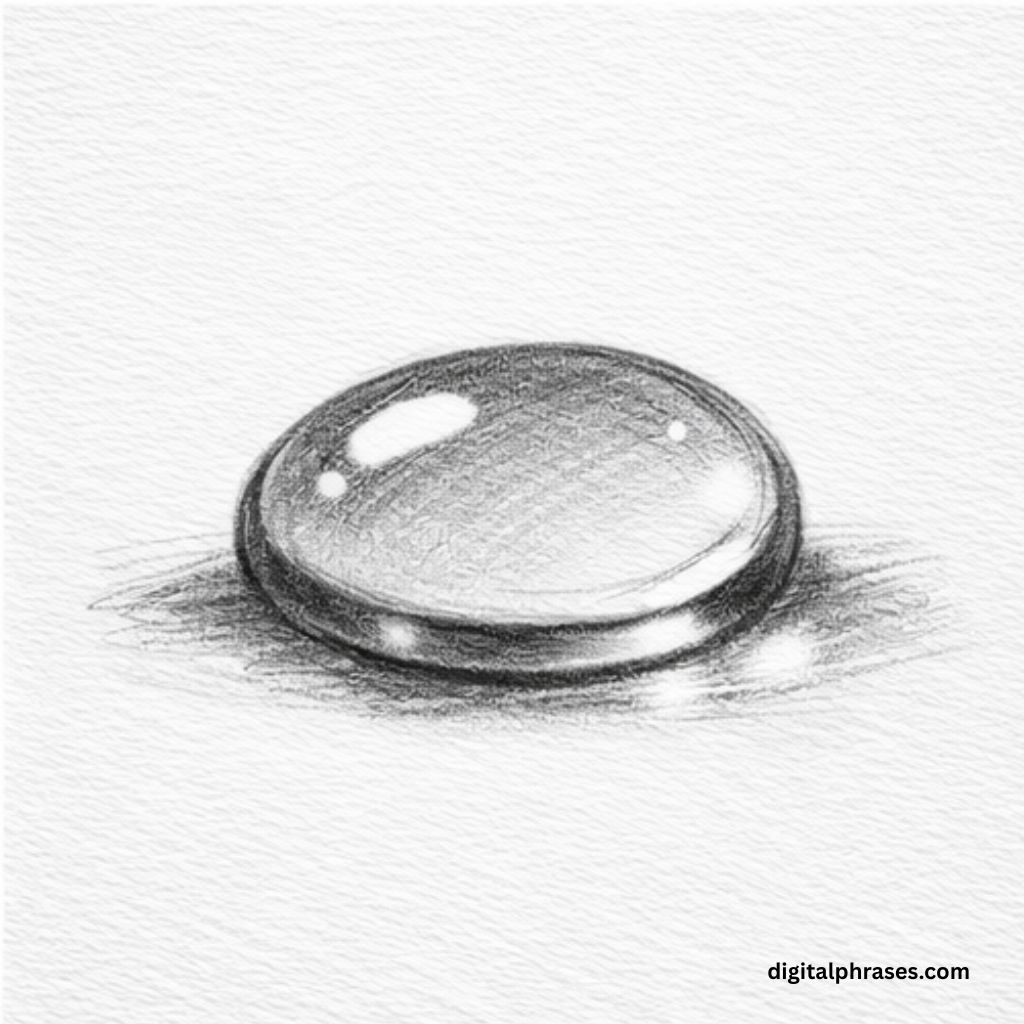
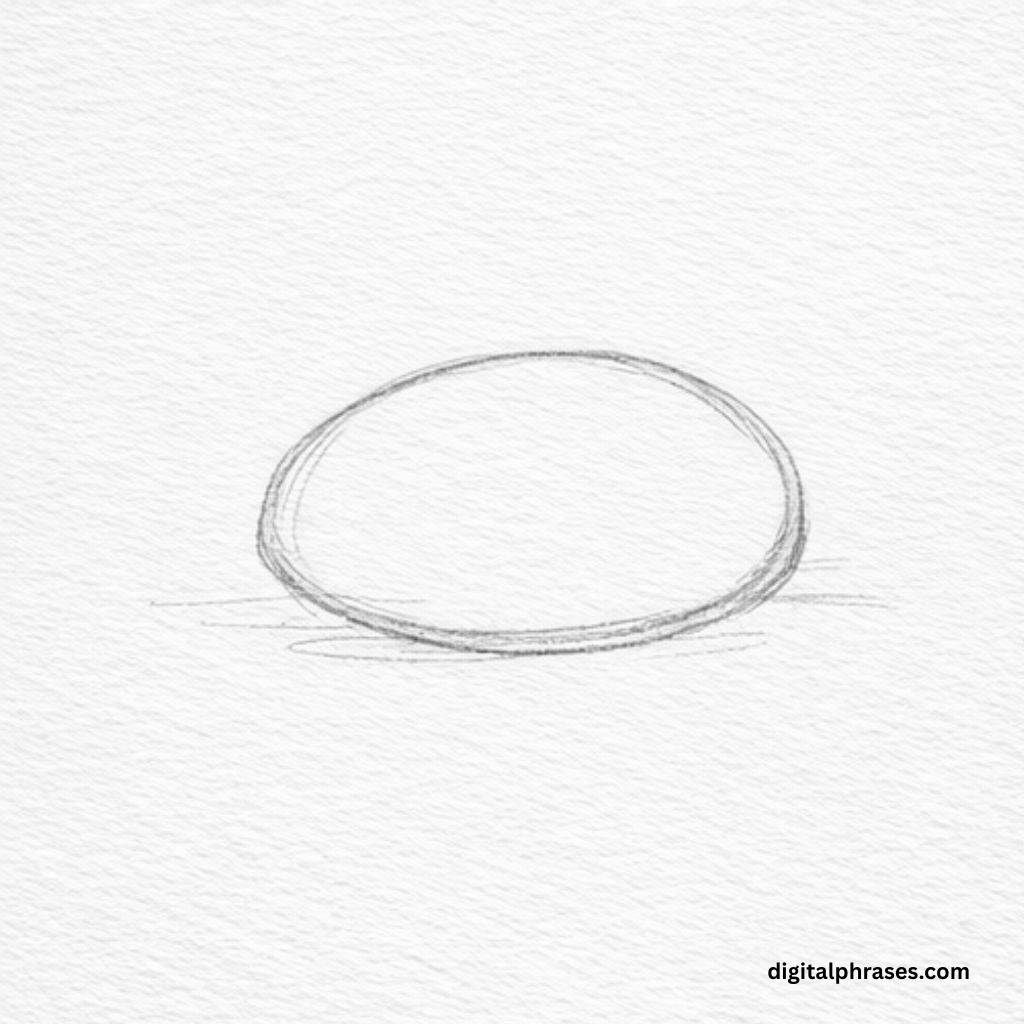
Step 1 – Sketch the Droplet Outline and Base Shadow Guide
- Begin by drawing a wide, flattened oval to represent the droplet’s footprint on the surface.
- Slightly thicken the lower edge of the oval by tracing it again, because a droplet often has a darker rim where it meets the surface.
- Keep the top edge lighter and smoother, suggesting a gentle curved dome rather than a hard outline.
- Add a few short, light horizontal strokes beneath and around the droplet to hint at the surface shadow area (very faint at this stage).
- Make sure the oval isn’t perfectly symmetrical—tiny irregularities help it feel more natural and less like a coin.
- Keep everything light and minimal; this step is only about establishing the droplet’s shape and where it sits.
- Avoid highlights or heavy shading yet—focus on a clean outline that can support the glossy look later.
Step 2 – Add Soft Shading and the First Highlights
- Start shading the droplet’s body with a light mid-tone, focusing on the side opposite your imagined light source.
- Leave a clear highlight patch near the top-left (or top area) by not shading there—this will make the droplet look shiny.
- Darken the rim slightly along the bottom edge to show thickness and the way light bends through water.
- Add a soft shadow underneath the droplet using light horizontal strokes, darkest closest to the droplet and fading outward.
- Blend the shading gently so the droplet looks smooth and rounded, not rough or striped.
- Keep the highlight area clean and bright; that contrast is what creates the “wet” glassy effect.
- At this stage, the droplet should look like a rounded dome with a visible shine and a subtle grounded shadow.
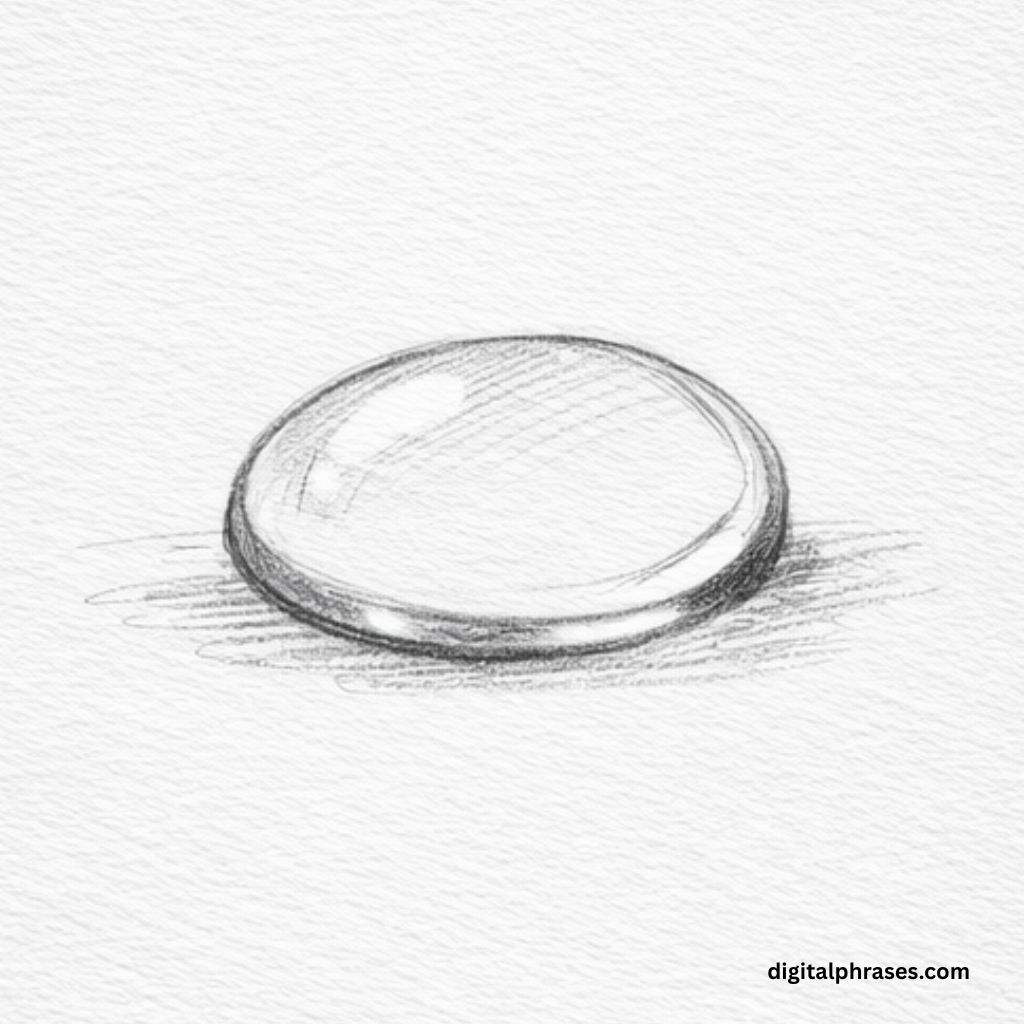
Step 3 – Deepen Contrast, Sharpen Highlights, and Finish the Cast Shadow
- Increase the darkest tones along the droplet’s lower rim and on the shaded side to give it stronger 3D depth.
- Smoothly blend mid-tones into darker areas so the droplet surface looks glossy and curved.
- Add a brighter, more defined specular highlight (small white spot) near the main highlight area to mimic reflected light.
- Slightly darken the area just beneath the highlight (a soft gradient) to enhance the illusion of shine.
- Strengthen the cast shadow around the droplet, making it darker and more concentrated directly under the rim.
- Extend the shadow outward with lighter strokes so it fades naturally into the surface.
- Clean up the droplet outline: keep edges crisp where the rim meets the surface, and softer where the dome curves upward.
- Finish by checking contrast—highlights should stay bright, the rim should be the darkest edge, and the shadow should anchor the droplet realistically.