How To Draw a Zombie?
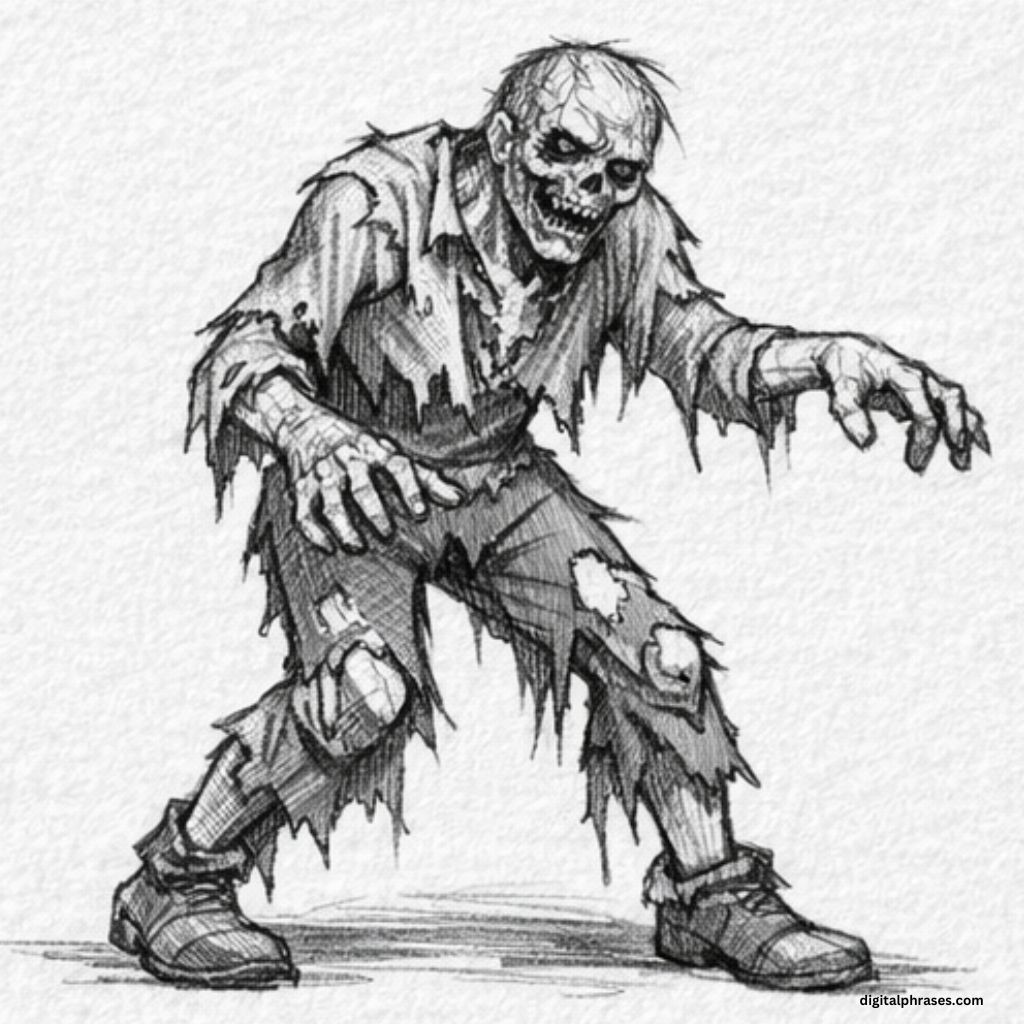
Here are 4 simple steps towards drawing a zombie.
Step 1 – Plan the Pose and Gesture
- Start by deciding what kind of zombie you want to draw: slow and dragging, aggressively charging, or eerily standing still. This decision affects the entire sketch.
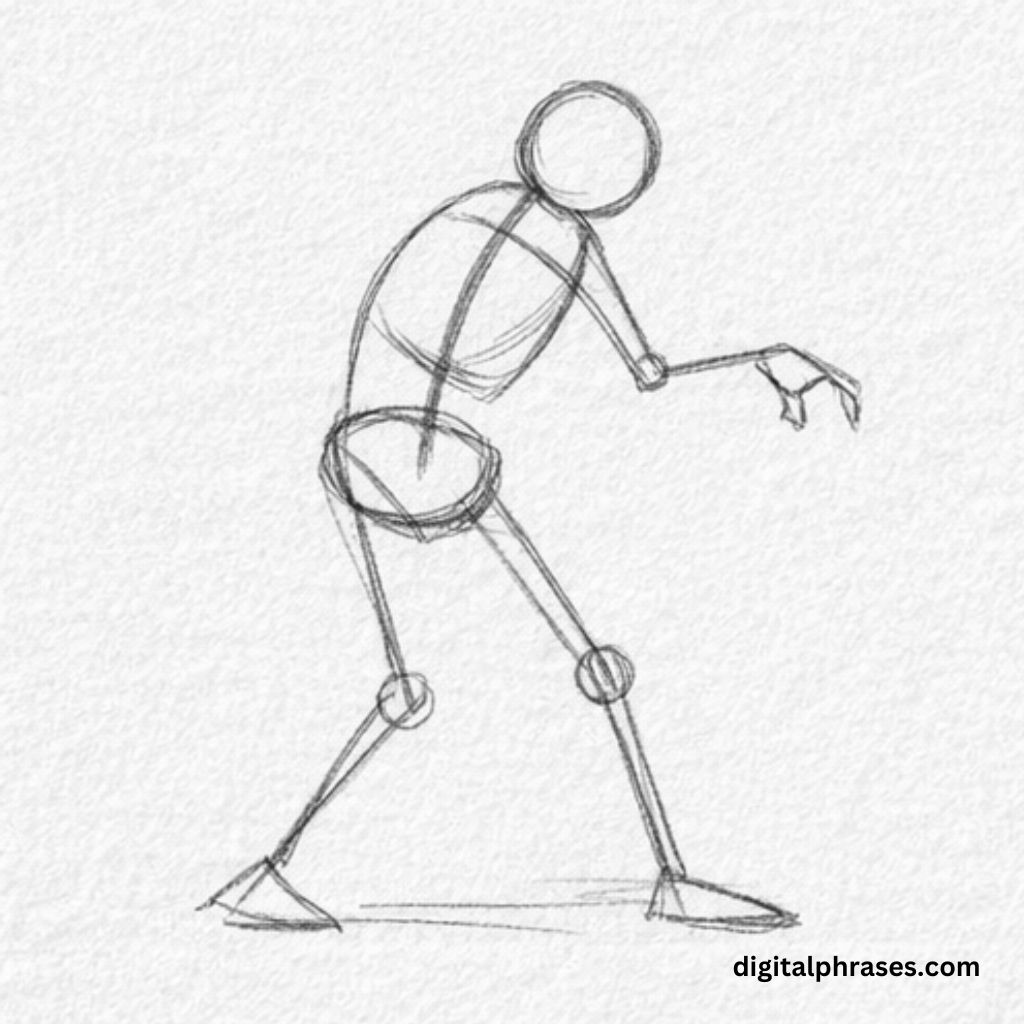
- Draw a gesture line (also called a line of action). This is a loose, flowing line that captures the overall movement or posture of the zombie.
- Use a stick figure to map out the skeleton. Keep it rough and simple—just lines for arms and legs, a circle for the head, and basic shapes for the chest and hips.
- Make the pose feel unnatural by exaggerating angles. Zombies often look more convincing when their posture feels off-balance or broken.
- Avoid details at this stage. The goal is movement and balance, not perfection.
- Check proportions early to ensure the head, torso, and limbs relate correctly before moving forward.
Step 2 – Build the Body Using Basic Shapes
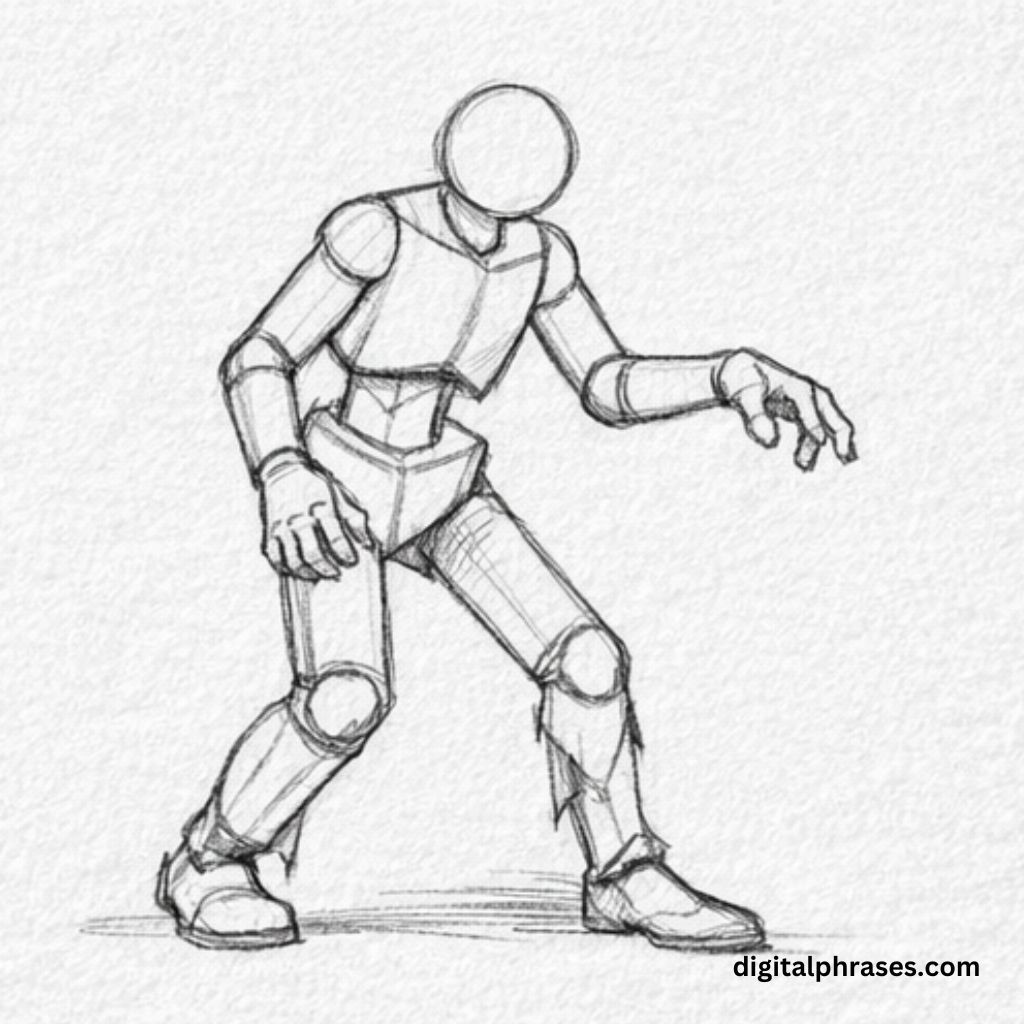
- Convert the stick figure into solid forms by adding simple 3D shapes like cylinders, boxes, and spheres.
- Draw the head as a sphere with a jaw block attached. This will help later when you add facial features.
- Use cylinders for arms and legs to establish thickness and perspective.
- Make the zombie asymmetrical: one arm thicker, one shoulder drooping, or one leg bent inward to create an unsettling look.
- Lightly sketch muscles and bones, keeping them loose and slightly exaggerated.
- Do not press hard with your pencil; this is still a construction phase meant to guide your final sketch.
Step 3 – Add Zombie Features and Facial Details
- Draw facial guidelines (vertical centerline and horizontal eye line) to keep features aligned, even if they are distorted.
- Add sunken eyes, uneven eye sizes, or hollow sockets to give a lifeless appearance.
- Sketch a broken or crooked mouth with exposed teeth, cracks, or torn skin around the lips.
- Emphasize bony areas such as cheekbones, jawlines, and temples.
- Draw hands carefully, as they are very expressive. Make fingers long, thin, and slightly claw-like.
- Add subtle details like scars, wrinkles, or sagging skin to enhance realism.
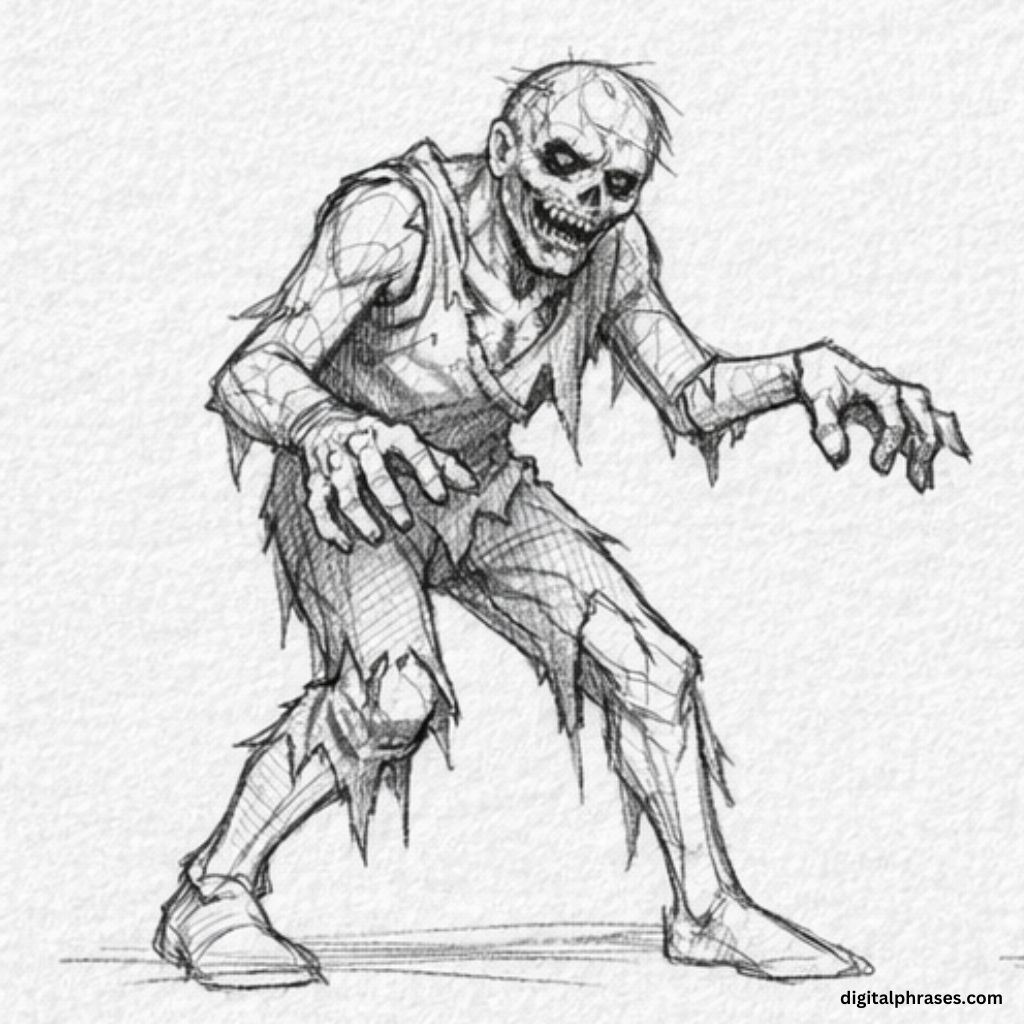
Step 4 – Clothing, Damage, and Shading
- Sketch torn or loose clothing using jagged, irregular lines to show wear and decay.
- Add rips, holes, and frayed edges to sleeves, pants, and collars.
- Include small storytelling details such as bite marks, stitches, bandages, or exposed bones.
- Choose one light source and apply shading consistently to give depth.
- Darken areas like eye sockets, under the chin, inside the mouth, and beneath torn fabric.
- Use cross-hatching or soft shading to keep the sketch gritty and atmospheric.
- Clean up unnecessary construction lines and strengthen final outlines where needed.