How To Draw an Easter Egg?
Here are the steps towards drawing an Easter Egg.
Step 1 – Sketch the Basic Egg Shape
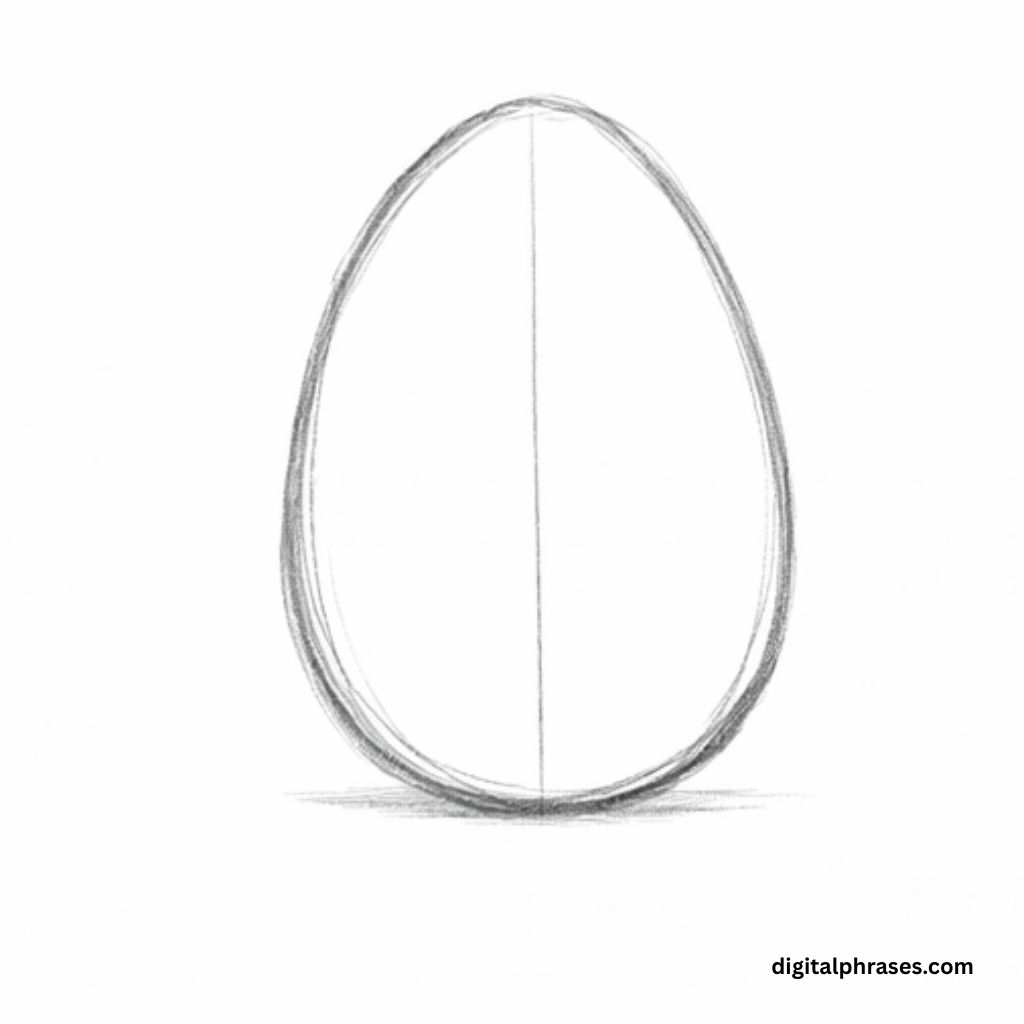
- Start by placing your paper in a comfortable position (portrait usually works well for an egg).
- Lightly draw a tall oval in the center of the page. Don’t press hard—this is your “guide” shape.
- Make the top slightly narrower and the bottom slightly wider so it feels more like a real egg rather than a perfect ellipse.
- If the shape looks lopsided, don’t erase immediately—try gently redrawing the outline around it to correct the curve.
- A helpful trick is to draw a faint vertical line down the center of the oval first, so you can check whether both sides match.
- Once you’re happy, clean up the outline with a slightly darker stroke, but still keep it smooth and simple.
- Avoid adding details too early; a neat base shape makes every later step easier.
- If you want your egg to look like it’s sitting on something, leave a tiny flat area at the bottom instead of making it fully rounded.
Step 2 – Add Guide Lines for Patterns
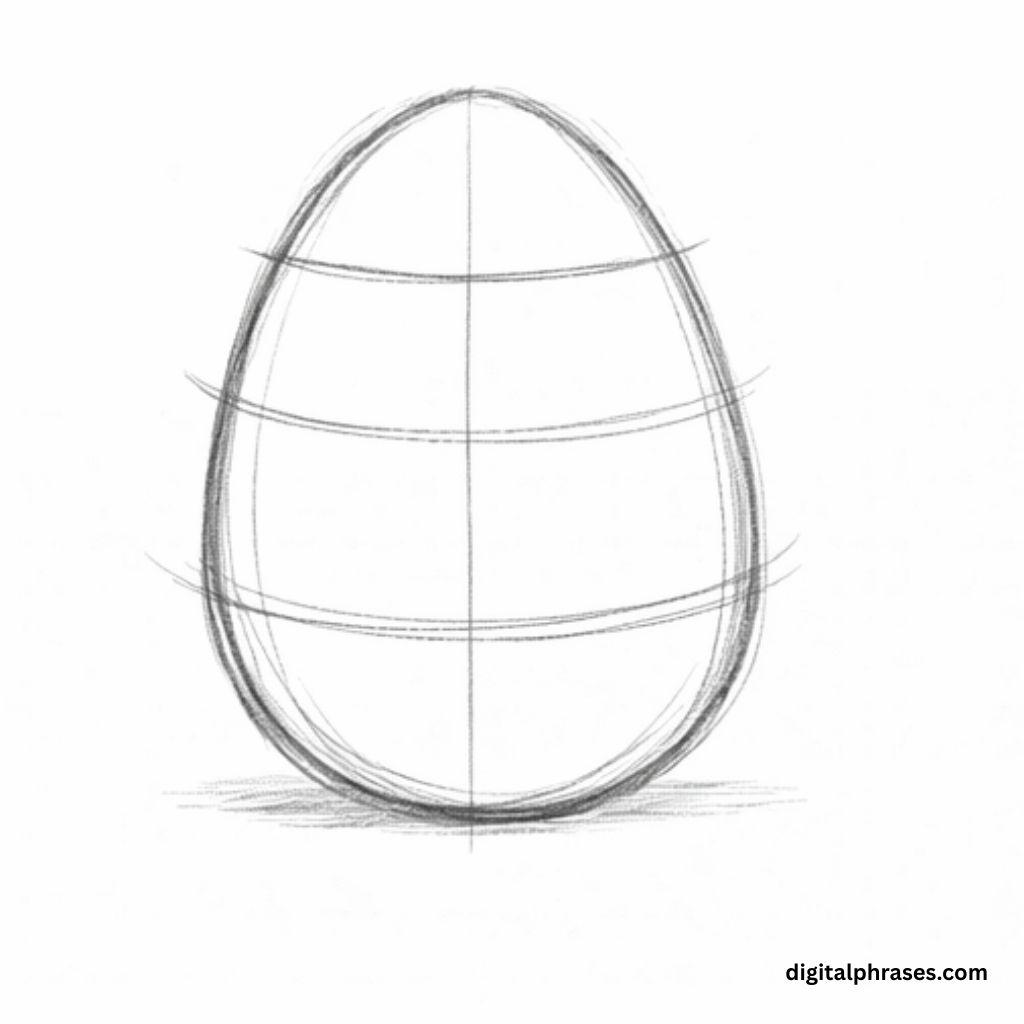
- Decide where you want the decorative patterns to go before you start drawing them.
- Lightly draw a few curved horizontal bands across the egg to create “sections” for designs. Curved lines help the pattern look like it’s wrapping around a round surface.
- Add one or two vertical guide lines if you want symmetry (for example, identical designs on the left and right).
- Think of these guide lines like road lanes—they keep your patterns organized and evenly spaced.
- Vary the thickness of the bands: one wide band in the middle and thinner bands near the top and bottom often looks balanced.
- Keep the lines very light so they don’t show through strongly once you color the egg.
- If you’re planning to draw repeating shapes (dots, zigzags, waves), mark small spacing points along the band first.
- Take a moment to step back and check: do the sections feel too crowded or too empty? Adjust now while it’s still easy.
Step 3 – Draw Decorative Patterns Inside Each Section
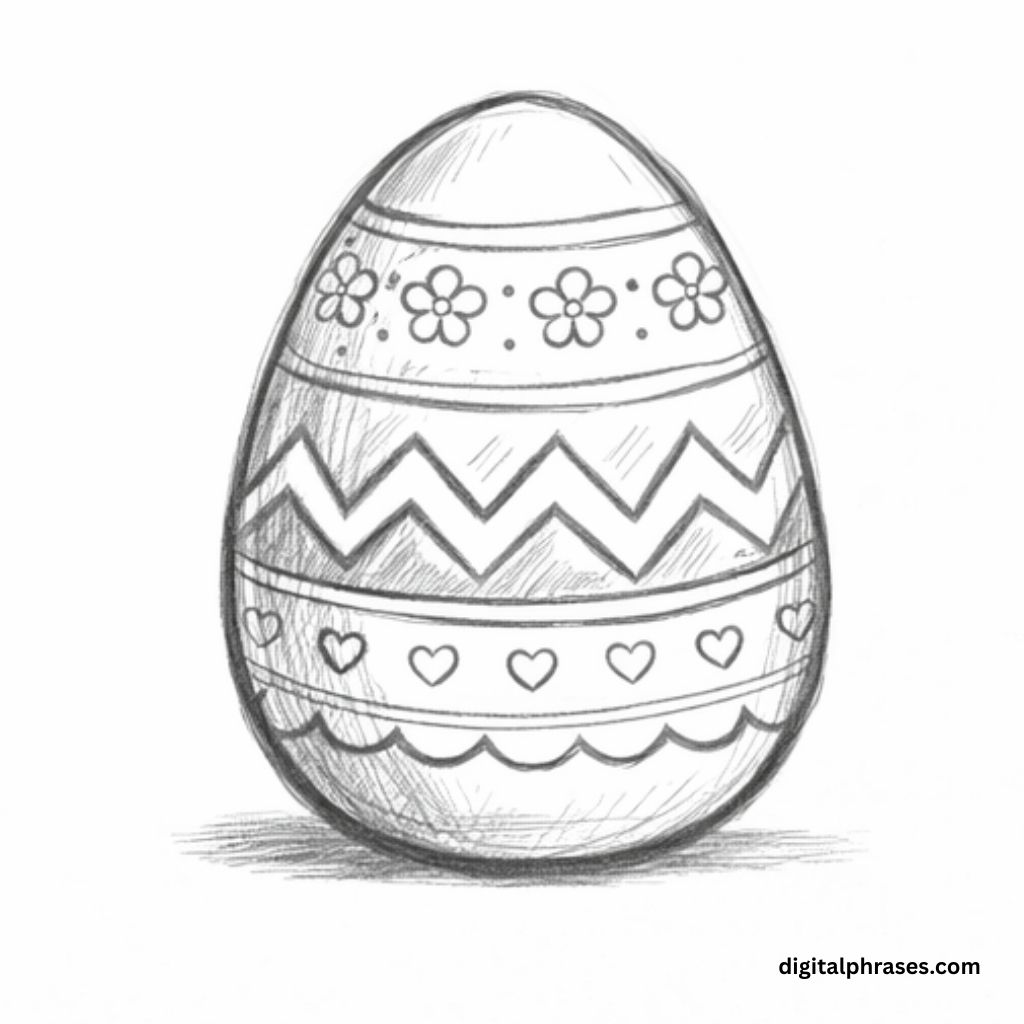
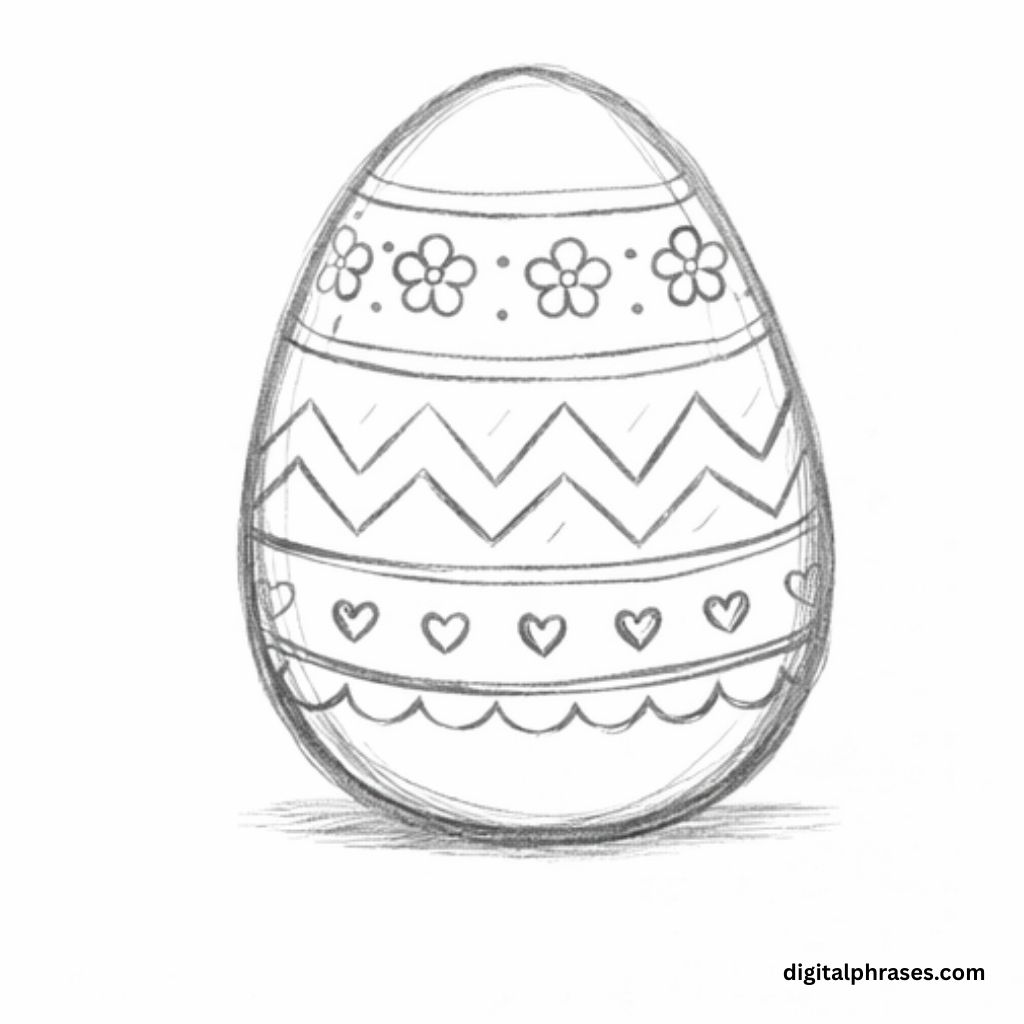
- Choose 2–4 simple motifs to repeat: dots, stripes, zigzags, tiny flowers, stars, hearts, or loops.
- Begin with the biggest shapes first (like larger flowers or bold zigzags), then fill gaps with smaller details (like dots).
- Follow the curve of the egg: patterns should slightly bend around the sides, especially near the edges.
- If you’re drawing a zigzag, make sure the peaks and valleys stay consistent—counting the points can help.
- Mix pattern types for variety: for example, dots on the top band, a chevron strip in the middle, and little petals near the bottom.
- Keep your linework clean by drawing slowly, rotating the paper if your hand feels awkward.
- If you make a mistake, turn it into a design choice (an extra dot, a thicker stripe, or a small sticker-like shape can “hide” errors).
- When the patterns look right, trace the final pattern lines a bit darker so they stand out clearly.
Step 4 – Outline, Shade, and Color for a Finished Look
- Carefully erase the guide lines, keeping the decorative outlines intact.
- Strengthen the outer edge of the egg with a confident outline so the shape pops.
- Add light shading along one side (usually the left or right edge) to make the egg look rounded.
- Leave a thin bright highlight strip on the opposite side to create a shiny, painted-egg effect.
- Pick a color palette: pastel colors (soft pink, mint, pale yellow, sky blue, lavender) give a classic Easter vibe.
- Color each band differently, but repeat a couple of colors in multiple places so the design feels connected.
- Use darker shades of the same color for small shadows under thick patterns, and lighter shades for open areas.
- Finish by adding tiny accents like sparkles, extra dots, or a thin border around bands to make it look polished and festive.