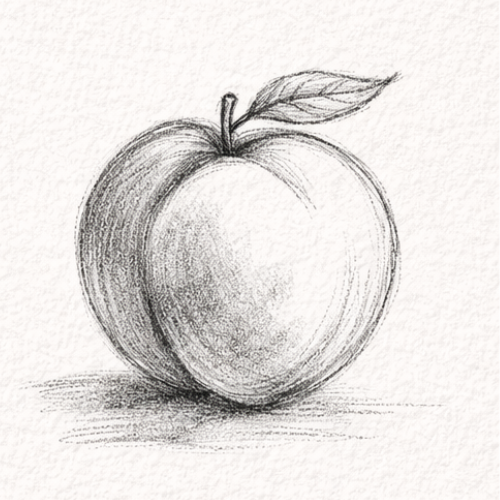
How To Draw an Orange?
Here’s a simple step by step tutorial on how to draw an orange.
How To Draw an Orange – Step-By-Step Process
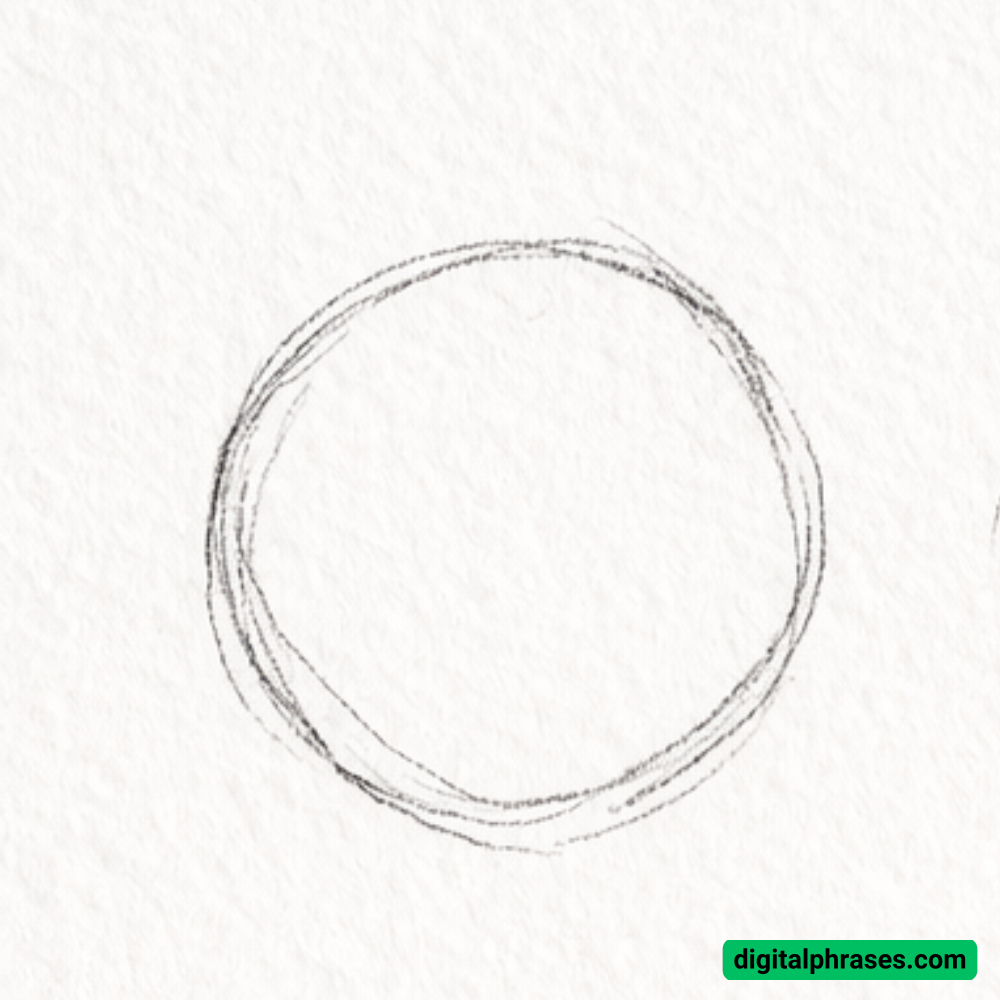
Step 1: Draw a Light Circle as the Base
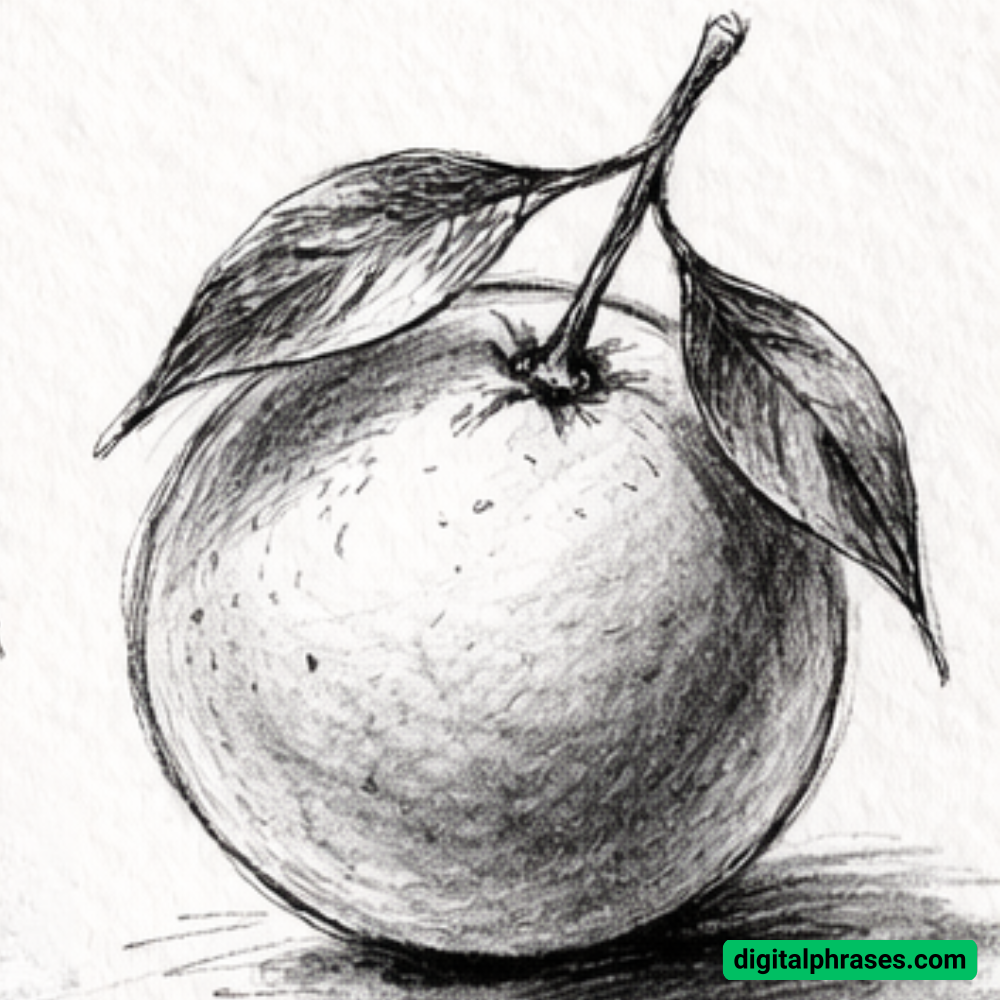
Start by sketching a simple, light circle. This will serve as the basic shape of your orange. Don’t worry about making it perfectly round—natural fruit is slightly irregular. Use soft pencil strokes so you can easily adjust the shape if needed. Keep the lines loose and sketchy rather than dark and defined.
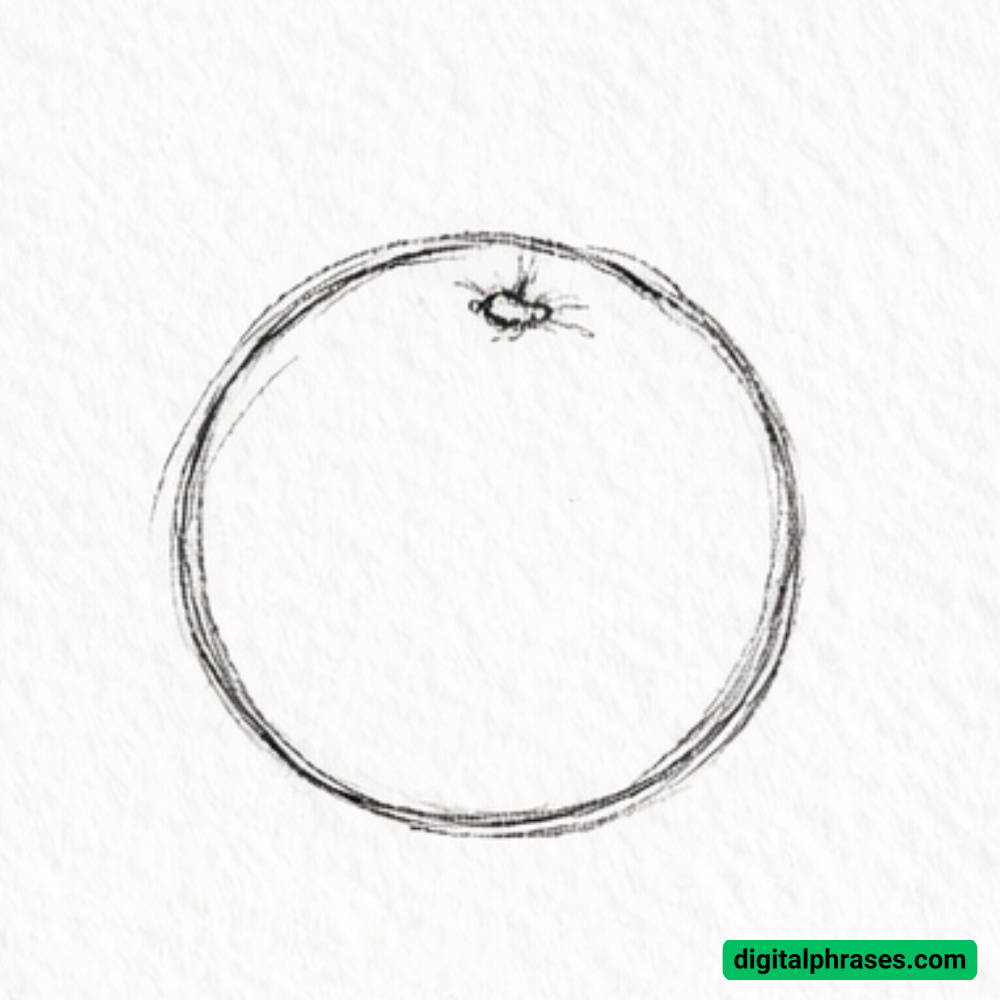
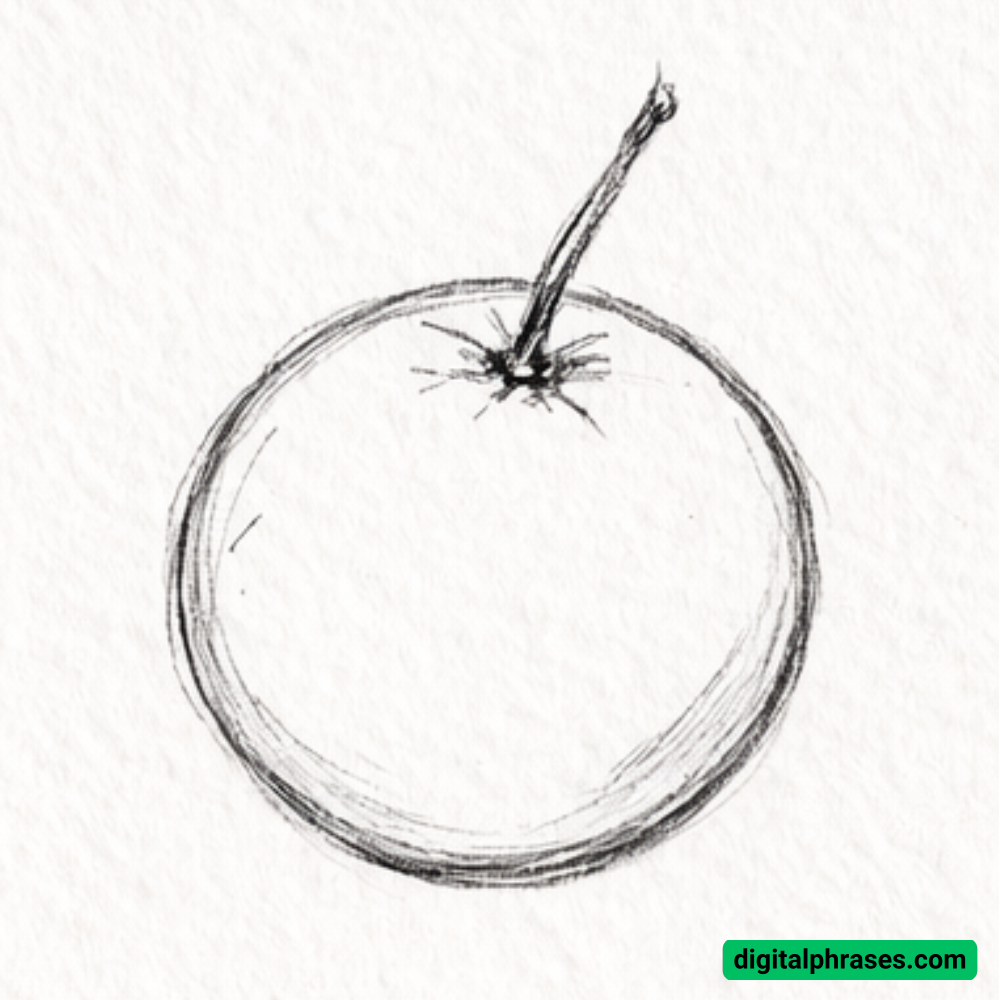
Step 2: Refine the Outline and Add the Top Indentation
Go over the circle and refine its outer contour, making it slightly uneven to give it a more organic look. At the top of the circle, add a small inward dip to suggest where the stem will sit. This subtle indentation helps the orange look more realistic and less like a perfect geometric shape.
Step 3: Draw the Stem
From the small indentation at the top, draw a short, slightly curved stem extending upward. Make the stem narrow and natural-looking, slightly thicker at the base and tapering toward the tip. Add a few small lines around the base of the stem to suggest texture and where it connects to the fruit.
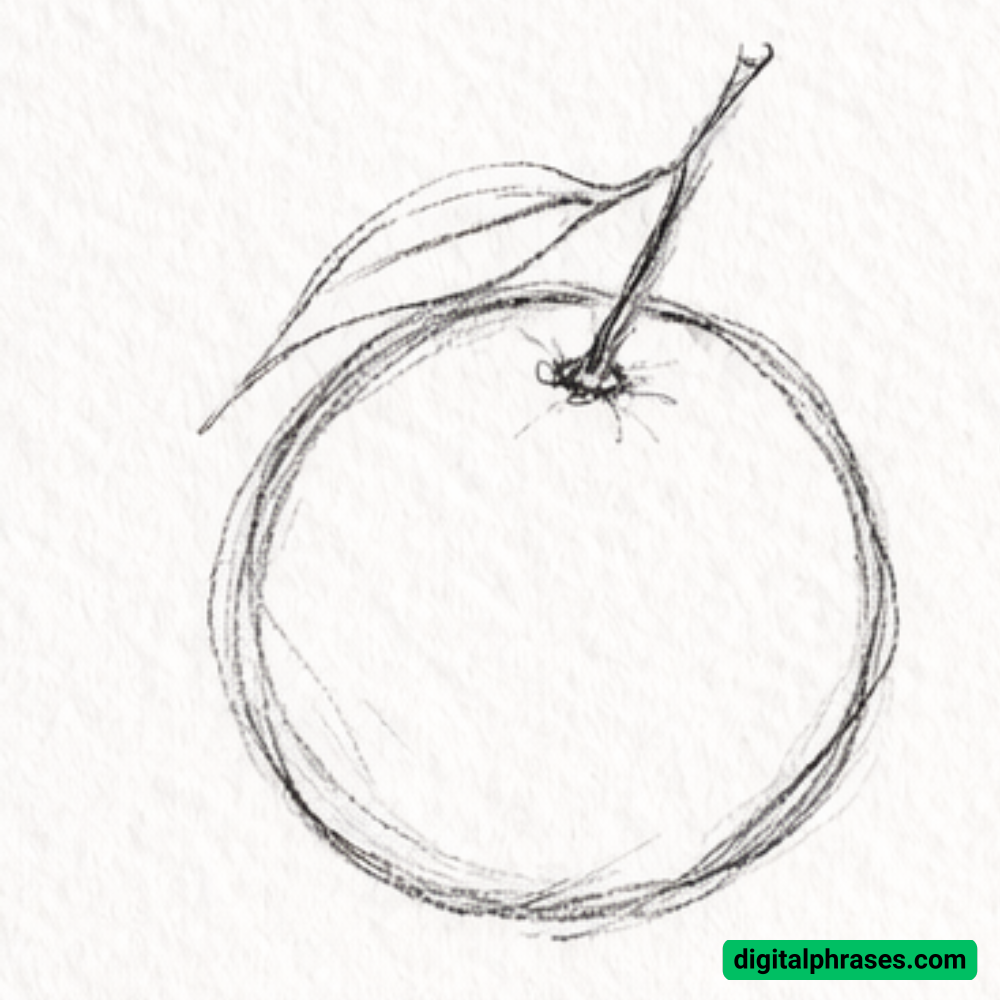
Step 4: Add the First Leaf
Attach a leaf to the stem. Start by drawing its central vein line, then build the leaf shape around it. The leaf should curve gently and taper to a soft point. Keep the edges slightly wavy rather than perfectly smooth. Lightly sketch in a few vein lines branching from the center.
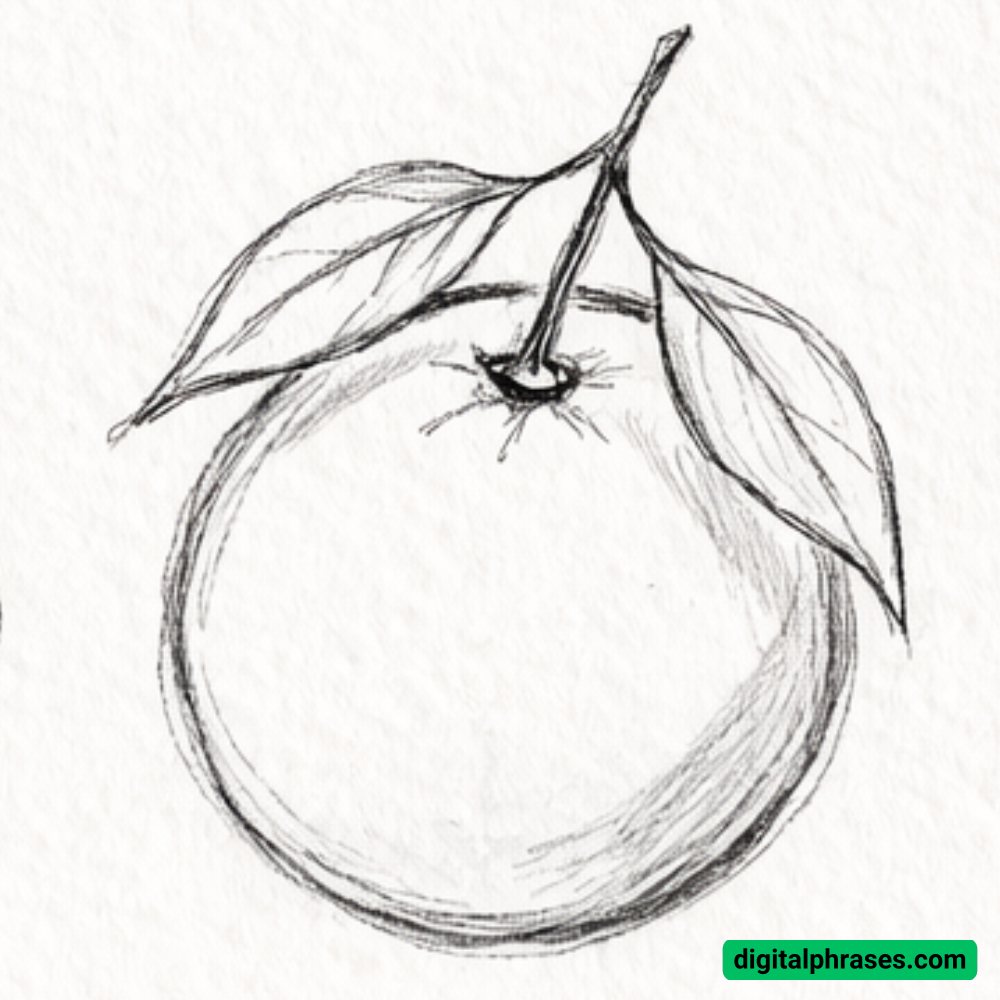
Step 5: Add a Second Leaf and Refine Details
Draw a second leaf on the opposite side of the stem to balance the composition. Overlap it slightly with the first leaf for a more natural appearance. Refine both leaves by darkening their outlines and adding more visible vein details. Clean up the orange’s outer contour if necessary.
Step 6: Begin Shading and Add Surface Texture
Choose a light source (for example, from the upper left). Start shading the opposite side of the orange to create volume. Use curved pencil strokes that follow the round shape of the fruit. Leave a lighter area to represent a highlight. Add tiny dots and subtle marks across the surface to suggest the textured skin of the orange. Lightly shade beneath the leaves and around the stem for depth.
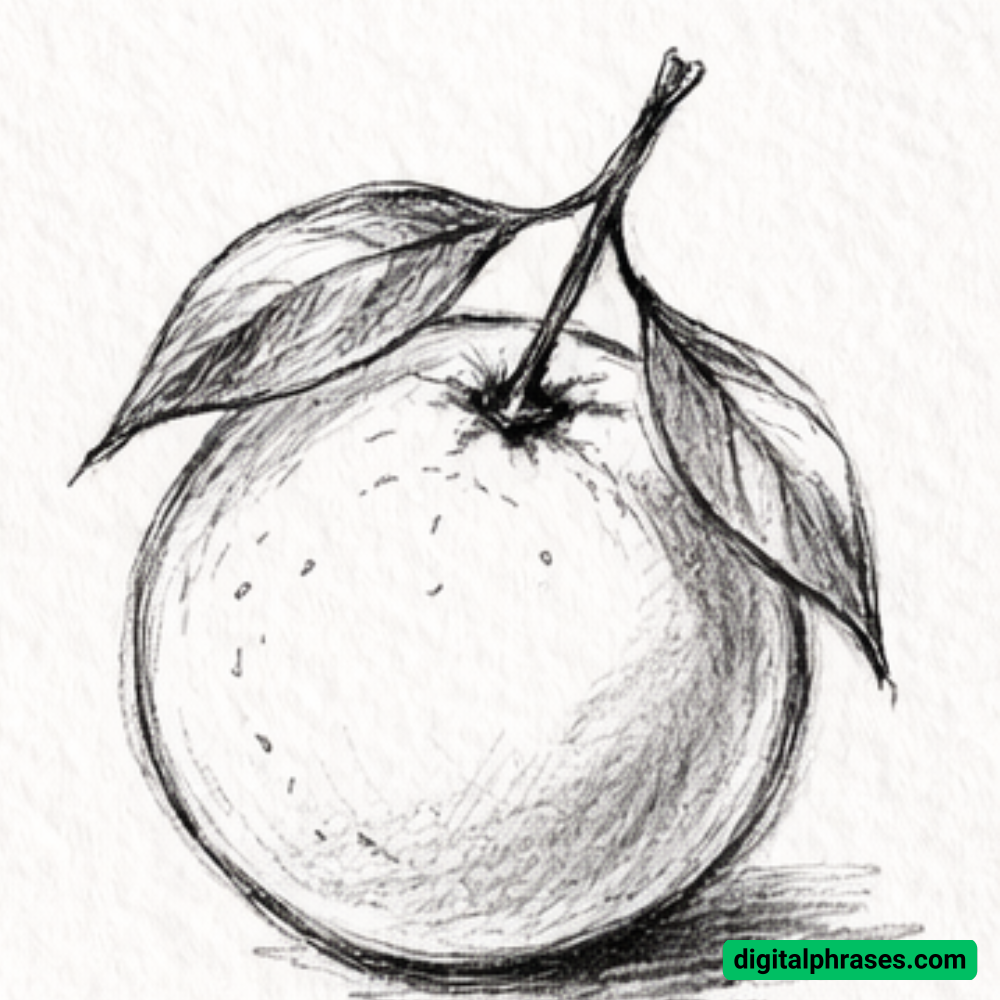
Step 7: Deepen Shadows and Add Ground Shadow
Enhance the shading by darkening the deepest shadow areas, especially along the lower side and where the leaves overlap the fruit. Blend gently to create smooth transitions from light to dark. Finally, add a cast shadow beneath the orange on the ground. This anchors the fruit in space and makes the drawing feel complete and three-dimensional.