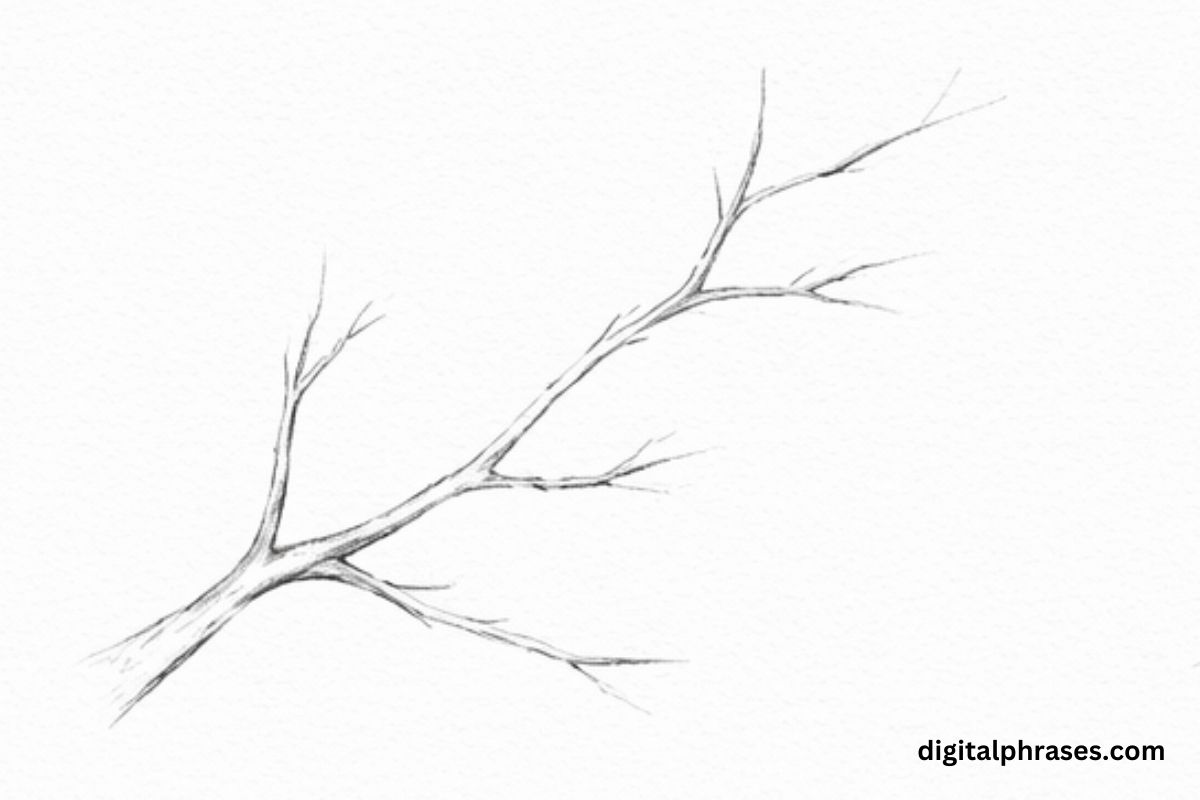
Begin by lightly sketching the main branch using soft, loose pencil strokes, focusing on the natural curve rather than perfect straight lines. Cherry blossom branches tend to arch gracefully, so allow your hand to move fluidly.
Decide the direction and balance of the composition early. Think about where the branch enters and exits the page so the sketch feels stable and visually pleasing.
Add a few secondary twigs branching off from the main limb. Keep them uneven in length and angle to avoid stiffness and create an organic look.
Use minimal pressure at this stage so the lines remain adjustable. These early marks act as a guide rather than a final commitment.
Take a moment to observe reference images or real branches to understand how cherry blossom branches naturally taper and split.
Step 2 – Plan the Flower Clusters and Bud Placement
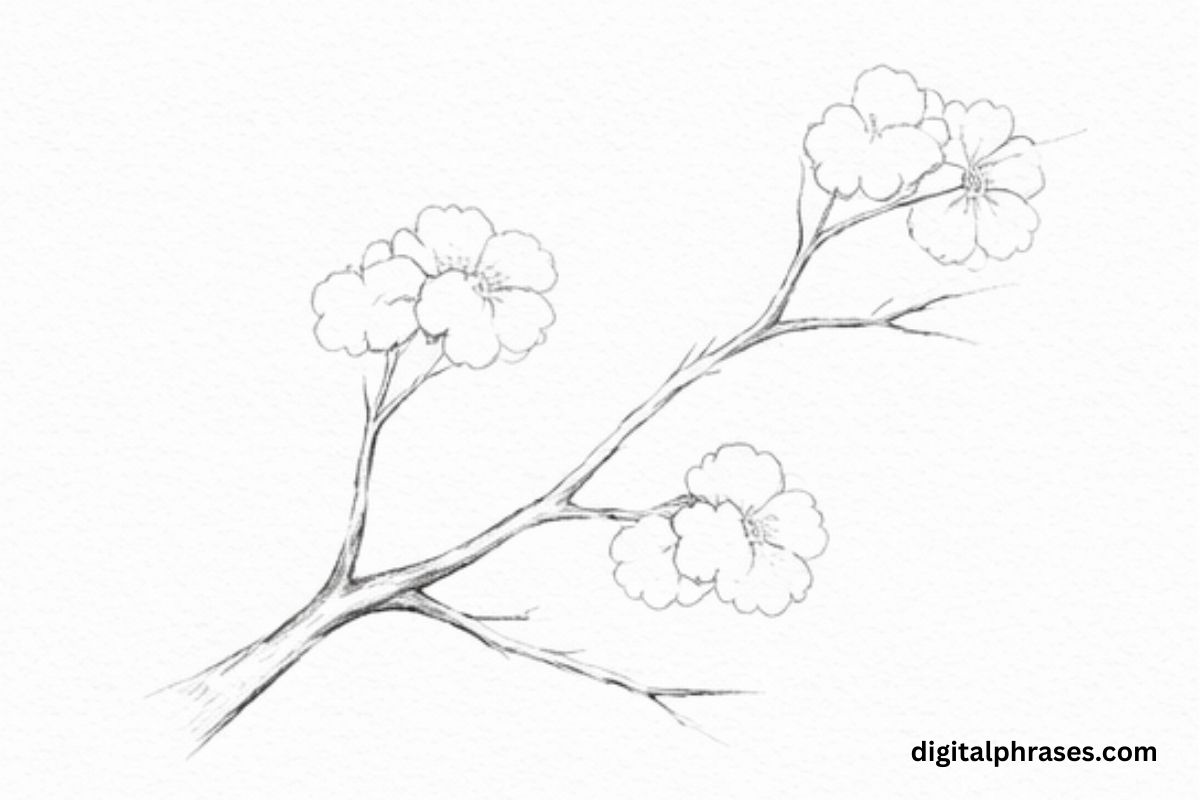
Identify spots along the branches where blossoms will grow, typically near joints or the ends of twigs.
Lightly draw simple circular or cloud-like shapes to represent clusters of flowers instead of individual blossoms right away.
Vary the size and spacing of these clusters so they don’t look repetitive or artificial.
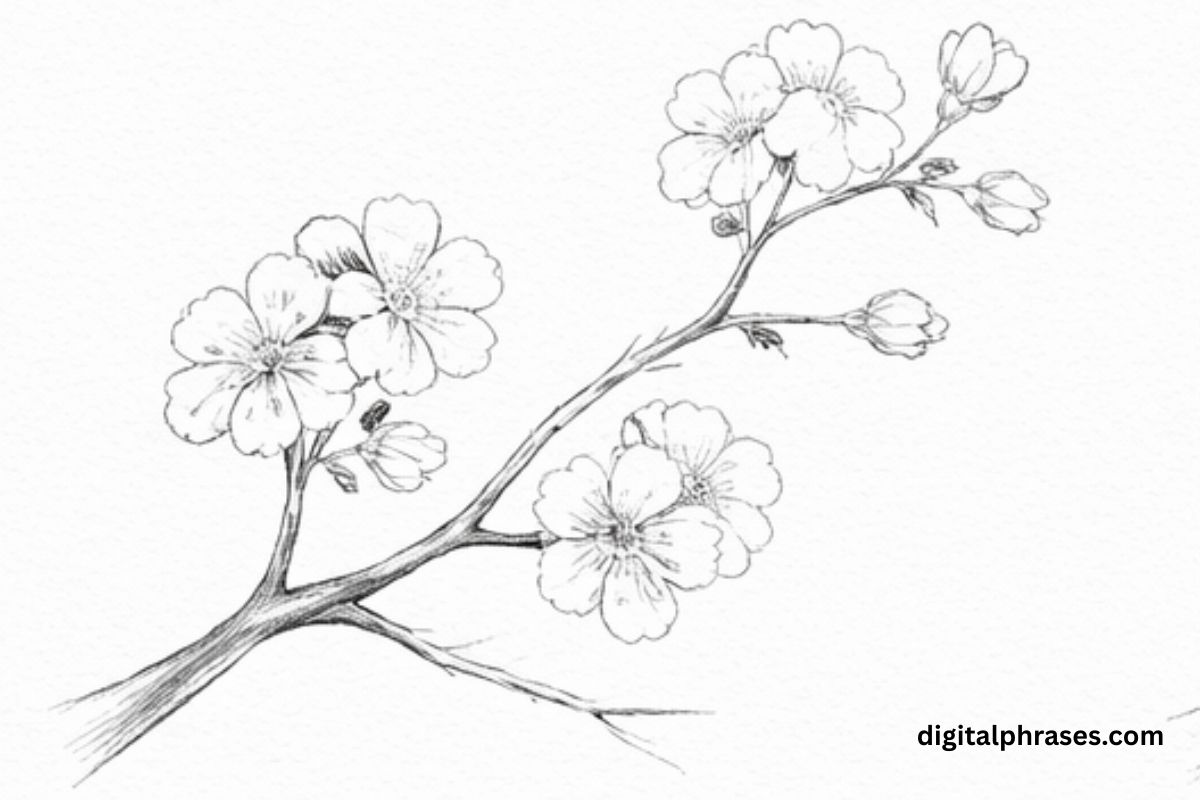
Add a few small oval shapes near some clusters to indicate unopened buds, which helps make the sketch feel more realistic.
Check the overall rhythm of the composition, making sure the clusters lead the viewer’s eye naturally along the branch.
Step 3 – Draw Individual Cherry Blossoms in Detail
Within each cluster, select a few flowers to fully define while leaving others implied with partial shapes.
Start each blossom by drawing a small center circle, then add five gently rounded petals radiating outward.
Slightly overlap petals or vary their size to avoid a flat, mechanical appearance.
Draw delicate stamens extending from the center using thin lines, finishing them with tiny dots.
Keep your lines light and clean, refining petal edges gradually rather than pressing hard all at once.
Step 4 – Refine, Add Texture, and Finalize the Sketch
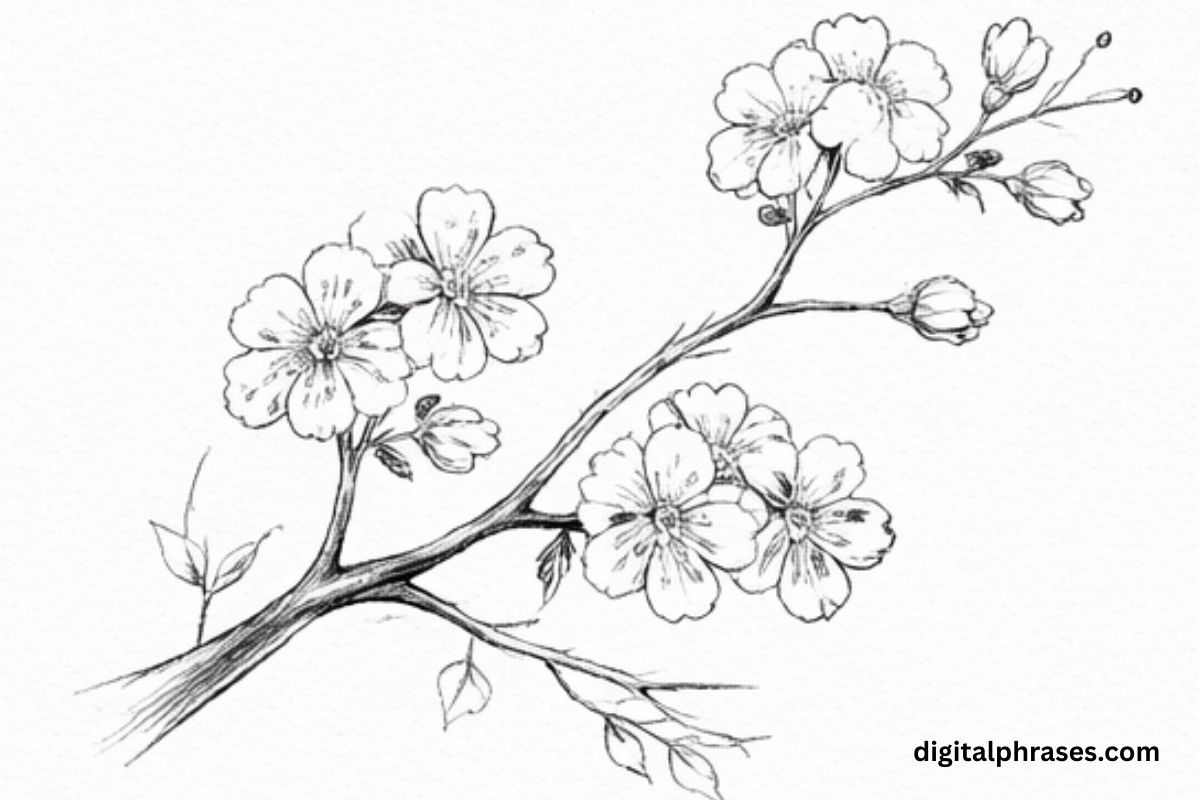
Strengthen the most important outlines, such as the main branch and the most prominent flowers, while keeping background elements softer.
Add subtle texture to the branch using short, uneven strokes to suggest bark.
Lightly shade the base of petals and the underside of clusters to create depth and a sense of volume.
Erase unnecessary guide lines carefully so the drawing looks clean and intentional.
Step back and review the sketch as a whole, making small adjustments to balance, contrast, or detail before considering the drawing complete.