How To Draw Curly Hair
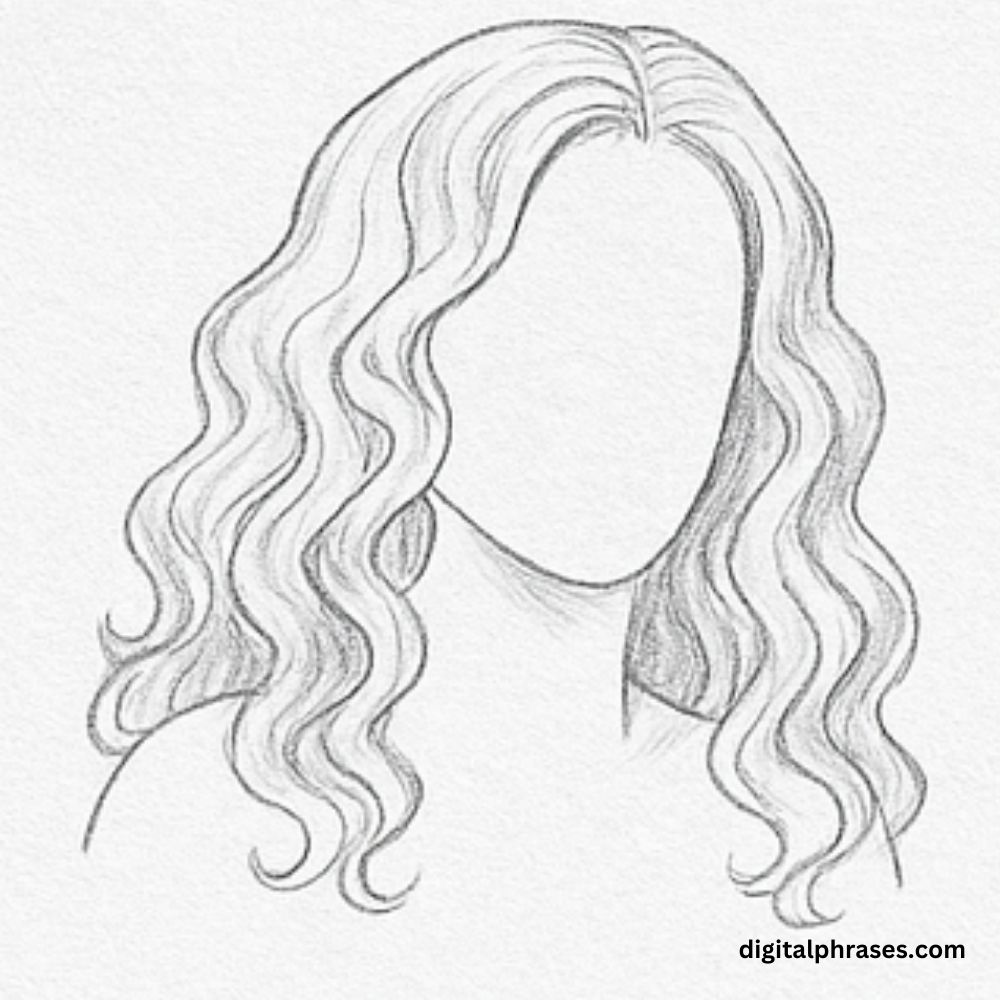
Here’s the simple process on how to draw Curly Hair
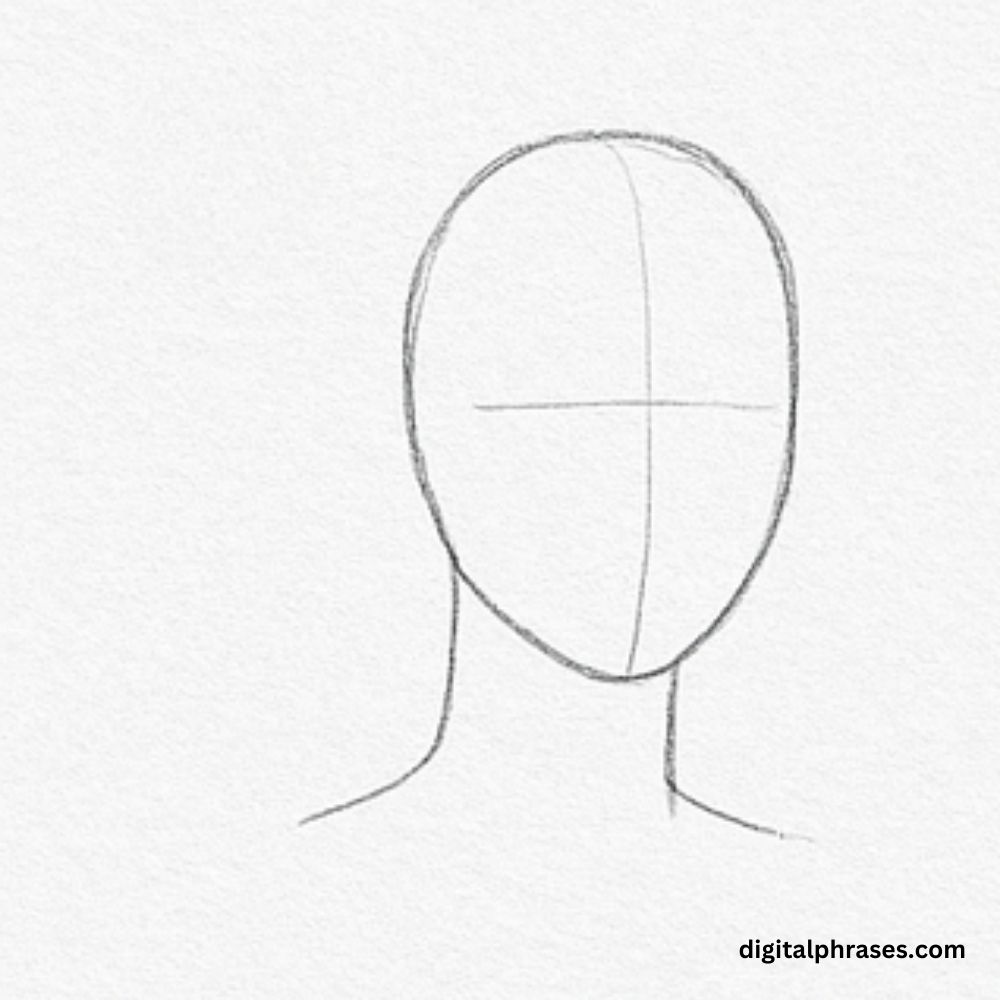
Step 1 – Construct the Basic Head Shape and Guidelines
- Begin by lightly sketching an oval to represent the head. This oval should be slightly narrower at the chin to resemble a natural face shape.
- Draw a vertical center line down the middle of the face to establish symmetry. This helps keep the hair balanced on both sides.
- Add a horizontal guideline across the upper half of the oval to indicate eye level. Even though facial features are not drawn, this line helps place the hairline correctly.
- Sketch a simple neck extending downward from the base of the oval using two curved lines.
- Keep all strokes light and loose at this stage, as these are construction lines that may be adjusted or erased later.
Step 2 – Outline the Overall Hair Mass
- Decide where the hairline begins, usually slightly above the horizontal guideline, and lightly mark it.
- Draw the outer silhouette of the hair, focusing on the overall volume rather than individual curls.
- Use long, flowing curves to frame the head, allowing the hair to fall naturally on both sides of the face.
- Avoid sharp angles; curly hair tends to have soft, rounded contours even in its outer shape.
- Ensure the hair extends past the shoulders slightly to suggest length and fullness.
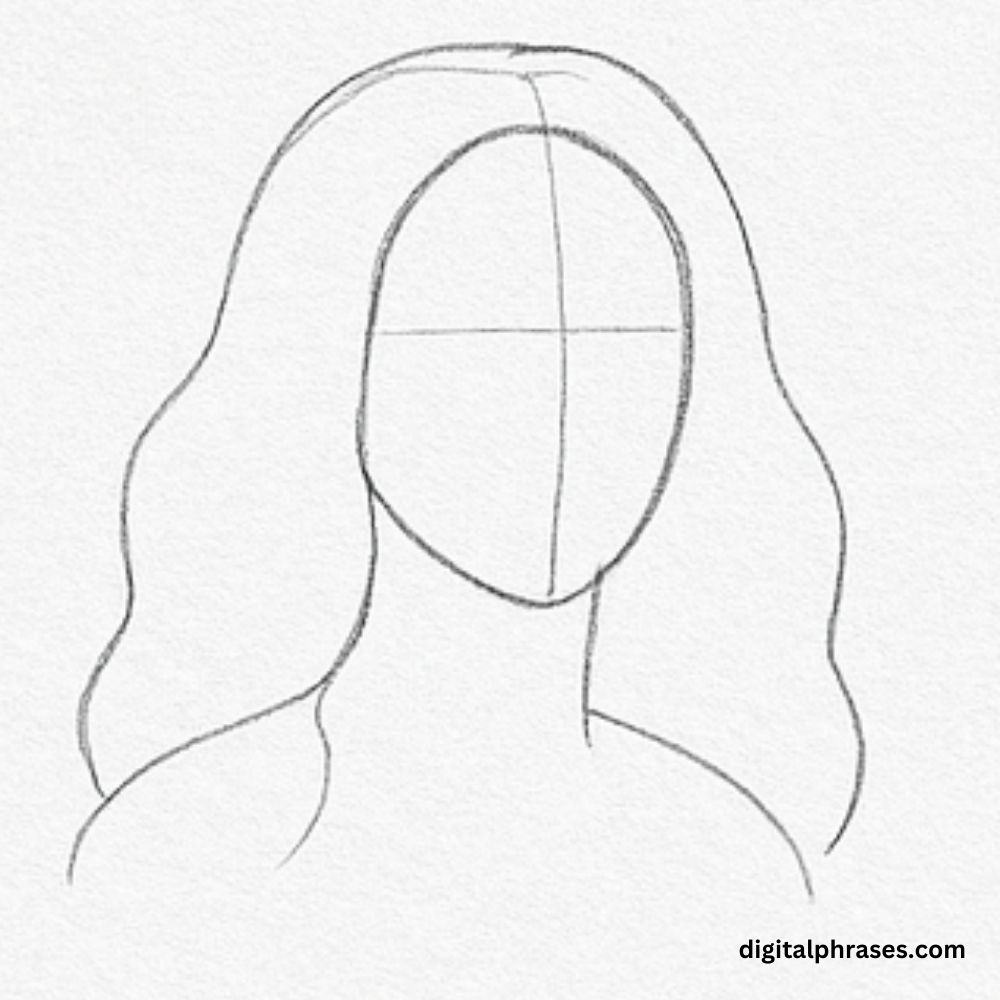
Step 3 – Divide the Hair into Large Curly Sections
- Inside the outer hair shape, sketch large, wavy strands that follow the direction of hair growth.
- Think of curls as grouped ribbons rather than single strands; this gives the hair a more realistic structure.
- Vary the width of these sections so the hair does not appear repetitive or stiff.
- Let some sections overlap others to create depth and a layered appearance.
- Maintain a consistent flow so the curls feel connected rather than randomly placed.
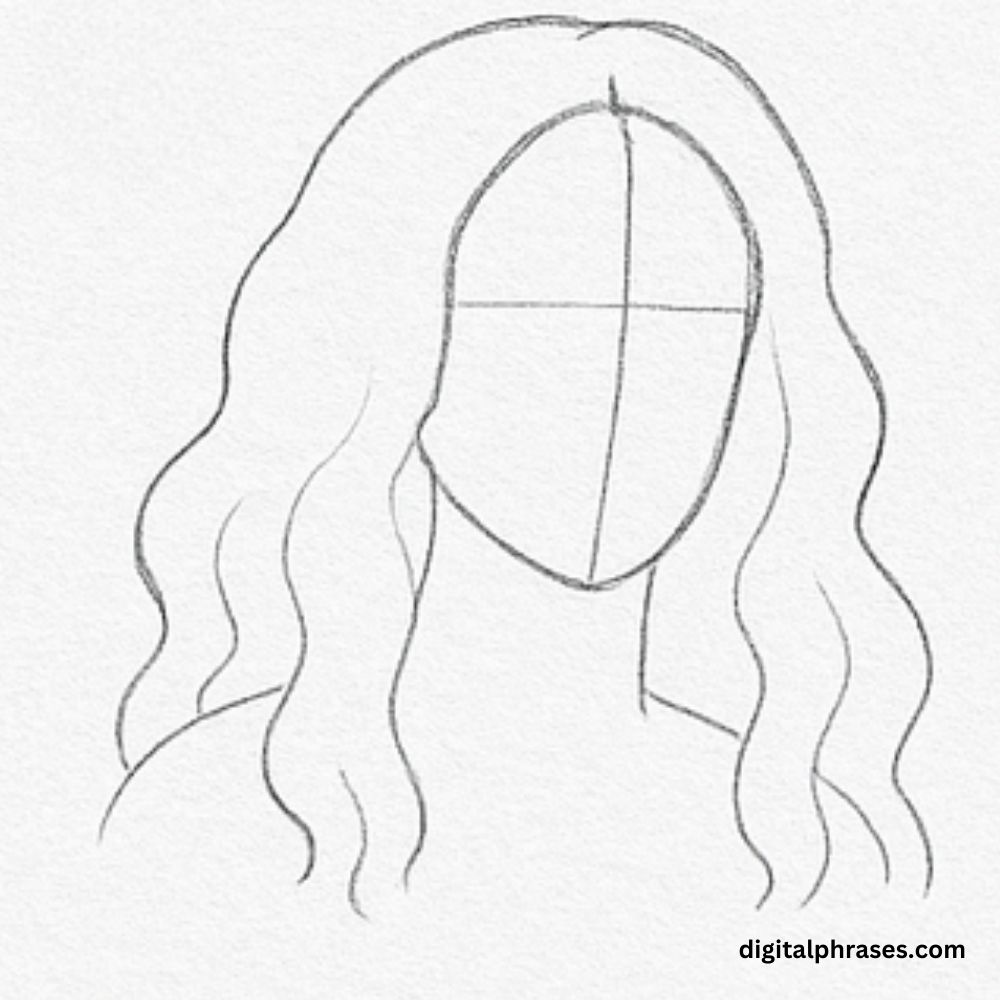
Step 4 – Refine the Curls and Add Rhythm
- Begin adding smaller wave patterns within each large section to suggest individual curls.
- Use repeating S-shaped lines to form natural curl rhythms, allowing them to loosen and tighten in different areas.
- Curve the lines more tightly toward the ends of the hair to show how curls often coil more at the tips.
- Avoid outlining every curl completely; broken lines make the hair look softer and more natural.
- Step back occasionally to check that the curls feel balanced on both sides of the head.
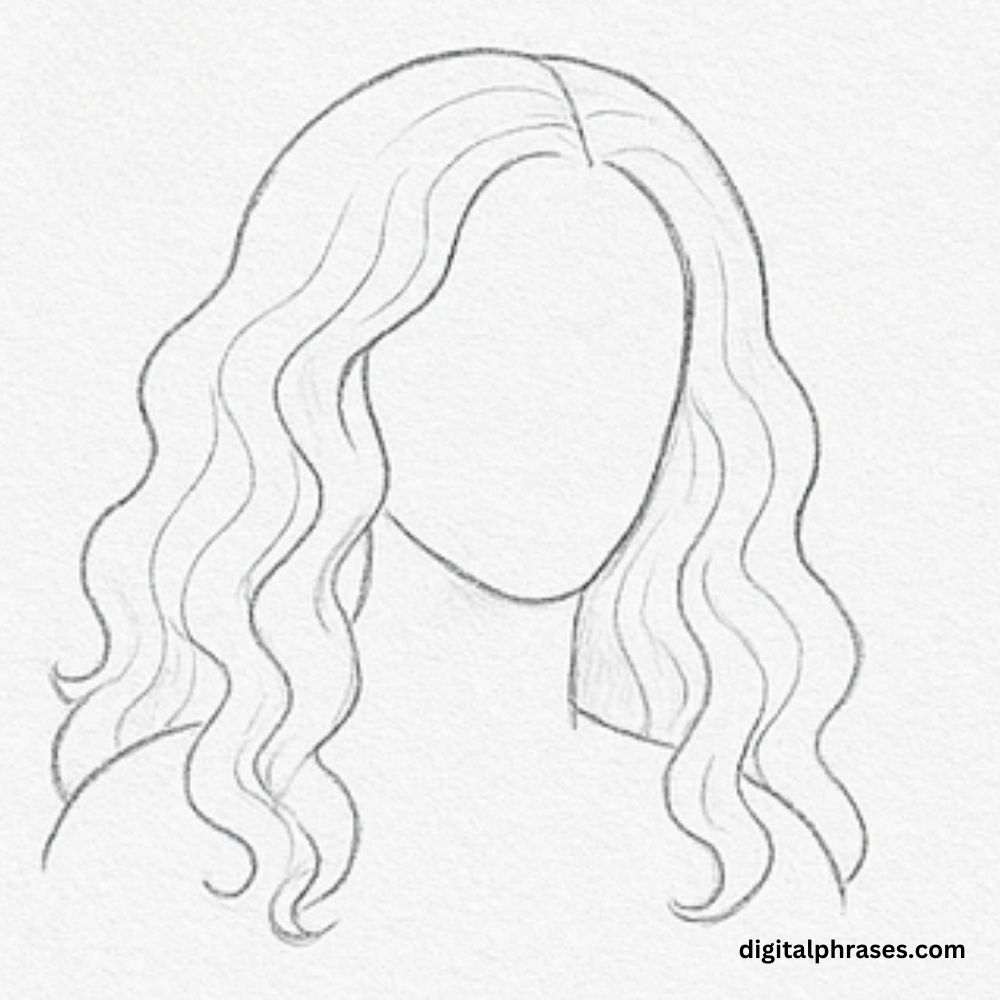
Step 5 – Add Depth, Overlap, and Texture
- Darken select lines where curls overlap to emphasize depth and separation.
- Add subtle inner contour lines to show how curls stack behind and in front of one another.
- Lightly shade near the roots and under overlapping curls to suggest shadows and volume.
- Refine the hairline by adding small, irregular curves instead of a single smooth line.
- Erase unnecessary construction lines and strengthen final strokes to complete the curly hair drawing with clarity and realism.