How To Draw Fairy Wings
Step-by-Step Guide on How To Draw Fairy Wings
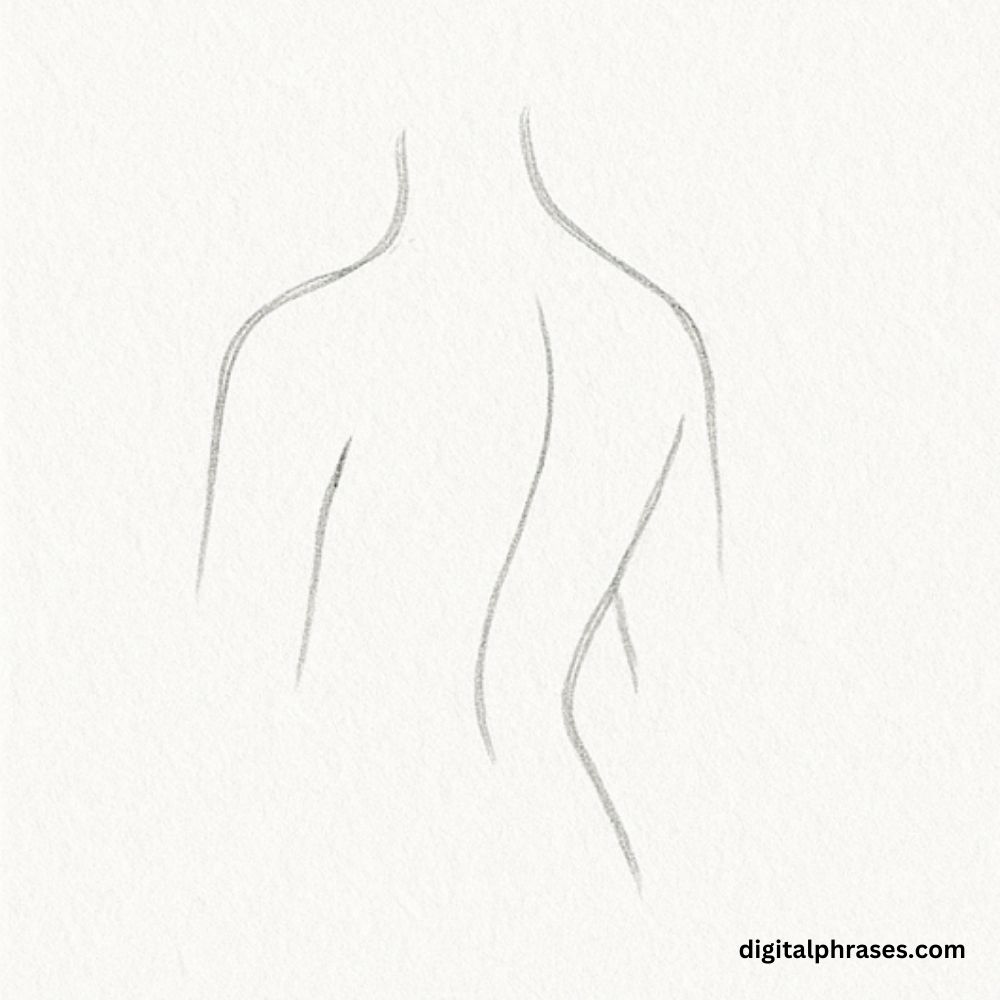
Step 1 – Sketch the Upper Back and Guideline Flow
- Begin by lightly sketching the upper back or shoulder area of the figure where the fairy wings will attach. This provides a natural anchor point and helps with correct placement.
- Use soft, curved lines to suggest the spine and shoulder contours rather than rigid anatomy. Fairy wings look best when they follow organic, flowing lines.
- From the shoulder blades, draw two gentle, outward-curving guideline lines on each side. These lines act as the central “spine” or flow path of each wing.
- Keep the pencil pressure light. This stage is about planning movement and symmetry, not details.
- Focus on balance: both sides should mirror each other in size and angle, even if the curves are not perfectly identical.
Step 2 – Block in the Basic Wing Shapes
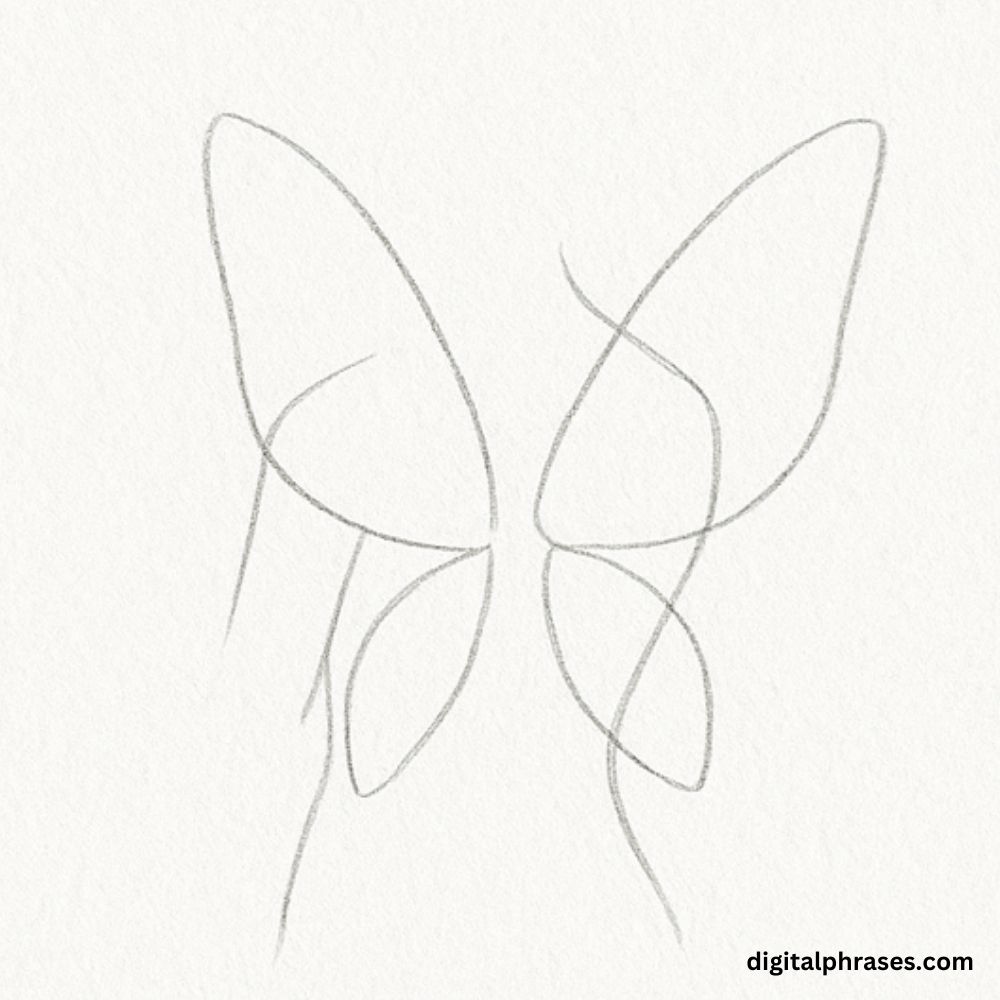
- Using the guidelines from Step 1, sketch large, leaf-like shapes extending outward from each side of the back.
- Draw one larger upper wing on each side first. These usually resemble elongated teardrops or butterfly wings.
- Add a smaller lower wing beneath each upper wing, slightly overlapping and angled downward.
- Do not worry about precision yet; aim for soft, rounded edges and graceful curves.
- Ensure both wings feel connected to the back rather than floating independently.
- Step back and visually check symmetry—adjust sizes or angles if one wing feels heavier than the other.
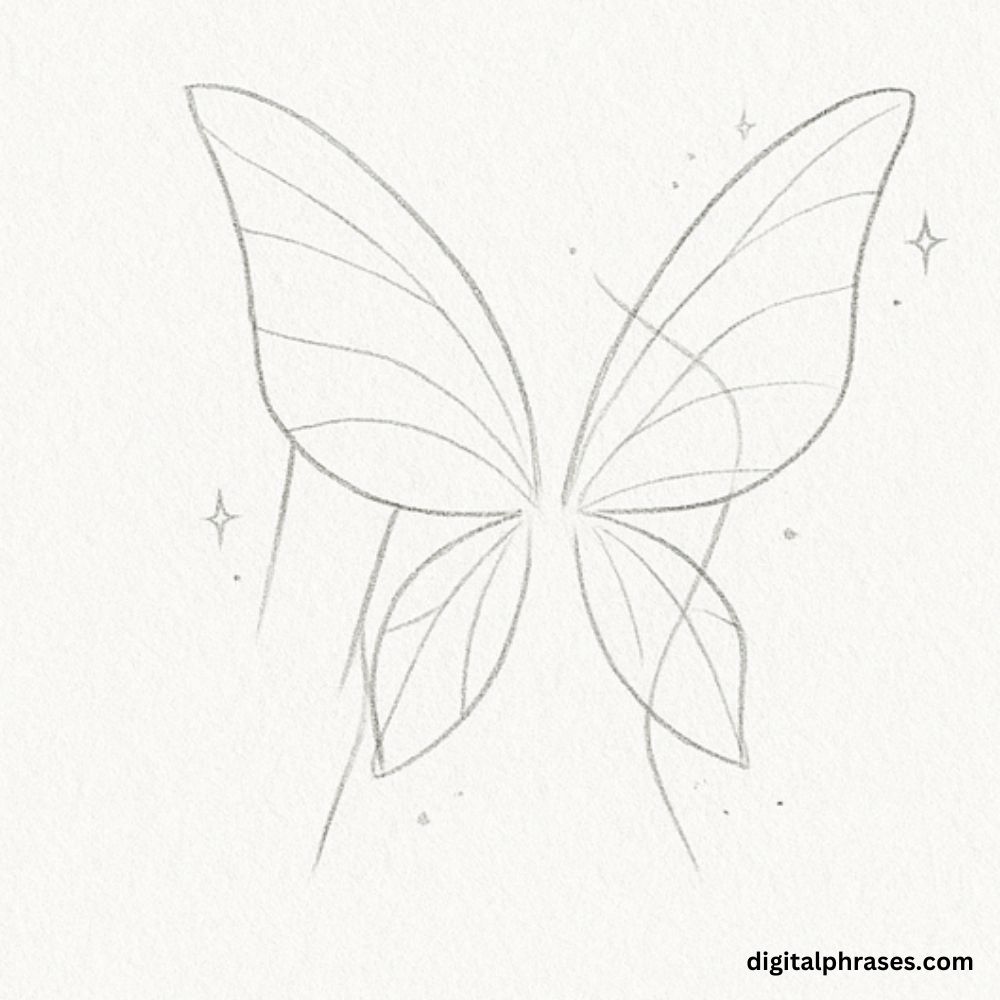
Step 3 – Refine the Wing Structure and Segments
- Inside each wing, add curved internal lines that radiate outward from the base where the wings connect to the body.
- These lines suggest the wing’s structure, similar to veins in butterfly wings or leaves.
- Keep the lines flowing and tapered, avoiding harsh straight strokes.
- Refine the outer edges by smoothing and slightly reshaping the contours for elegance.
- At this stage, erase unnecessary construction lines to clean up the overall form.
- Make sure the wings still appear light and airy rather than stiff or mechanical.

Step 4 – Add Decorative Details and Texture
- Begin enhancing the wings with additional curved lines, small dots, and subtle sparkles.
- You can add layered segments within the wings to give them depth and dimension.
- Include gentle tapering at the tips to make the wings feel delicate and magical.
- Lightly shade or vary line thickness to suggest transparency and softness.
- Avoid overcrowding details—fairy wings should feel intricate but not heavy.
- Check that decorations are relatively balanced on both sides.
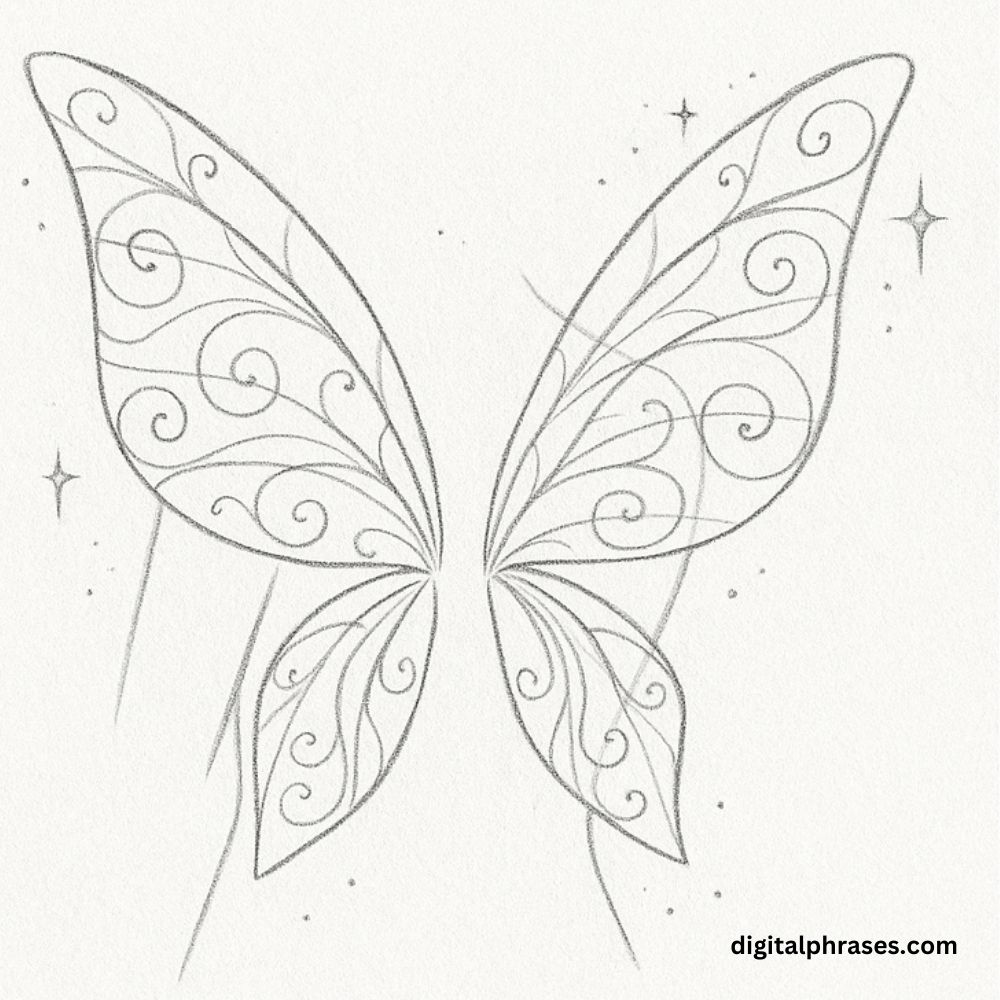
Step 5 – Finalize with Ornamentation and Cleanup
- Add ornamental swirls, curls, or filigree patterns inside the wings for a whimsical fairy aesthetic.
- Enhance the outer edges with confident, clean lines to finalize the silhouette.
- Erase any remaining sketch marks so the wings appear polished.
- Optionally add tiny stars or sparkles around the wings to emphasize their magical nature.
- Review the entire drawing for flow, symmetry, and elegance.
- Once satisfied, you can ink the drawing or add color, keeping tones light and translucent to preserve the fairy-like feel.
By following these structured steps, you can gradually build fairy wings that look graceful, magical, and well-balanced while maintaining a natural, flowing appearance.