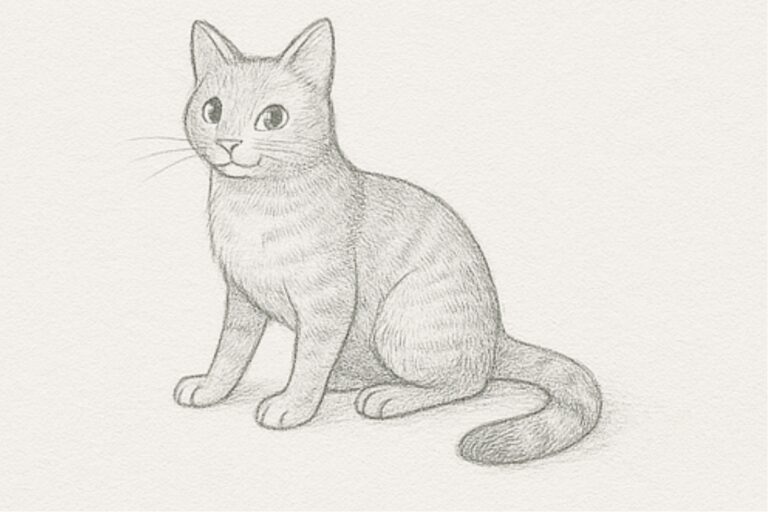
How To Draw Fur?
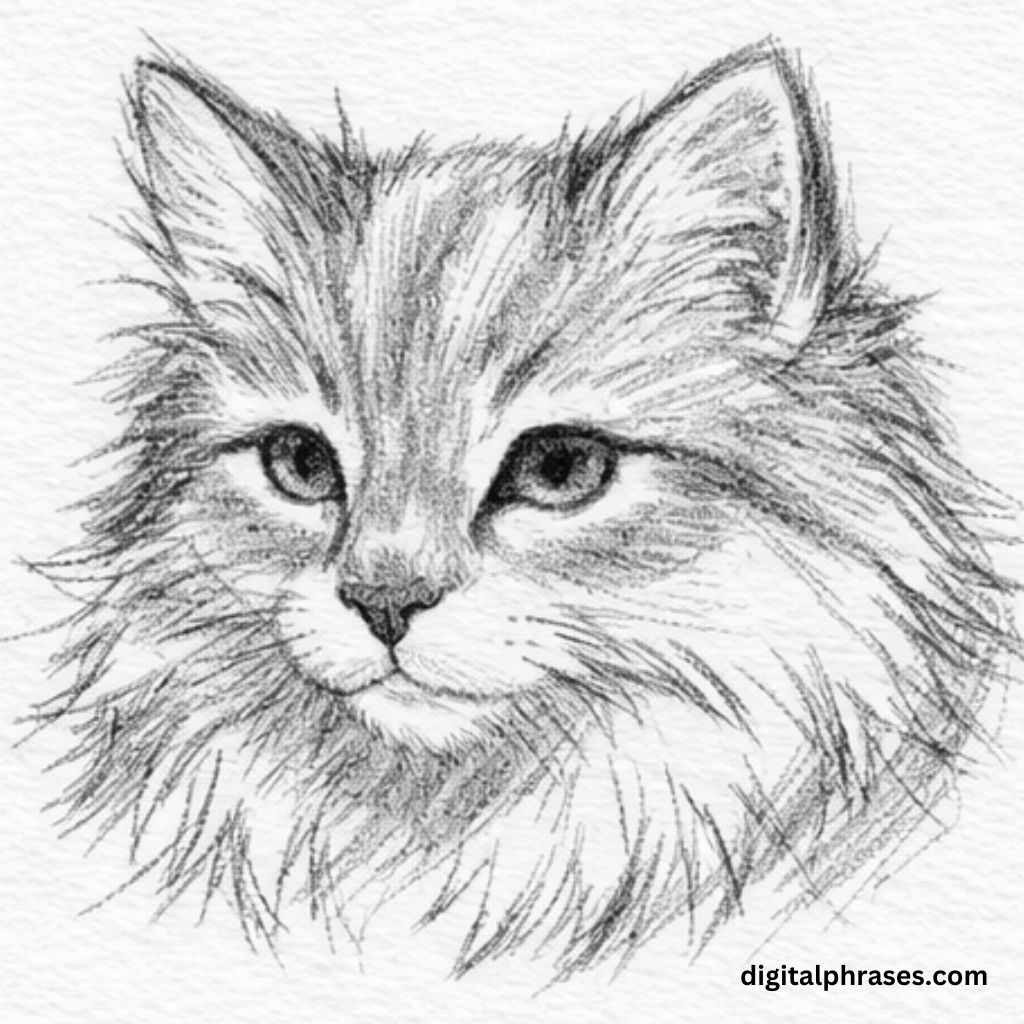
Here we are drawing a furry cat. Check out the steps below.
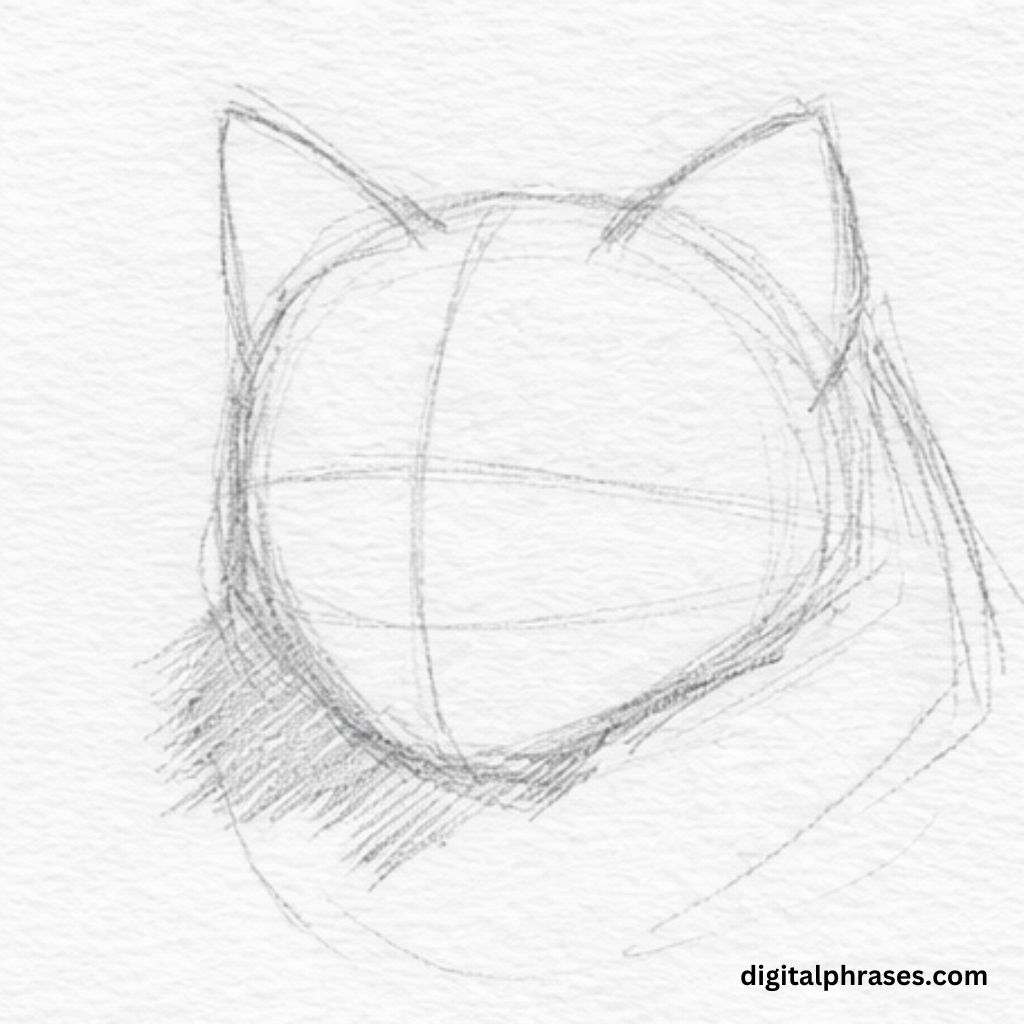
Step 1 – Understand and Sketch the Base Form
- Begin by lightly sketching the basic shape of the subject you are drawing (for example, the head, body, or limb of an animal).
- Focus on simple geometric forms such as circles, ovals, and cylinders instead of fur details at this stage.
- Remember that fur follows the surface of the form, so a solid foundation is essential for realism.
- Keep your pencil pressure very light so these construction lines can be erased or blended later.
- Observe reference images carefully to understand the proportions and posture of the subject.
- Avoid drawing individual hair strands early; this often makes the sketch messy and confusing.
- Think of the form as a sculpture that will later be “covered” with fur.
- Check symmetry and balance before moving forward, as mistakes are easier to fix now.
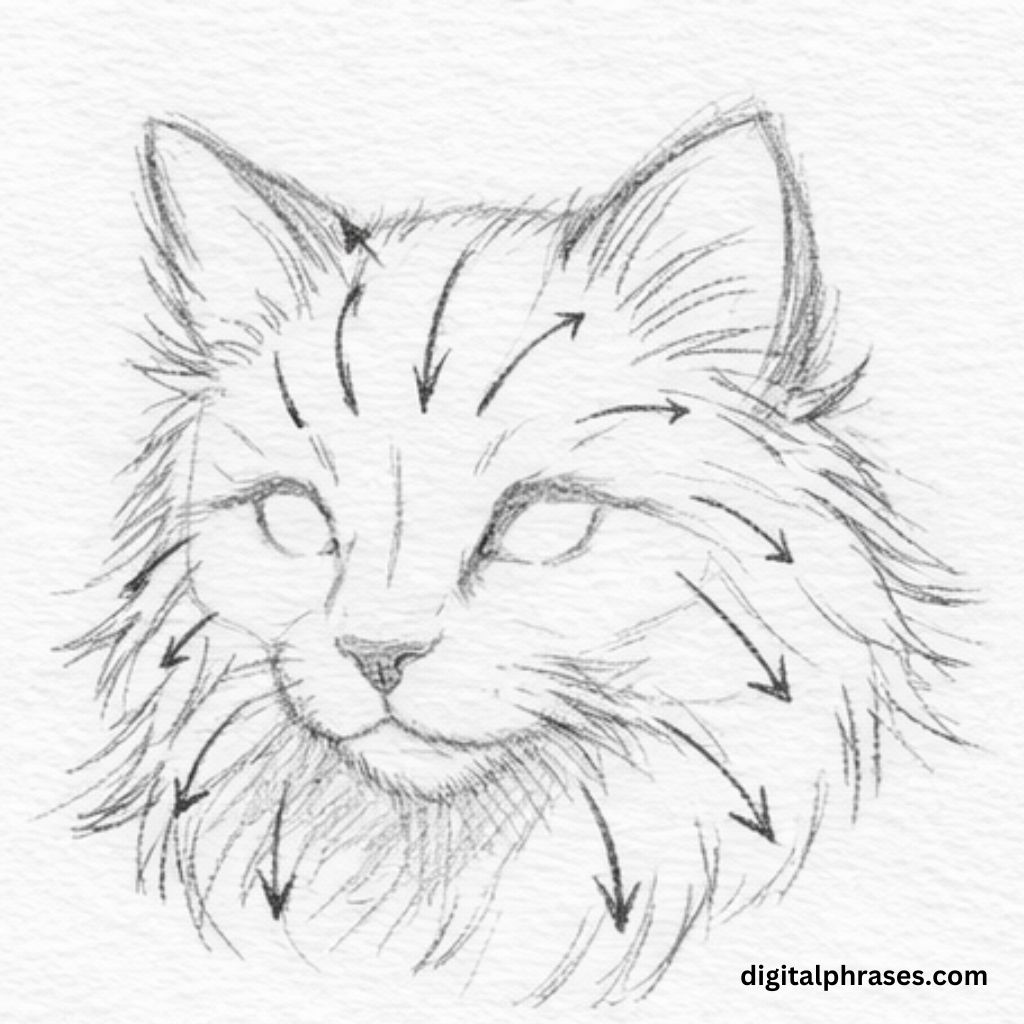
Step 2 – Identify Fur Direction and Flow
- Study your reference to understand how the fur grows and flows across the body.
- Lightly draw directional guidelines to show where the fur moves—upward, downward, outward, or in circular patterns.
- Notice that fur direction often changes around facial features, joints, and curves of the body.
- Use arrows or curved lines to map these flow patterns clearly.
- Keep these lines subtle; they are guides, not final strokes.
- Pay special attention to areas like the cheeks, neck, chest, and tail where fur tends to fan out.
- This step helps prevent fur from looking flat or randomly placed.
- Correct fur direction adds movement and realism to the sketch.
Step 3 – Build Fur Using Clumps and Texture
- Start adding fur using short, controlled strokes that follow the direction lines.
- Draw fur in small clumps or tufts, not individual hairs, to keep the sketch natural.
- Vary the length and thickness of strokes to avoid repetition.
- Use tapered strokes—press slightly harder at the base and lift at the end.
- Leave small gaps between clumps to suggest air and softness.
- Avoid outlining every tuft; let some edges blend into the form.
- Work gradually, building texture layer by layer instead of rushing.
- Step back occasionally to ensure the fur still supports the overall shape.
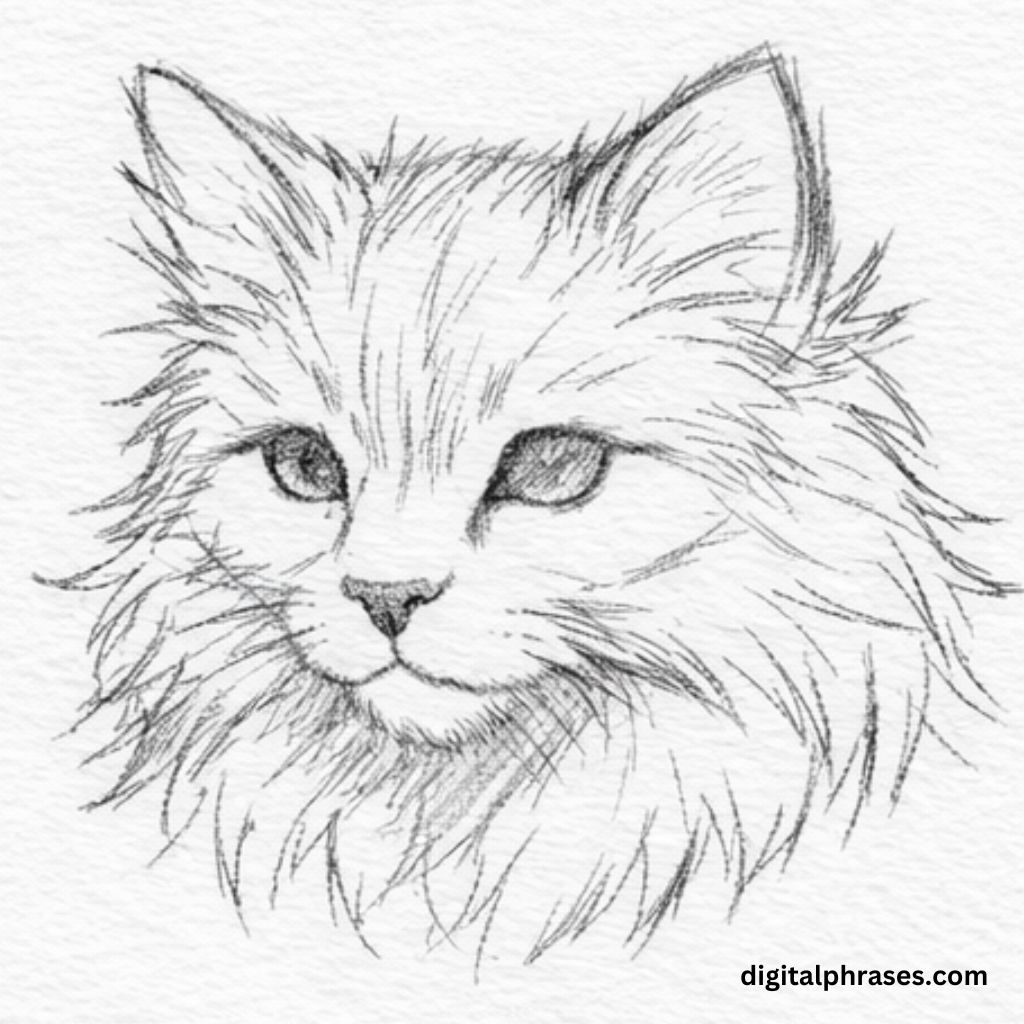
Step 4 – Add Shading, Depth, and Final Details
- Identify the light source to understand where shadows and highlights should appear.
- Darken areas where fur overlaps, such as under the chin, belly, and inner limbs.
- Shade between fur clumps to create depth and separation.
- Use softer strokes for mid-tones and firmer strokes for deeper shadows.
- Avoid heavy outlines; fur looks more realistic with soft, broken edges.
- Add highlights using lighter strokes or by gently erasing small areas.
- Refine important focal areas like the face while keeping less important areas simpler.
- Finish by cleaning up unnecessary lines and enhancing contrast for clarity.