How To Draw Sea Waves
Here’s the step by step process.
Step-by-Step Process of Drawing Sea Waves
1. Draw the Horizon & Base Line
Begin by lightly sketching a straight horizontal line across your paper to represent the horizon. This line helps establish perspective and balance in your composition. Below it, draw a gentle, slightly uneven wavy line to indicate the surface of the water. Keep your pencil strokes soft and loose at this stage so you can easily adjust proportions and placement later.

2. Outline the Wave Shapes
Now, start forming the main structure of the waves using smooth, flowing curves. Use soft “S”-shaped lines to create natural-looking wave crests and dips. Avoid sharp or rigid lines, as waves are fluid and organic. Vary the size and direction slightly to make the scene feel more dynamic and realistic, giving a sense of movement and rhythm.
3. Add Foam & Details
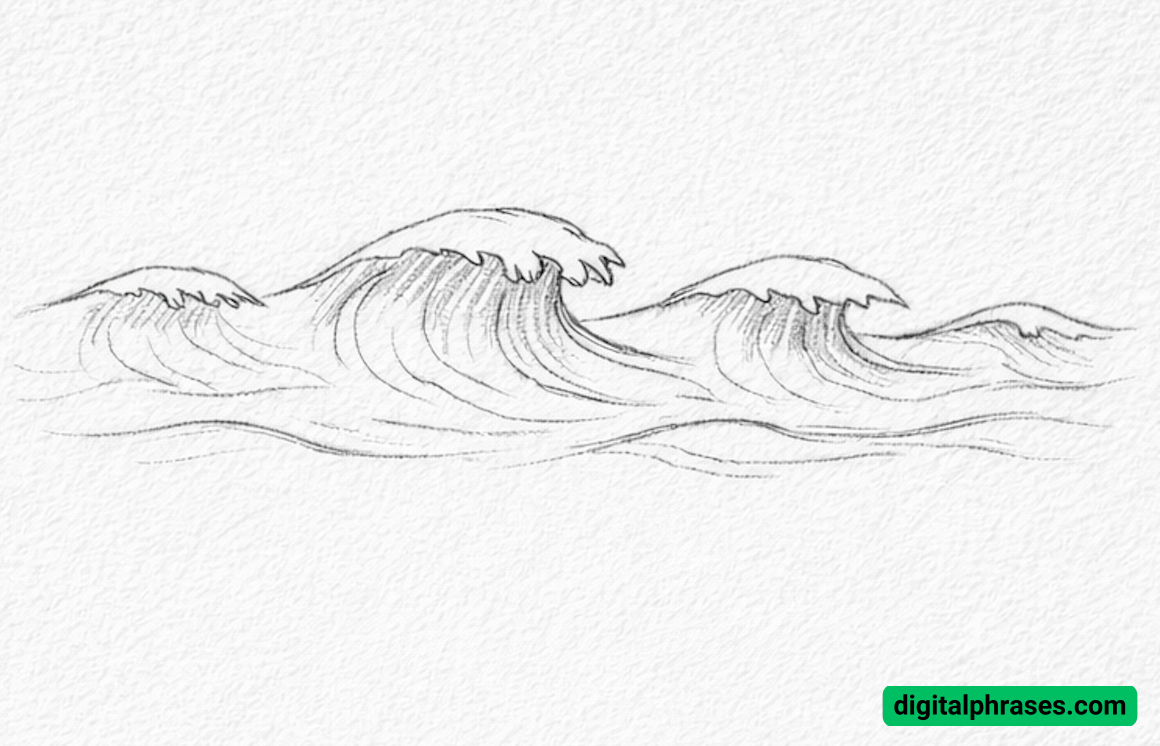
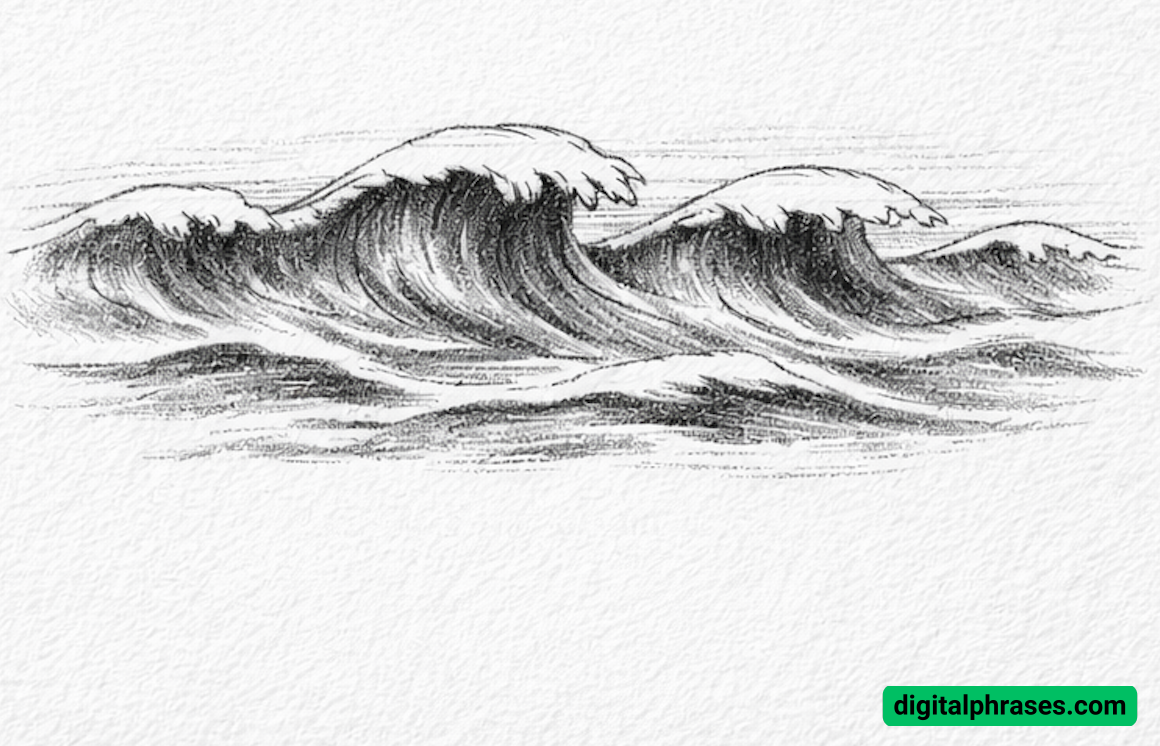
Enhance the waves by adding foamy textures along the crests. Draw irregular, broken lines that resemble bubbly or frothy edges where the wave is breaking. Include small ripples and secondary lines around the main waves to show water movement. These details bring life to your sketch and help differentiate between calm areas and active wave motion.

4. Shade for Depth
Finally, add shading to give your waves depth and dimension. Darken the underside of each wave and the areas between overlapping waves to create contrast. Use lighter shading near the crests to suggest light reflecting off the water. Blend gently to achieve smooth transitions, making the waves appear more three-dimensional and visually engaging.
Tips on Drawing Sea Waves
Tip 1: Observe Real Waves Carefully
Spend time observing real sea waves, either in person, through videos, or from reference photos. Notice how waves rarely follow perfect patterns—they vary in size, shape, and spacing.
Pay attention to how light interacts with water, especially how highlights form on crests and shadows gather beneath. Studying these details will improve your ability to draw waves naturally rather than relying on repetitive or artificial shapes.
Tip 2: Practice Flow and Movement
Waves are all about motion, so practice drawing continuous, flowing lines without lifting your pencil too often. Try sketching loose, quick strokes to capture the rhythm of the sea.
Avoid overthinking each line; instead, aim for a sense of movement and fluidity. The more you practice this freehand motion, the more confident and natural your wave drawings will become over time.
Tip 3: Use Layered Shading Techniques
Instead of pressing hard with your pencil, build up shading gradually using multiple light layers. This technique allows you to control depth and texture more effectively.
Blend lightly if needed, but keep some visible strokes to maintain the look of water movement. Darker tones should be placed strategically under waves and in deeper areas to create contrast and realism.
Tip 4: Keep It Loose and Organic
One of the biggest mistakes beginners make is trying to make waves look too perfect. In reality, waves are irregular and constantly changing. Embrace imperfections in your lines and shapes.
Let your sketch feel spontaneous and slightly rough rather than overly polished. This looseness adds authenticity and helps your drawing capture the true essence of the sea.