How to Draw Spring Season?
Here’s a simple step-by-step process to draw a Spring Season sketch (works great with pencil + a fineliner + light colors). However, here’s the core thing that you need to do before starting the drawing.
Pick a spring “story”
Choose one main vibe so your sketch feels focused:
- Blossoming tree in a park
- Rainy day with an umbrella
- Flower field + butterflies
- Garden scene with a watering c
We are choosing the first one i.e. “Blossoming tree in a park“
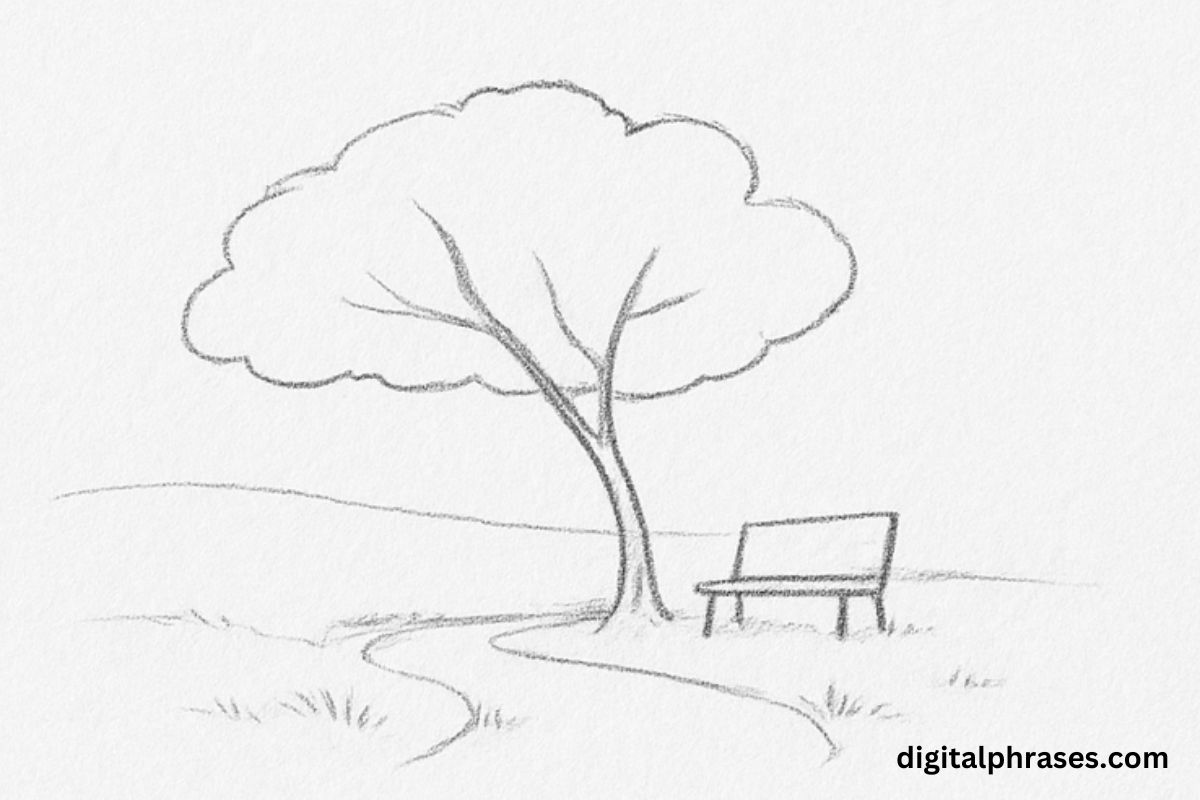
Step 1: Basic layout and placement
Start with very light pencil lines. Draw a simple horizon line to divide sky and ground. Add basic shapes to place the scene: an oval or cloud-like shape for the tree canopy, a straight line for the trunk, a curved line for the pathway, and a simple rectangle for the bench.
At this stage, everything is loose and rough—only proportions and positioning matter.

Step 2: Define main forms
Refine the shapes slightly. Give the tree trunk gentle curves and split it into branches. Shape the canopy more clearly. Add structure to the bench by drawing its legs and seat lines.
Slightly thicken the path and add small grass strokes near the ground. Still keep the sketch light and unfinished.
Step 3: Add natural details
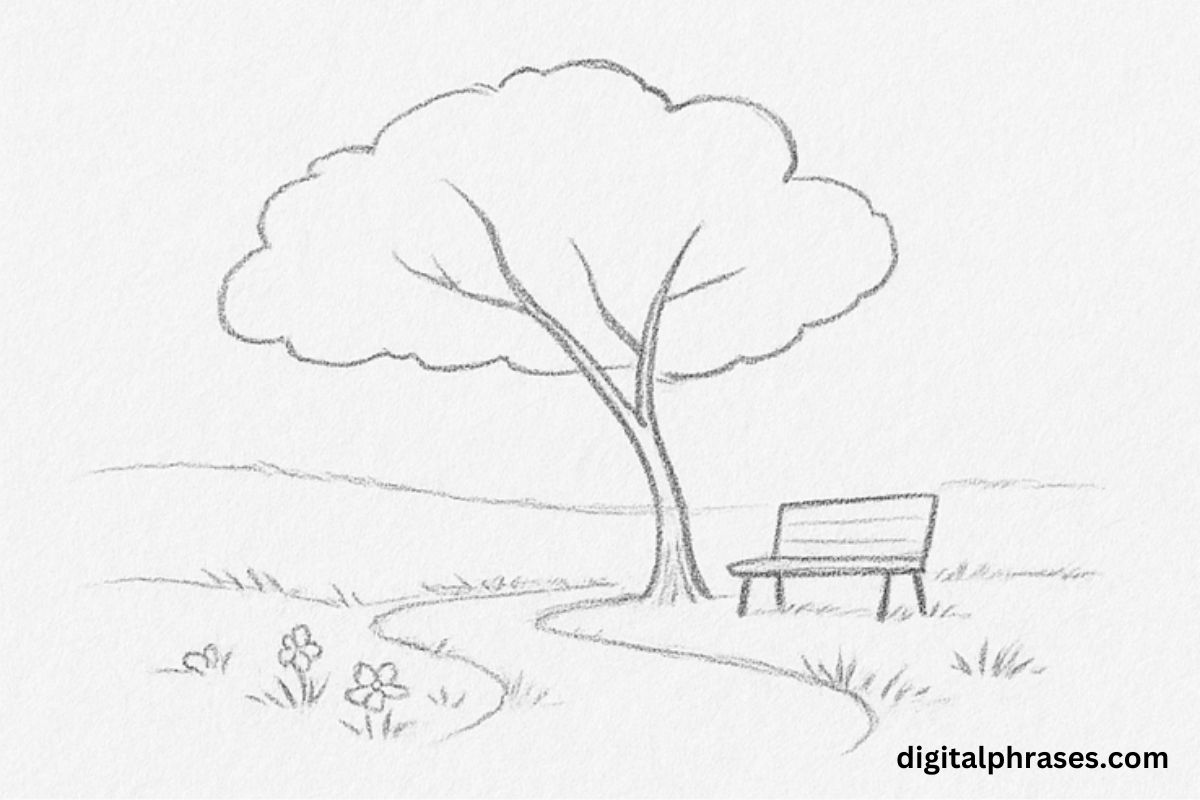
Enhance the spring feeling by adding small details. Sketch simple flowers near the path and grass areas.
Smooth the tree canopy outline and add a few branch lines inside it. Lightly suggest background hills and ground texture. The scene should now feel fuller but still soft and airy.
Step 4: Final sketch refinement
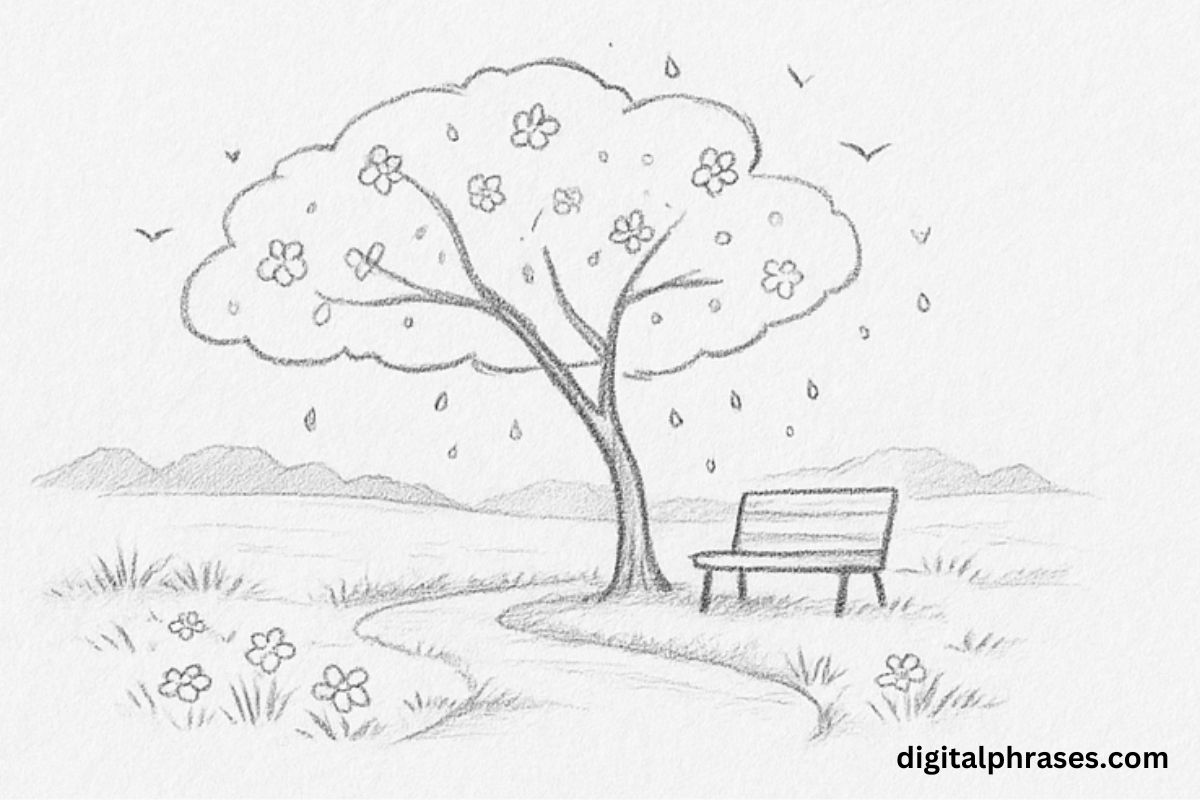
Complete the spring scene with delicate details. Add blossoms inside the tree canopy, falling petals, birds in the sky, and more flowers in the foreground.
Strengthen key outlines slightly while keeping the pencil texture visible. The sketch remains monochrome, light, and natural, capturing a calm spring atmosphere.