How To Draw a Piano?
Here are the steps.
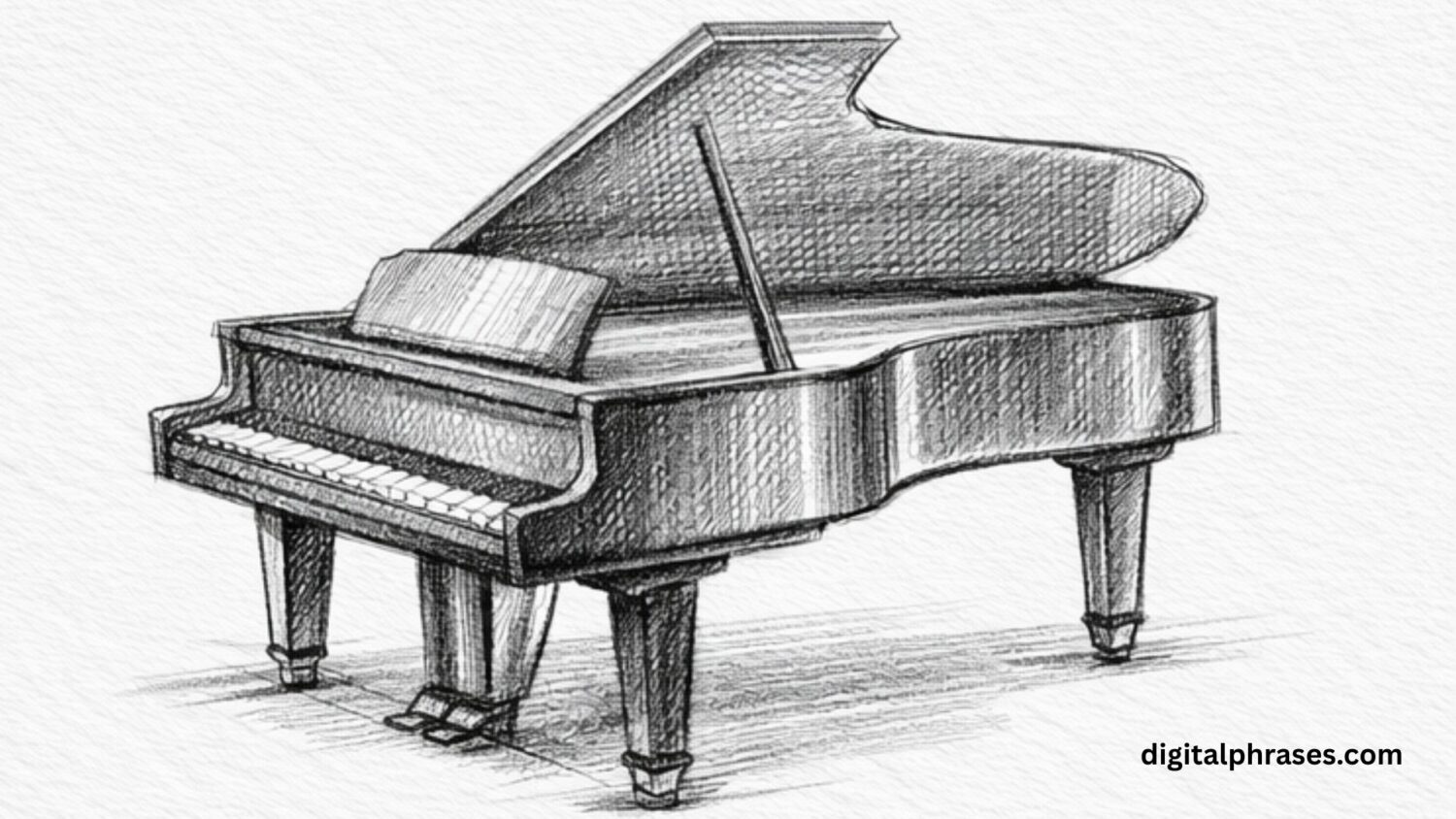
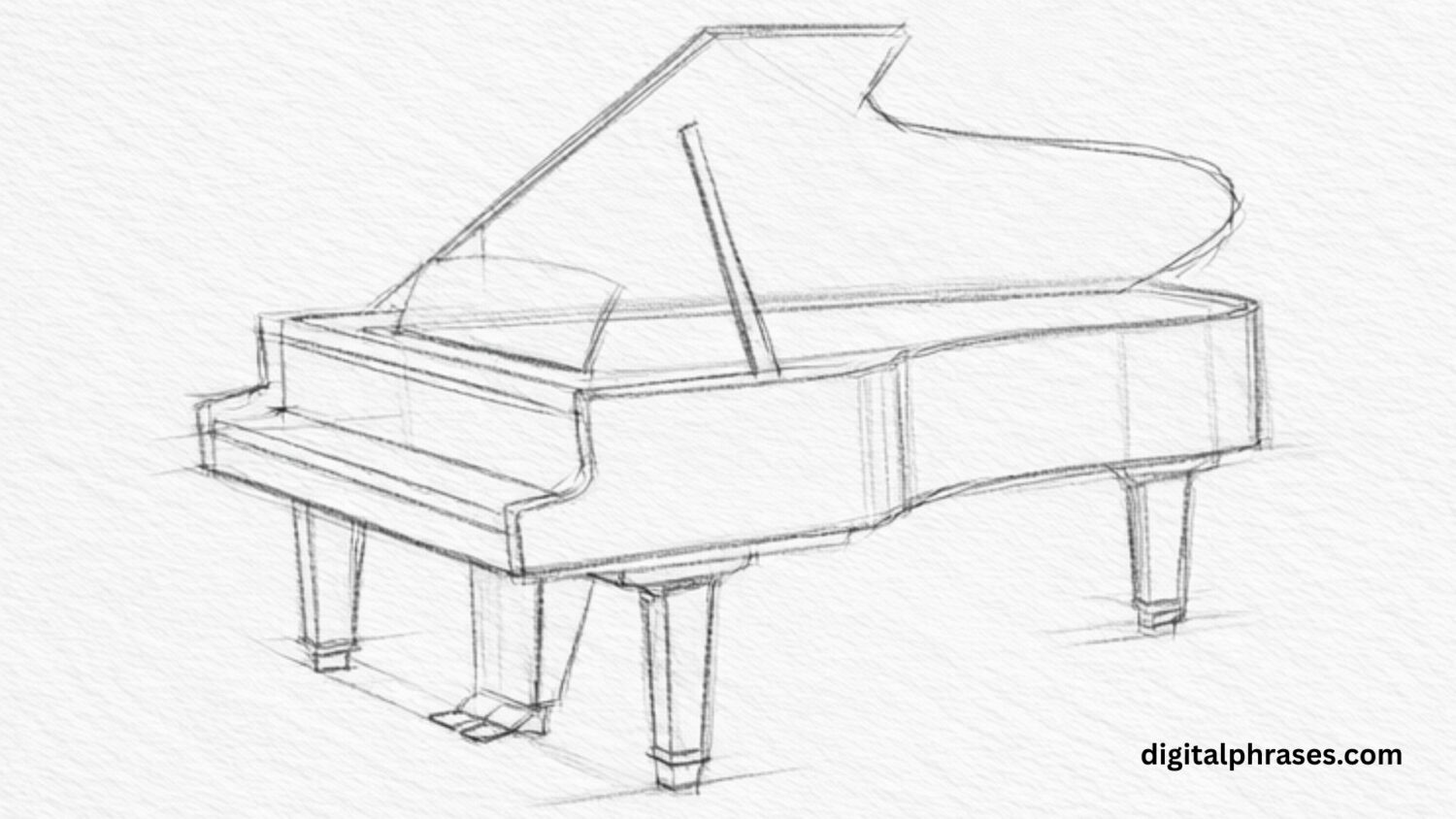
Step 1 – Sketch the Basic Grand Piano Outline
- Start with a long, low rectangular block to represent the main body of the piano, angled slightly to show perspective.
- Add a second, slightly raised block on the left side to indicate the keyboard housing area.
- On the right side, extend the shape into a rounded, curved form to create the classic grand piano tail.
- Lightly draw the top plane lines so the instrument feels three-dimensional, not flat.
- Add a simple slanted shape on top to suggest the open lid, keeping it minimal and geometric.
- Keep all edges soft and sketchy; this stage is about getting the correct size, tilt, and proportion rather than perfect lines.
- Check that the keyboard section is clearly distinct from the larger body, since it helps the viewer immediately recognize the object.

Step 2 – Add Structure: Legs, Lid, and Keyboard Area
- Refine the body by straightening and cleaning the outer contours, keeping the perspective consistent.
- Define the front ledge where the keys will be by adding a thin horizontal strip along the keyboard section.
- Add the piano’s legs: draw three supporting legs, each slightly tapered, and place them so the piano looks stable.
- Sketch small foot shapes at the bottom of each leg to show the piano resting on the ground.
- Improve the lid by drawing the raised top surface and the lid prop (a thin support stick) that holds the lid open.
- Add the inner planes of the body—subtle lines that indicate thickness and layered wood panels.
- Lightly indicate the underside shadows and the ground line so the piano doesn’t look like it’s floating.
Step 3 – Refine Details and Add Shading for Realism
- Strengthen key features: sharpen the keyboard edge, the front panel, and the lid outline so the piano reads clearly.
- Add more definition to the keys area by suggesting key divisions with fine lines (keep them subtle to avoid clutter).
- Darken areas under the lid and along the side panels to show depth and the piano’s glossy surfaces.
- Use hatching and layered shading to create form on the curved tail, emphasizing its rounded volume.
- Shade the legs with darker tones on one side to match a consistent light source and make them look cylindrical.
- Deepen shadows beneath the piano and around the feet to anchor it firmly to the surface.
- Add highlights by leaving lighter patches on the body, which helps suggest polished wood or lacquer.
- Erase leftover construction lines and refine edges where the body overlaps, keeping the final silhouette clean and confident.