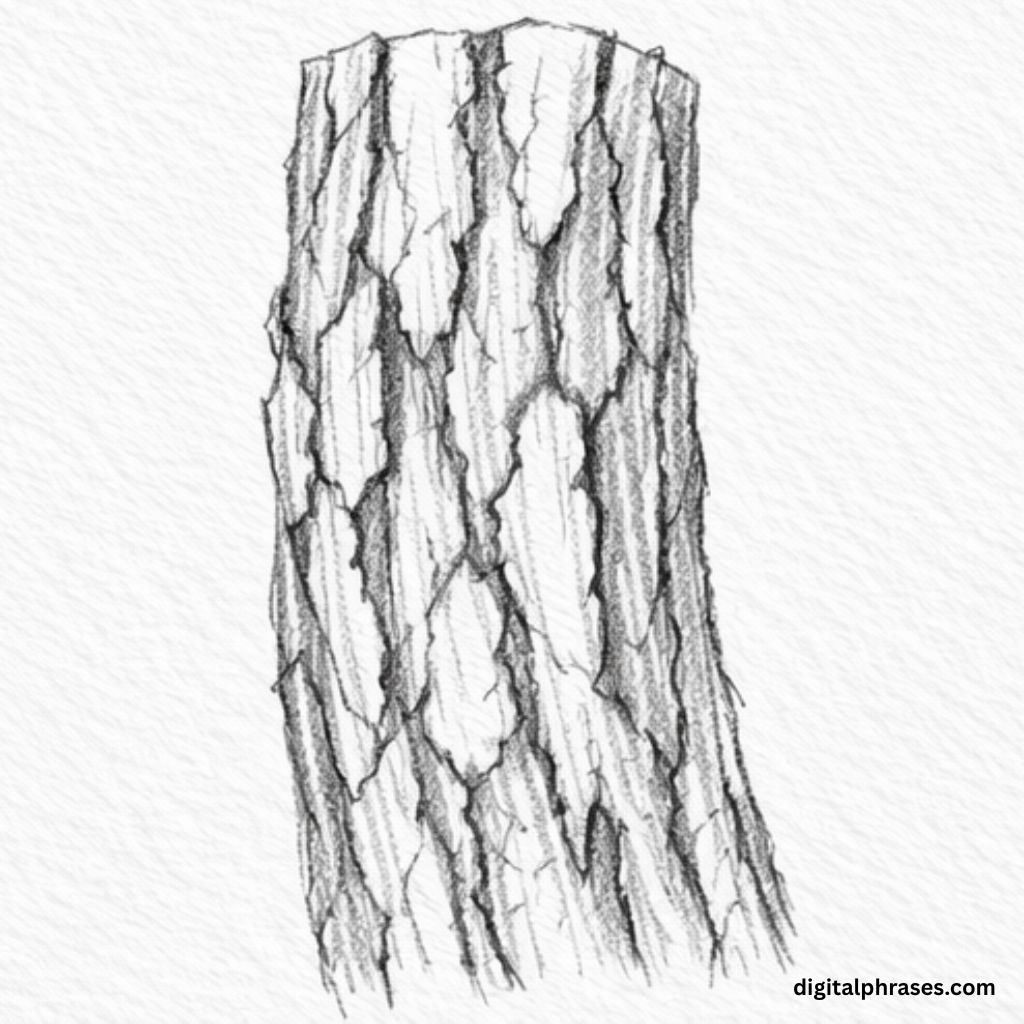
How To Draw a Wooden Bark?
Here are the steps.
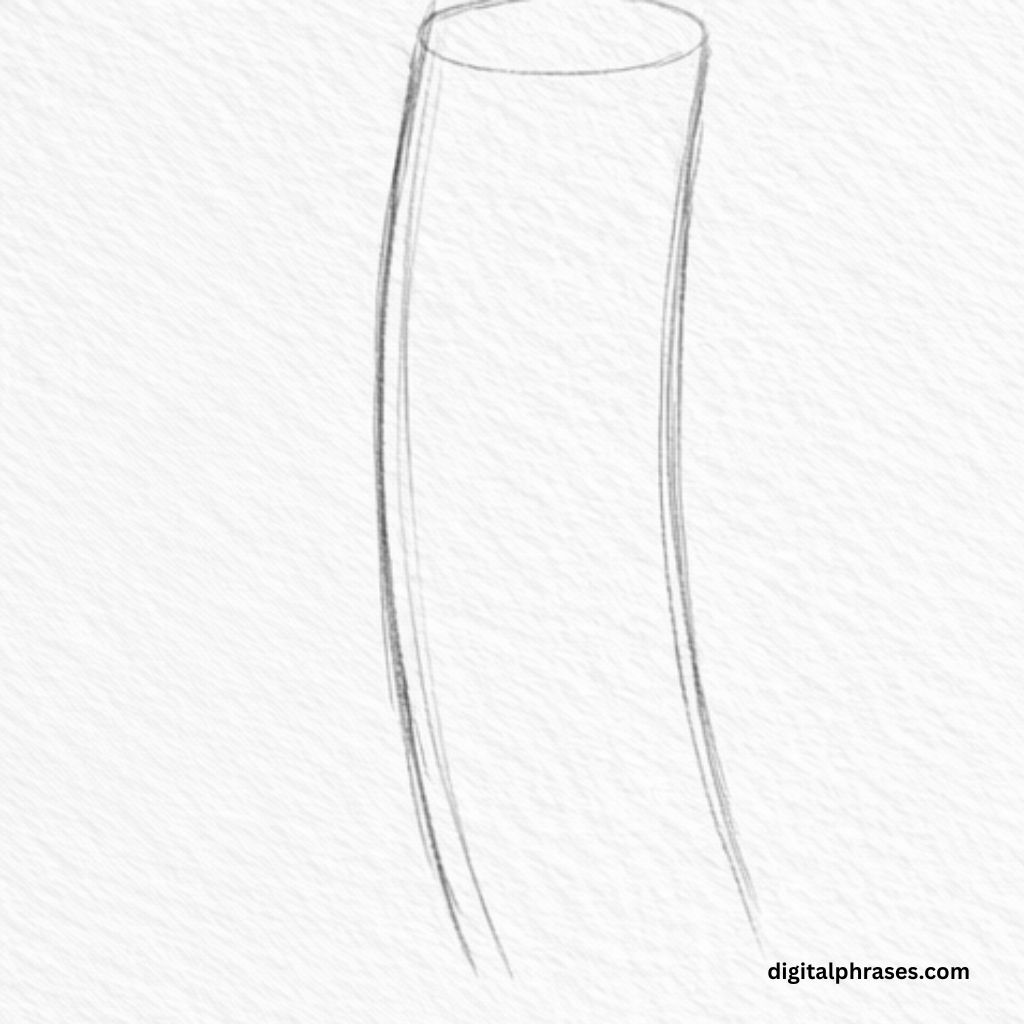
Step 1 – Sketch the Tree Trunk Cylinder
- Start by drawing two long, slightly curved vertical lines to form the sides of the tree trunk.
- Make the trunk subtly uneven—one side can bow outward a little—to avoid a stiff, perfectly straight look.
- Add a light oval at the top to show the trunk’s opening and give it a cylindrical, 3D form.
- Keep the outline thin and sketchy, since the bark texture will become the main focus later.
- Lightly refine the trunk width so it feels consistent from top to bottom, with a gentle natural taper if you like.
- Avoid texture in this step; think of it as building the “tube” that the bark will wrap around.
- Check that the trunk edges are smooth and parallel enough to read as a solid form, but not so perfect that it looks artificial.
Step 2 – Add Light Bark Crack Lines
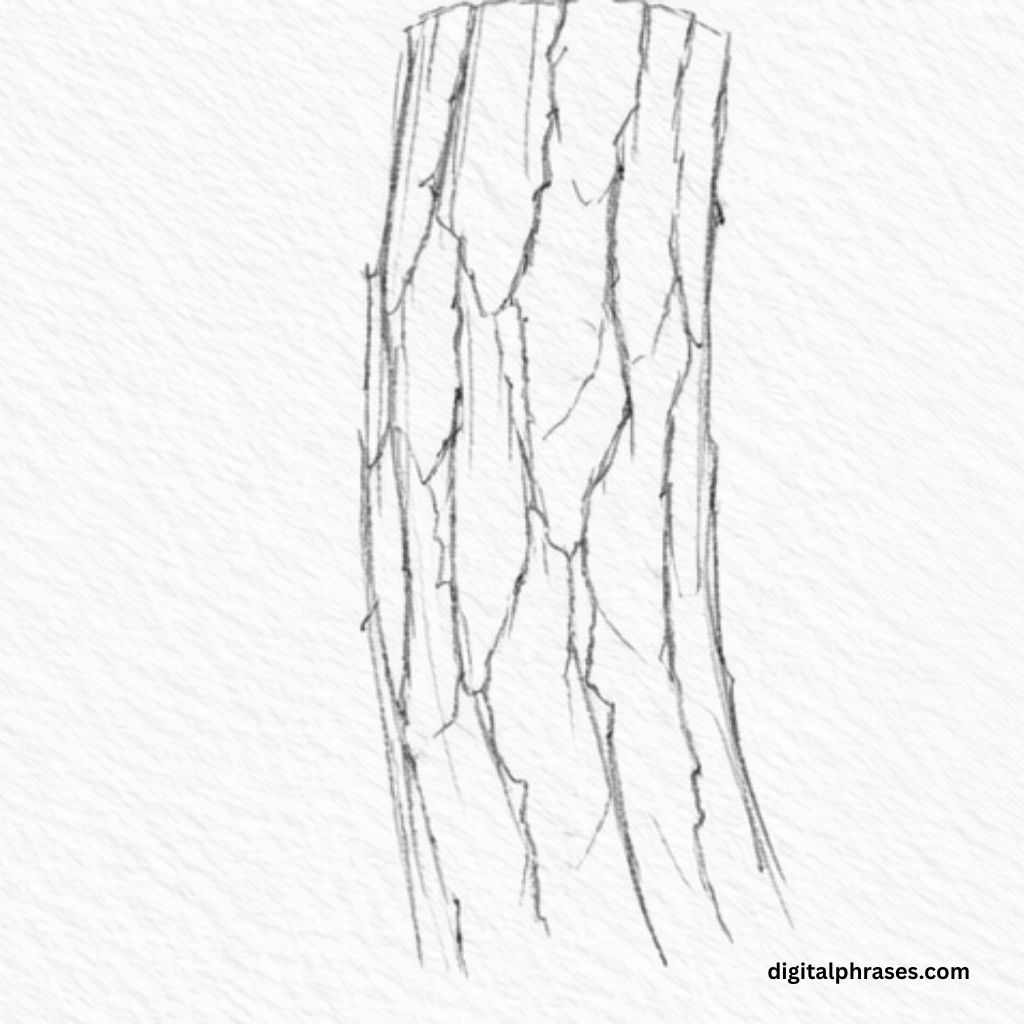
- Begin drawing long, irregular vertical crack lines down the trunk, following the direction of the trunk’s length.
- Create jagged, broken paths rather than smooth lines—bark splits are uneven and angular.
- Let some cracks branch into smaller offshoots, forming a natural “lightning-bolt” look.
- Keep these cracks lightly sketched, spacing them so the trunk doesn’t become overcrowded too quickly.
- Vary the lengths: some cracks can run almost the full height, while others can stop and restart.
- Slightly curve a few cracks to match the trunk’s cylindrical shape, especially near the edges.
- At this stage, the bark should look like a simple network of splits, with no heavy shading yet.
Step 3 – Build Bark Plates and Define Texture
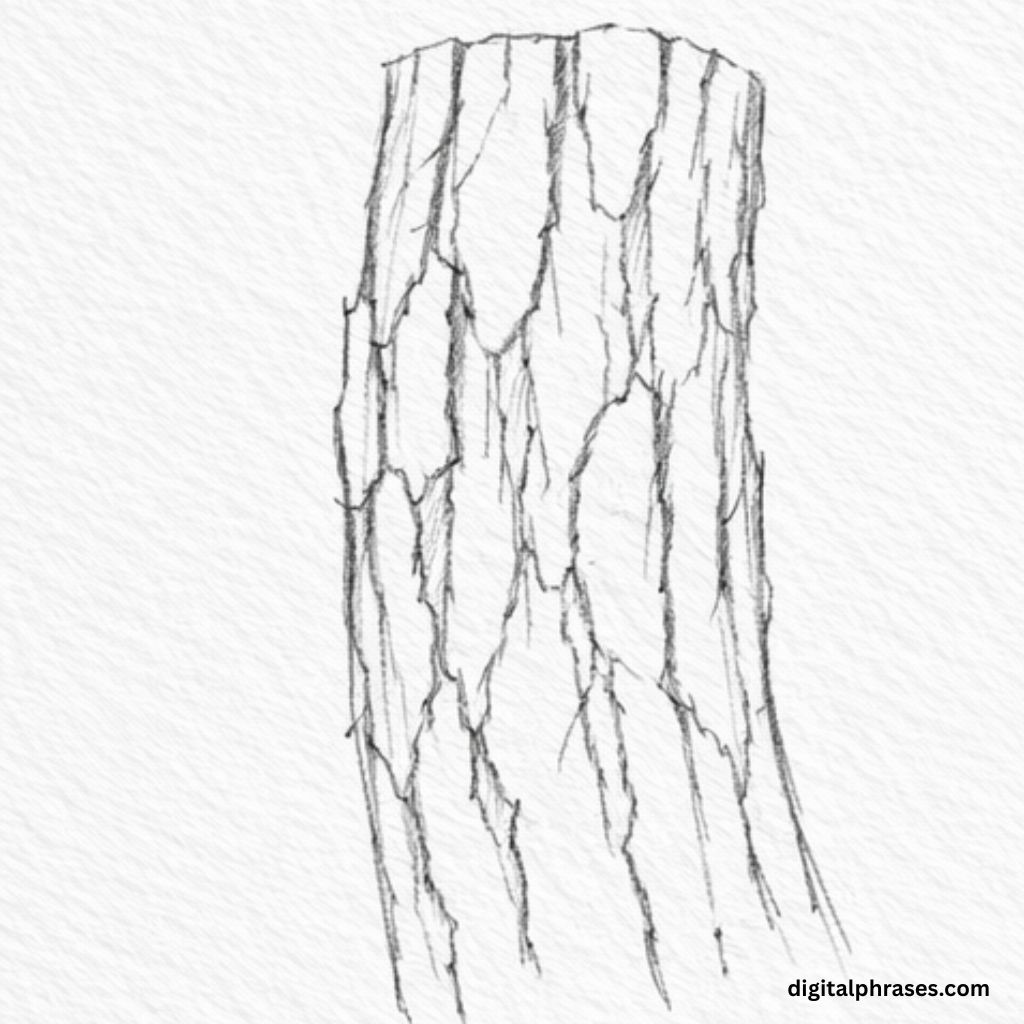
- Expand the cracks into larger bark “plates” by adding extra lines that connect and form chunky, irregular shapes.
- Make some bark pieces tall and narrow while others are wider, creating variety and realism.
- Darken a few key crack lines to establish depth and make the texture more readable.
- Add small broken edges and notches along some plates to suggest rough, peeling bark.
- Keep the pattern consistent with the trunk form: plates should curve slightly around the cylinder, not appear flat.
- Lightly erase any confusing overlaps or messy sketch marks so the plate shapes remain clear.
- By the end of this step, the trunk should look textured, with recognizable bark segments instead of just random lines.
Step 4 – Shade the Crevices and Add Strong Contrast
- Deepen the darkest areas by shading inside the cracks and gaps between bark plates, making them look recessed.
- Use layered pencil strokes or cross-hatching to create darker shadows, especially along one side of each bark plate.
- Add mid-tone shading on some bark surfaces to show uneven thickness and roughness.
- Increase contrast near the trunk edges to enhance the cylindrical look—slightly darker shading can help the trunk “turn” away from the light.
- Strengthen a few plate outlines selectively so the bark pattern stands out without becoming overly outlined everywhere.
- Blend lightly in places, but keep some scratchy texture visible to match the rough bark feel.
- Finish by cleaning the trunk outline and balancing highlights and shadows so the bark looks deep, natural, and fully detailed.