Eastern vs. Western Storytelling: Key Differences Explained
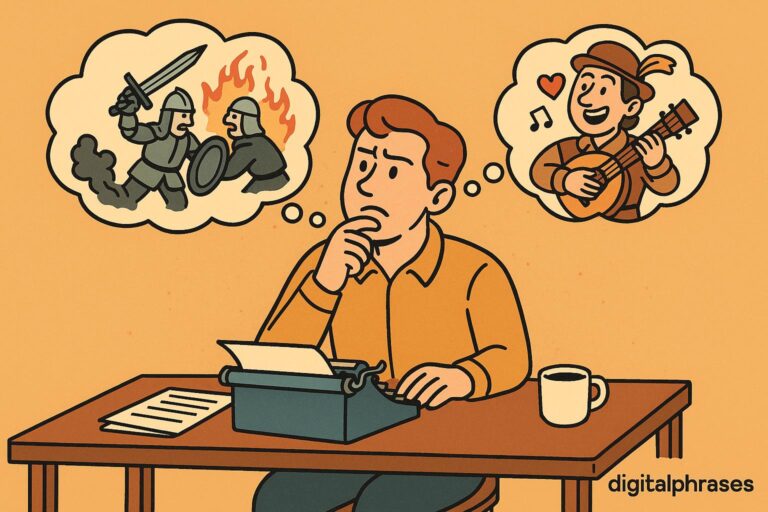
If you’ve ever watched a slow, meditative anime and then switched to a fast-paced Hollywood movie, you’ve probably felt the difference instantly—even if you couldn’t quite explain it. I remember finishing Spirited Away and just sitting there, thinking, “Wait… that’s it?” Not in a bad way—just in a different way. Compare that to something like The Avengers, where everything builds toward a big, explosive payoff.
That contrast isn’t random. It comes from deep cultural roots that shape how stories are told. Eastern and Western storytelling traditions grew out of very different philosophies, and those philosophies quietly guide everything—from how characters behave to whether a story even needs a clear ending. Once you start noticing these patterns, it changes how you watch films, read books, and even understand characters.
The ideas behind the stories
Eastern thinking shapes the narrative
When I first started paying attention to Eastern stories, especially from places like Japan and China, one thing stood out: they don’t rush to “fix” everything. That’s not a flaw—it’s intentional. A lot of this comes from philosophical traditions like Buddhism and Taoism, which emphasize balance, impermanence, and letting things flow.
Take Spirited Away again. Chihiro doesn’t “defeat” a villain in the way we might expect. Instead, she learns, adapts, and grows emotionally. The story feels less like a battle and more like a journey through a living world. The goal isn’t to conquer—it’s to understand and coexist.
You see the same pattern in classic Chinese literature like Journey to the West. Yes, there’s action and adventure, but the deeper layer is about spiritual growth and discipline. The characters aren’t just trying to win—they’re trying to evolve.
What I find fascinating is how conflict isn’t always the centerpiece. Sometimes, it’s barely even the point. A character might face a problem, but instead of overcoming it in a dramatic way, they come to terms with it. That idea—that not everything needs resolution—can feel unfamiliar if you’re used to Western storytelling.
Western thinking drives action and resolution
Now, if we shift to Western storytelling, the vibe changes almost immediately. Here, stories are often built on clear goals, strong conflict, and satisfying resolutions. This comes from a mix of influences, including ancient Greek philosophy and traditions rooted in Christian theology, where narratives often revolve around struggle, morality, and redemption.
Think about The Avengers. The entire story is structured around a problem that needs solving: Loki threatens Earth, the heroes assemble, they fight, and they win. It’s clean, direct, and incredibly satisfying. You know what the stakes are, and you get a payoff.
This structure goes all the way back to thinkers like Aristotle, who wrote about storytelling in terms of beginning, middle, and end. That idea still shapes modern movies, novels, and even TV shows. We’re trained to expect progress—things should move forward, escalate, and then resolve.
Even character arcs follow this pattern. Take someone like Tony Stark. He starts off flawed, faces challenges, makes choices, and becomes a better version of himself. That transformation is the emotional core of the story. In Western narratives, change is often loud, visible, and tied to action.
Where the real difference shows up
Here’s where it gets really interesting. The difference between Eastern and Western storytelling isn’t just about plot—it’s about what each culture believes a story is supposed to do.
- In many Eastern traditions, stories are a way to reflect life’s complexity. They’re comfortable with ambiguity. You might not get a neat ending, but you get something more subtle—a feeling, a perspective, a quiet realization.
- In Western traditions, stories are often about shaping the world. There’s a problem, and it needs solving. There’s chaos, and it needs order. The story moves toward closure because that’s where meaning is found.
I used to think one style was just “slower” or “less structured,” but that’s not really fair. It’s more accurate to say they’re aiming for different experiences. One invites you to sit with uncertainty. The other pushes you toward resolution.
And honestly, once you start noticing this, it’s hard to unsee. You begin to appreciate why a film might leave things open-ended, or why another goes all-in on a dramatic finale. They’re not just storytelling choices—they’re reflections of how different cultures understand life itself.
How the stories are actually built
Alright, now that we’ve talked about the why, let’s get into the how. This is where the differences really jump out—because structure is something you can feel almost immediately, even if you don’t consciously analyze it.
Plot structure feels completely different
If you grew up on Western movies, you’re probably used to a very specific rhythm. There’s a setup, something goes wrong, things get worse, and then there’s a big turning point followed by a resolution. It’s tight, efficient, and honestly… kind of addictive.
That structure shows up everywhere—from The Avengers to Harry Potter and the Sorcerer’s Stone. You always know where you are in the story, and there’s a constant sense of forward motion. Everything is building toward something big.
Now compare that to a lot of Eastern storytelling, especially in Japanese anime or classic literature. The structure can feel… looser. Not messy, just less obsessed with momentum.
Take Naruto. Yes, it has arcs and battles, but it also spends a lot of time on side stories, quiet character moments, and even detours that don’t directly push the main plot forward. At first, I used to think, “Why are we still here?” But over time, I realized something: the journey itself is the point.
Even more extreme examples exist in films like My Neighbor Totoro. There’s barely a traditional “plot” at all. It’s more like a slice of life—moments, emotions, and atmosphere stitched together. And yet, it sticks with you.
So while Western stories often feel like a straight line, Eastern stories can feel more like a circle—or even a wandering path.
Characters grow in very different ways
This is one of my favorite differences because it really changes how you connect with a story.
In Western storytelling, characters usually go through clear, visible transformation. They start one way and end another. It’s almost like a checklist: flaw → challenge → growth.
Think about someone like Simba from The Lion King. He runs away, avoids responsibility, then comes back and claims his role. His arc is obvious and satisfying. You can see the change.
Now, in Eastern storytelling, character development is often way more subtle. Instead of dramatic transformation, you get gradual emotional shifts.
Take Neon Genesis Evangelion. Shinji doesn’t suddenly become a confident hero. If anything, he struggles… a lot. His growth is messy, incomplete, and sometimes uncomfortable to watch. But that’s kind of the point. It feels closer to real life, where people don’t just “fix themselves” in a neat arc.
Another great example is Spirited Away again. Chihiro does grow, but it’s not through one big heroic act. It’s through small decisions—being kind, being brave in quiet ways, learning to navigate a strange world.
So while Western characters often transform, Eastern characters often adjust. And honestly, both approaches can be powerful—they just hit differently.
Conflict isn’t always treated the same way
Here’s something that surprised me when I first noticed it: conflict isn’t always the main event in Eastern stories.
In Western storytelling, conflict is everything. Without it, the story basically doesn’t exist. There’s always a villain, a problem, or an obstacle that needs to be overcome.
Again, look at The Avengers. The entire narrative is built around stopping Loki. Remove that conflict, and the story falls apart.
But in Eastern storytelling, conflict can be quieter—or even unresolved.
In My Neighbor Totoro, there isn’t really a villain. The tension comes from everyday worries, like a sick parent or moving to a new place. The story doesn’t “defeat” these problems—it just sits with them.
That’s such a different mindset. Instead of asking, “How do we solve this?” the story sometimes asks, “How do we live with this?”
And when conflict does exist, it’s not always about winning. In Journey to the West, the challenges are as much about inner discipline as they are about external enemies. The battles matter, but the lessons matter more.
Themes reflect deeper priorities
If you zoom out a bit, you’ll notice that themes follow these structural choices.
Western stories tend to focus on:
- Individual achievement
- Justice and morality
- Overcoming obstacles
- Personal identity
You can see this clearly in something like Rocky, where the entire story is about proving yourself through effort and determination. It’s inspiring because it’s about what one person can achieve.
Eastern stories, on the other hand, often explore:
- Balance and harmony
- Connection with others and nature
- Spiritual growth
- Acceptance of change
A film like Princess Mononoke doesn’t give you a simple “good vs. evil” narrative. Instead, it shows multiple sides of a conflict between humans and nature. No one is entirely right or wrong. It’s about coexistence, not victory.
And that’s really the heart of it. Western stories often ask, “Who wins?” Eastern stories are more likely to ask, “What does this mean?”
How audiences feel the difference today
Now here’s where things get really fun—because we’re no longer living in a world where these styles stay separate. Thanks to streaming, global cinema, and the internet, we’re all consuming a mix of both… whether we realize it or not.
What audiences expect (and why it matters)
I’ve noticed that when people first watch something outside their usual storytelling style, they can feel a bit… lost.
For example, someone used to Western films might watch Spirited Away and think, “Why didn’t they explain everything?” or “Where’s the big ending?”
On the flip side, someone used to Eastern storytelling might find Western films a bit too predictable. You can almost feel when the climax is coming.
That’s because we’re trained by what we grow up watching. Western audiences often expect:
- Clear goals
- Strong conflict
- A satisfying resolution
Eastern audiences may be more comfortable with:
- Open-ended stories
- Emotional ambiguity
- Slower pacing
Neither is wrong—it’s just conditioning. And once you recognize that, it becomes easier to appreciate both styles without judging them unfairly.
The rise of blended storytelling
One of the coolest things happening right now is how these styles are starting to mix.
Take Attack on Titan. It has the philosophical depth and moral ambiguity you’d expect from Eastern storytelling, but it also delivers intense action, clear stakes, and dramatic twists that feel very Western. It’s basically the best of both worlds.
Or look at Inception. While it’s a Western film, it leans heavily into ambiguity and layered meaning. The ending doesn’t give you a clean answer—it invites you to think. That’s a very Eastern-style move.
Even big franchises are experimenting. Some Marvel films have started slowing down to explore character emotions more deeply, while anime has embraced tighter plotting and high-stakes conflict to appeal to global audiences.
Why this blending actually matters
This crossover isn’t just a trend—it’s changing how stories are told.
When creators borrow from both traditions, you get stories that are:
- Emotionally rich and narratively engaging
- Thought-provoking and entertaining
- Structured but flexible
And as viewers, we benefit a lot from this. We’re no longer stuck in one storytelling “language.” We can enjoy a quiet, reflective film one day and a high-energy blockbuster the next—and understand both on their own terms.
Personally, I’ve found that exploring both styles has made me a more patient and curious viewer. I don’t just ask, “Was this exciting?” anymore. I also ask, “What was this trying to make me feel or understand?”
And honestly, that shift has made storytelling way more rewarding.
Before You Leave
If there’s one thing I’d want you to take away from all this, it’s that storytelling isn’t just about entertainment—it’s a window into how different cultures see the world.
Eastern storytelling teaches us to slow down, reflect, and accept complexity. Western storytelling reminds us to act, strive, and seek resolution. Neither approach is better—they just highlight different truths about life.
So the next time you watch something that feels “different,” don’t dismiss it right away. Sit with it. Ask yourself what it’s trying to do.
You might just discover a whole new way of experiencing stories—and honestly, that’s where things start to get really interesting.