How To Draw a Palm Tree
Step-by-Step Guide to Drawing a Palm Tree
Step 1 – Sketch the Basic Trunk Guidelines
- Begin by lightly drawing two slightly curved vertical lines that taper gently toward the top, forming the basic trunk shape.
- Keep the lines loose and uneven to reflect the natural, organic look of a palm tree rather than a perfectly straight trunk.
- Make sure the trunk leans slightly to one side, as palm trees often appear curved due to wind and growth patterns.
- Do not add details at this stage; this step is only about establishing proportion and placement.
- Leave enough space above the trunk for the palm leaves to spread outward later.
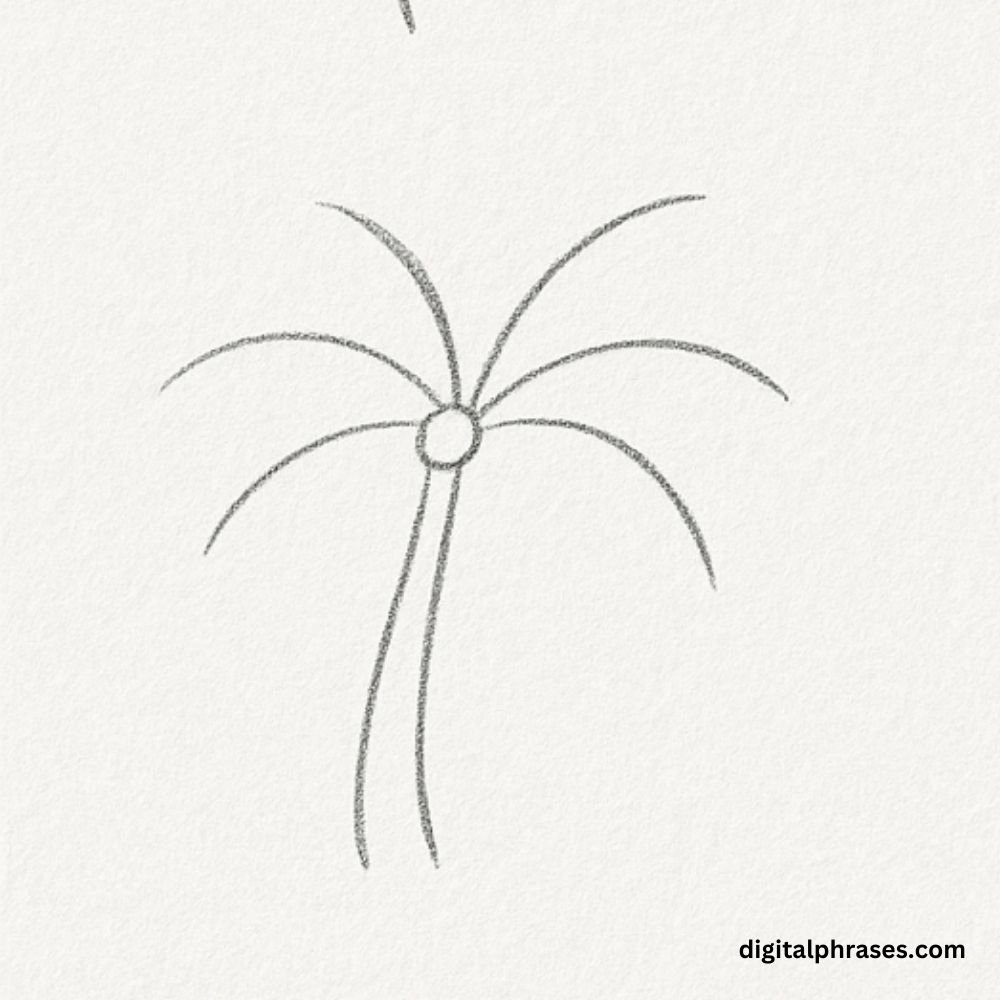
Step 2 – Add the Crown and Initial Palm Fronds
- At the top of the trunk, draw a small circular or oval shape to represent the crown where the leaves emerge.
- From this crown, sketch several long, curved lines radiating outward in different directions.
- These lines act as guides for the palm fronds and should vary in length to create a natural, flowing appearance.
- Avoid making the fronds stiff or symmetrical; palms look best when the lines arc gently and unevenly.
- This stage focuses on the overall silhouette of the tree rather than fine detail.
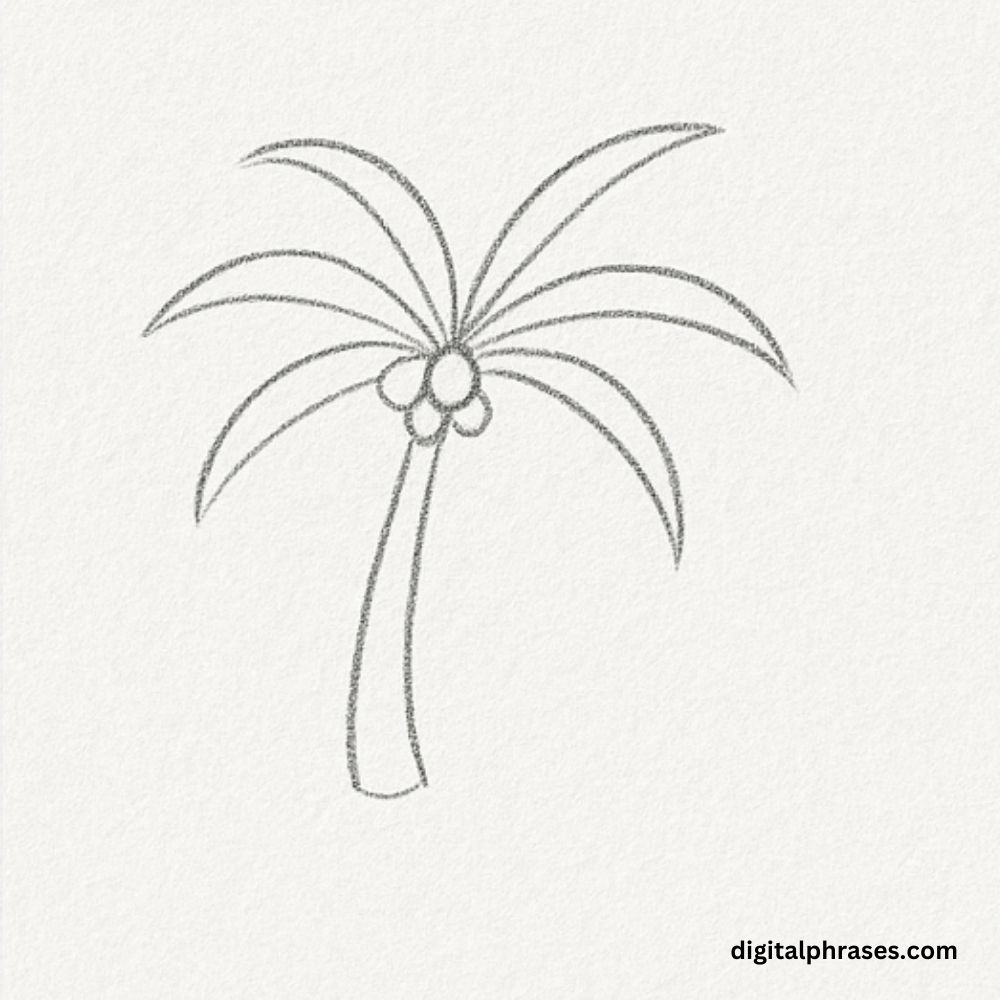
Step 3 – Define the Trunk and Shape the Leaves
- Refine the trunk by smoothing the edges and slightly widening the base to give it a grounded, stable look.
- Add horizontal curved lines along the trunk to suggest the segmented texture typical of palm trees.
- Thicken each palm frond guide line by drawing a second line alongside it, forming long leaf shapes.
- Within each frond, sketch short, angled strokes branching outward from the center line to represent individual leaflets.
- Ensure the leaflets taper toward the ends to maintain a realistic palm leaf structure.
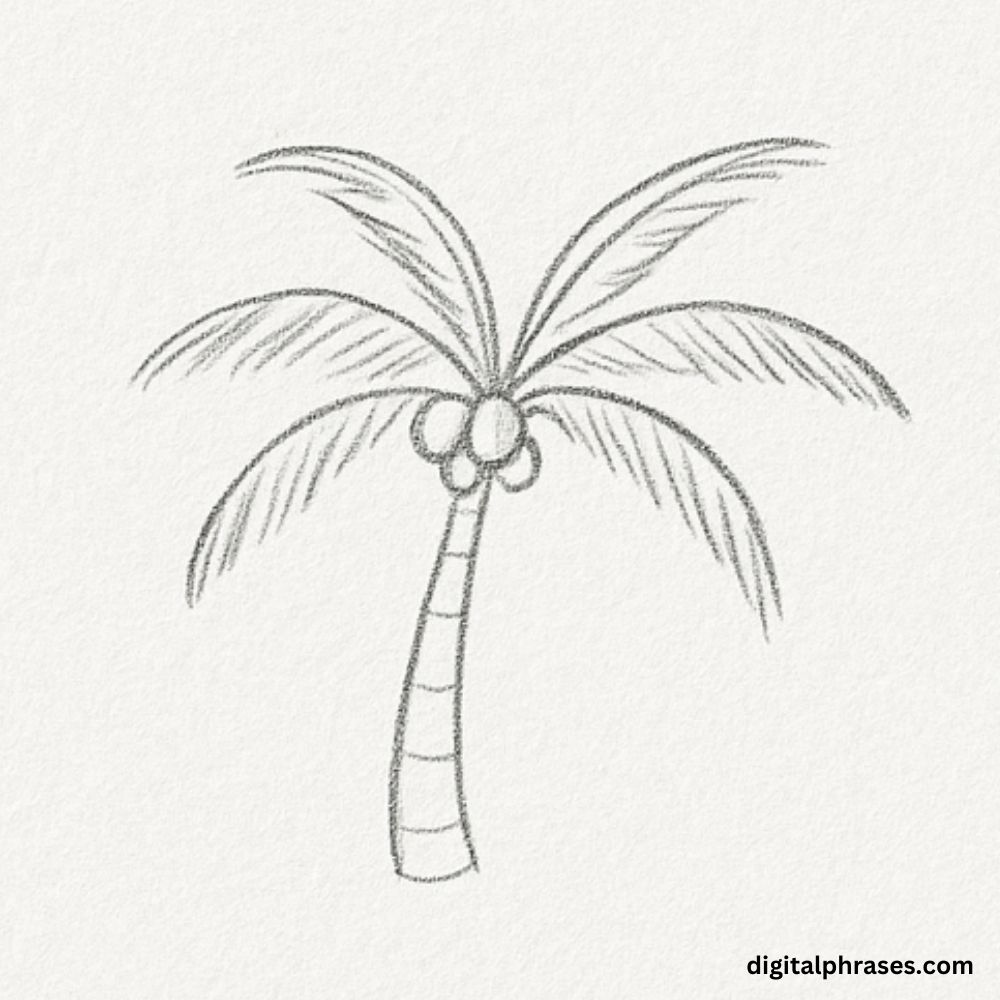
Step 4 – Enhance Details and Add Texture
- Darken the final outline of the trunk and fronds, erasing unnecessary guide lines.
- Add more fine leaflets to each frond, increasing density near the center and spacing them out toward the tips.
- Slightly curve the leaflets downward to suggest gravity and softness.
- Add subtle shading near the base of the trunk and beneath the leaves to create depth.
- Optionally, sketch a faint ground line or shadow beneath the tree to anchor it to the surface.
- Review the drawing for balance, making small adjustments to curves and thickness to improve realism.
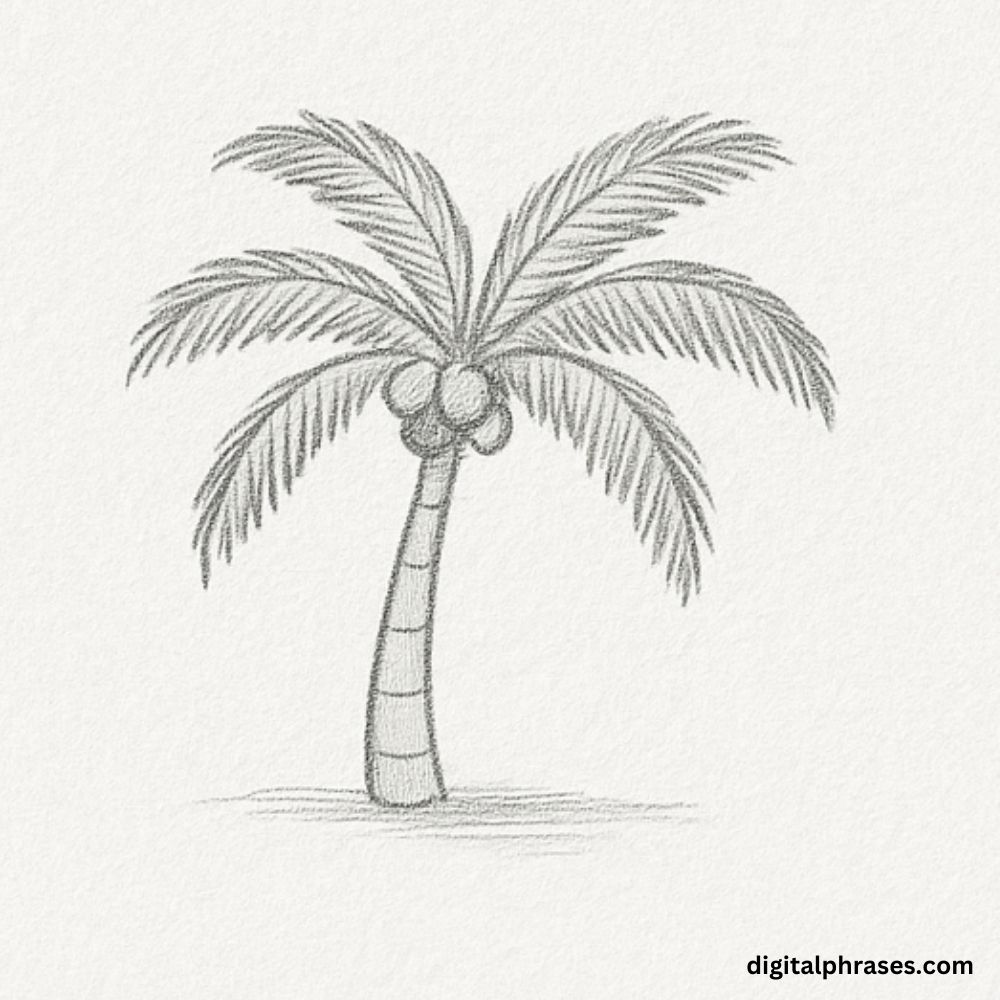
By following these steps progressively—from simple guidelines to refined details—you can build a palm tree drawing that feels natural, balanced, and visually appealing. The image demonstrates how starting with minimal shapes and gradually layering detail results in a clean, confident final illustration.