How To Draw a Watermelon
Here are the steps.
How to Draw a Full Watermelon in 3 Simple Steps
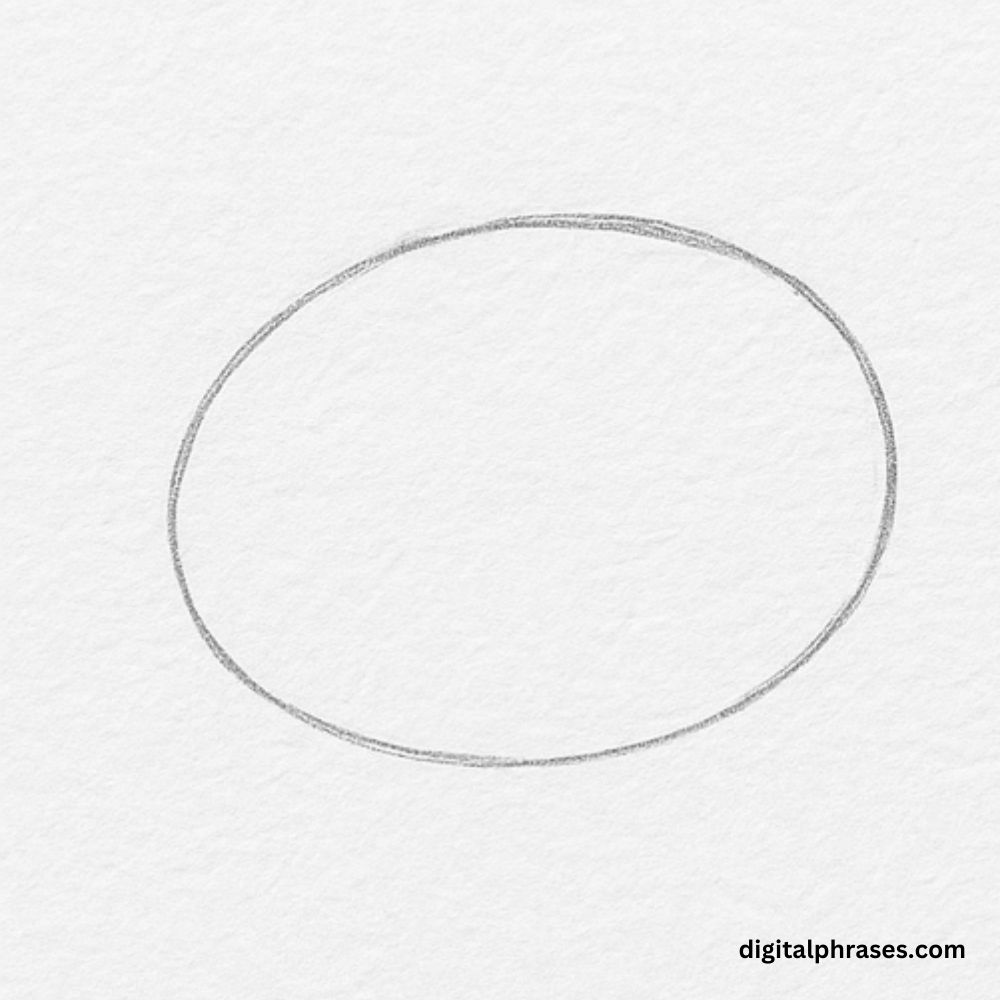
Step 1 – Draw the Basic Outline
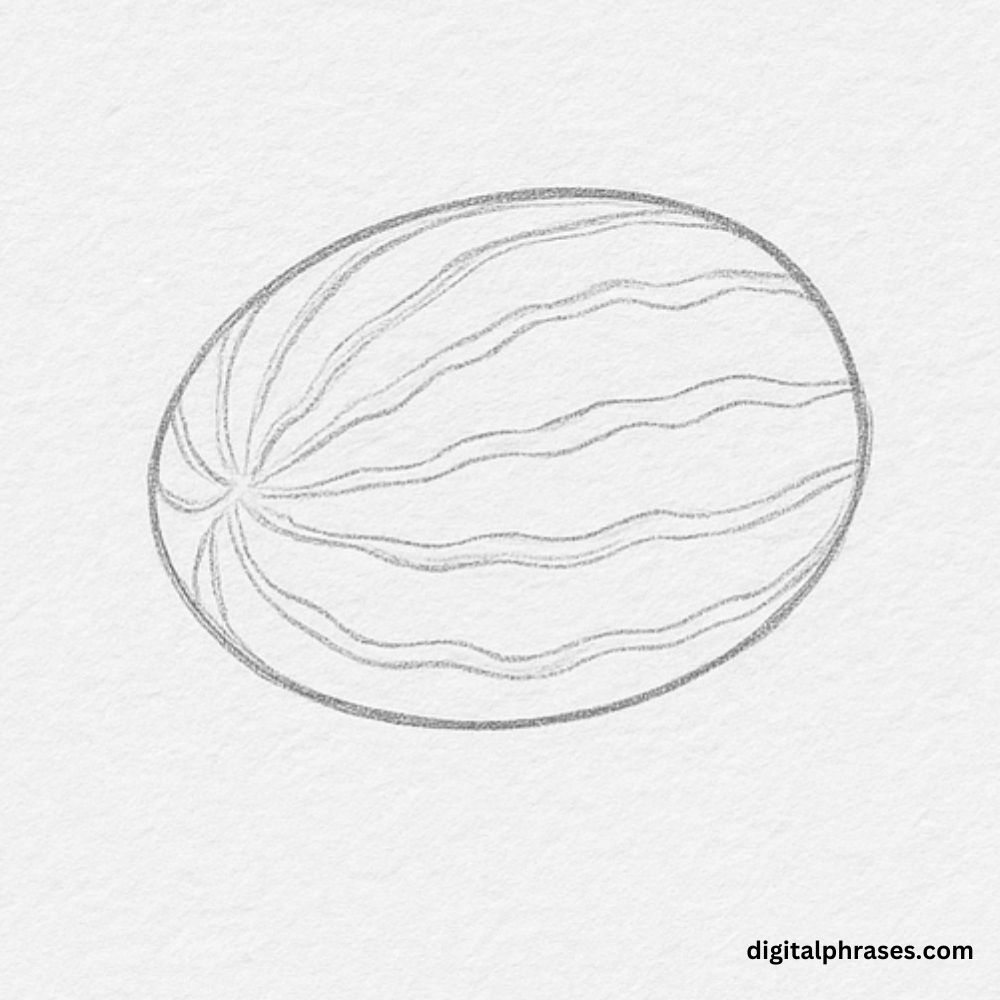
- Begin by sketching a large oval or slightly elongated circle, as shown in the first image.
- Keep your pencil pressure light so the shape can be adjusted easily.
- Focus on making the outline smooth and balanced, since this will form the overall body of the watermelon.
- This step is all about proportion, not details, so avoid adding lines or texture at this stage.
- The oval should look natural, not perfectly geometric, to reflect the organic shape of a real watermelon.
Step 2 – Add Guiding Stripes
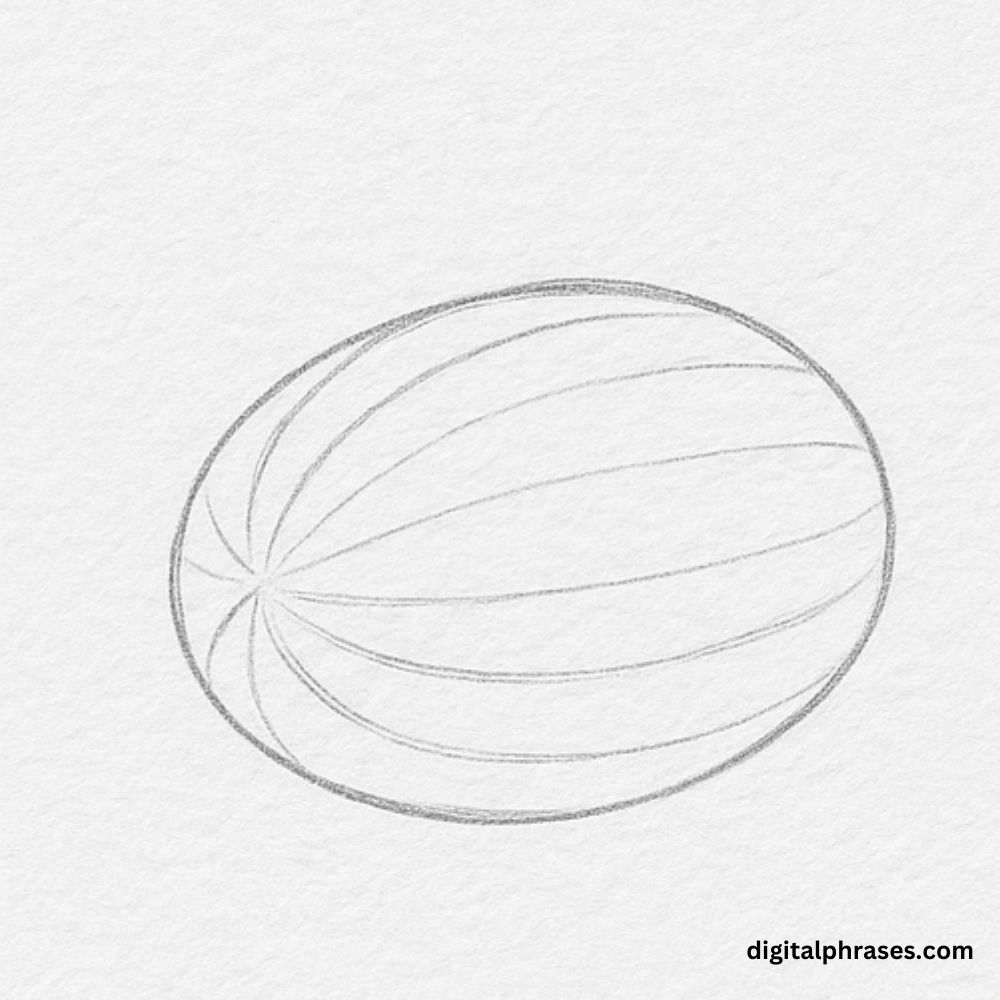
- From one side of the oval, draw curved lines that arc across the surface toward the opposite side, similar to the second image.
- These lines should follow the curve of the watermelon to show its roundness and 3D form.
- Space the lines evenly, but don’t worry about perfection—slight variations add realism.
- These stripes act as guides and represent the natural segmentation of the watermelon rind.
Step 3 – Refine Details and Texture
- Go over the stripes and make them slightly wavy and thicker, as shown in the final image.
- Darken the outer outline of the watermelon to make it stand out.
- Add subtle irregularities to the stripes to mimic the natural texture of a real watermelon.
- Erase unnecessary guide marks and clean up the drawing.
- Optionally, add light shading between stripes to enhance depth and realism.
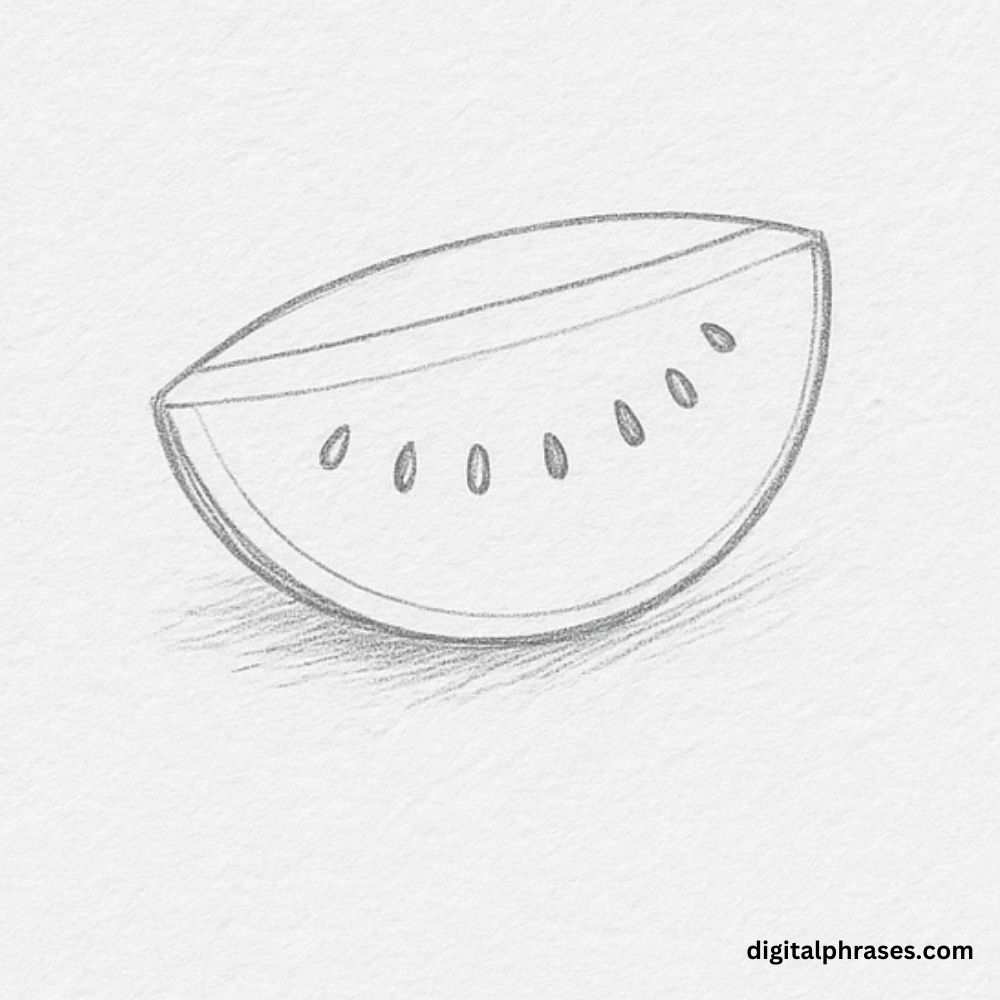
How to Draw a Half Watermelon (3 Steps)
Step 1 – Sketch the Cut-Wedge Outline
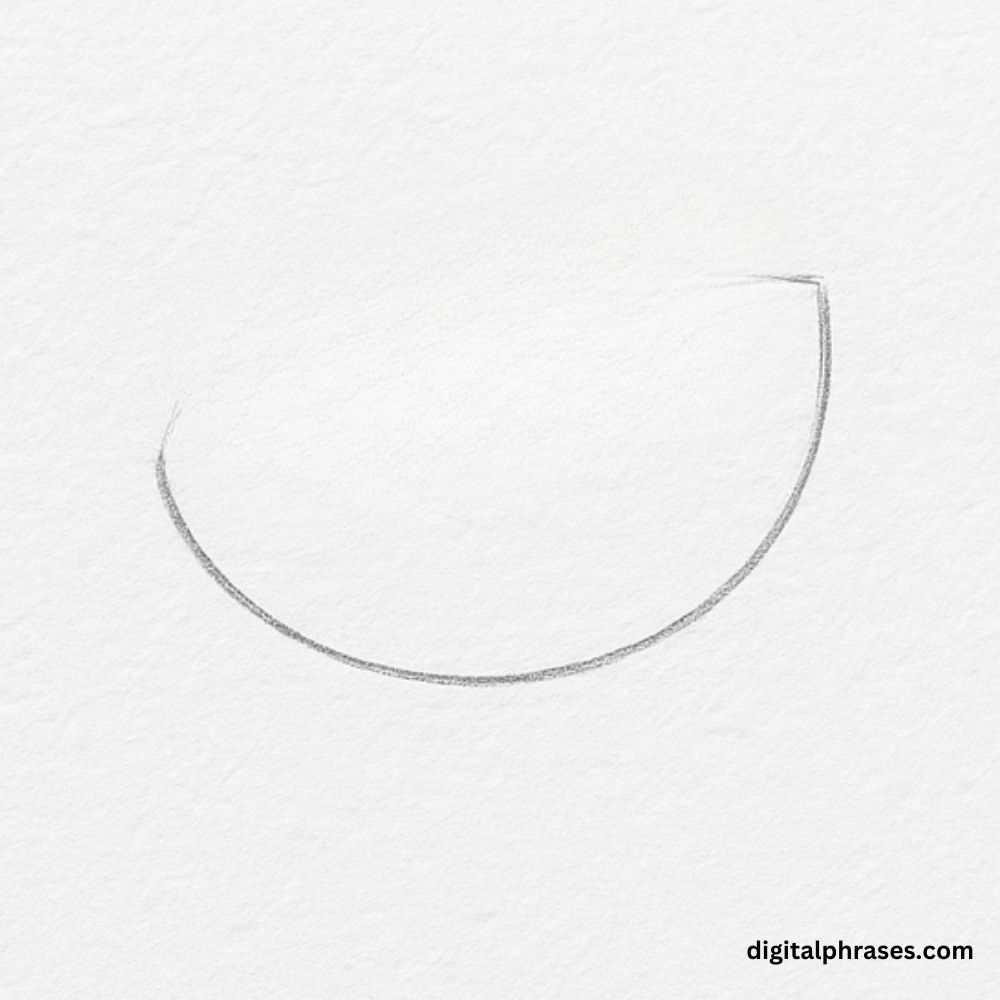
- Draw a large curved “U” shape for the bottom rind (like a wide bowl).
- On the right side, add a short vertical line rising upward to form the cut edge.
- Lightly connect the top with a gentle curve so the shape feels like a thick slice, not a flat semicircle.
- Keep lines soft so you can refine the proportions.
Step 2 – Add the Top Cut Surface and Thickness
- Inside the shape, draw a long, curved line near the top to show the cut surface (like an oval seen at an angle).
- Thicken the rind by tracing a second line along the outer edge, especially around the bottom curve.
- Smooth the outline so the slice looks rounded and three-dimensional, matching the middle panel’s clean form.

Step 3 – Draw Seeds, Details, and Shadow
- On the cut surface area, add a few small oval/teardrop seeds in a row, spaced evenly.
- Add one or two light curved guide lines on top to suggest the melon’s inner texture.
- Darken the outer rind edge slightly, then add a soft shadow underneath to make it sit on the page.