Nobody 2 Review and Ending Explained
You know those sequels that just rehash the same beats from the first film but louder?
Well, Nobody 2 doesn’t quite fall into that trap. Instead, Timo Tjahjanto (who’s proven himself with films like The Night Comes for Us) takes Derek Kolstad’s foundation and cranks up the carnage while weaving in more family drama. The result? A sequel that’s as much about fatherhood and fractured promises as it is about fists, bullets, and blood.
Story Recap and Review
Alright, let’s break this down.
After the dust settles from the first Nobody, Hutch Mansell (Bob Odenkirk) isn’t exactly sipping piña coladas in suburban bliss. Nope—turns out he owes The Barber big time, and the only way to pay that debt is by going back to what he does best: assassination.
This setup alone is classic Kolstad: you can almost hear echoes of John Wick’s “one last job” syndrome. Except here, the stakes aren’t just underworld markers—they’re Hutch’s crumbling family life.
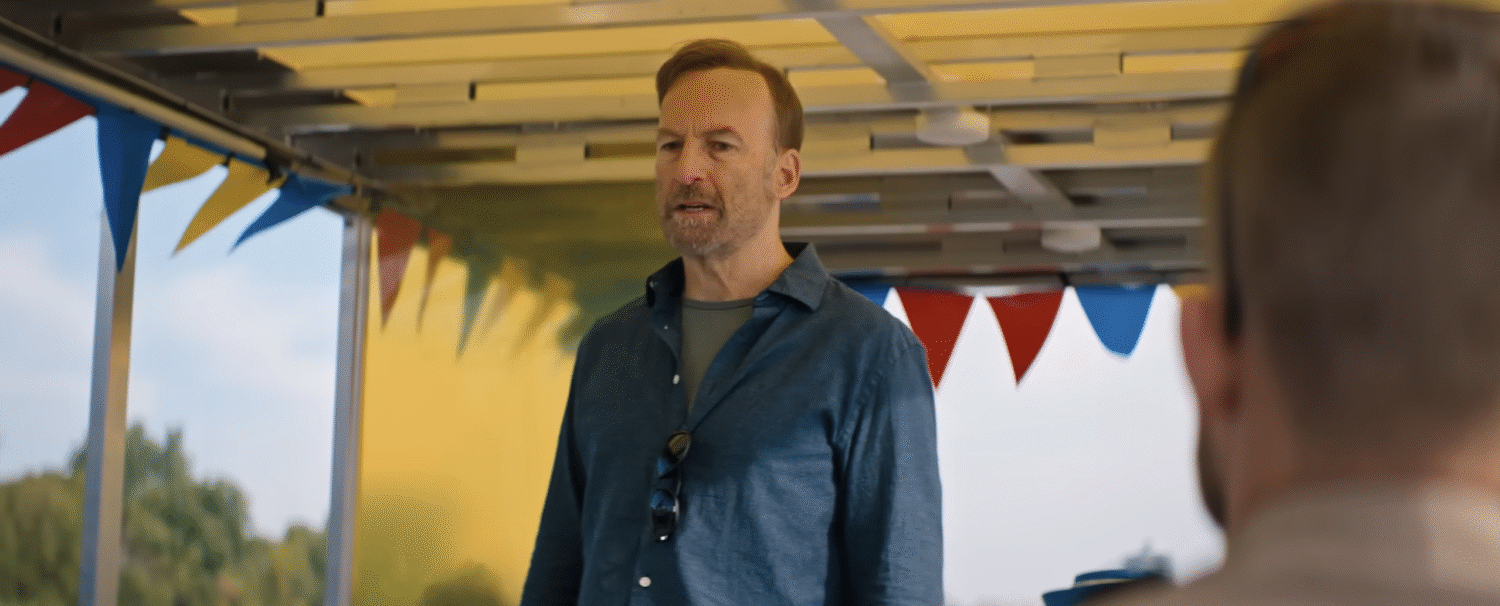
The opening act grounds us in Hutch’s strained relationship with Becca and the kids. He’s distant, guilty, and compensating with promises he can’t keep. That promised family trip to Plummerville—an amusement park town straight out of a Stephen King novel gone wrong—feels like a metaphor from the jump. You know something’s going to corrupt this attempt at normalcy.
And sure enough, it doesn’t take long. At the arcade, Brady (Hutch’s teenage son) gets into it with Max, a local kid. Max wrecks a plush meant for Sammy (the little sister), which seems small—until it spirals into humiliation, violence, and the family being kicked out.
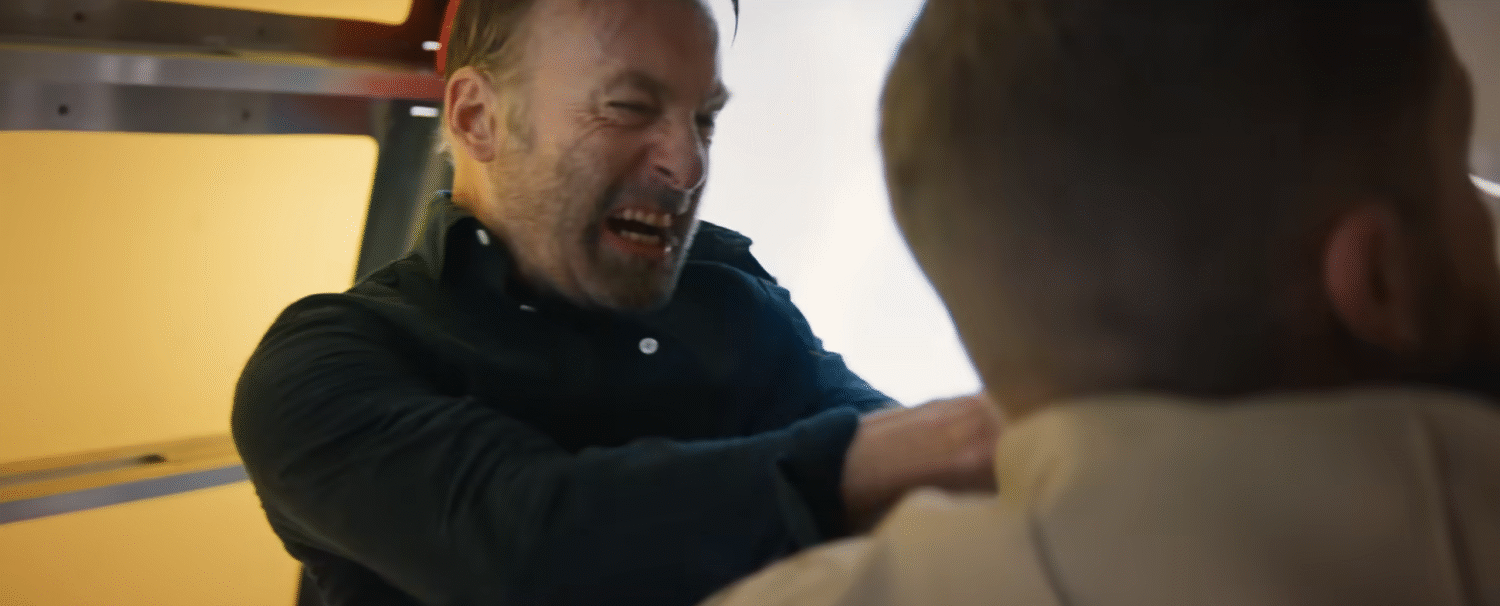
Then comes the trigger: an employee smacks Sammy, and Hutch’s instincts kick in. He demolishes the staff in that trademark controlled-rage style, echoing that infamous bus scene from the first film. But here’s the twist: this fight isn’t just about Hutch losing control—it’s about him trying (and failing) to protect his kids the only way he knows how.
Now, this is where Tjahjanto puts his stamp on the Nobody universe. Wyatt, the amusement park owner, feels like a Coen brothers villain—slick, petty, and money-obsessed. Abel, the corrupt sheriff, is the wild card: violent, opportunistic, and in bed with local crime boss Lendina. Abel isn’t just a nuisance; he represents everything wrong with the town—authority abused, power wielded without accountability.
The boat ambush where Hutch loses his pinky finger is a turning point. That mutilation isn’t just physical—it’s symbolic.
The pinky is traditionally associated with promises, with oaths. Losing it becomes a grim foreshadowing: Hutch can’t keep the promise he made to Becca to stay out of trouble.
Plummerville turns out to be more than a creepy vacation town—it’s a smuggling hub. This reveal ties Hutch’s personal drama to larger criminal stakes. Lendina, the big boss, controls the bootlegging route, with Abel as her lackey and Wyatt caught in the middle. When Wyatt dares to say he’s done paying her off, Lendina flexes her power by kidnapping his son, Max.
Here’s where Hutch shows his heart. He could’ve walked away, but seeing Max—this kid who just bullied his son—triggers his sense of justice. He rescues him, burns Lendina’s stash of money and drugs, and scars Abel. It’s reckless, sure, but it’s also pure Hutch: violent morality, delivered with fire.
Becca’s confrontation with Hutch is brutal. She’s furious, not just because of the chaos, but because Hutch keeps lying to himself about who he really is. Yet instead of leaving him, she lays it bare about not going anywhere.
This moment hits harder than any punch—it reframes the entire movie. Hutch isn’t fighting for survival; he’s fighting to rebuild trust.
The reconciliation with Wyatt is another fascinating beat. These two men—so different on the surface—become unlikely allies. It’s almost mythic: the trickster businessman and the fallen warrior uniting to defend the town. And with Harry (RZA) and David (Christopher Lloyd) entering the mix, we get that delicious “family team-up” energy that fans craved after the first film.
If Nobody 1 gave us the bus, Nobody 2 gives us the amusement park. It’s a playground of violence, full of creative set pieces that show off Tjahjanto’s flair for inventive choreography. Hutch and Wyatt rig the place like it’s Home Alone on steroids. Harry takes out men at the lodge with brutal precision, while David—ever the wildcard old-timer—adds darkly comedic carnage.
When Becca finally gets her own moment—tranquilizing Lendina in the eye—it’s a chef’s kiss. It’s not just a cheap “wife finally joins the fight” trope; it’s catharsis. Becca chooses to stand by Hutch, but on her own terms.
And then, in true over-the-top fashion, David recovers just in time to blow up the entire park, killing Lendina and her men. It’s spectacle with emotional weight: destruction as closure.
Ending Explained
So what do we make of this wild ending?
After the park explodes, Hutch and Becca are captured and taken to a mysterious hangar. The fact that they’re released by orders of an “anonymous source” is fascinating.
My theory?
This is Tjahjanto and Kolstad expanding the Nobody mythology. Much like the High Table in John Wick, there’s clearly a bigger power structure at play here.
The anonymous source likely sees value in Hutch—or fears him enough not to eliminate him. This opens the door for a larger universe of assassins, smugglers, and shadow organizations. But unlike Wick, Hutch isn’t chasing revenge or legacy. He just wants his family intact. That tension between personal stakes and systemic violence is what makes Nobody stand out.
The film closes on the Mansell family watching a visual album of their trip. On the surface, it’s almost cheesy—like a family slideshow after a chaotic getaway. But dig deeper, and it’s devastatingly ironic. This “vacation album” is a highlight reel of survival, not relaxation. It’s their bond forged in fire.
For cinephiles, this ending recalls films like The Sopranos finale or even True Lies. In those, the juxtaposition of family domesticity with violence isn’t played for laughs—it’s a statement. Hutch can’t separate the two. His family life and his violent nature are inseparable, stitched together like the scar where his pinky used to be.
Arguably the most important beat of the ending is Becca staying by Hutch’s side. It would’ve been easy (and cliché) to write her off as “the fed-up wife who leaves.” Instead, the film respects her complexity.
She loves Hutch, not despite who he is, but because of it. By tranquilizing Lendina, she becomes complicit—not in his debt, but in his survival.
This echoes characters like Karen Hill in Goodfellas, who knowingly embraces the criminal lifestyle for the love of her husband. But with Becca, it feels less tragic and more empowering—she chooses the mess because she chooses Hutch.
So many sequels bloat themselves by going bigger but not deeper. Nobody 2 manages both. Yes, it has more bodies, more fire, and more spectacle. But it also doubles down on Hutch’s humanity.
The ending isn’t just a setup for a potential third film (though you know that’s coming). It’s a meditation on promises broken and remade. Hutch didn’t keep his promise to avoid violence—but he did keep his promise to never abandon his family. That paradox is what makes him fascinating.
Walking out of Nobody 2, I couldn’t stop thinking about that pinky finger. Losing it early on was such a small but powerful choice. It’s the kind of detail cinephiles love—loaded with symbolism, never mentioned outright, but felt in every scene after. That’s what makes this sequel resonate: it’s brutal, funny, and cathartic, but also layered with meaning if you’re willing to dig.
Is Hutch Mansell the suburban John Wick?
Maybe. But he’s also something Wick never was: a dad fumbling through his failures, trying to stitch together a family in the middle of chaos.
And that, my friends, is what makes Nobody 2 more than just another action flick—it’s a bloody, broken family portrait.