How to Use Cliffhangers Without Frustrating Your Readers
We all know what a cliffhanger is, right?
A sudden cut, a jarring revelation, a moment of suspense that yanks the reader into the next scene or chapter. But I think we often underestimate their real function. A good cliffhanger isn’t just a plot device—it’s a rhythmic beat in the story’s emotional flow.
The magic lies in what it does to the reader’s brain.
Ever heard of the Zeigarnik effect?
It’s the psychological quirk where people remember unfinished tasks better than completed ones. That’s why readers can’t sleep after a chapter ends on a cliffhanger—they’re cognitively agitated. They need closure.
But here’s the catch: this tool only works when readers trust you’ll pay it off. Used carelessly, cliffhangers feel like clickbait.
Used well, they pull your story forward like narrative gravity. So let’s get into what not to do—because that’s where most writers get tripped up.
How Cliffhangers Go Wrong (And Why Readers Get Pissed Off)
Okay, let’s get real: if I had a dollar for every time a cliffhanger made me groan out loud instead of gripping the edge of my seat, I’d be… well, buying fewer books. Because here’s the truth: most bad cliffhangers don’t fail because they’re dramatic. They fail because they’re dishonest.
Let’s break down the common ways writers misuse cliffhangers—especially ones that backfire on expert readers who’ve seen it all before.
1. Fake Stakes That Vanish in the Next Scene
You’ve seen this one. A character is dangling off a literal or emotional cliff—and then, in the next chapter: “Just kidding! They were never in danger.”
This is the narrative equivalent of crying wolf. If your cliffhanger leads to a resolution that makes the tension feel meaningless, readers will remember that. Worse, they’ll stop trusting your story.
Example? Think of the classic “Is he dead?” ending—only to start the next chapter with, “Oh no, he was wearing a bulletproof vest.” One or two of those might slide. But keep it up, and readers start skimming.
2. Tone Shifts That Break the Flow
A cliffhanger can’t just be about plot—it has to match the emotional tone. Dropping a brutal twist at the end of a lighthearted chapter can feel jarring, unless you’ve laid groundwork.
Let’s say you’re writing a rom-com and end a chapter with, “And then the phone rang. It was the coroner.” Uh, what?
You need tonal build-up. Otherwise, it feels like you changed genres mid-paragraph. Even thrillers need emotional continuity, not just plot escalation.
3. Cliffhangers With No Narrative Payoff
This one’s a killer. It’s when the story builds up mystery or suspense… only to never resolve it or let it fizzle out.
One big example: “Lost.” Remember how it threw cliffhanger after cliffhanger—mysterious hatches, shadowy organizations, polar bears—without tying everything back in a meaningful way? The suspense became noise.
When cliffhangers aren’t part of the story’s thematic arc, they feel tacked on. If you raise a question, even subtly, you’ve made a promise. Break that promise, and it’s not just frustrating—it’s disrespectful to the reader’s attention.
4. Too Many Dangling Threads
Some writers go overboard with layered suspense, hoping to keep the reader hooked by sheer volume. But too many unresolved cliffhangers? That’s how you cause narrative fatigue.
We’ve all read stories where everything ends on a “DUN-DUN-DUN” moment. But eventually, readers just get tired. You can’t have readers chasing ten rabbits with one pair of legs.
Even complex stories—like George R.R. Martin’s A Storm of Swords—use resolution rhythmically. For every “Red Wedding” jaw-drop, there’s a quieter moment that lets the emotional dust settle.
5. Overuse That Kills the Surprise
If every chapter ends with a twist, then… none of them are twists anymore. Readers get smart fast. They start predicting the rhythm: “Okay, five pages left, something shocking is coming.”
You know how jump scares in horror movies stop working when they happen every five minutes?
Same rule applies here.
Surprise only works when it’s not expected every single time.
That doesn’t mean ditching cliffhangers—just vary the intensity. Let some chapters close on a gentle beat. That way, when the real sucker-punch comes, it lands.
Cliffhangers are like seasoning. Use the right amount, in the right places, and you’ve got a story that sizzles. But overdo it, or use the wrong kind, and you’ve just ruined the dish.
The next section, we’ll talk about how to do it right—not just avoiding the pitfalls, but creating cliffhangers that truly elevate your storytelling.
How to Use Cliffhangers the Right Way (Without Losing Reader Trust)
So now that we’ve torn into all the ways cliffhangers can flop, let’s talk about how to actually use them well—not just to keep readers turning pages, but to deepen the emotional pull of your story.
These aren’t just writing tips. Think of them as narrative principles that make cliffhangers land and last.
1. Build Momentum, Not Just Shock
A cliffhanger should feel like a natural escalation, not a sudden explosion. That means the moment needs to be earned. Ask yourself: Is this cliffhanger the natural extension of the scene’s emotional arc?
Let’s say a character discovers a secret note. Ending the chapter on the line “I know what you did, and I’m coming for you” works only if you’ve already built tension around hidden consequences. Drop that line without setup, and it feels like drama-for-drama’s-sake.
Pro tip: Your cliffhanger should feel inevitable in hindsight—like the only way that chapter could have ended.
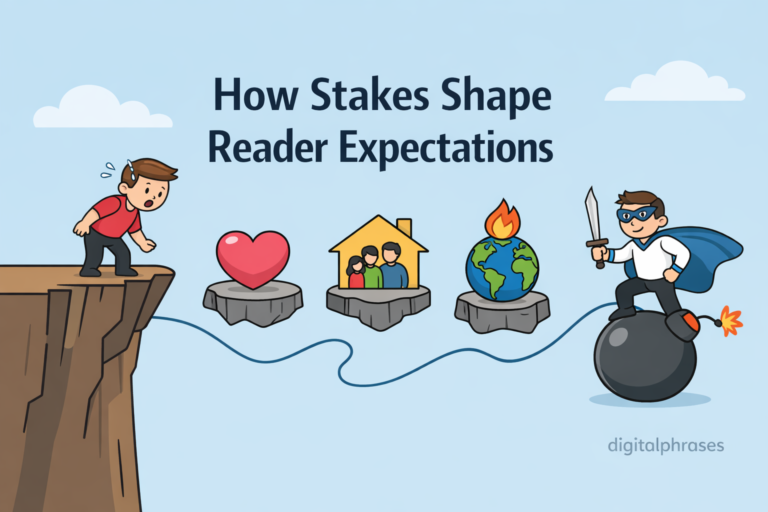
2. Make the Stakes Character-Driven
The best cliffhangers aren’t just plot twists—they’re emotional consequences. The twist should matter to the character on a deep level. If it’s just a surprise for the sake of surprise, it won’t stick.
Think about Breaking Bad. When Walt lets Jane die at the end of that episode, it’s shocking—but it’s also a massive character turning point. It’s not just “Wow, he let someone die.” It’s “Wow, this is who Walt’s becoming.”
That’s the kind of cliffhanger that scars—in a good way.
3. Don’t Leave Everything Hanging
I know it’s tempting to end every chapter with a question. But if everything’s a question, readers will start feeling like your story’s just a puzzle box with no emotional center.
Try this instead: resolve one thread while teasing another. Let your reader feel a sense of satisfaction—then nudge them forward with a new mystery or tension point.
Think of it like breathing: inhale (tension), exhale (resolution). That rhythm is what makes long-form storytelling sustainable.
4. Layer Your Cliffhangers
Here’s a fun trick: use micro and macro cliffhangers.
- Micro cliffhangers are the beats that keep the scene moving—like a line of dialogue that begs a response, or a gesture that signals something deeper.
- Macro cliffhangers are the ones at the end of chapters or arcs—big reveals, new threats, emotional collapses.
When you layer them, you create a sense of constant propulsion without exhausting the reader. A great example of this is in The Hunger Games. Suzanne Collins doesn’t just end chapters with bombshells—she ends scenes with tension, and ends chapters with emotional punches.
5. Play With Cliffhanger Types
Not all cliffhangers have to be “who just died” moments. In fact, some of the best ones are quiet, subtle, or internal. Here’s a quick list of types you can experiment with:
- Action-based: A gunshot, a fall, a door creaking open.
- Revelation-based: A secret uncovered, a betrayal realized.
- Emotional: A character making an irreversible decision.
- Thematic: A twist that reframes what the story is really about.
- Philosophical: A line that asks the reader to think, not just feel.
Give yourself permission to mix it up. Keep readers on their toes—not just with what you do, but how you do it.
6. Use the Cliffhanger as a Bridge, Not a Wall
A lot of writers treat cliffhangers as “chapter stoppers,” but I’d argue the best ones act more like chapter bridges. They’re not about ending the scene—they’re about opening a door into the next.
The key question is: Does this cliffhanger make the next scene more urgent? If not, it might be working against you.
Think of how Stranger Things ends its episodes. Yes, they’re dramatic. But they’re also connective. Each one leads directly into the next beat, the next hunt, the next reveal. It’s movement, not just suspense.
In short?
Don’t think of cliffhangers as traps.
Think of them as invitations. Done well, they don’t manipulate your reader—they collaborate with them. You’re not dangling them off a cliff. You’re pulling them deeper into the story.
How to Build Trust With Your Readers (Even When You’re Making Them Wait)
Well, cliffhangers are a little cruel.
You’re asking someone to sit with unresolved tension—sometimes for hours, days, or, if you’re publishing serially, even months. So if you’re going to do that, you’ve gotta earn it.
This part’s about reader trust, and how to hold it tight even when you’re keeping secrets.
1. Payoffs Matter More Than Setups
You can set up the greatest cliffhanger in the world—but if the resolution is flat, you’ve lost your reader.
What makes payoff work?
- It has to feel earned.
- It should recontextualize what came before.
- It should lead somewhere new.
Think about the ending of Season 1 of The Good Place. That reveal (“This is the Bad Place”) retroactively reshapes everything we’ve seen. It’s not just surprising—it’s deeply satisfying.
Readers will forgive almost any wait if the resolution is brilliant.
2. Don’t Delay for the Sake of Delaying
Cliffhangers lose power if they feel like filler. If you’re stretching tension just to pad out chapters, readers will feel it—and they’ll resent it.
Ask yourself: Am I delaying because it adds richness to the character or plot? Or am I avoiding the reveal because I don’t know what comes next?
If it’s the latter, fix that before hitting publish. Your cliffhanger isn’t suspense—it’s avoidance.
3. Use Emotional Echoes
One way to build trust is to tie your cliffhangers to themes that echo throughout the story.
Example: In Mad Men, Don Draper’s secrets are often the source of cliffhangers—but the emotional fallout always ties into his identity, shame, or family. It’s not just “What will happen?” It’s “What does this mean for who he is?”
When readers can trace your cliffhangers to larger emotional threads, they’re more willing to go along for the ride—even if it’s slow-burning.
4. Occasionally Break the Pattern
Here’s a weird truth: sometimes the best way to keep readers engaged is to not give them a cliffhanger at all.
Throw in a soft ending. Let the chapter settle. Give the reader space to breathe.
Why? Because it changes the rhythm. It builds tension through contrast. When everything is a spike in the heart, nothing stands out. But when you vary your pacing—boom. The next cliffhanger hits ten times harder.
5. Be Honest With Your Audience
This is maybe the most important piece of the whole puzzle: be emotionally honest in your storytelling.
If your cliffhanger exists only to get a reaction, it’ll feel empty. But if it grows naturally out of your character’s truth—their decisions, flaws, hopes—your reader will feel it.
Because in the end, readers don’t just want twists. They want meaning. They want to care.
And when they trust you to give them that, they’ll follow you to the end.
Before You Leave…
Cliffhangers are powerful—but they’re not magic. They don’t work just because you add a last-minute twist. They work when they’re woven into the emotional structure of your story, when they feel earned, and when they reflect something deeper than “what happens next?”
Think of them less like plot grenades and more like narrative handshakes: a promise that what comes next is worth the wait.
So next time you’re about to end a chapter, pause for a second. Don’t just ask, “Is this surprising?”
Ask, “Is this honest? Is this meaningful?”
If the answer’s yes? You’ve nailed it.