Why Introductions Matter In a Story and What Are The Strategies For Creating an Amazing Intro
We all know the intro matters.
But I’m going to push back on the idea that just a “strong opening line” is enough. It’s not. The introduction isn’t just a hook — it’s a promise. It sets emotional tone, audience expectations, pacing, voice, and even theme. And if we don’t get that right, the rest of the story fights an uphill battle.
Think of Beloved by Toni Morrison — that haunting line, “124 was spiteful,” drops us into a world that feels lived-in, broken, and deeply strange.
Immediately, we feel that the house is a character, that the past is very much present. Morrison doesn’t explain; she implies. And that’s powerful.
Great introductions don’t explain the story — they ignite it. And for those of us who write stories professionally, that ignition point is where good storytelling becomes unforgettable.
What Actually Happens In a Reader’s Brain When They Read an Intro
Now, let’s dig into why intros work — not from a literary angle, but from a cognitive and emotional one. Because when we understand what’s going on in the reader’s brain, we can shape those first moments with real precision.
Here are five psychological principles I keep coming back to when I’m building an opening:
1. The Primacy Effect Is Your Best (and Worst) Friend
We’ve all heard it: people remember the first thing they read. But what’s wild is how much it skews their entire perception of the rest of your story. This is called the primacy effect — and it means that the emotional and narrative tone you set up front will color everything that comes after.
Take The Road by Cormac McCarthy. In the first few pages, the prose is stripped, brutal, and hushed. That intro doesn’t just introduce a world — it trains the reader how to read the story. So if you start with emotional detachment and shift to intimacy later, the reader might not follow. Primacy makes that first impression sticky, so you’d better mean it.
2. Curiosity Gaps Pull Us In (Hard)
George Loewenstein’s theory of the information gap says we’re most curious when we know just enough to feel the absence of knowledge. Great intros use this instinct.
Look at the opening of Fight Club:
“People are always asking me if I know Tyler Durden.”
That line doesn’t just ask a question — it implies there’s a story behind the question. It gives us a name, a mystery, and a sense that something big has already happened. We lean in.
You don’t need to be cryptic, but you do need to withhold just the right thing at the right moment.
3. Emotion First, Logic Later
Let’s not forget: readers are emotional processors before they’re logical analyzers. That means you’ve got a tiny window — maybe a few lines — to make them feel something. Otherwise, they’re out.
Think about The Fault in Our Stars. Hazel starts narrating her cancer story with dry wit and bitterness. That tone — that mix of pain and snark — is emotionally sticky. We bond with her before we even know the plot. You don’t need melodrama, but you do need to create an emotional connection fast.
4. Pattern Recognition is a Reader’s Superpower
Humans are wired to spot patterns. In stories, this means readers are constantly searching for motifs, echoes, and narrative symmetry. And whether consciously or not, they’ll remember patterns that start in the intro.
Let’s say your story opens with a symbol — maybe a crow on a windowsill, or a child drawing in chalk. If you bring that symbol back later, it hits harder. Planting narrative motifs early pays dividends. Denis Villeneuve does this masterfully in Arrival, using visual and tonal repetition to link the intro to the story’s emotional resolution.
5. Pacing = Trust
The way your intro is paced teaches your reader how much effort they’ll need to invest. Start with dense exposition and they’ll brace for complexity. Open with a tight, propulsive moment and they expect forward motion.
This is why many modern prestige shows (think Breaking Bad, The Bear, Severance) start with a cold open. It’s not just to hook — it’s to establish rhythm. If your pacing shifts too drastically from intro to act one, you risk breaking the trust you just built.
Let me say it this way: your intro is where the reader decides if they’re safe in your hands. And when we understand the brain’s biases, emotions, and rhythms, we can design openings that don’t just “work” — they resonate.
How to Craft a Killer Intro (Without Falling Into the Usual Traps)
Alright, let’s talk tactics. If you’ve been writing stories for a while, you’ve probably developed a rhythm.
You know how to open a scene, establish POV, hint at conflict. But when we talk about an amazing intro, we’re talking about more than just starting well. We’re talking about designing something intentionally magnetic — the kind of intro that signals mastery from line one.
Here are four advanced techniques I’ve seen elevate intros from “competent” to unforgettable:
1. Thematic Anchoring
One of the fastest ways to give an intro weight is by tying it directly to the central theme of the story — not in an obvious way, but through implication. This isn’t about summarizing your thesis. It’s about planting a question the whole story will try to answer.
In Kazuo Ishiguro’s Never Let Me Go, we start with Kathy simply talking about being a “carer” and her memories of Hailsham. It’s so low-key. But hidden inside that plain start is a deep theme: what does it mean to be human? The intro frames this by showing us someone who appears normal but carries a quiet emotional ache. That ache becomes the story.
So when you write your intro, ask:
What emotional or thematic echo do I want this story to leave behind — and how can I whisper it early?
2. Voice First, Exposition Later
Writers (especially experienced ones) often rush to explain the world. We want the reader to “get it.” But clarity at the cost of voice is a mistake.
Try starting your story not with facts, but with perspective. With attitude. With bias.
For example, in American Psycho, we’re dropped straight into Patrick Bateman’s wealthy, psychotic POV. The world doesn’t get explained — it gets felt. And that’s what gives the story its unsettling tone.
Readers don’t need to understand everything immediately. They need to feel grounded in someone’s experience. Build your intro from the inside out.
3. Start in Motion — Even If It’s Internal
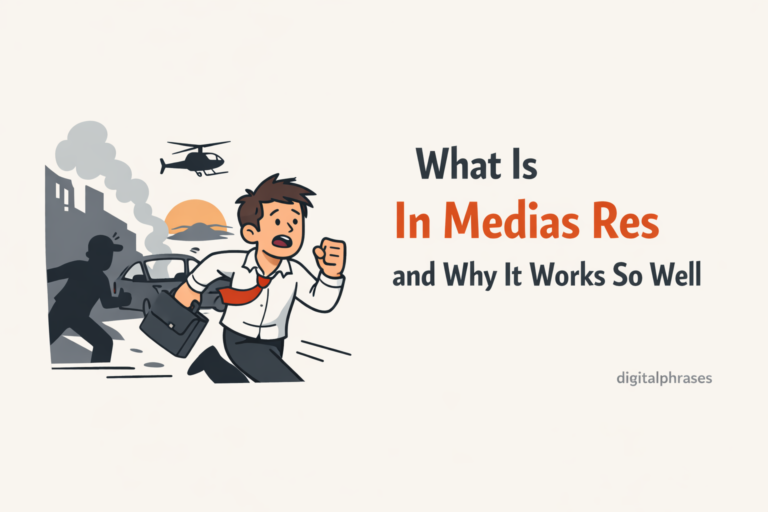
We all love “in medias res,” but too many intros use it as a gimmick: explosions, arguments, murders. That’s not wrong, but motion doesn’t always mean action.
You can start in psychological or emotional motion. Think of The Bell Jar by Sylvia Plath. That book opens in the heat of summer with this line:
“It was a queer, sultry summer, the summer they electrocuted the Rosenbergs, and I didn’t know what I was doing in New York.”
Boom. We’re moving. Not in space, but in mood. Something’s unsettled.
Motion gives the reader something to track. It creates momentum, even in stillness.
4. Use Echoes to Create Narrative Gravity
Here’s a more subtle trick: structure your story so the intro echoes the ending. This gives the whole piece a satisfying shape, like a well-played symphony.
A great example?
The Godfather.
The story begins with Don Corleone in a dark room, hearing a plea on the day of his daughter’s wedding. It ends with his son, Michael, standing in that same position — not just literally, but morally.
This doesn’t have to be heavy-handed. It can be symbolic (a recurring object), tonal (same emotional flavor), or structural (a return to a location). What matters is this: if your intro foreshadows the end, the whole story feels inevitable in retrospect.
Expert-Level Tools for Building (or Fixing) Your Intro
Let’s say your story’s written, but the intro feels… okay. Not bad. Just fine. And fine isn’t enough.
This section is your diagnostic toolkit — a set of questions and tactics to rebuild your intro with clarity, control, and a little creative swagger.
1. Ask: Does this intro declare authority?
What I mean is this: does your first page feel like the work of a confident storyteller? Not because you’re throwing in flourishes, but because there’s clear intent behind every sentence.
Test this: strip away your first paragraph. Does the story still work? If yes, the real intro might be hiding on page 2. Cut until you hit blood.
2. Consider: Where’s the spark?
Every great intro has a moment of ignition — a turn of phrase, an image, a line of dialogue that makes the reader go, “Okay, I’m in.”
Find that spark. Move it up. Build around it.
For instance, if your opening is three paragraphs of quiet worldbuilding but paragraph four has a line like “She wasn’t supposed to kill him — not yet”, then guess what? You buried the lead.
3. Test: Is the central tension hinted at early?
You don’t have to spill the plot, but you do need to create narrative pressure. Think about your story’s driving question — the emotional or narrative engine. Does the intro hint at it?
Let’s say your story’s about a marriage unraveling. Don’t wait until page 10 to show friction. A small, loaded gesture — like a partner brushing crumbs off the other’s lap with just a bit too much force — can do wonders.
Subtle signs of tension tell the reader: something is off, and I need to know why.
4. Use: Structural devices that add punch
Try one of these intro formats — especially if you’re stuck:
- Cold open: Drop into a scene mid-conflict with no preamble.
- Metaphorical frame: Start with a symbolic moment that mirrors the theme (like a bird hitting a window, a child building something fragile, etc.).
- Contradiction: Say something unexpected: “My mother was a liar, but she was right about the stars.”
- Internal monologue: Especially for voice-heavy pieces, let the narrator talk straight to the reader — intimate, raw, revealing.
These aren’t gimmicks — they’re tools. And when used deliberately, they can crack open the story.
5. Refine: Rewrite your intro after the ending is done
This one’s big: never lock your intro until the whole story is finished. Why? Because only once you know where it ends can you design an opening that echoes, foreshadows, or contrasts with that end.
Sometimes your intro is a map, sometimes it’s a mirror, sometimes it’s a misdirection. But it should always feel like it belongs to the same universe as the final line.
If your intro doesn’t “speak to” your ending — even subtly — that’s a missed opportunity.
Here’s the truth: great intros aren’t written — they’re rewritten. With every draft, your story reveals more of itself. So don’t be afraid to rebuild that opening again and again until it hums.
Final Thoughts
Whether you’re writing novels, scripts, essays, or even brand storytelling — the intro is where you win or lose the reader’s trust. And the more expert you get, the more dangerous it is to assume you’ve “nailed it” too soon.
Because the best intros don’t just pull readers in — they set up emotional payoffs, thematic resonance, and narrative structure that echo through the entire story.
So write your intro.
Then write it again. And again.
The payoff?
A story that starts with intention, confidence, and the kind of spark that readers don’t forget.