How To Draw a Bumblebee
Here’s the simple way to draw a bumblebee.
How To Draw a Bumblebee – Step by Step
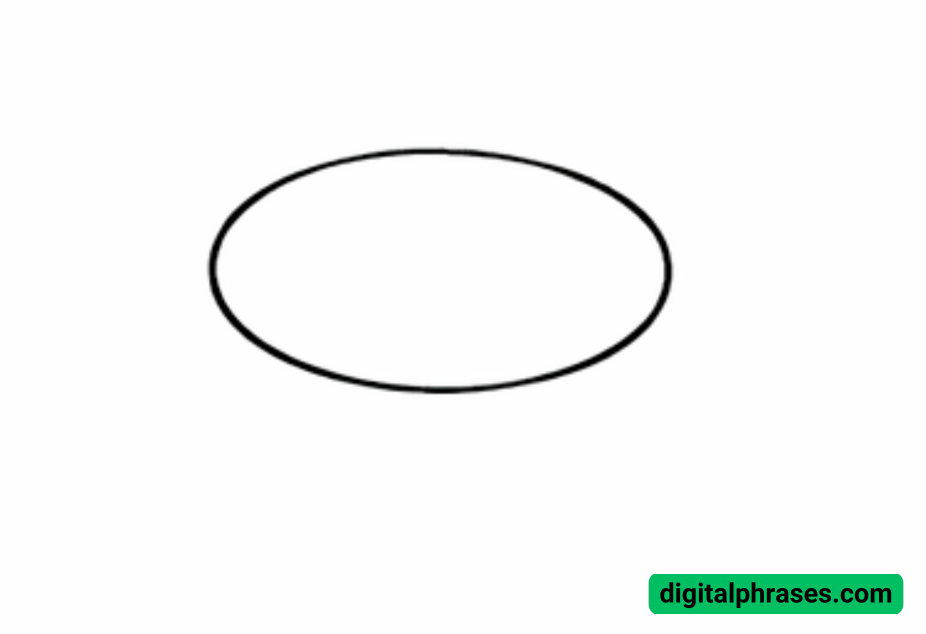
Step 1: Draw the Main Body Shape
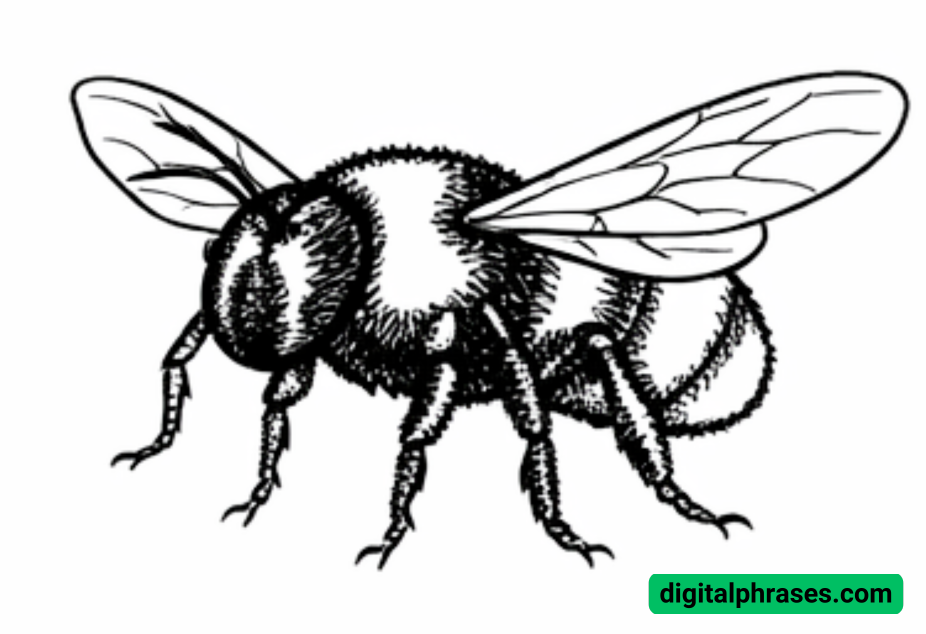
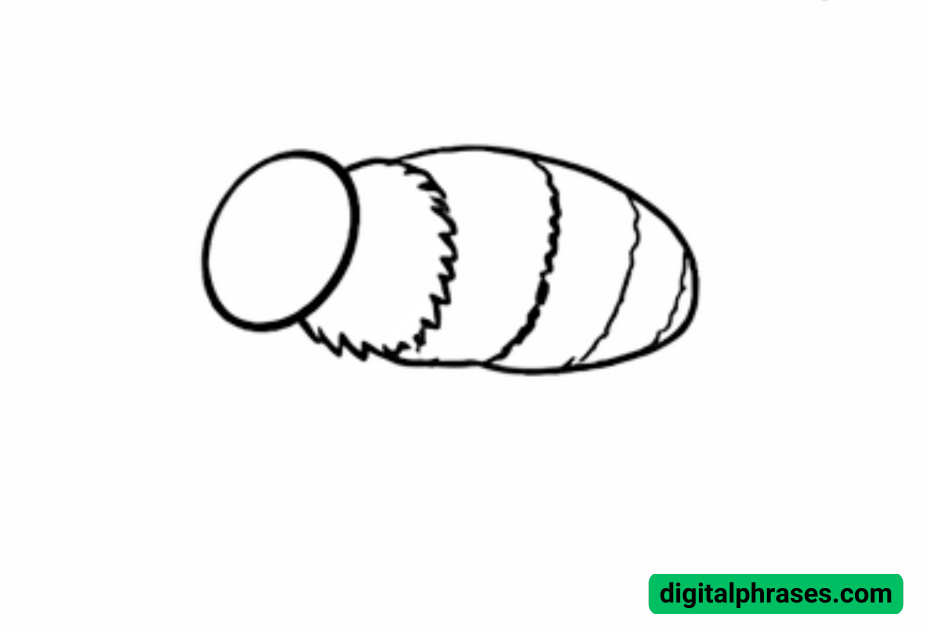
Start by sketching a large horizontal oval in the center of your page. This will form the main body (abdomen) of the bumblebee. Keep your lines light and smooth so you can adjust the proportions if needed. The oval should be slightly wider than it is tall to give the bee a natural, rounded appearance.
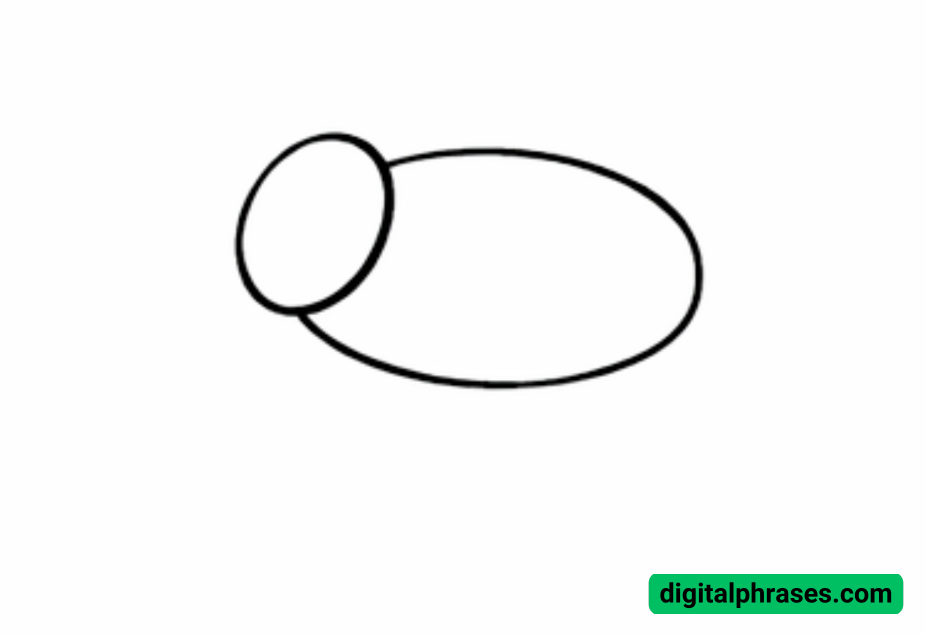
Step 2: Add the Head
Next, draw a smaller oval overlapping the left side of the large body oval. This smaller oval represents the head. Angle it slightly so it looks naturally attached rather than perfectly straight. Make sure the head is proportionate — roughly one-third the size of the body oval.
Step 3: Define the Body Sections and Stripes
Now begin shaping the bee’s fuzzy thorax and abdomen details. Add curved horizontal lines across the back portion of the body to create the characteristic bumblebee stripes. Slightly jagged or soft zigzag lines near where the head meets the body can suggest the fuzzy texture of the thorax. Keep the stripe lines curved to match the roundness of the body.
Step 4: Draw the Wings
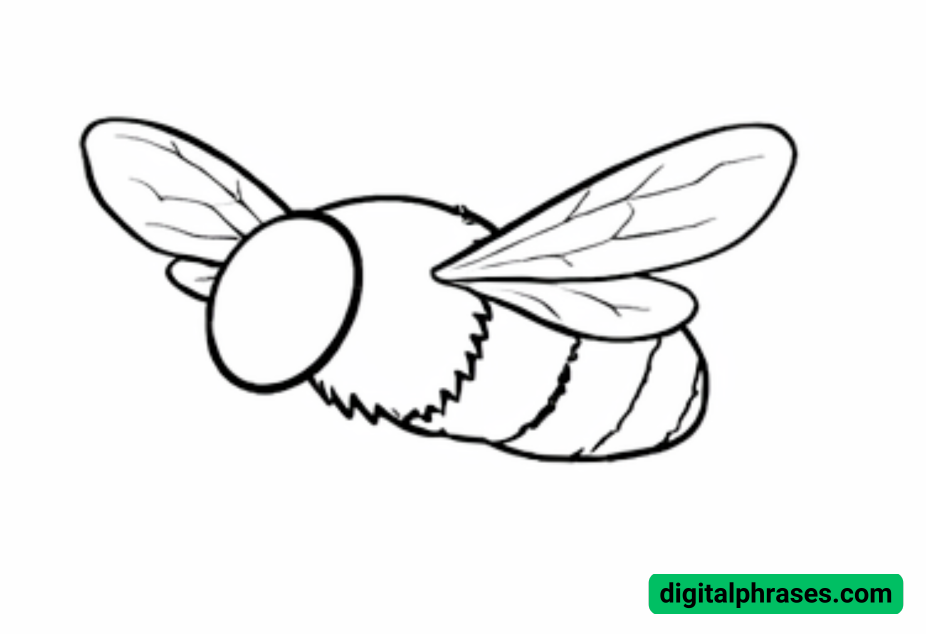
From the top of the thorax area (just behind the head), sketch two elongated oval shapes extending upward and outward to form the wings. The wings should be slightly transparent-looking and delicate. Add light inner vein lines to give them structure. The top wing should overlap the lower wing slightly for a realistic layered look.
Step 5: Add the Legs and Refine the Shape
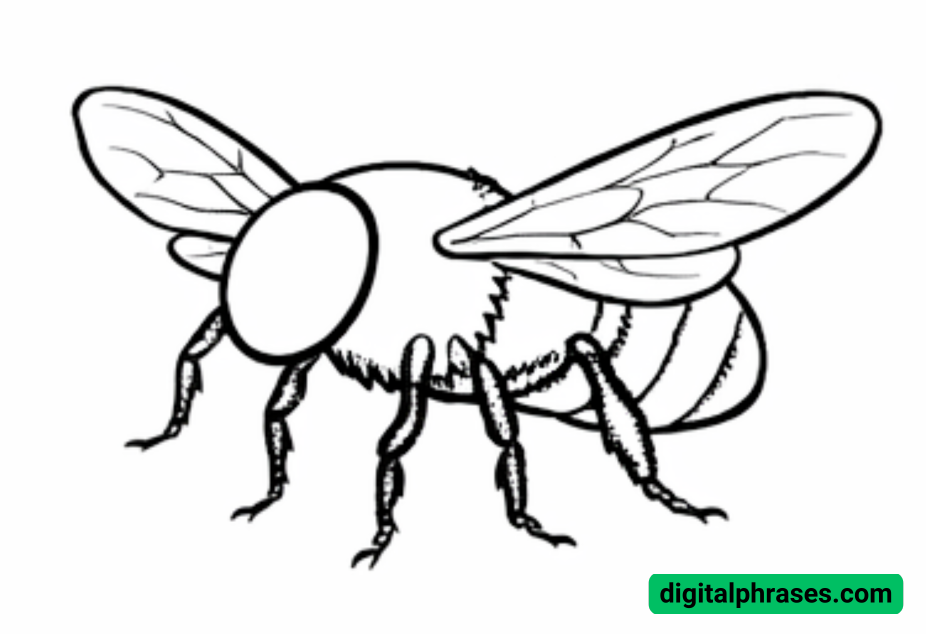
Underneath the thorax and abdomen, draw six thin, segmented legs. Start each leg with a slightly thicker upper segment and taper it down as you extend outward. Bend the legs at slight angles to make them look natural and grounded. Refine the body outline and adjust curves where needed.
Step 6: Add Details, Texture, and Shading
Finally, enhance your drawing with detail. Darken the stripes and add shading to create dimension. Use short, fine strokes around the thorax and parts of the abdomen to suggest fuzziness. Darken the head, define the eyes if visible, and refine the wing veins. Add subtle shading beneath the body and legs to give the bee a more realistic, three-dimensional appearance.