How To Draw a Popsicle
Here’s the simple process of drawing a popsicle.
Step-by-Step Process of Drawing a Popsicle
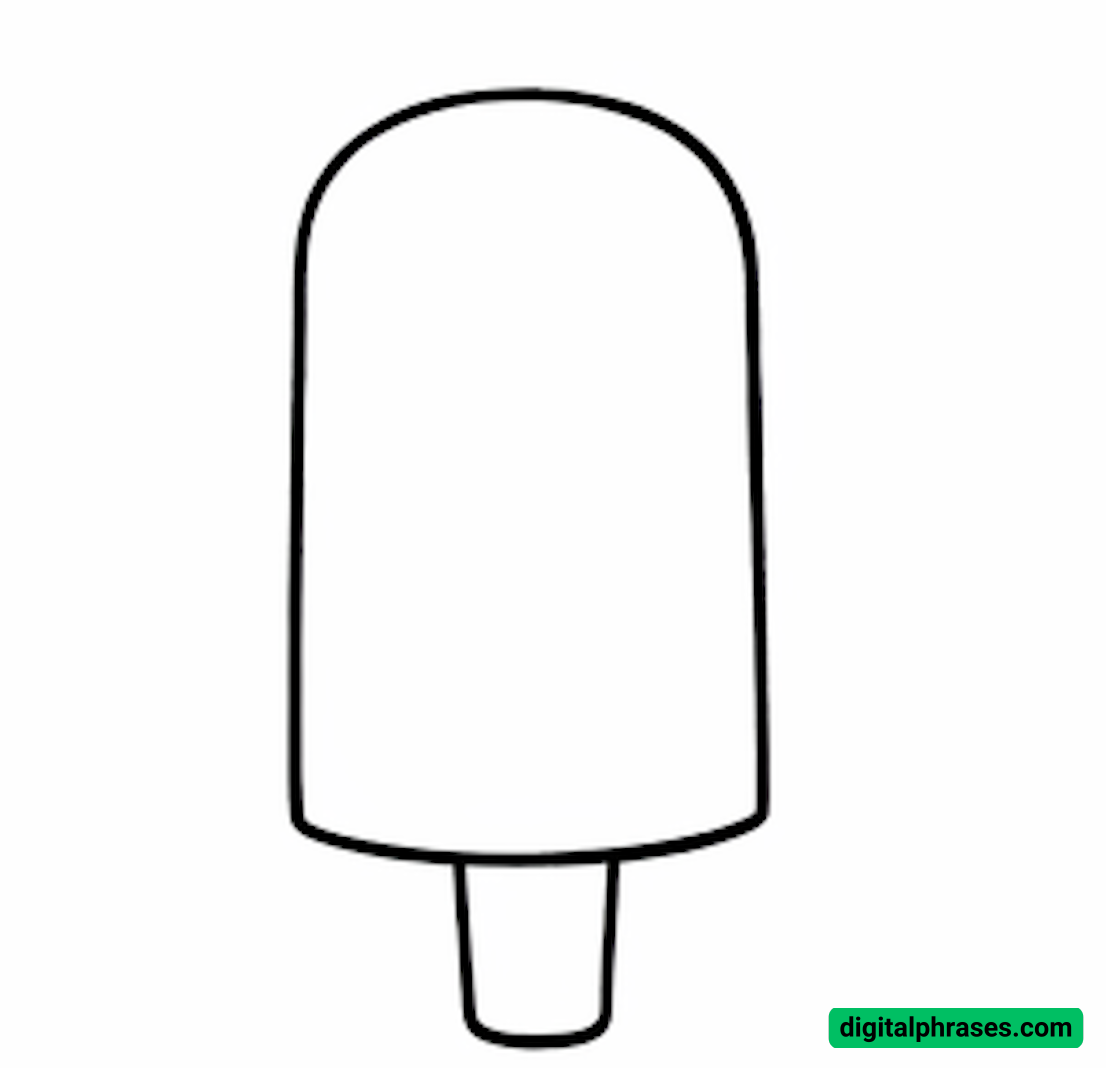
Draw the basic popsicle outline
Begin by sketching the main body of the popsicle as a tall vertical shape with a rounded top and softly curved sides. Keep the bottom slightly flatter so it looks balanced. Then draw the stick coming out from the center of the bottom. Make the stick short, narrow, and rounded at the corners so the overall shape looks simple, clean, and easy to build on in the next steps.
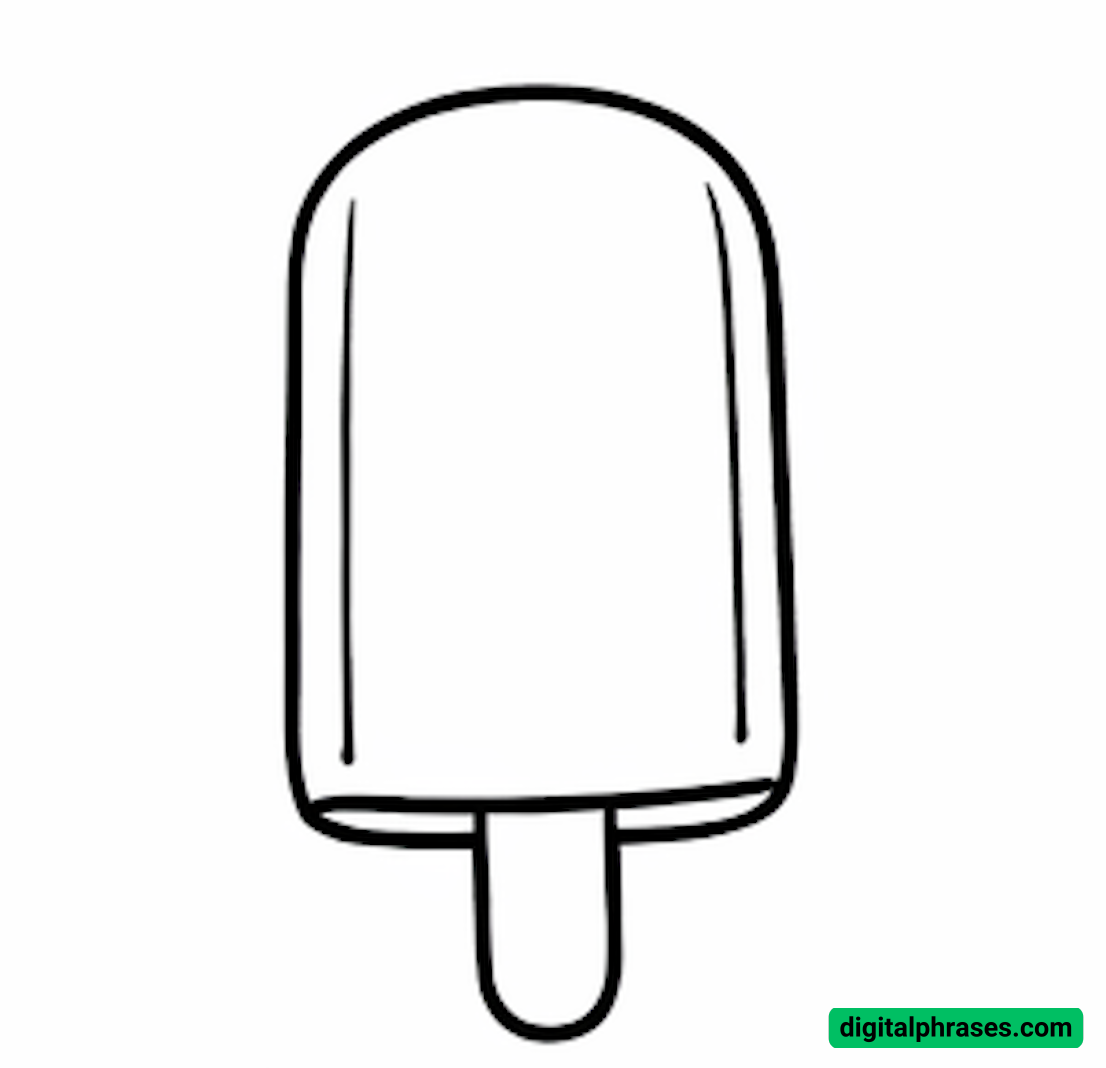
Add inner contour lines and define the lower edge
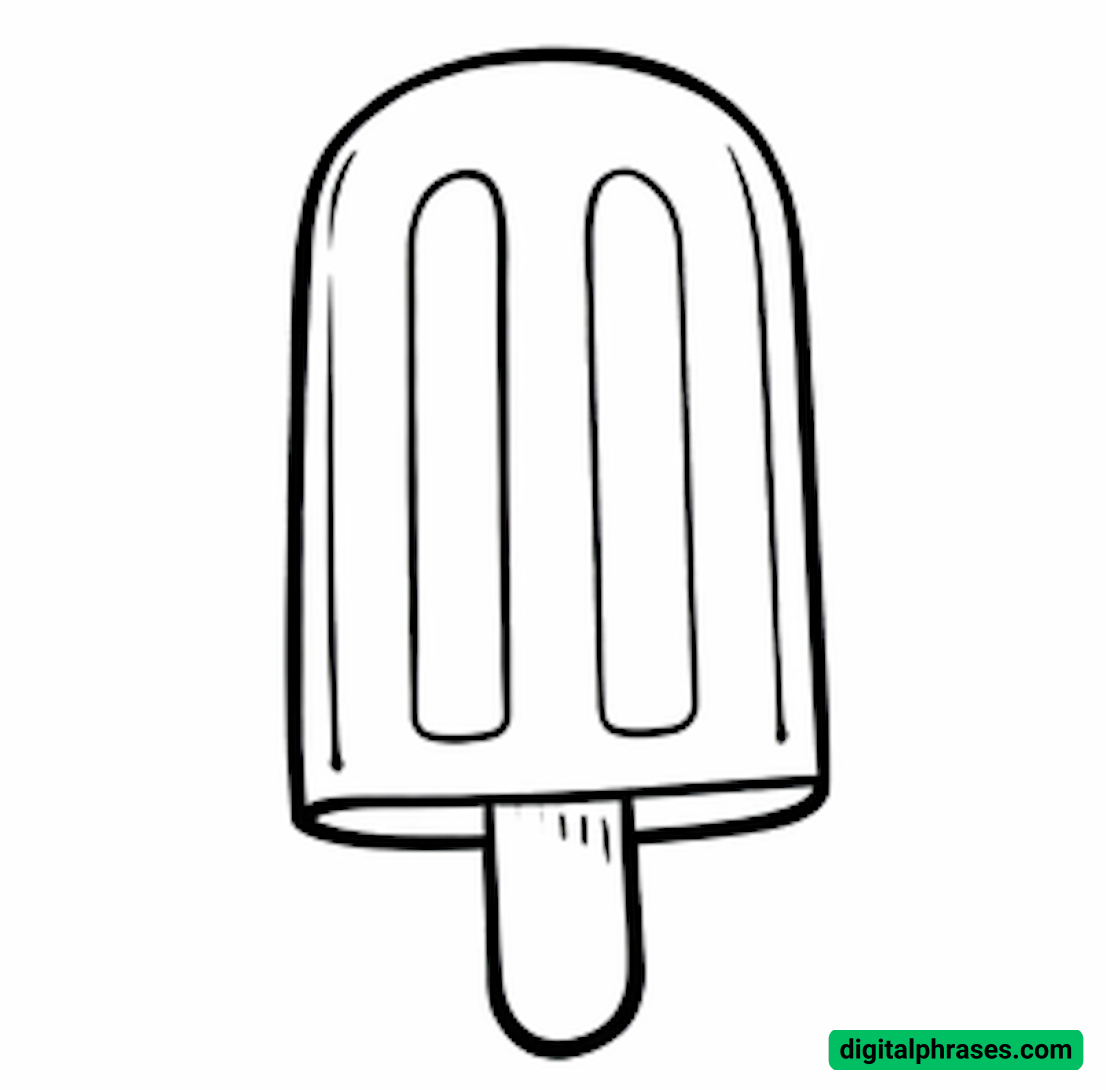
Next, add a pair of long curved lines inside the popsicle, one near the left side and one near the right side. These lines help suggest the curved surface and thickness of the popsicle. After that, define the bottom edge more clearly with a gentle curved line above the stick area. This step gives the drawing more structure and makes the popsicle look less flat and more three-dimensional.
Draw the decorative front grooves
Now add two long rounded rectangular grooves on the front of the popsicle. Place them vertically and space them evenly so they look centered and neat. These details make the popsicle resemble a molded frozen treat rather than a plain block shape. You can also slightly refine the outer edges and the stick at this stage, cleaning up the lines so the design appears more polished and intentional.
Finish with melted topping, texture, and shading
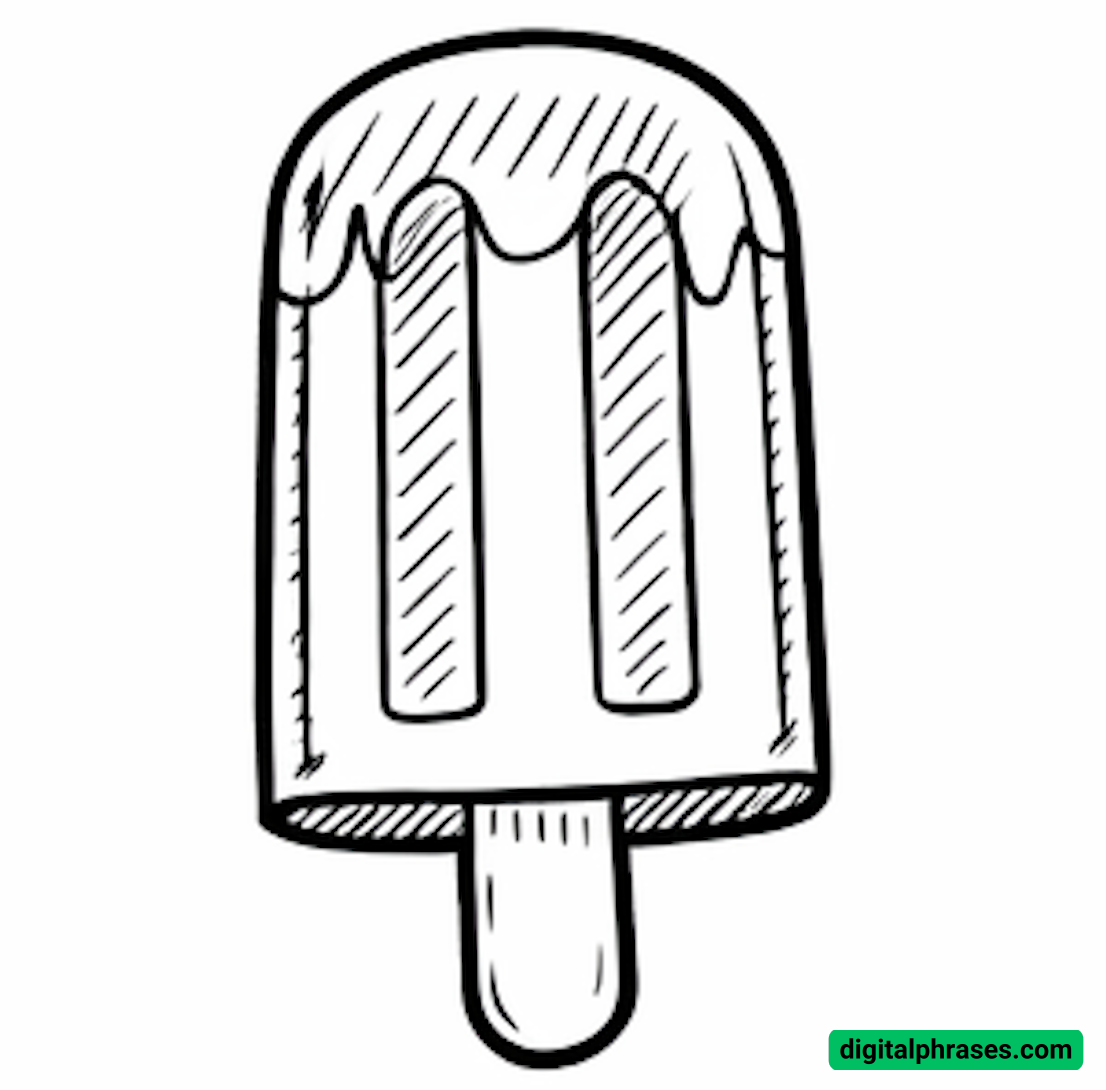
In the final step, draw a wavy melted topping dripping over the upper front of the popsicle. Let the drips curve naturally so they look soft and slightly uneven. Then add short texture lines and light hatching along the sides, bottom, and stick to create depth. These finishing touches give the popsicle more personality, make it look tastier, and turn the simple outline into a complete illustrated drawing.
Tips on How To Draw a Popsicle
Start with simple shapes first
Begin your popsicle drawing with the most basic forms instead of worrying about details too early. A rounded rectangle or long oval shape works well for the main frozen part, and a smaller narrow rectangle with curved corners can be used for the stick. Building the drawing this way helps you keep the proportions balanced from the beginning. Once the big shapes look right, it becomes much easier to add texture, grooves, or melted topping without the drawing feeling uneven or awkward.
Keep both sides balanced
A popsicle usually looks best when the left and right sides feel symmetrical. As you draw, compare one side to the other so the width stays consistent and the top remains smoothly rounded. The stick should also sit close to the center, since an off-center stick can make the whole drawing look tilted. You do not need perfect mathematical symmetry, but keeping the overall form balanced will make the popsicle look cleaner, more realistic, and more appealing.
Use curved lines to show form
Even though a popsicle seems simple, gentle curved lines can make it look much more three-dimensional. Adding slightly curved inner contour lines near the sides suggests that the frozen treat has rounded edges instead of being completely flat. A soft curved line near the bottom can also help define the lower edge of the popsicle body. These subtle curves give the drawing depth and prevent it from looking stiff or boxy.
Add details that make it recognizable
Small design choices can quickly turn a plain shape into a popsicle. You can draw long grooves on the front, a dipped chocolate top, a melting glaze, or a few drips running down the surface. Even a slightly textured wooden stick adds personality. These features help viewers recognize the subject right away and also make the drawing more interesting. Try not to overload it with detail, though; a few clear features often work better than too many.
Finish with texture and shading
Once the outline and details are complete, use light shading to give the popsicle more dimension. Add darker areas along one side, under the drips, or near the bottom edge where shadows would naturally appear. You can also place small texture marks on the stick to suggest wood grain. Keep the shading soft so the drawing still feels clean and playful. A little contrast goes a long way in making a simple popsicle sketch look finished and lively.