How to Draw a Hawaiian Flower
The Hawaiian flower is a tropical bloom admired for its large, open petals and graceful structure. It typically features five broad petals radiating from a central point, with soft curves and slightly uneven edges that give it a natural look.
A long, prominent center extends outward, adding character and elegance. These flowers are often associated with warmth, beauty, and island culture, making them a popular subject for drawing and artistic expression.
Step 1: Drawing the Center Base
The drawing begins with a simple small circle placed in the center of the page. This circle serves as the structural anchor for the entire flower and determines the placement of petals later on.

Step 2: Sketch a Simple Flower Shape
Around the small circle, draw five large petals spaced evenly. Keep the lines light and simple.
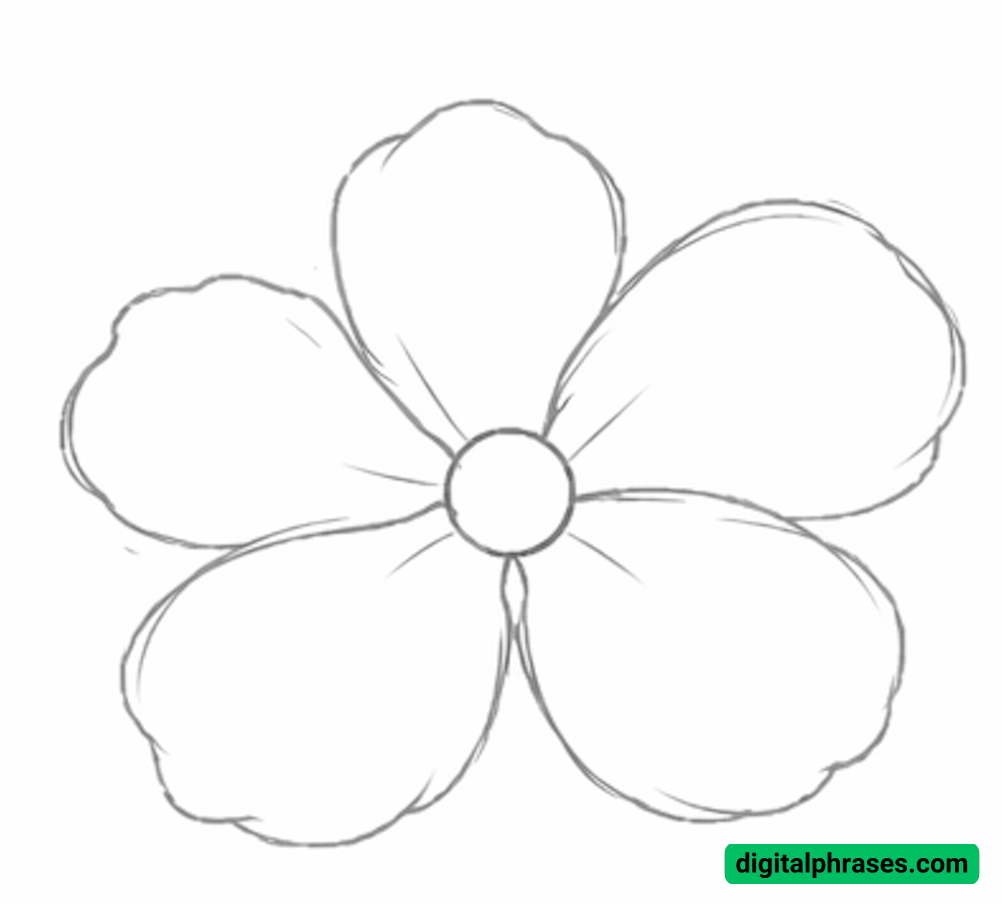
Step 3: Refine the Petal Outlines
Go over the petals and make them look more natural by adding soft, wavy edges instead of smooth round ones. Darken the center circle and clean up the overall flower shape.
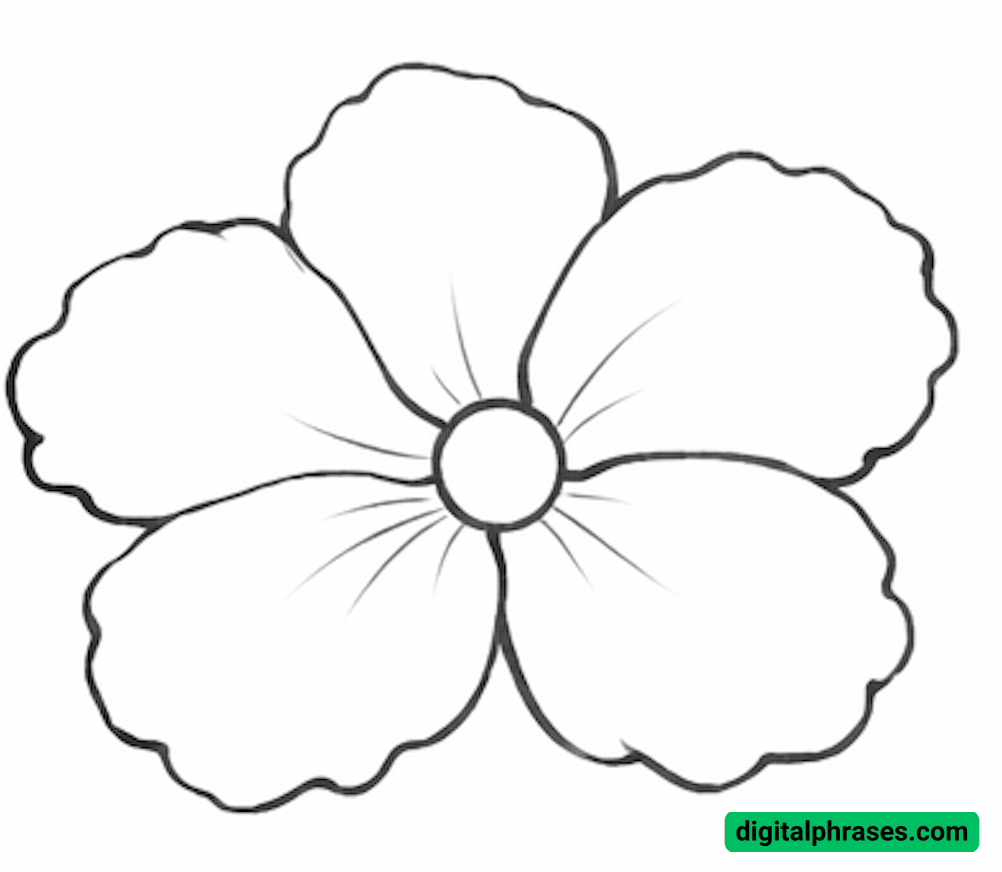
Step 4: Add the Hawaiian Flower Details
From the center, draw a long, narrow stamen tube rising upward. Add a small cluster of rounded shapes at the tip. Then draw several vein lines spreading outward from the center into each petal.

Step 5: Finish and Polish
Add a second small cluster at the top of the stamen for extra detail. Strengthen the main outlines, especially around the petals and center. Add a few more fine lines near the middle to give the flower depth and make it look like a hibiscus-style Hawaiian flower.

Tips on Drawing the Hawaiian Flower
Keep Your Initial Sketch Light
Start your drawing with very light pencil strokes so you can easily adjust shapes and proportions as you go. This flexibility is important because the Hawaiian flower has soft, flowing petals that often need refinement. Pressing too hard early on can make corrections difficult and messy. Light sketching allows you to build confidence gradually while maintaining clean lines, ultimately helping you achieve a more natural and balanced final drawing.
Observe Natural Petal Variations
Take time to study real Hawaiian flowers or reference images to understand how the petals naturally vary. No two petals are exactly the same—some may be slightly larger, more curved, or uneven at the edges. Avoid making them too symmetrical or identical, as this can make your drawing look artificial. Embracing these natural imperfections will give your sketch a more organic, lifelike appearance that better reflects the beauty of the flower.
Emphasize the Central Structure
The center of the Hawaiian flower is one of its most distinctive features, so it deserves extra attention. Make sure it is properly positioned and proportionate to the petals. Adding small details, such as rounded pollen tips and slight variations in thickness, will make it stand out. A well-drawn central structure draws the viewer’s eye and enhances the overall realism and visual impact of your flower sketch.
Use Shading to Create Depth
Apply shading thoughtfully to give your drawing a sense of depth and dimension. Focus on darker tones near the base of the petals and lighter shading as you move outward. Smooth transitions between light and dark areas will help maintain a soft, natural look. Avoid over-shading, as too much darkness can take away from the delicate and airy feel that characterizes a Hawaiian flower.